Whisperloop
Custom subliminal maker app
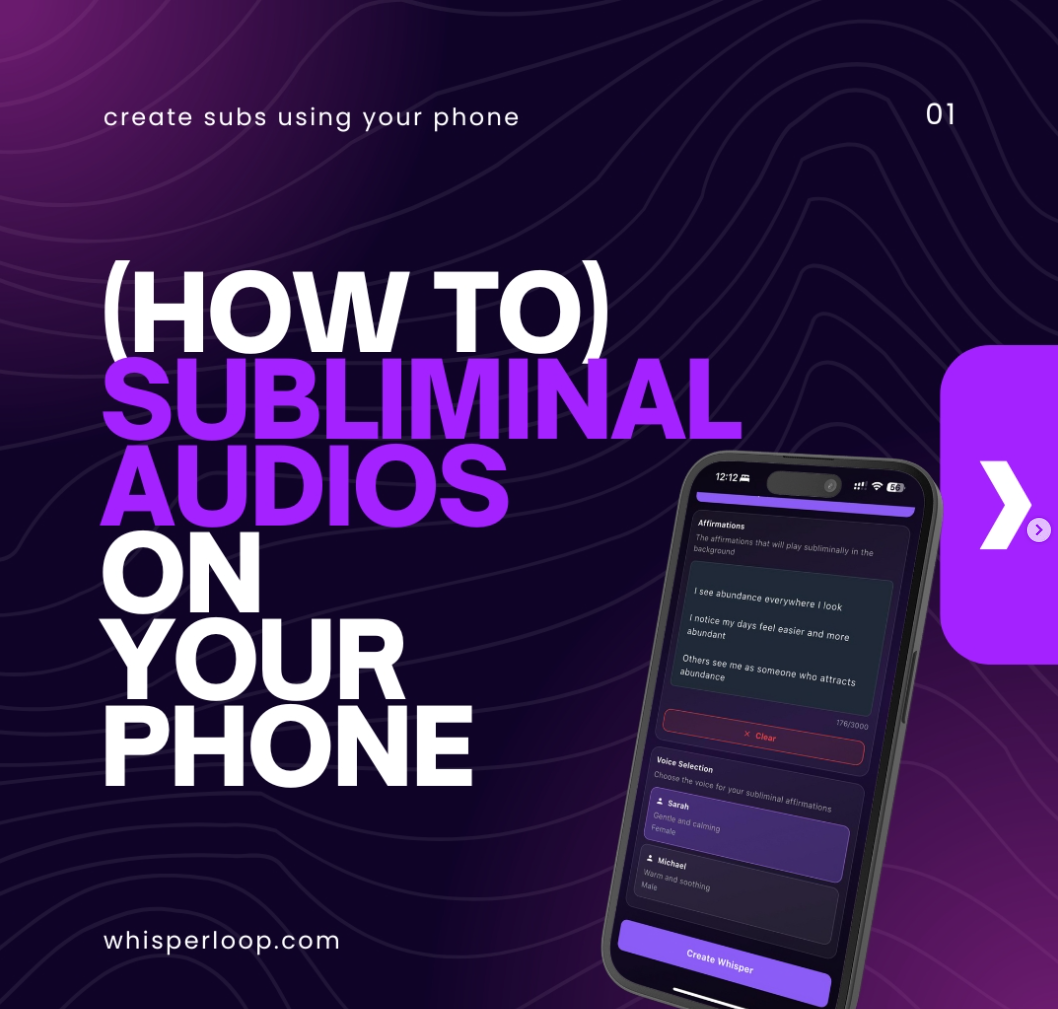
Whisperloop is a subliminal maker that lets anyone create personalized subliminal audio tracks in their own voice. Users record affirmations tied to specific goals (confidence, better
sleep, focus, manifestation, motivation, anxiety relief, etc) and the app processes them into custom subliminal loops designed to reinforce positive self-talk at a subconscious level.
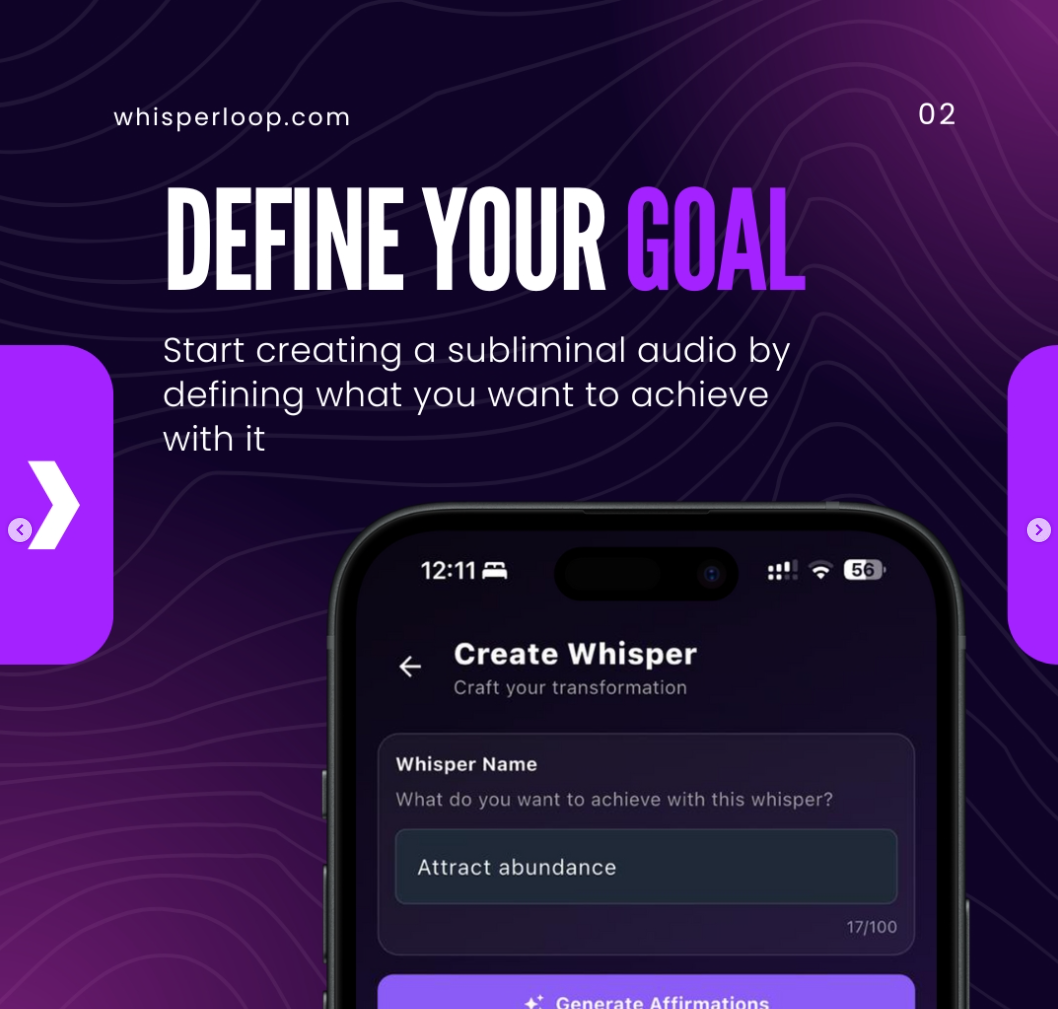
Unlike generic meditation or affirmation apps that ship pre-recorded content, Whisperloop is built around the idea that your own voice is the most effective tool for reshaping internal narratives. The app guides users through goal selection, affirmation writing, and voice recording, then generates ready-to-listen tracks they can play during sleep, work, or routines.
Whisperloop is available on iOS, web at whisperloop.com.
Features
- Record subliminal affirmations in your own voice
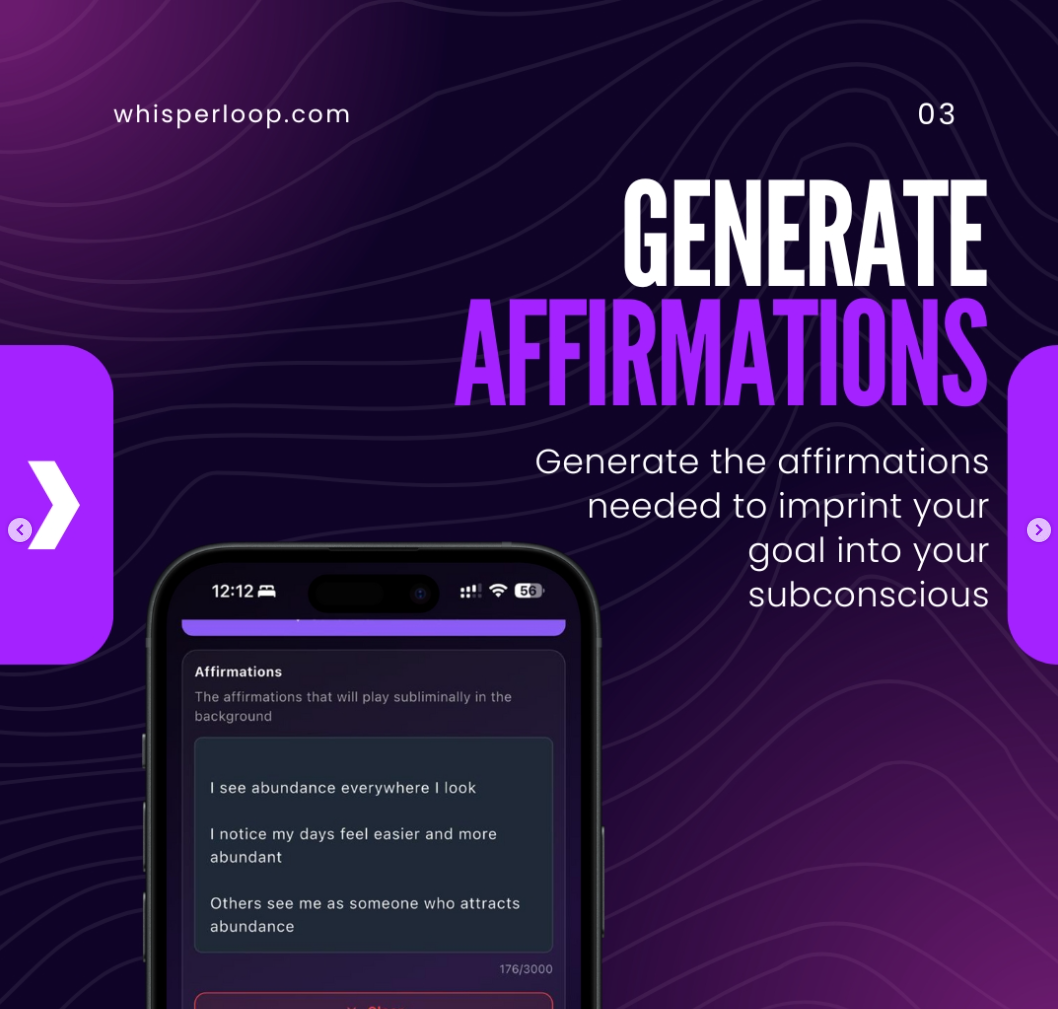
- AI-generated affirmations tailored to your goal
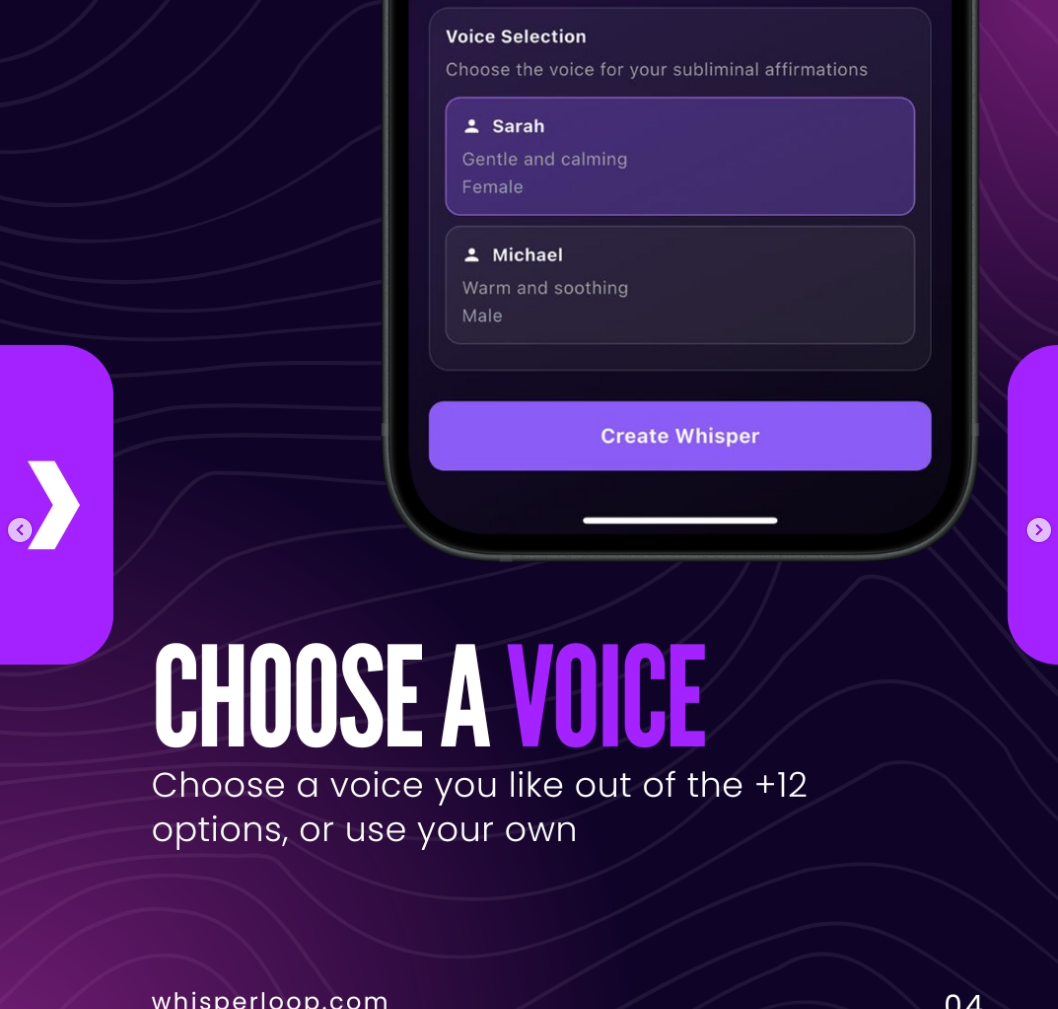
- 9 stock TTS voices
- Library with pre-made affirmations
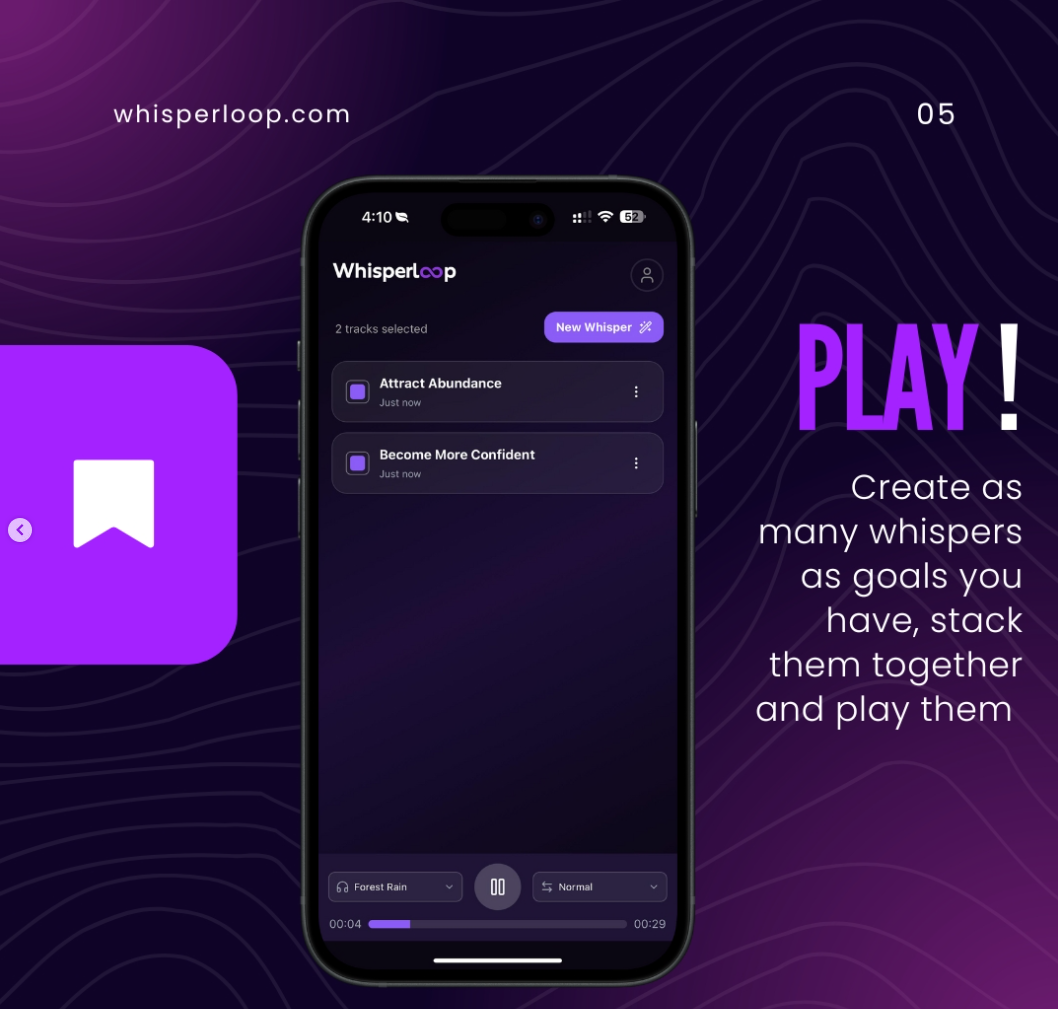
- Background sounds
- Binaural frequencies
- Voice speed control
- Reverse audio track
- Adjustable volume mix between voice and background
- Offline listening once tracks are generated
Use Cases
- Sleep & nighttime reprogramming — loop affirmations during sleep to reinforce positive self-talk while the conscious mind is offline
- Confidence building — daily voice affirmations for self-esteem, public speaking, social anxiety
- Manifestation practice — record intentions aligned with the law of attraction or scripting routines
- Focus & productivity — listen during deep work to anchor concentration cues
- Anxiety & stress relief — calming affirmations in your own voice as a grounding tool
- Habit formation — pair with morning routines to lock in identity-based habits ("I am someone who…")
- Pre-performance priming — athletes, performers, and presenters loop affirmations before high-stakes moments
- Recovery & healing support — complement therapy or self-work with personalized internal narratives
- Replacing generic YouTube subliminals — ditch stranger-voice tracks for ones that actually sound like you

Comments









The idea of using your own voice instead of generic affirmation tracks is actually pretty interesting. Most subliminal or meditation apps feel very impersonal, so making the experience customizable could make people connect with it more consistently. The sleep-loop and habit-building use cases especially make sense for daily routines.

The own-voice angle is the right wedge. Pre-recorded affirmation apps have a known drop-off because users don't auditorily "recognise" the speaker as themselves. ThinkUp has been in this lane for years but stayed on conscious affirmations, so the subliminal-loop framing is a real differentiator if the audio engineering holds up. The hard usage moment is sleep-listen, where consumption is unverifiable — the user wakes up not knowing whether they actually played the track. Is there a verification mechanism (loop counter, next-morning recall prompt) that confirms playback, or does retention live on faith?
Using your own voice for subliminal affirmations is a genuinely differentiated angle — there's research suggesting familiarity of voice increases retention. Did you find users prefer recording themselves vs. using a generated voice? Would be curious if there's a "starter pack" of pre-made affirmations for users who don't know where to begin.


Whisperloop is a paid iOS and web app letting users create personalized subliminal audio loops with their own voice. It offers AI affirmations, TTS voices, binaural sounds and offline playback for sleep aid, confidence building, focus and anxiety relief. Users love its clean design and unique own-voice feature, noting it stands out from generic meditation apps, while some wonder about usage tracking and user preference for self-recorded versus AI voices.
Premium Products






































Sponsors
Buy

Awards
View all
Awards
View allMakers

Makers
Comments
The idea of using your own voice instead of generic affirmation tracks is actually pretty interesting. Most subliminal or meditation apps feel very impersonal, so making the experience customizable could make people connect with it more consistently. The sleep-loop and habit-building use cases especially make sense for daily routines.
The own-voice angle is the right wedge. Pre-recorded affirmation apps have a known drop-off because users don't auditorily "recognise" the speaker as themselves. ThinkUp has been in this lane for years but stayed on conscious affirmations, so the subliminal-loop framing is a real differentiator if the audio engineering holds up. The hard usage moment is sleep-listen, where consumption is unverifiable — the user wakes up not knowing whether they actually played the track. Is there a verification mechanism (loop counter, next-morning recall prompt) that confirms playback, or does retention live on faith?
Using your own voice for subliminal affirmations is a genuinely differentiated angle — there's research suggesting familiarity of voice increases retention. Did you find users prefer recording themselves vs. using a generated voice? Would be curious if there's a "starter pack" of pre-made affirmations for users who don't know where to begin.
Whisperloop is a paid iOS and web app letting users create personalized subliminal audio loops with their own voice. It offers AI affirmations, TTS voices, binaural sounds and offline playback for sleep aid, confidence building, focus and anxiety relief. Users love its clean design and unique own-voice feature, noting it stands out from generic meditation apps, while some wonder about usage tracking and user preference for self-recorded versus AI voices.
Premium Products
New to Fazier?

Find your next favorite product or submit your own. Made by @FalakDigital.
Copyright ©2026. All Rights Reserved