
Teyla
Task planning organised around the roles in your life.
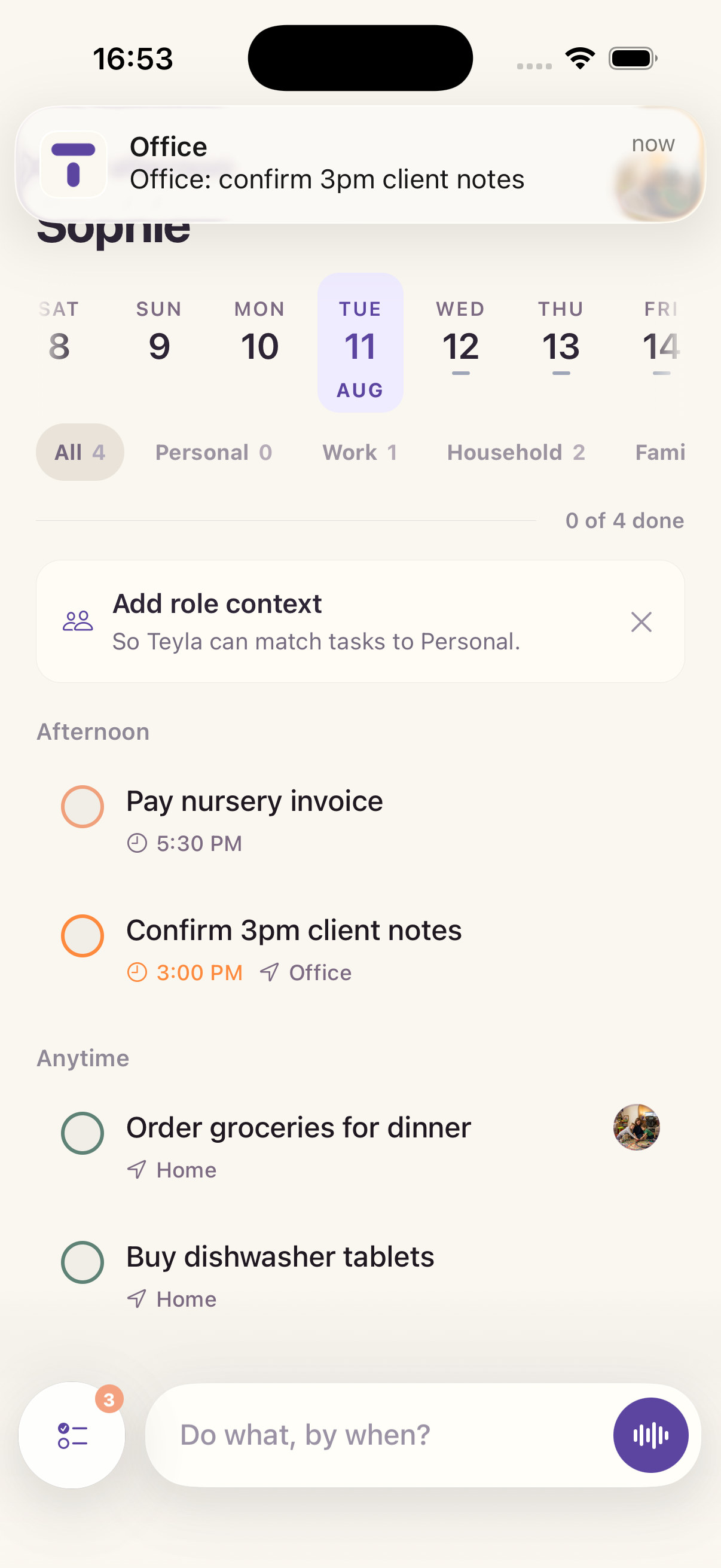
Teyla is a task and planning app built to give every role the attention it deserves.
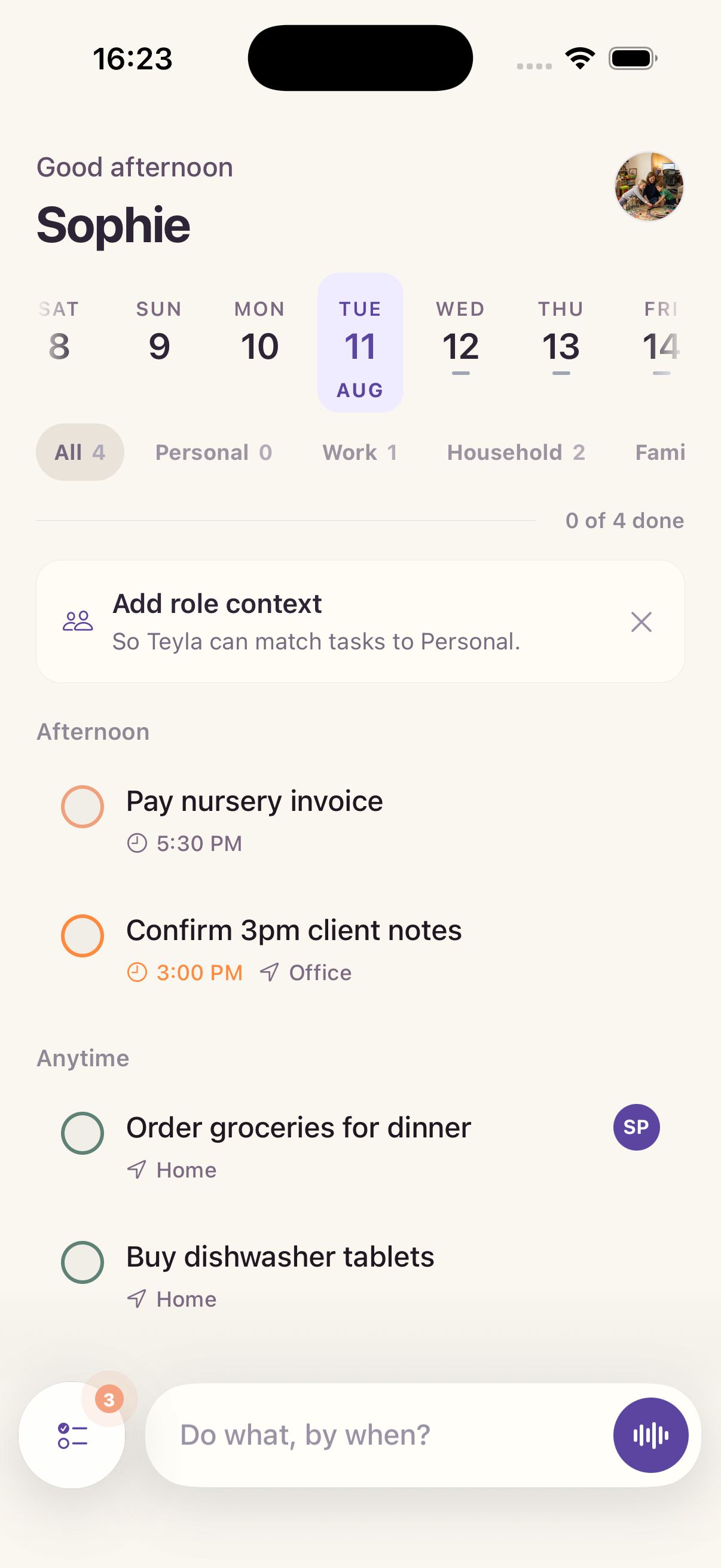
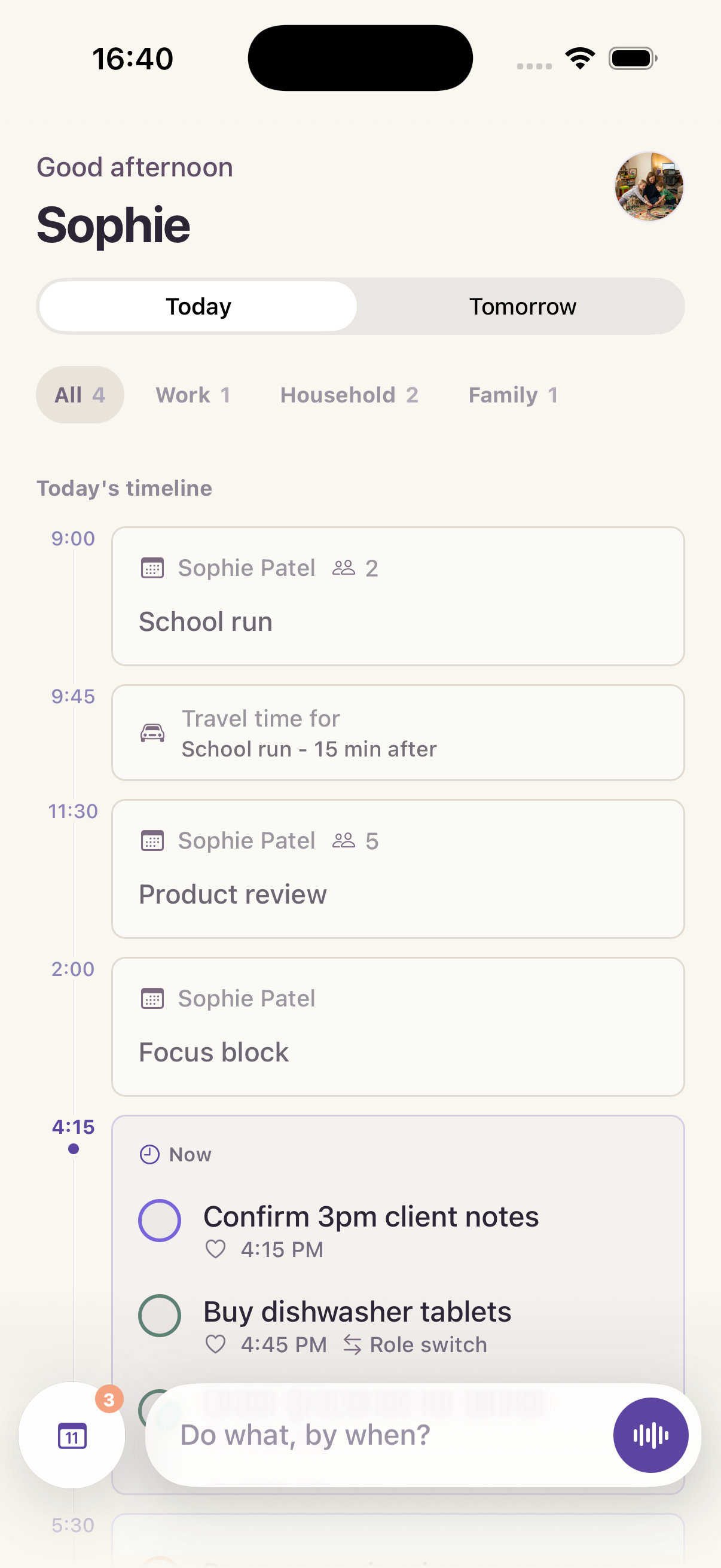
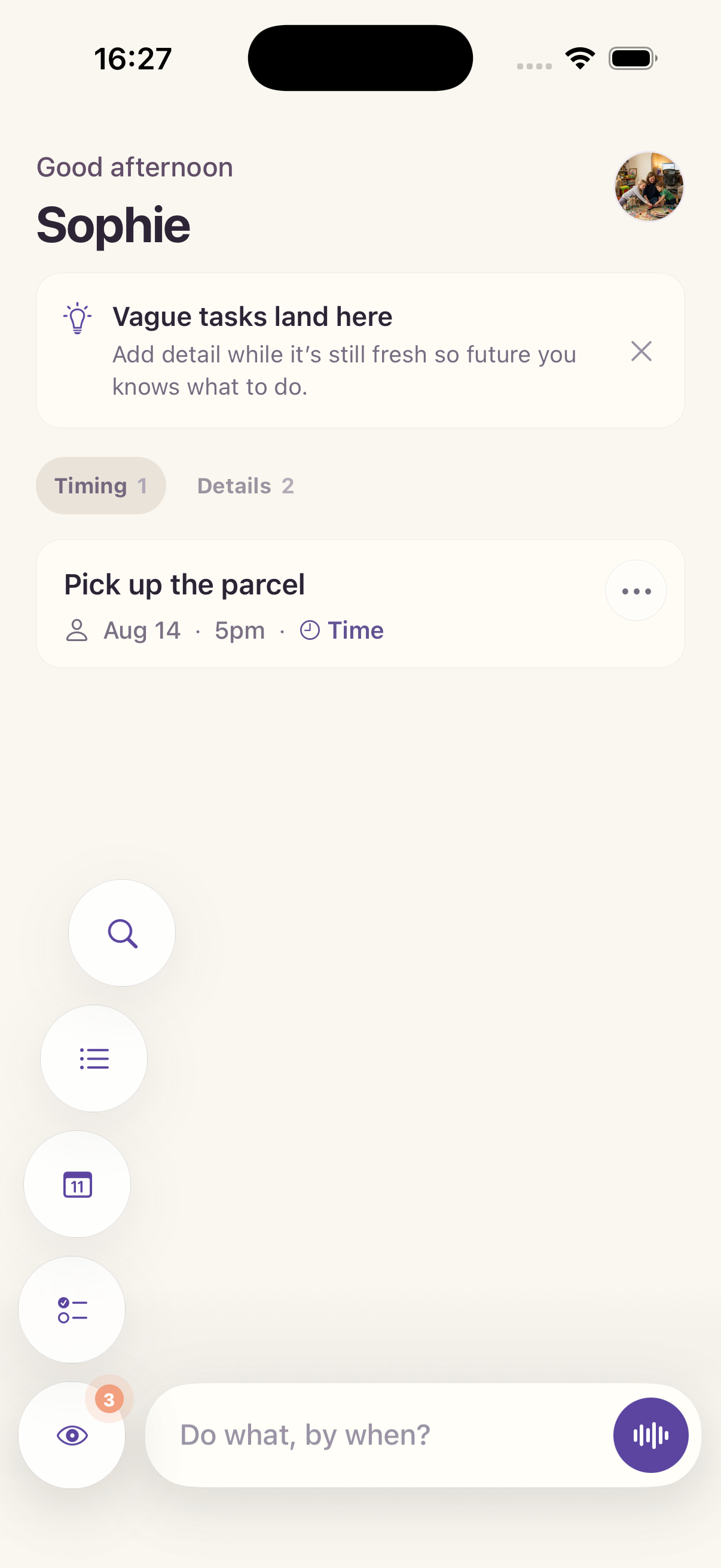
Add tasks by typing or speaking, and Teyla’s AI understands what needs doing, when it matters and which part of your life it belongs to. It organises everything around your roles, calendars, priorities and available time, helping you focus on the role you’re in while keeping track of the rest.
Features
- Add tasks by typing or speaking
- AI understands timing, context and roles
- Organise tasks around roles and calendars
- Plan around priorities and available time
- Reminders at the right time and place
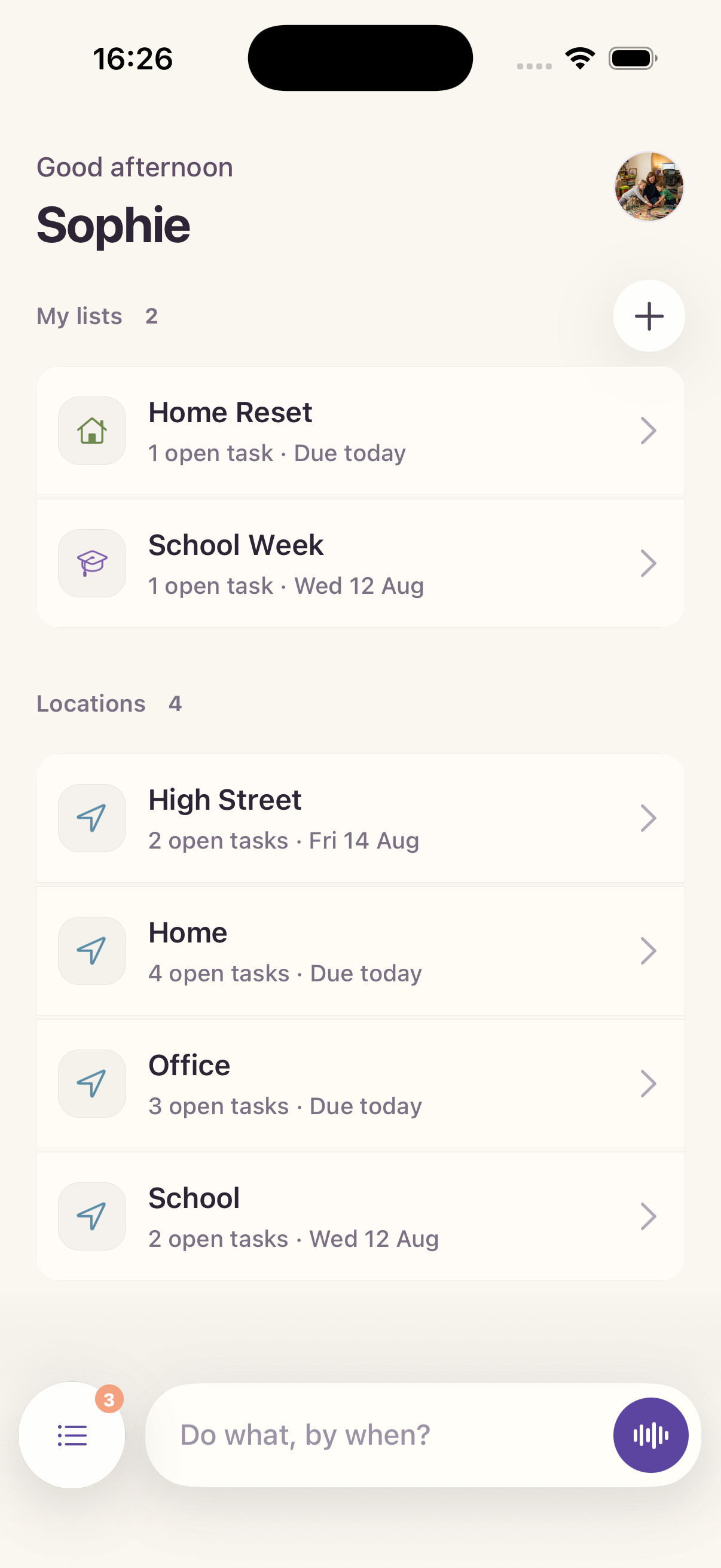
- Smart lists group tasks based on themes
Use Cases
- Manage work, family and household commitments
- Capture tasks quickly by voice or text
- Stay focused on the role you’re currently in
- Decide what to do next with less mental overhead

Comments


The role-based view is brilliant - most task managers force you to work in project-centric hierarchies, but Teyla flips that. You're not juggling projects constantly, you're switching between roles. This matches how humans actually think about their work and kills a major source of context-switching friction. That's the kind of small design insight that compounds into real productivity wins.


The role-based view is brilliant - most task managers force you to work in project-centric hierarchies, but Teyla flips that. You're not juggling projects constantly, you're switching between roles. This matches how humans actually think about their work and kills a major source of context-switching friction. That's the kind of small design insight that compounds into real productivity wins.
Laura's question about what planners still make you do by hand: for me it's the roles that never get a slot. In a small shop the 'keep the lights on' role always wins and the 'build the next thing' role gets whatever is left. Does Teyla ever tell you a role has had zero time this week, before the week ends? That nudge would be worth more to me than smarter capture.



Organising tasks around life roles instead of a flat todo list is a smarter mental model—especially for makers juggling product, content, and ops at once. Teyla’s framing makes it easier to see where attention is leaking across roles rather than just chasing inbox zero. Would love to know whether role views support recurring weekly rituals, or if that still lives as one-off tasks.

Hey everyone — Laura here, co-founder of Teyla. Mario and I built Teyla because most productivity tools assume your life is one neat list of tasks. In reality, there’s work, family, health, side projects, errands and countless small commitments competing for attention. Teyla helps you capture tasks naturally, including by voice, then organises them around the different roles in your life, your calendar, priorities and available time. The goal isn’t just to maintain a better task list — it’s to help answer a simpler question: What should I actually do next? We’ve just launched, so feedback is hugely appreciated. What does your current planner still make you manage manually?




I really like Teyla’s approach to task management. Most productivity apps treat life as one long to-do list, while Teyla recognizes that we’re constantly switching between different roles—work, family, health, personal projects, and everyday responsibilities. The idea of helping users decide what to focus on next, rather than simply showing them more tasks, feels genuinely useful. As a potential user, I’d love to know how flexible the role-based system is. Can users create their own roles, and can a task belong to more than one role? I’m also curious about how Teyla handles unexpected changes during the day. If a meeting runs late or a task takes longer than expected, will the AI automatically adjust the rest of the schedule, while still giving the user control to accept or edit its suggestions? A few other features would make the experience even more practical: recurring tasks, subtasks, task dependencies, calendar integrations, and the ability to consider not only available time but also location, estimated duration, and energy level. Voice input sounds particularly convenient, but it would be helpful to have a quick confirmation step before an incorrectly interpreted task is added to the plan. Overall, Teyla has a thoughtful and promising concept. Its long-term value will depend on how accurately it understands real-life context and how easily users can correct or customize its recommendations.

Really like the idea of organising tasks around the different roles in your life instead of dumping everything into one giant to-do list. The voice capture + context-aware planning sounds especially useful when your day keeps switching between work, family, and personal tasks. Curious to see how well Teyla handles those messy days when priorities change halfway through.



Most task managers treat everything as the same priority bucket, but real life has different contexts - work tasks, personal goals, family responsibilities, side projects. The role-based approach actually maps how humans think about their time. Being able to toggle between perspectives and see the same task differently depending on which hat you're wearing is a smart way to reduce context switching stress.




Answering Laura's question directly: what my planner still makes me work out by hand is how much time is actually left. Every planner I have used will happily accept eleven tasks for a Tuesday that has about four hours of free space in it, because the list and the calendar are two separate things that never argue with each other. Teyla planning around available time is the interesting part. Two things I would want to see: does it tell me when a role holds more work than the week can fit, and does it say so while I am still adding, rather than after the day has already gone wrong?

Hey Fazier! 👋 Excited to finally share Ryzio with you all. We built this platform to help job seekers bypass strict ATS filters and keep track of their job applications in one neat, intuitive dashboard. Please check it out and let me know your thoughts down in the comments—your feedback is incredibly valuable to us! 🚀
Context switching kills productivity, and Teyla actually solves that. The role-based view is genius - you're not juggling projects, you're switching hats. Seeing your work through different perspectives makes priorities crystal clear. This is the kind of small design decision that compounds into real time savings.



The role-based view is brilliant - most task managers force you to work in project-centric hierarchies, but Teyla flips that. You're not juggling projects constantly, you're switching between roles. This matches how humans actually think about their work and kills a major source of context-switching friction. That's the kind of small design insight that compounds into real productivity wins.
Premium Products





























Sponsors
Buy



Makers
Makers
Comments
The role-based view is brilliant - most task managers force you to work in project-centric hierarchies, but Teyla flips that. You're not juggling projects constantly, you're switching between roles. This matches how humans actually think about their work and kills a major source of context-switching friction. That's the kind of small design insight that compounds into real productivity wins.
The role-based view is brilliant - most task managers force you to work in project-centric hierarchies, but Teyla flips that. You're not juggling projects constantly, you're switching between roles. This matches how humans actually think about their work and kills a major source of context-switching friction. That's the kind of small design insight that compounds into real productivity wins.
Laura's question about what planners still make you do by hand: for me it's the roles that never get a slot. In a small shop the 'keep the lights on' role always wins and the 'build the next thing' role gets whatever is left. Does Teyla ever tell you a role has had zero time this week, before the week ends? That nudge would be worth more to me than smarter capture.
Organising tasks around life roles instead of a flat todo list is a smarter mental model—especially for makers juggling product, content, and ops at once. Teyla’s framing makes it easier to see where attention is leaking across roles rather than just chasing inbox zero. Would love to know whether role views support recurring weekly rituals, or if that still lives as one-off tasks.
Hey everyone — Laura here, co-founder of Teyla. Mario and I built Teyla because most productivity tools assume your life is one neat list of tasks. In reality, there’s work, family, health, side projects, errands and countless small commitments competing for attention. Teyla helps you capture tasks naturally, including by voice, then organises them around the different roles in your life, your calendar, priorities and available time. The goal isn’t just to maintain a better task list — it’s to help answer a simpler question: What should I actually do next? We’ve just launched, so feedback is hugely appreciated. What does your current planner still make you manage manually?
I really like Teyla’s approach to task management. Most productivity apps treat life as one long to-do list, while Teyla recognizes that we’re constantly switching between different roles—work, family, health, personal projects, and everyday responsibilities. The idea of helping users decide what to focus on next, rather than simply showing them more tasks, feels genuinely useful. As a potential user, I’d love to know how flexible the role-based system is. Can users create their own roles, and can a task belong to more than one role? I’m also curious about how Teyla handles unexpected changes during the day. If a meeting runs late or a task takes longer than expected, will the AI automatically adjust the rest of the schedule, while still giving the user control to accept or edit its suggestions? A few other features would make the experience even more practical: recurring tasks, subtasks, task dependencies, calendar integrations, and the ability to consider not only available time but also location, estimated duration, and energy level. Voice input sounds particularly convenient, but it would be helpful to have a quick confirmation step before an incorrectly interpreted task is added to the plan. Overall, Teyla has a thoughtful and promising concept. Its long-term value will depend on how accurately it understands real-life context and how easily users can correct or customize its recommendations.
Really like the idea of organising tasks around the different roles in your life instead of dumping everything into one giant to-do list. The voice capture + context-aware planning sounds especially useful when your day keeps switching between work, family, and personal tasks. Curious to see how well Teyla handles those messy days when priorities change halfway through.
Most task managers treat everything as the same priority bucket, but real life has different contexts - work tasks, personal goals, family responsibilities, side projects. The role-based approach actually maps how humans think about their time. Being able to toggle between perspectives and see the same task differently depending on which hat you're wearing is a smart way to reduce context switching stress.
Answering Laura's question directly: what my planner still makes me work out by hand is how much time is actually left. Every planner I have used will happily accept eleven tasks for a Tuesday that has about four hours of free space in it, because the list and the calendar are two separate things that never argue with each other. Teyla planning around available time is the interesting part. Two things I would want to see: does it tell me when a role holds more work than the week can fit, and does it say so while I am still adding, rather than after the day has already gone wrong?
Hey Fazier! 👋 Excited to finally share Ryzio with you all. We built this platform to help job seekers bypass strict ATS filters and keep track of their job applications in one neat, intuitive dashboard. Please check it out and let me know your thoughts down in the comments—your feedback is incredibly valuable to us! 🚀
Context switching kills productivity, and Teyla actually solves that. The role-based view is genius - you're not juggling projects, you're switching hats. Seeing your work through different perspectives makes priorities crystal clear. This is the kind of small design decision that compounds into real time savings.
The role-based view is brilliant - most task managers force you to work in project-centric hierarchies, but Teyla flips that. You're not juggling projects constantly, you're switching between roles. This matches how humans actually think about their work and kills a major source of context-switching friction. That's the kind of small design insight that compounds into real productivity wins.
Premium Products
New to Fazier?

Find your next favorite product or submit your own. Made by @FalakDigital.
Copyright ©2026. All Rights Reserved