
Peak Visibility
Generate production ready SEO files for your website
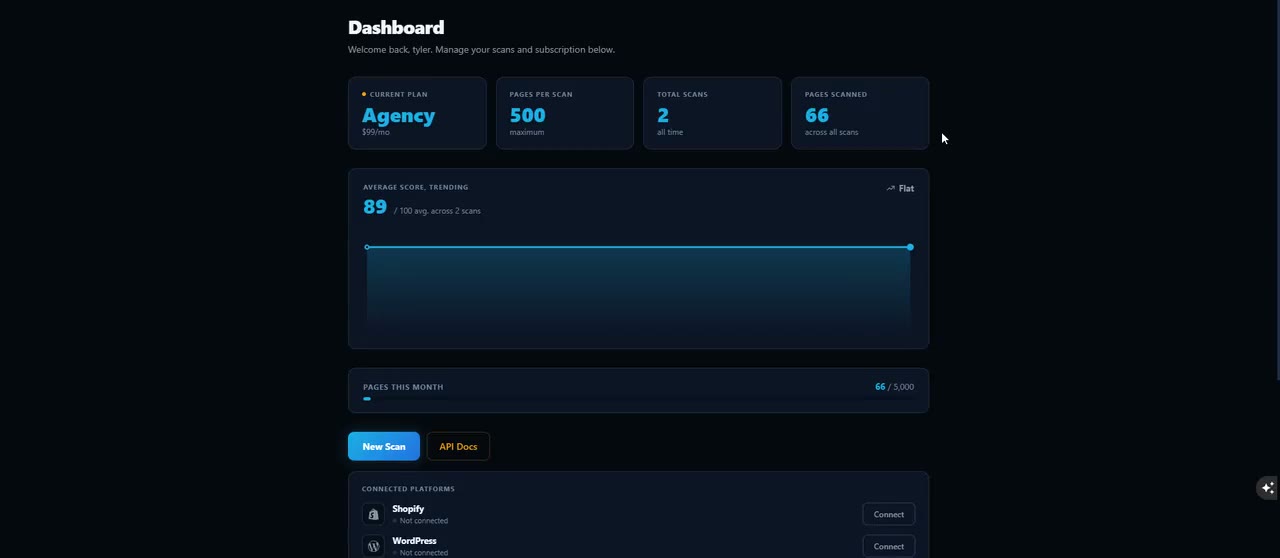
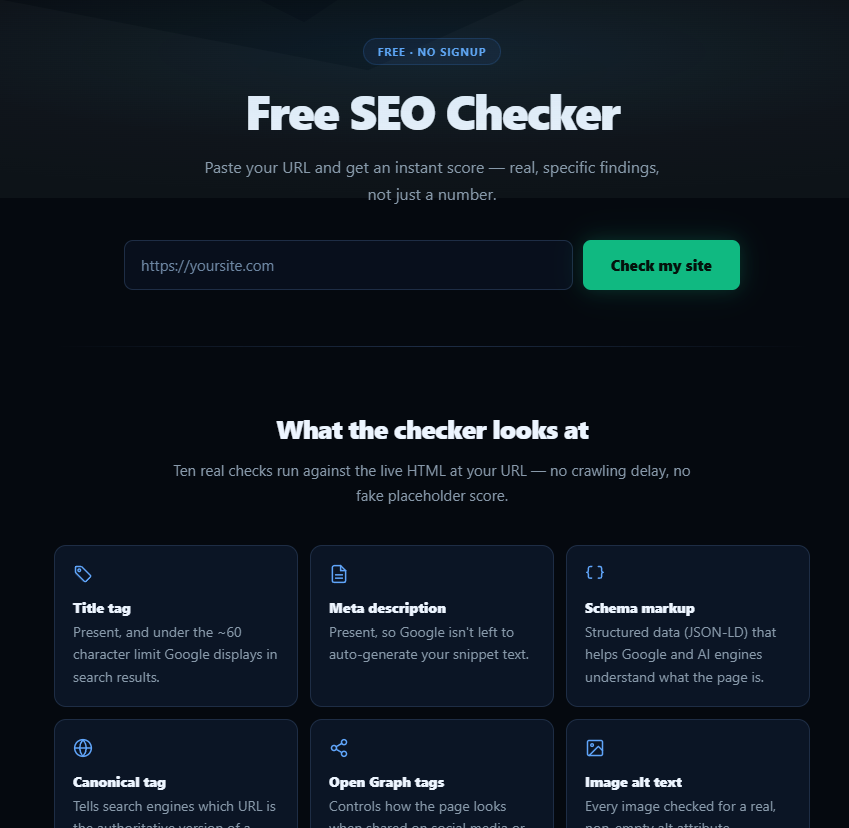
Peak Visibility is an AI SEO tool that turns any website into ready to deploy SEO files in under three minutes, including sitemaps, meta tags, schema markup, Open Graph tags, image alt text, and a detailed SEO report.

Features
• Scan up to 500 pages
• Generate complete SEO files
• Create page specific metadata
• Produce schema and Open Graph markup
• Suggest image alt text
• Download ready to deploy files
• Access white label reports and API automation
Use Cases
• Freelancers completing client websites
• Agencies managing SEO across multiple clients
• Developers preparing websites for launch
• Small businesses improving search visibility
• Store owners adding technical SEO without specialist knowledge

Comments


The SEO knowledge gap is real - most people launching websites don't have the expertise to implement proper schema markup, OpenGraph tags, or sitemap structure. Peak Visibility solves this by turning the technical complexity into a simple scan-and-deploy process. The white label reporting feature is especially smart for agencies - it lets you deliver branded reports to clients without spending hours on manual documentation. Being able to scan 500 pages and generate production-ready files in minutes removes a major consulting cost that usually gets passed to clients. For freelancers especially, this compresses what used to be billable hours of research and implementation into actual value-add work.

The page-specific metadata and schema markup generation is the part I'd actually use - writing JSON-LD by hand for every page is the most tedious bit of shipping a site. Question: does the scanner handle JS-rendered pages, or only static HTML? Our docs site is server-rendered but I know plenty of SPA folks who'd need the former.


The risky part is presenting generated SEO files as production-ready with “no manual fixes.” Incorrect canonicals, schema, or robots.txt rules can damage crawling and indexing, especially when the instructions say to replace the existing robots.txt file. I’d add a safety layer that shows a before-and-after diff, validates every generated file, flags destructive changes, and creates a rollback package before deployment.



Agree with the diff/rollback point above — presenting generated files as production-ready is a trust problem more than a generation problem. One thing I'd want as a user: a per-page preview of the generated title/meta/OG tags the way Google and social crawlers would actually render them, since truncated titles and missing OG images are the most common silent failures. Also curious how the scan handles JS-rendered pages — headless browser crawl or raw HTML parsing?

Premium Products


































Sponsors
Buy


Comments
The SEO knowledge gap is real - most people launching websites don't have the expertise to implement proper schema markup, OpenGraph tags, or sitemap structure. Peak Visibility solves this by turning the technical complexity into a simple scan-and-deploy process. The white label reporting feature is especially smart for agencies - it lets you deliver branded reports to clients without spending hours on manual documentation. Being able to scan 500 pages and generate production-ready files in minutes removes a major consulting cost that usually gets passed to clients. For freelancers especially, this compresses what used to be billable hours of research and implementation into actual value-add work.
The page-specific metadata and schema markup generation is the part I'd actually use - writing JSON-LD by hand for every page is the most tedious bit of shipping a site. Question: does the scanner handle JS-rendered pages, or only static HTML? Our docs site is server-rendered but I know plenty of SPA folks who'd need the former.
The risky part is presenting generated SEO files as production-ready with “no manual fixes.” Incorrect canonicals, schema, or robots.txt rules can damage crawling and indexing, especially when the instructions say to replace the existing robots.txt file. I’d add a safety layer that shows a before-and-after diff, validates every generated file, flags destructive changes, and creates a rollback package before deployment.
Agree with the diff/rollback point above — presenting generated files as production-ready is a trust problem more than a generation problem. One thing I'd want as a user: a per-page preview of the generated title/meta/OG tags the way Google and social crawlers would actually render them, since truncated titles and missing OG images are the most common silent failures. Also curious how the scan handles JS-rendered pages — headless browser crawl or raw HTML parsing?
Premium Products
New to Fazier?

Find your next favorite product or submit your own. Made by @FalakDigital.
Copyright ©2026. All Rights Reserved