
Memex
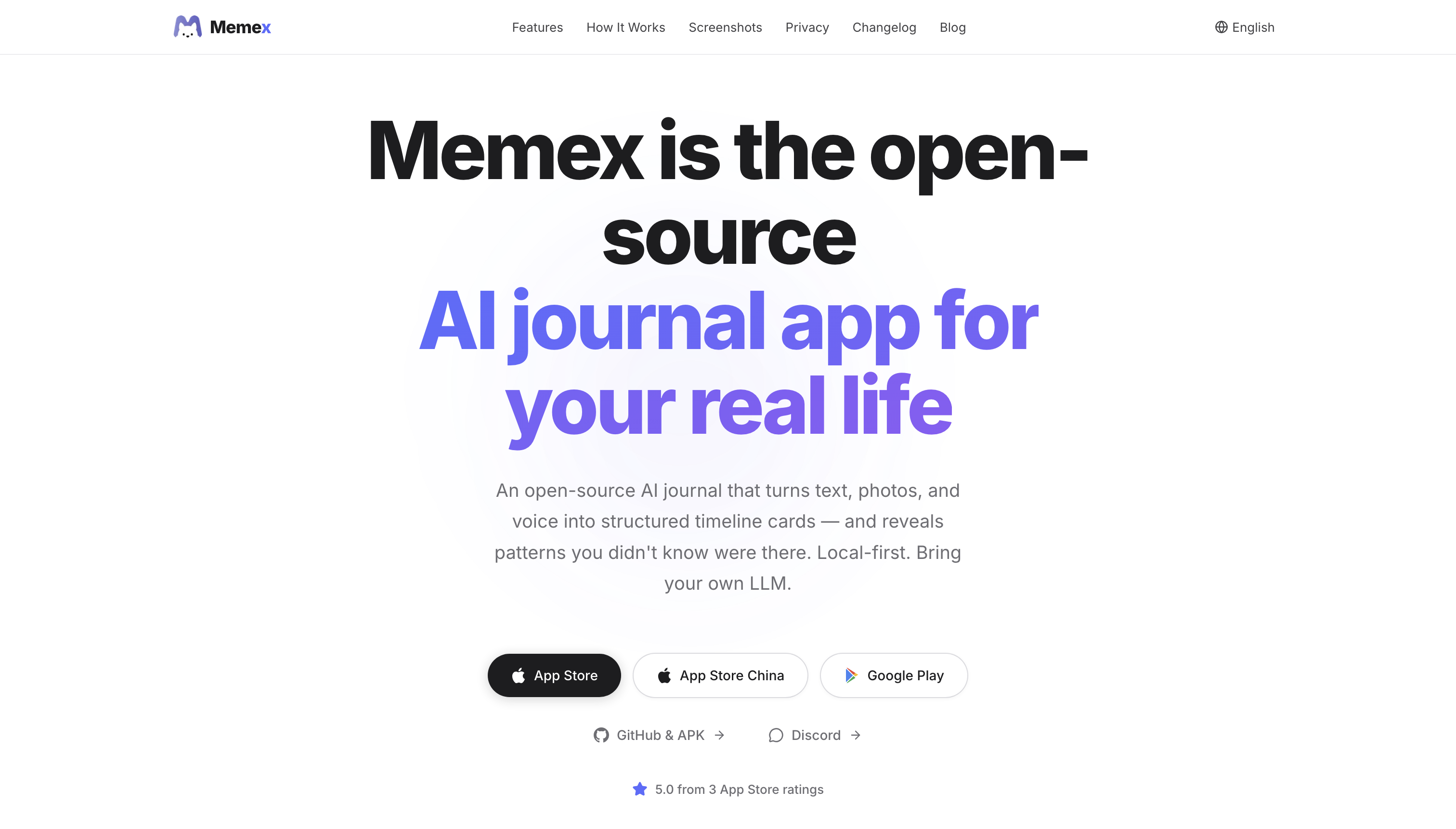
Open-source, local-first AI journal for your life
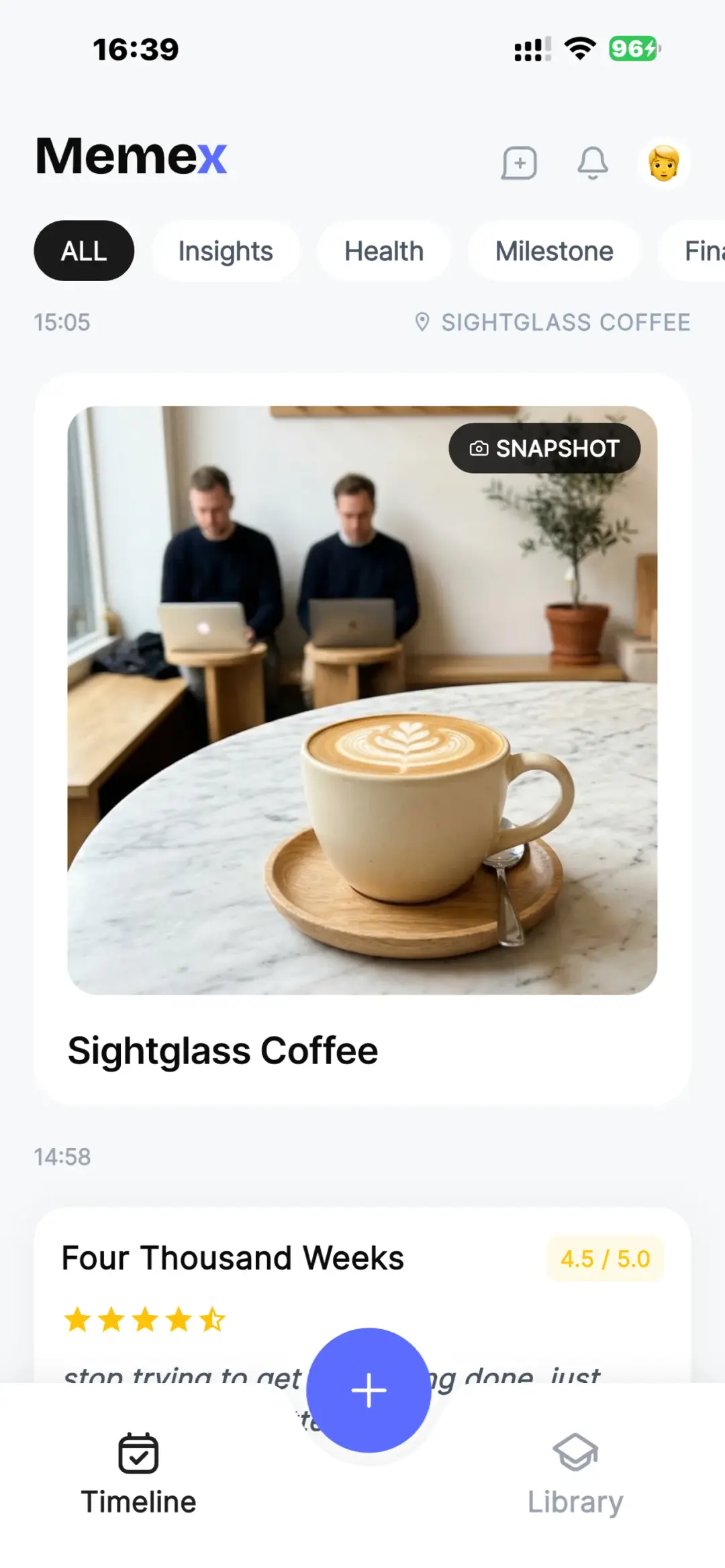
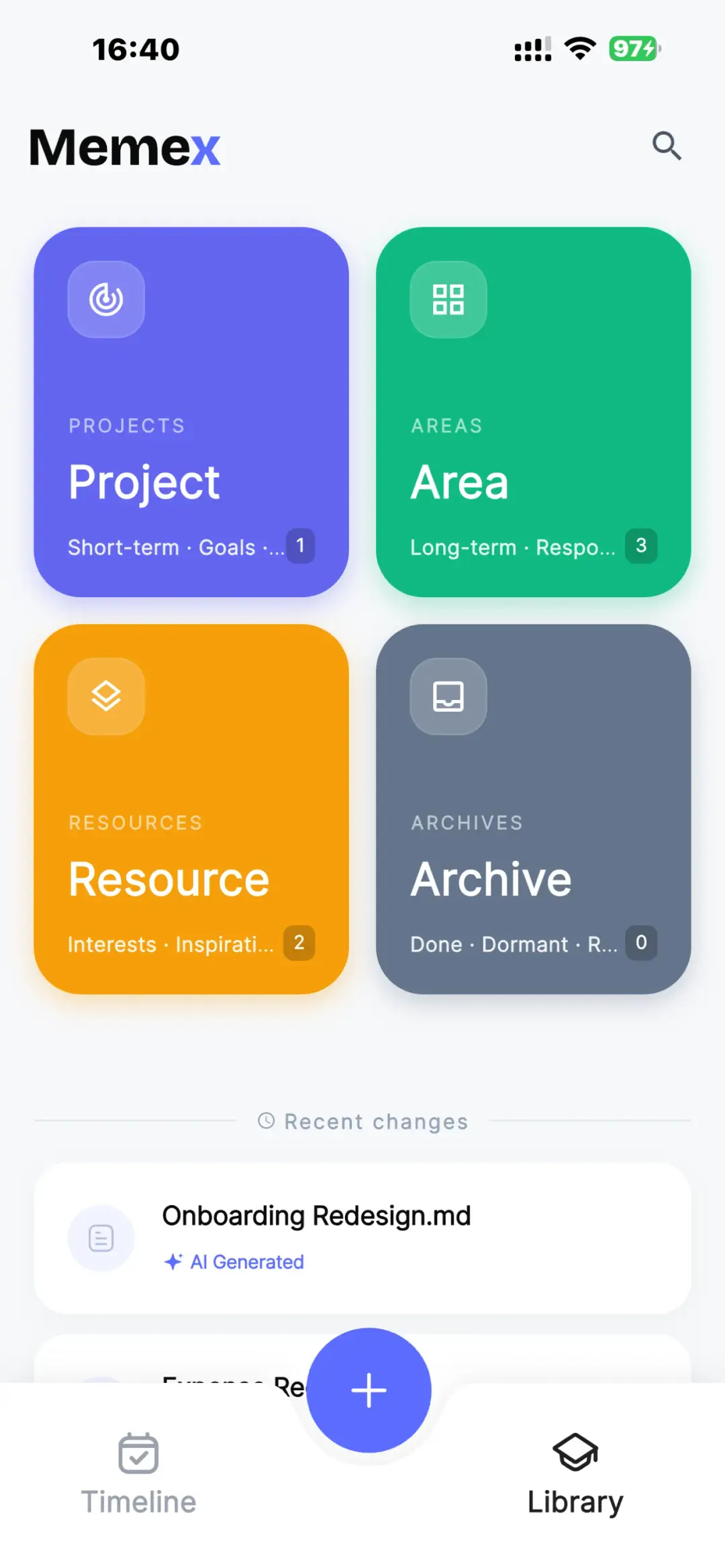
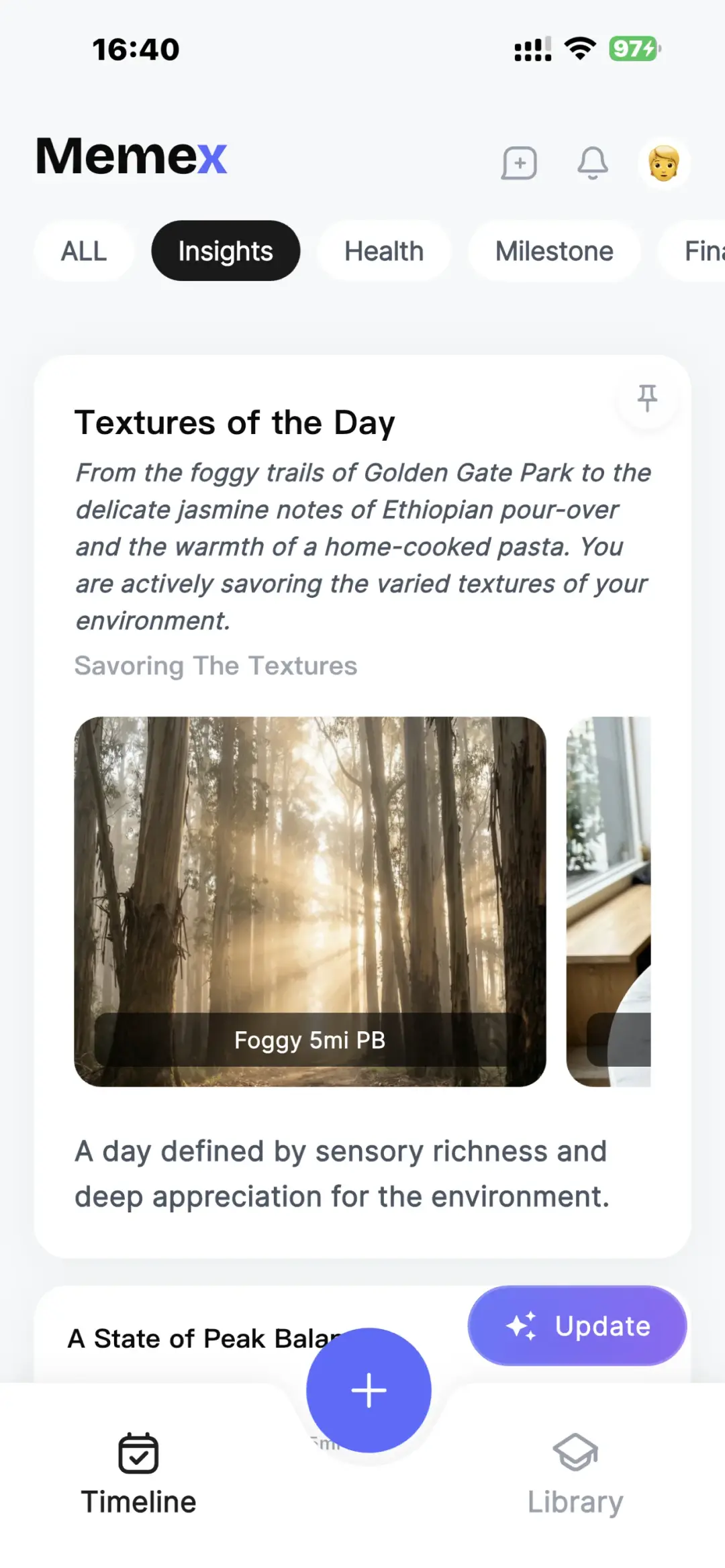
Memex is an open-source, local-first AI journal for iOS and Android. Capture everyday fragments as text, photos, or voice notes, then let AI organize them into structured timeline cards, searchable memories, knowledge, and personal insights.
Your records stay on your device in portable Markdown and SQLite formats. Memex does not require a Memex account: connect your own AI provider—including OpenAI, Claude, Gemini, or Ollama—and keep control of your data and API keys.
Features
- Capture text, photos, voice notes, reminders, and daily reflections
- Automatically organize records into timeline cards and searchable memories
- Discover knowledge and personal insights across your journal
- Local-first storage with portable Markdown files and SQLite
- Open source and available on iOS and Android
- Bring your own LLM: OpenAI, Claude, Gemini, Ollama, and more
- No Memex account required; prompts go directly to your chosen provider
Use Cases
- Keep a private daily journal without manual tagging or organization
- Turn scattered notes, photos, and voice memos into a searchable life record
- Reflect on goals, habits, projects, and important moments over time
- Build a personal knowledge base from everyday capture
- Record ideas on the go, then revisit them with AI-generated context
- Choose a privacy-focused, local-first alternative to cloud journaling and note-taking apps

Comments


Most of life arrives as fragments: a quick thought, a photo, a voice note, a reminder, or something you want to remember later. Memex lets you capture those pieces first, then uses AI to organize them into timeline cards, searchable memories, knowledge, and insights. The important part for us is ownership. Memex is open source and local-first: your records live on your device in portable Markdown and SQLite formats. You choose the AI provider—OpenAI, Claude, Gemini, Ollama, and others—and your prompts go directly to that provider. We’d love your feedback: what would make an AI journal genuinely useful in your everyday life?

The bring-your-own-API-key model combined with plain Markdown and SQLite on device is what makes the privacy claim credible here, because most journalling apps that advertise privacy still round-trip everything through a vendor backend. The question I'd want answered before switching: if I point it at a local Ollama model instead of a hosted provider, does the timeline-card organisation and insight extraction still run entirely offline, or are some enrichment steps hardcoded to a cloud model? That one detail decides whether this is usable on a flight, or for people who'd rather not send journal entries across a border.

Memex solves the privacy and data control problem that plagues every major journaling and note-taking app. Using a closed proprietary service for your personal thoughts, memories, and reflections means surrendering not just data but agency over your own narrative. Being open-source, local-first, and allowing you to plug in your own LLM (Claude, Ollama, etc.) flips the script - you control the infrastructure AND the intelligence. The timeline-based organization and automatic tagging with AI context also removes the friction that keeps most people from maintaining a journal. This is journaling infrastructure for people who actually care about privacy and ownership.
Premium Products



































Sponsors
Buy

Makers
Makers
Comments
Most of life arrives as fragments: a quick thought, a photo, a voice note, a reminder, or something you want to remember later. Memex lets you capture those pieces first, then uses AI to organize them into timeline cards, searchable memories, knowledge, and insights. The important part for us is ownership. Memex is open source and local-first: your records live on your device in portable Markdown and SQLite formats. You choose the AI provider—OpenAI, Claude, Gemini, Ollama, and others—and your prompts go directly to that provider. We’d love your feedback: what would make an AI journal genuinely useful in your everyday life?
The bring-your-own-API-key model combined with plain Markdown and SQLite on device is what makes the privacy claim credible here, because most journalling apps that advertise privacy still round-trip everything through a vendor backend. The question I'd want answered before switching: if I point it at a local Ollama model instead of a hosted provider, does the timeline-card organisation and insight extraction still run entirely offline, or are some enrichment steps hardcoded to a cloud model? That one detail decides whether this is usable on a flight, or for people who'd rather not send journal entries across a border.
Memex solves the privacy and data control problem that plagues every major journaling and note-taking app. Using a closed proprietary service for your personal thoughts, memories, and reflections means surrendering not just data but agency over your own narrative. Being open-source, local-first, and allowing you to plug in your own LLM (Claude, Ollama, etc.) flips the script - you control the infrastructure AND the intelligence. The timeline-based organization and automatic tagging with AI context also removes the friction that keeps most people from maintaining a journal. This is journaling infrastructure for people who actually care about privacy and ownership.
Premium Products
New to Fazier?
Find your next favorite product or submit your own. Made by @FalakDigital.
Copyright ©2026. All Rights Reserved