
Lejar AI
AI accounting software: the AI drafts entries, you approve.
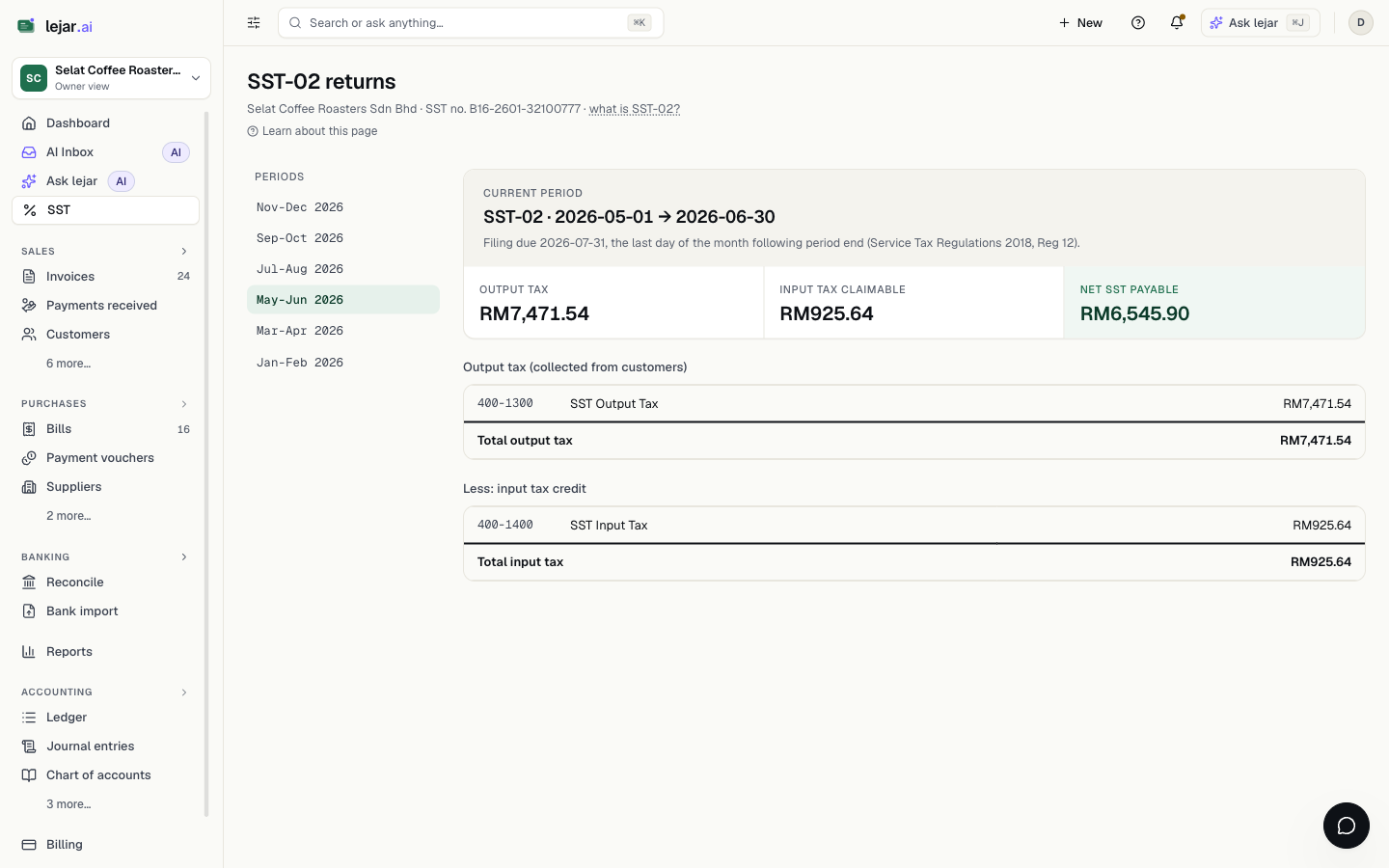
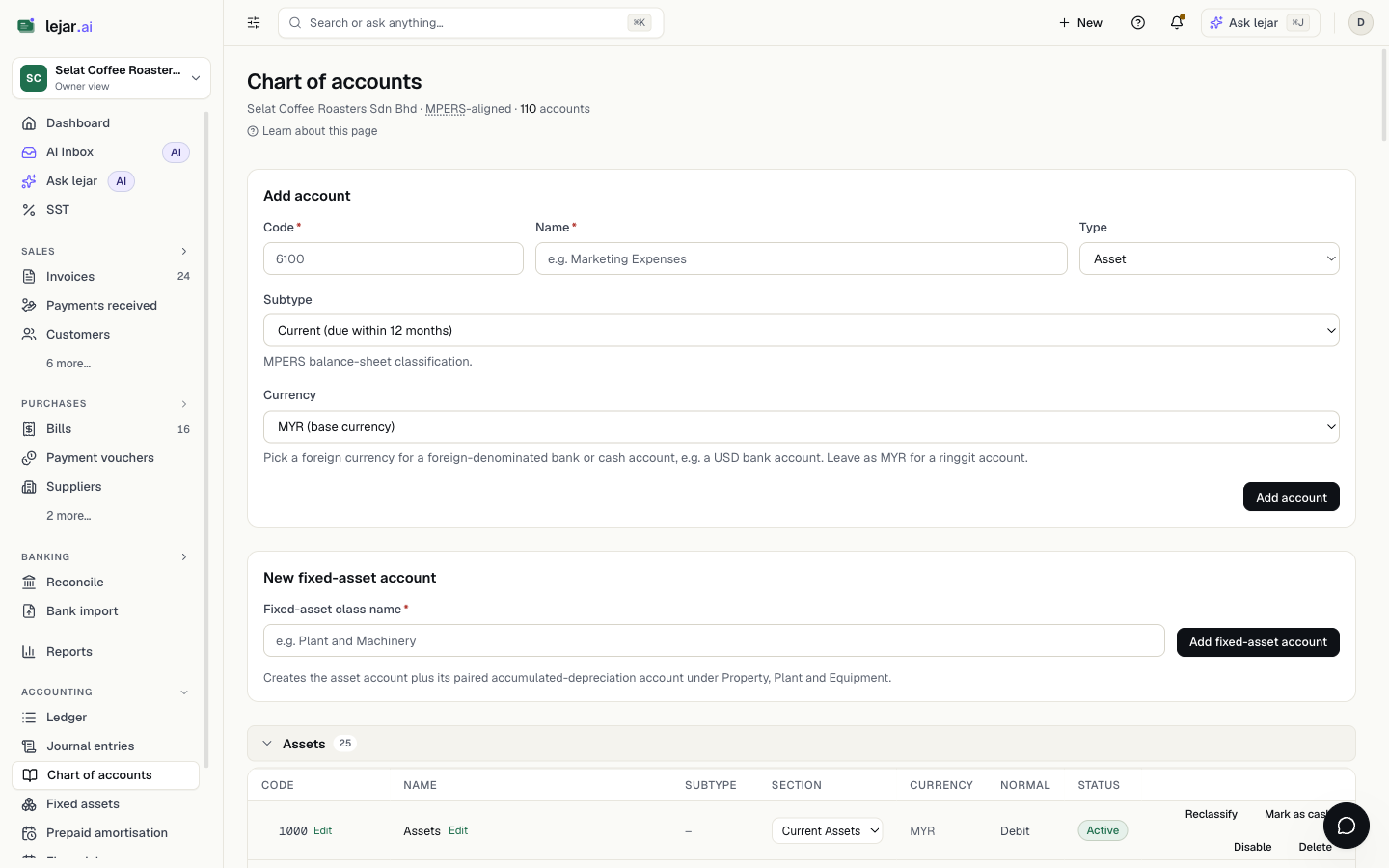
Lejar (ai‑first accounting for Malaysian small businesses) is a cloud‑native double‑entry bookkeeping platform built specifically for the Malaysian regulatory environment. From the moment a user signs up the system is pre‑wired with the MPERS chart of accounts and bi‑monthly SST‑02 filing, so there is no separate configuration step to make the software compliant.
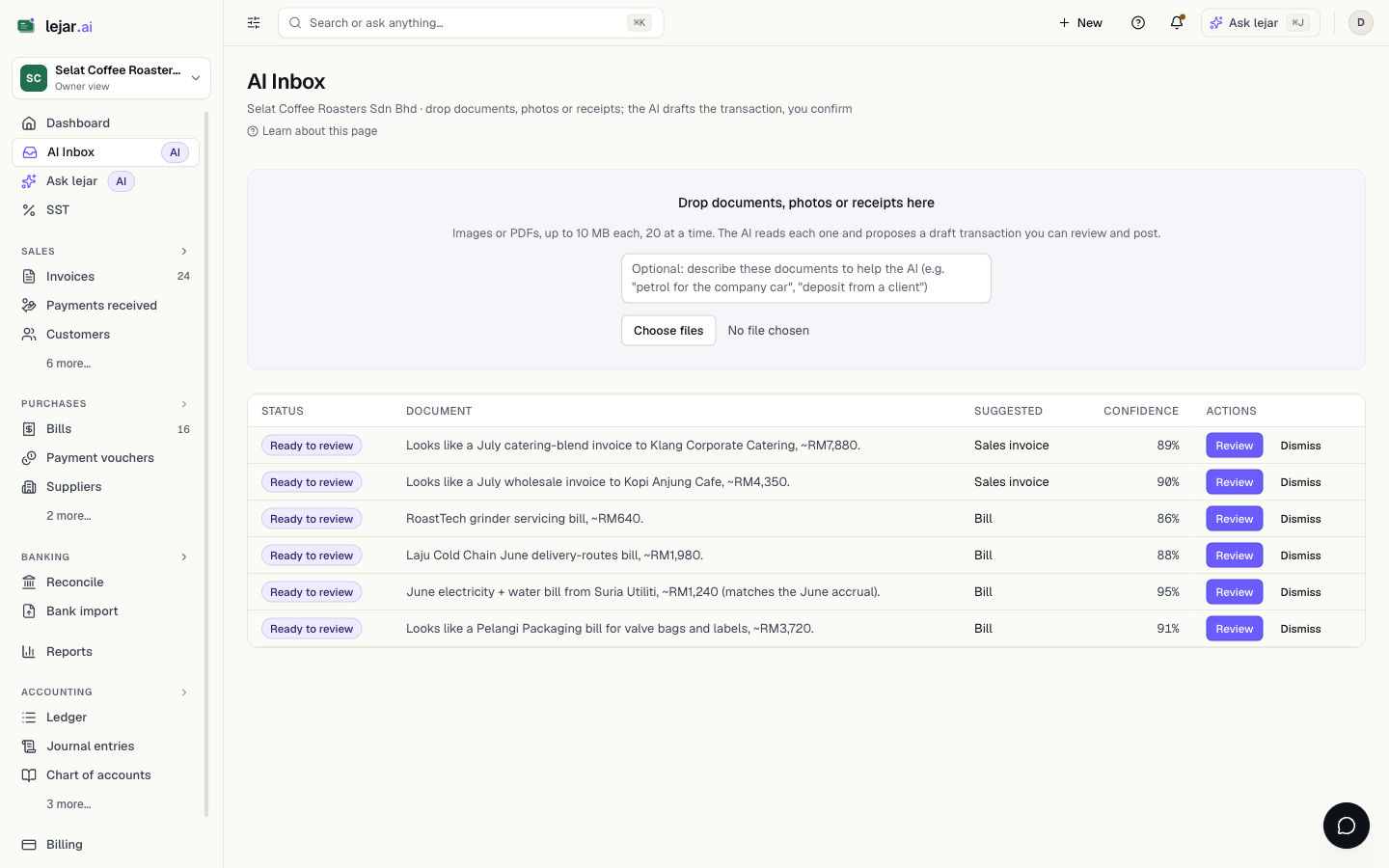
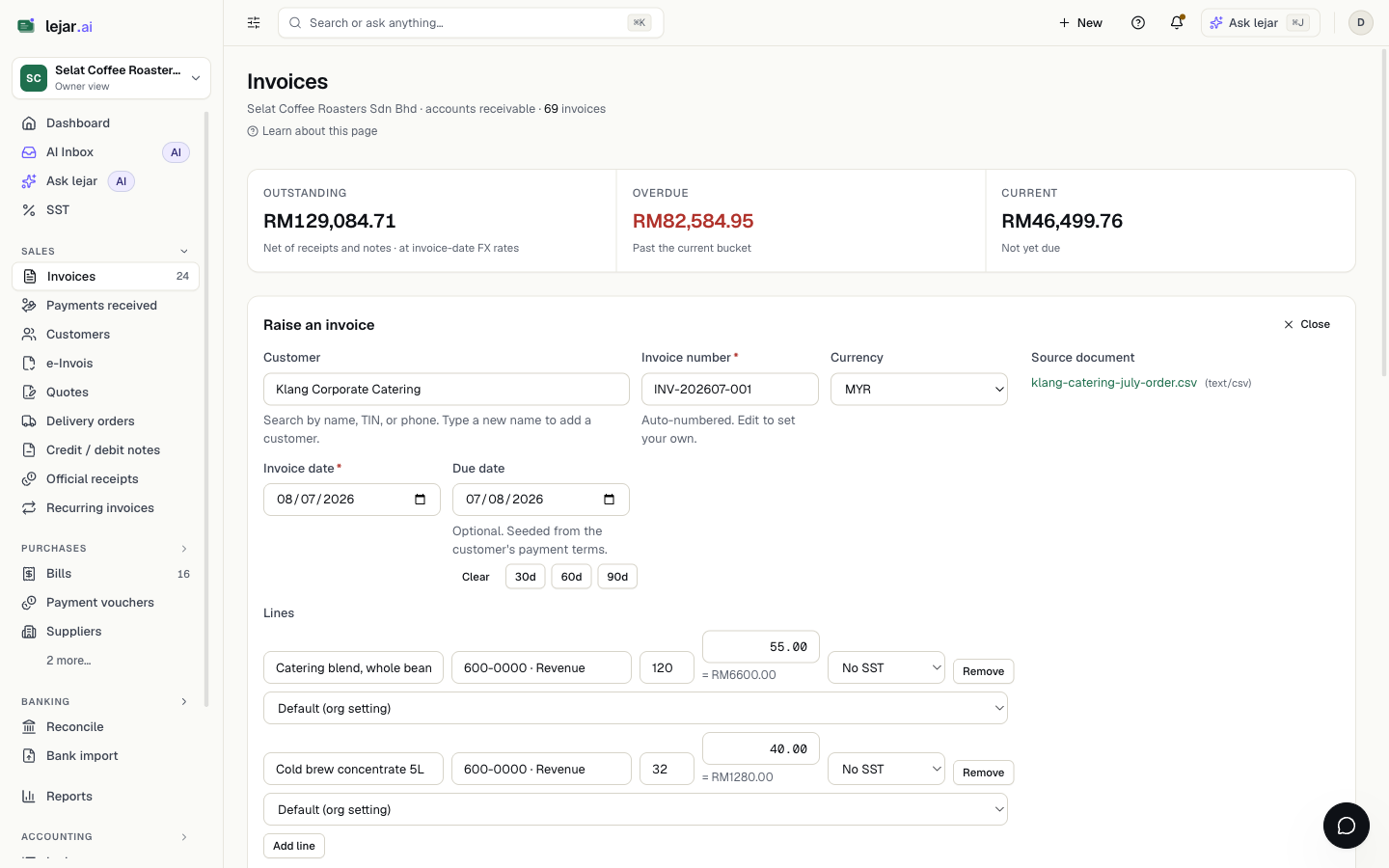
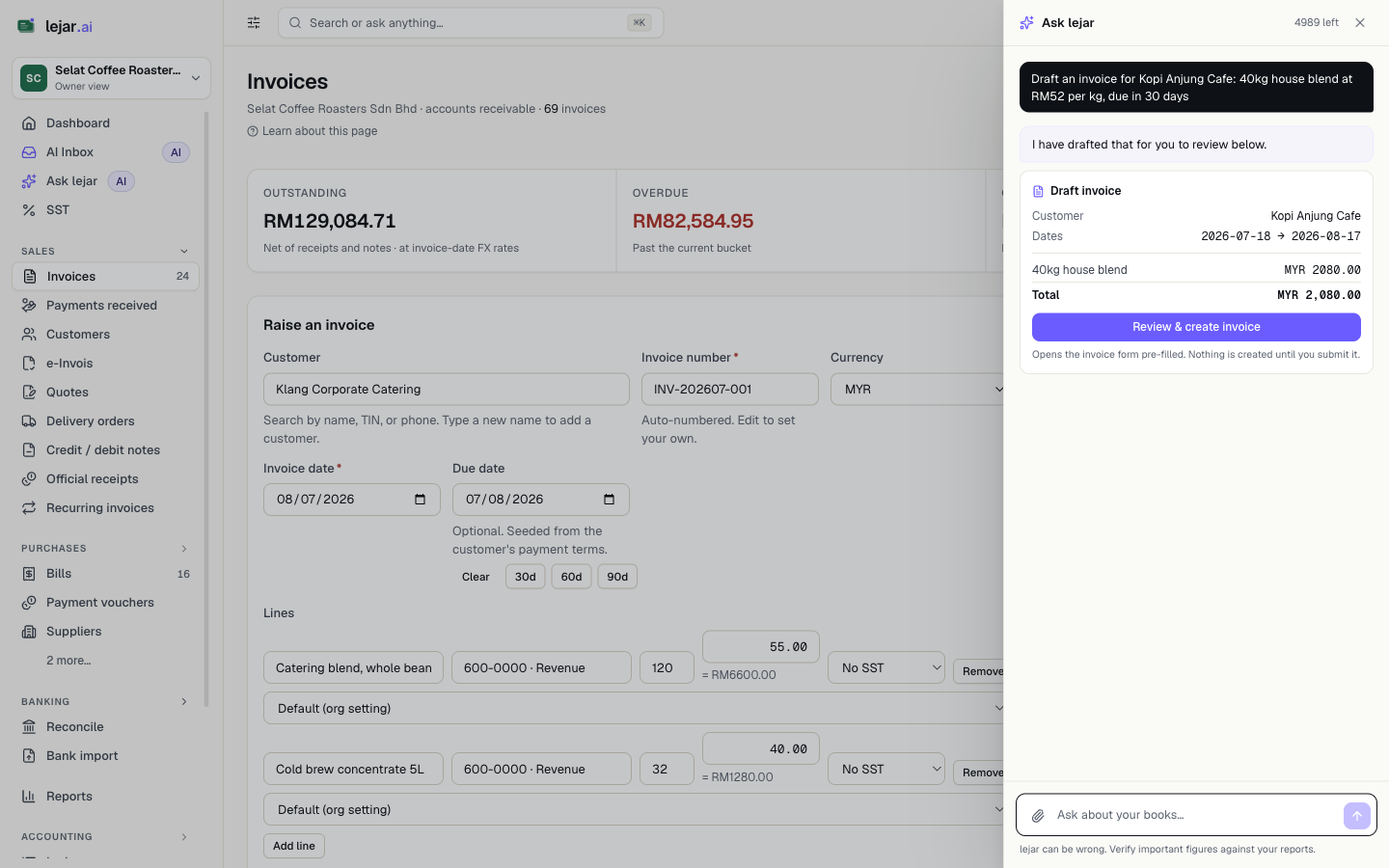
The core workflow revolves around the AI Inbox: a user drags a receipt, invoice or bill into the inbox and the AI reads the document, extracts the relevant data and drafts a complete journal entry, line‑by‑line, against the appropriate accounts. Every draft is presented in a review queue; the user or accountant must click “post” before the entry is committed to the ledger. This “draft‑then‑approve” model guarantees that the AI never posts autonomously, while still eliminating the tedious data‑entry task.
Lejar also supports bank‑statement imports (PDF or CSV). The AI matches each transaction to the correct accounts, pre‑checks high‑confidence lines and leaves uncertain items for manual review. Users can manage multiple legal entities under a single login; each entity has its own set‑of books but shares a flat‑rate subscription, avoiding per‑entity licensing fees.
Security and privacy are baked in: all data is encrypted in transit and at rest, row‑level security isolates each company’s records, and an immutable audit log records every change. The AI memory—corrections and supplier patterns—remains inside the organisation; users can view or delete it at any time to stay compliant with Malaysia’s PDPA.
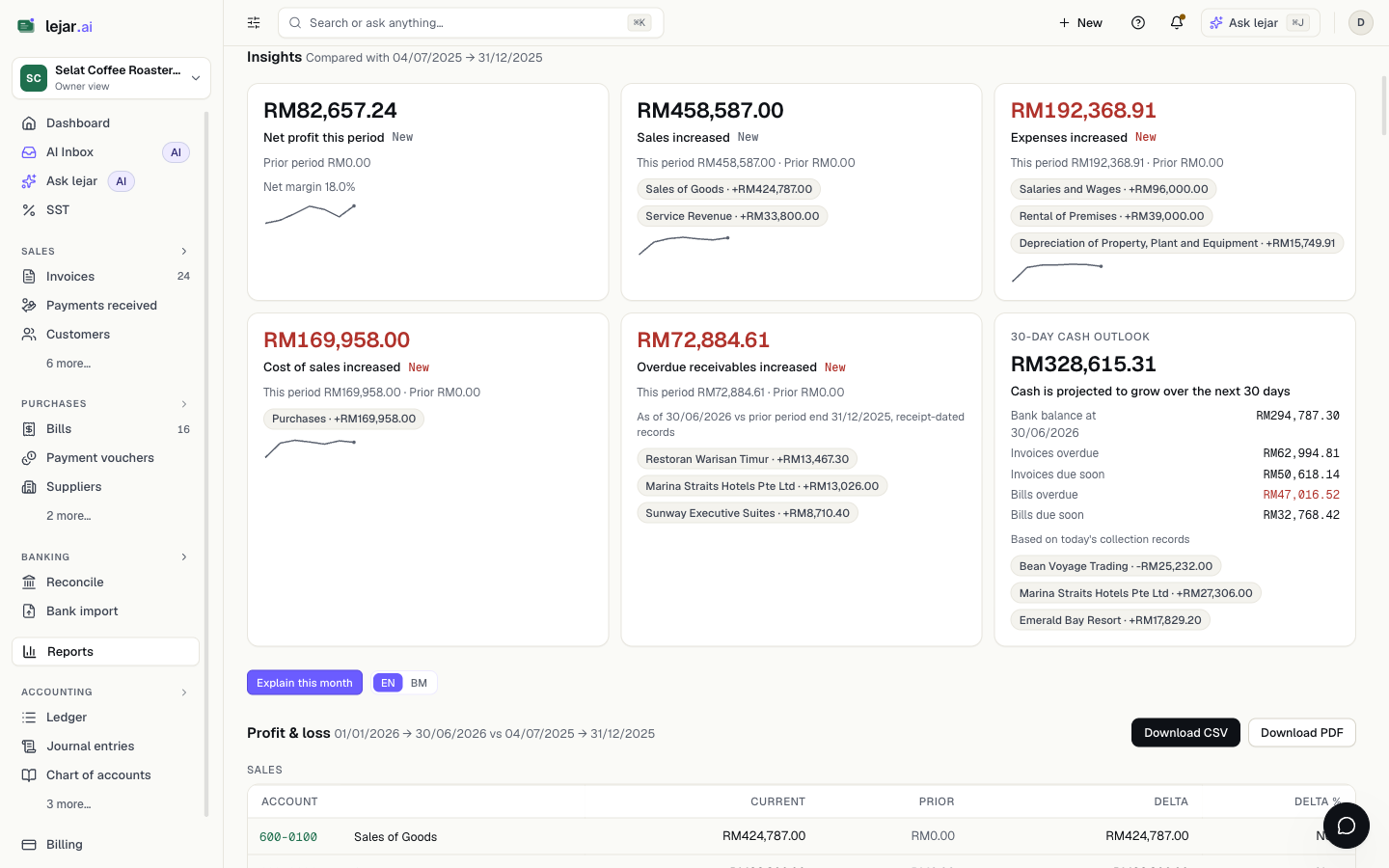
Reporting includes automatically generated profit‑and‑loss, balance‑sheet and cash‑flow statements, multi‑currency handling, fixed‑asset depreciation and real‑time reconciliation. Plans range from a free tier (one entity, 30 AI credits per month) to Starter, Business and Pro tiers that add more entities, higher AI credit limits, multi‑currency and advanced reporting. Every paid plan includes the AI bookkeeping assistant, bi‑monthly SST‑02 filing and the MPERS chart of accounts, with e‑invoicing (MyInvois) slated to launch free on all tiers.
In short, Lejar lets Malaysian SMEs stop manually entering data, stay compliant out of the box, and retain full control over every financial record while the AI handles the heavy‑lifting.
Features
- AI‑driven data entry: receipts, invoices, bills and bank statements are scanned and drafted into journal entries
- Review queue – every draft must be approved before posting (no autonomous posting)
- Built‑in Malaysian compliance: MPERS chart of accounts & bi‑monthly SST‑02 filing pre‑wired
- Upcoming free MyInvois e‑invoicing integration (available on all plans)
- Unlimited entities under a single flat‑rate subscription; switch between ledgers instantly
- Multi‑currency accounting, fixed‑asset depreciation, bank‑statement reconciliation
- Real‑time financial reports: profit & loss, balance sheet, cash‑flow, aged receivables/payables
- Role‑based permissions, optional two‑factor authentication, row‑level security per entity
- End‑to‑end encryption (in‑transit & at‑rest) and immutable audit log for every change
- Private AI memory: corrections and supplier patterns stay inside your organization; can be viewed or deleted at any time
- AI credit allocations per plan (Free 30 credits, Starter 300, Business 1 500, Pro 5 000) for drafting entries and chat queries
- Free tier includes one entity, AI drafting, bank import, basic reports – no credit‑card required
- Paid plans add more entities, higher AI credits, multi‑currency, advanced reporting and priority support.
Use Cases
- Solo freelancer / sole‑proprietor – Upload daily receipt photos; AI drafts entries, user approves, then files a single‑entity tax return with SST‑02 automatically generated.
- Micro‑SME with multiple subsidiaries – One login gives separate ledgers for each company; all share a flat subscription, eliminating per‑entity licences.
- Startup preparing for seed round – Quickly produce audit‑ready P&L, balance sheet and cash‑flow statements for investors without hiring an accountant.
- Accountant managing several clients – Central dashboard shows pending AI drafts from each client; accountant approves in batch, then pushes finalized books to each client’s portal.
- Retail shop integrating bank feeds – Import monthly bank statements; AI matches transactions, flags low‑confidence matches for manual review, then reconciles automatically.
- Export‑focused business handling multi‑currency – Record foreign‑currency invoices; AI calculates realised/unrealised FX and reflects it in the consolidated reports.
- Company transitioning from Xero – Import historical data, let AI re‑draft missing entries, then run compliance reports to verify MPERS and SST‑02 accuracy.
- Finance team needing role‑based access – Grant bookkeepers entry‑draft rights, senior accountants posting rights, and executives view‑only dashboards.
- Business that must comply with PDPA – All documents stay encrypted; AI memory can be exported or deleted on demand for data‑privacy audits.
- Entrepreneur testing a new product line – Create a temporary entity, track income/expenses, and close the ledger with a single click when the pilot ends.
- Company preparing for audit – Use the immutable audit log to prove who posted each entry and when, with source documents attached to every transaction.

Comments











Lejar has great potential and offers some useful features, but I encountered a few issues that could be improved. Please contact me so I can share detailed feedback and suggest the changes I'd like to see. Email: [email protected]

The accounting data entry friction here is genuinely compelling. Most small business owners and freelancers struggle because doing books manually eats hours every month, staying compliant requires expertise they don't have, and hiring an accountant gets expensive fast. The traditional path means dreading tax season, losing visibility into actual cash flow, or paying thousands in professional fees. Lejar removes that friction entirely by turning document scanning into journal entries that you just review and approve. Being able to upload receipts and bank statements, then have the AI handle the tedious matching and entry work transforms what felt like a painful monthly chore into something you actually control. For solopreneurs and small teams especially, that ability to maintain accurate books without becoming an accountant yourself is what changes the game from anxiety-inducing to genuinely manageable.

The review-queue design (no autonomous posting) seems like the right call for accounting, where a wrong journal entry is worse than a slow one. The MPERS chart of accounts and SST-02 pre-wiring is a strong wedge for the Malaysian market. Curious whether the confidence score on each draft is calibrated enough that users can safely batch-approve the 95%+ ones.

The compliance-by-default framing gets the attention, but the quietly hard part is the multi-entity model — separate books per entity under a shared chart of accounts on one flat subscription. That's exactly what holdcos and agencies need, and it's the thing most SMB tools refuse to build because the data model is a nightmare. If that piece is solid you're not really competing with bookkeeping apps, you're competing with the spreadsheet-plus-accountant setup those users actually run today. Much better fight to pick.


Premium Products































Sponsors
Buy

Awards
View all
Awards
View allMakers

Makers
Comments
Lejar has great potential and offers some useful features, but I encountered a few issues that could be improved. Please contact me so I can share detailed feedback and suggest the changes I'd like to see. Email: [email protected]
The accounting data entry friction here is genuinely compelling. Most small business owners and freelancers struggle because doing books manually eats hours every month, staying compliant requires expertise they don't have, and hiring an accountant gets expensive fast. The traditional path means dreading tax season, losing visibility into actual cash flow, or paying thousands in professional fees. Lejar removes that friction entirely by turning document scanning into journal entries that you just review and approve. Being able to upload receipts and bank statements, then have the AI handle the tedious matching and entry work transforms what felt like a painful monthly chore into something you actually control. For solopreneurs and small teams especially, that ability to maintain accurate books without becoming an accountant yourself is what changes the game from anxiety-inducing to genuinely manageable.
The review-queue design (no autonomous posting) seems like the right call for accounting, where a wrong journal entry is worse than a slow one. The MPERS chart of accounts and SST-02 pre-wiring is a strong wedge for the Malaysian market. Curious whether the confidence score on each draft is calibrated enough that users can safely batch-approve the 95%+ ones.
The compliance-by-default framing gets the attention, but the quietly hard part is the multi-entity model — separate books per entity under a shared chart of accounts on one flat subscription. That's exactly what holdcos and agencies need, and it's the thing most SMB tools refuse to build because the data model is a nightmare. If that piece is solid you're not really competing with bookkeeping apps, you're competing with the spreadsheet-plus-accountant setup those users actually run today. Much better fight to pick.
Premium Products
New to Fazier?

Find your next favorite product or submit your own. Made by @FalakDigital.
Copyright ©2026. All Rights Reserved