
Zıpır
Turn any document into a source-cited video lesson
Zıpır turns a document into a narrated, subtitled video lesson — with the source visible on screen. Upload a PDF, Word file, Markdown or plain text; Zıpır reads it line by line and binds every on-screen sentence to the exact page and line it came from. A second model checks that each quote actually exists in your source, and no frame is generated until you approve the scene plan.
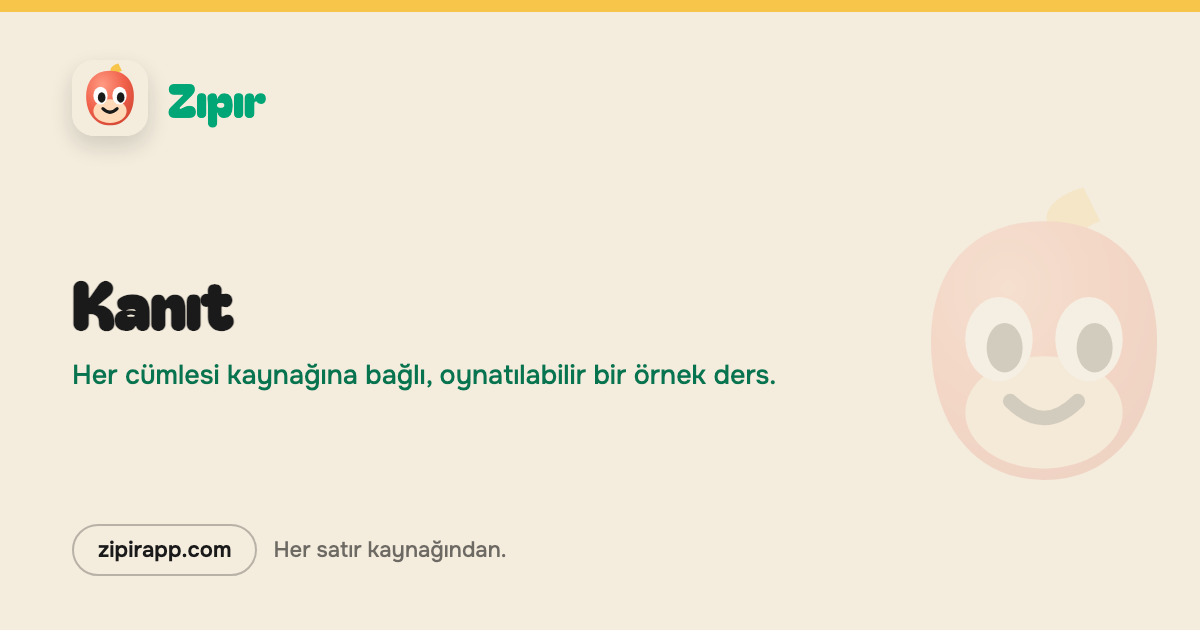
This is not a marketing video or a talking head. It is a lesson built from your own text: procedures, manuals, guidelines, articles. Every scene shows its citation (for example "6331.pdf, p. 4, line 6"), and a proof report is produced alongside the finished video.
Twelve visual formats are available — whiteboard, 3D cross-section, document tour, timeline, map story, mascot narration and more — so the same source can be presented differently for different audiences.
Built for in-house training, OHS and compliance teams, companies with manuals nobody reads, and instructional design agencies. Output is video only for now; interactive videos and quizzes are on the roadmap. Zıpır quotes documents, it does not interpret law, and it never trains models on your documents.
Features
Every on-screen sentence is a verbatim quote, with page and line shown
A second model verifies each quote exists in the source before rendering
You approve the scene plan; no frame is generated without it
12 visual formats: whiteboard, 3D cross-section, document tour, timeline, map story, mascot and more
Turkish narration and a Turkish subtitle track baked into the MP4
Fix a single frame without regenerating the rest of the video
Proof report generated with the finished video
Input: PDF, Word, Markdown or plain text
Use Cases
OHS and compliance teams turning procedures into training people actually watch
Companies with manuals and guidelines nobody reads
Instructional designers producing a lesson from a client document
Educators converting articles and chapters into narrated lessons
Onboarding: a new hire watches the policy instead of skimming it

Comments

Zıpır started from a boring problem: the documents that matter at work — procedures, OHS rules, guidelines — do not get read, and the videos meant to replace them quietly drop the source. So every sentence Zıpır puts on screen is a verbatim quote with its page and line, a second model checks that the quote exists in the document, and no frame is rendered before you approve the scene plan. The proof report ships with the video. Happy to answer anything about the citation pipeline, the twelve visual formats, or where this breaks.


Binding every on-screen sentence to a page and line, plus a second model that checks each quote exists, tackles the biggest trust problem with AI training videos. How do you handle procedures where the key steps live in a table or a diagram rather than running text? Is the citation still page and line, or does it point to the cell or figure? Also curious whether narration in other languages is planned, since many compliance teams train staff in several languages from a single source document.
aj-36 Fair point, and it is a real gap rather than a wording issue. Today a citation is page + line of the text layer, so a multi-column page or a table row can point at the right page and the wrong spot. Tables are already detected and preferred over surrounding prose when a document mixes them, so the steps get narrated instead of the legal boilerplate, but the citation they carry is still the page, not the cell. Flagging that in the proof report - this quote lives in a table or a multi-column block, check the source - is the right fix and is on the list. Until it ships we would rather say it out loud than let a page-line number imply precision we do not have.
Nland S Two good questions. On tables and diagrams: the key steps do not have to be running text. When a document mixes prose with a table, the table is detected and preferred over the surrounding boilerplate, so the steps get narrated rather than the legal preamble. What the citation says today is the page, not the cell or the figure number, and that is the honest weak spot, especially on multi-column pages. Pointing at the cell/figure where the format allows it is the next step, and until then we mark table-sourced quotes as check-the-source in the proof report rather than implying cell-level precision. On languages: this is the same source document, re-narrated and re-subtitled rather than re-shot. Narration carries its own language field and the voice catalogue already holds English voices next to the Turkish ones, so English is the next one out. Spanish and French after that, because for a compliance team the whole point is one document, several languages, one approved scene plan.
Premium Products









































Makers
Makers
Comments
Zıpır started from a boring problem: the documents that matter at work — procedures, OHS rules, guidelines — do not get read, and the videos meant to replace them quietly drop the source. So every sentence Zıpır puts on screen is a verbatim quote with its page and line, a second model checks that the quote exists in the document, and no frame is rendered before you approve the scene plan. The proof report ships with the video. Happy to answer anything about the citation pipeline, the twelve visual formats, or where this breaks.
Binding every on-screen sentence to a page and line, plus a second model that checks each quote exists, tackles the biggest trust problem with AI training videos. How do you handle procedures where the key steps live in a table or a diagram rather than running text? Is the citation still page and line, or does it point to the cell or figure? Also curious whether narration in other languages is planned, since many compliance teams train staff in several languages from a single source document.
aj-36 Fair point, and it is a real gap rather than a wording issue. Today a citation is page + line of the text layer, so a multi-column page or a table row can point at the right page and the wrong spot. Tables are already detected and preferred over surrounding prose when a document mixes them, so the steps get narrated instead of the legal boilerplate, but the citation they carry is still the page, not the cell. Flagging that in the proof report - this quote lives in a table or a multi-column block, check the source - is the right fix and is on the list. Until it ships we would rather say it out loud than let a page-line number imply precision we do not have.
Nland S Two good questions. On tables and diagrams: the key steps do not have to be running text. When a document mixes prose with a table, the table is detected and preferred over the surrounding boilerplate, so the steps get narrated rather than the legal preamble. What the citation says today is the page, not the cell or the figure number, and that is the honest weak spot, especially on multi-column pages. Pointing at the cell/figure where the format allows it is the next step, and until then we mark table-sourced quotes as check-the-source in the proof report rather than implying cell-level precision. On languages: this is the same source document, re-narrated and re-subtitled rather than re-shot. Narration carries its own language field and the voice catalogue already holds English voices next to the Turkish ones, so English is the next one out. Spanish and French after that, because for a compliance team the whole point is one document, several languages, one approved scene plan.
Premium Products
New to Fazier?

Find your next favorite product or submit your own. Made by @FalakDigital.
Copyright ©2026. All Rights Reserved