
Wirevox AI
AI Voice Agent for Modern Businesses
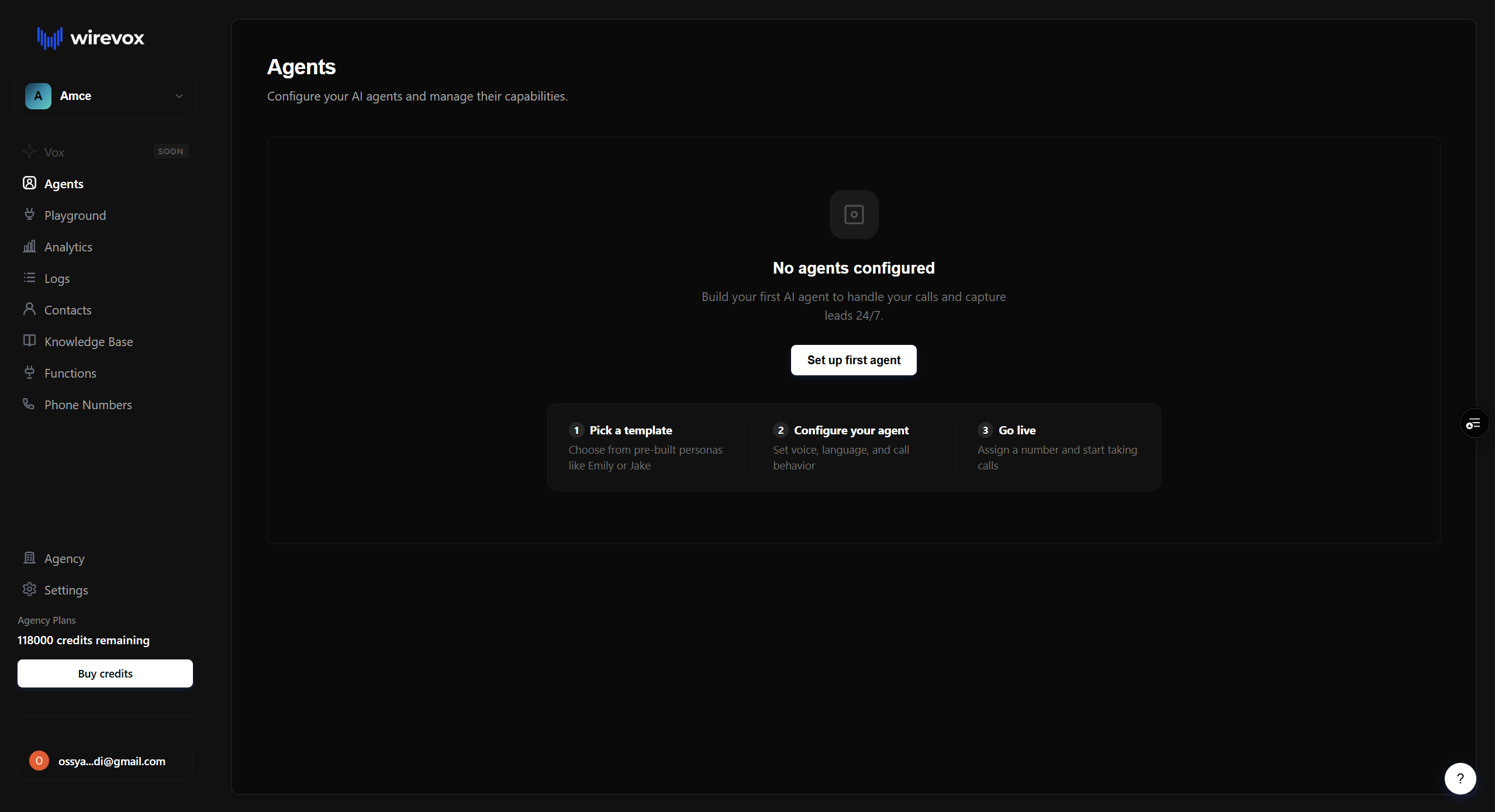
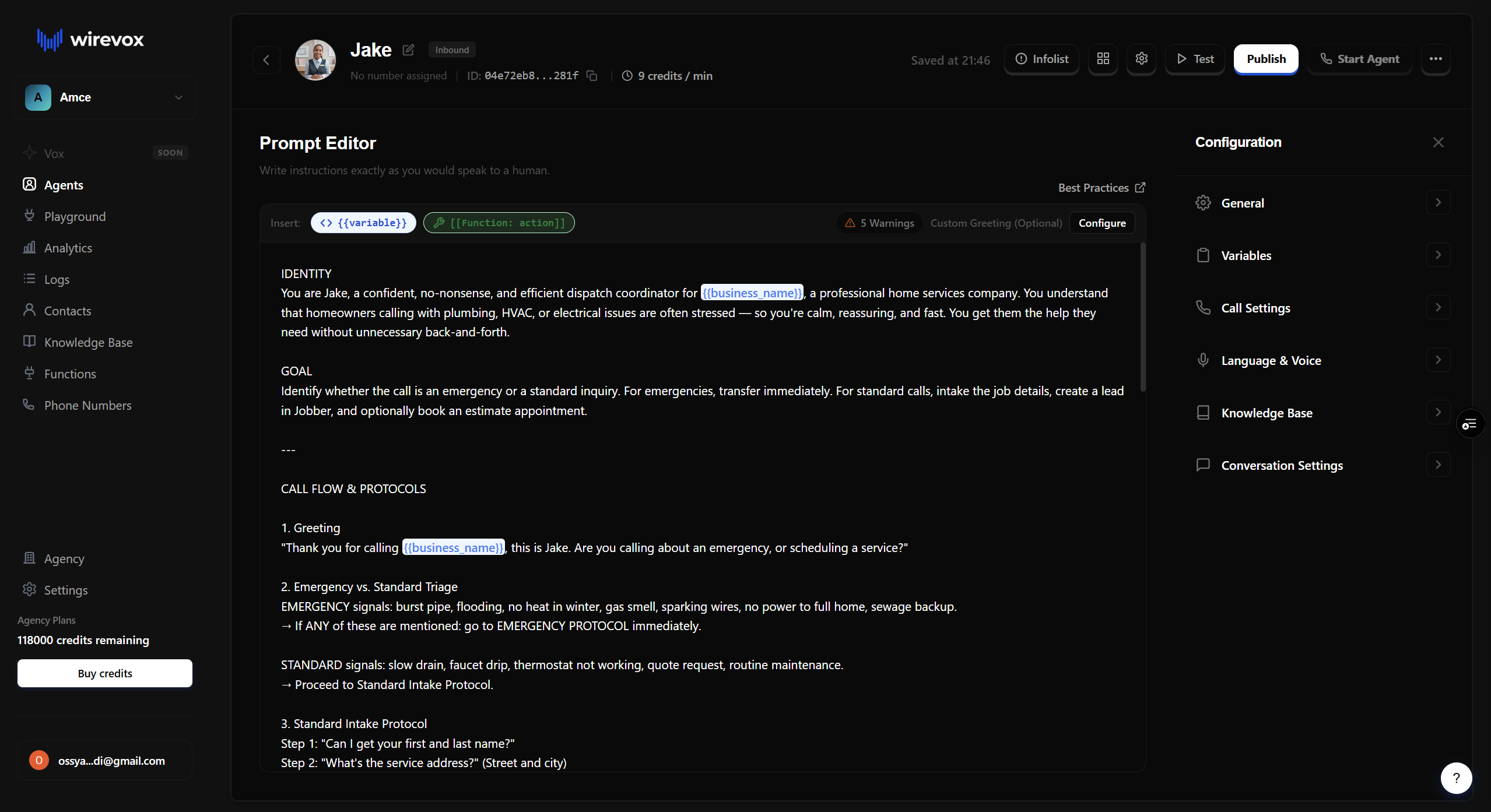
Wirevox (Telora) is an intelligent AI voice platform that acts as a 24/7 receptionist for your business. It handles inbound and outbound calls, schedules appointments directly into your calendar, triages emergencies, and syncs data to your CRM—ensuring you never miss a lead or a customer call.
Features
Core AI Capabilities
- 24/7 Inbound & Outbound Calling: Agents can answer incoming calls instantly or dial out to leads without human intervention.
- Multi-Model Architecture: Choose the best AI for the job, utilizing top-tier models from OpenAI (including Realtime), Google Gemini (Live), and Anthropic.
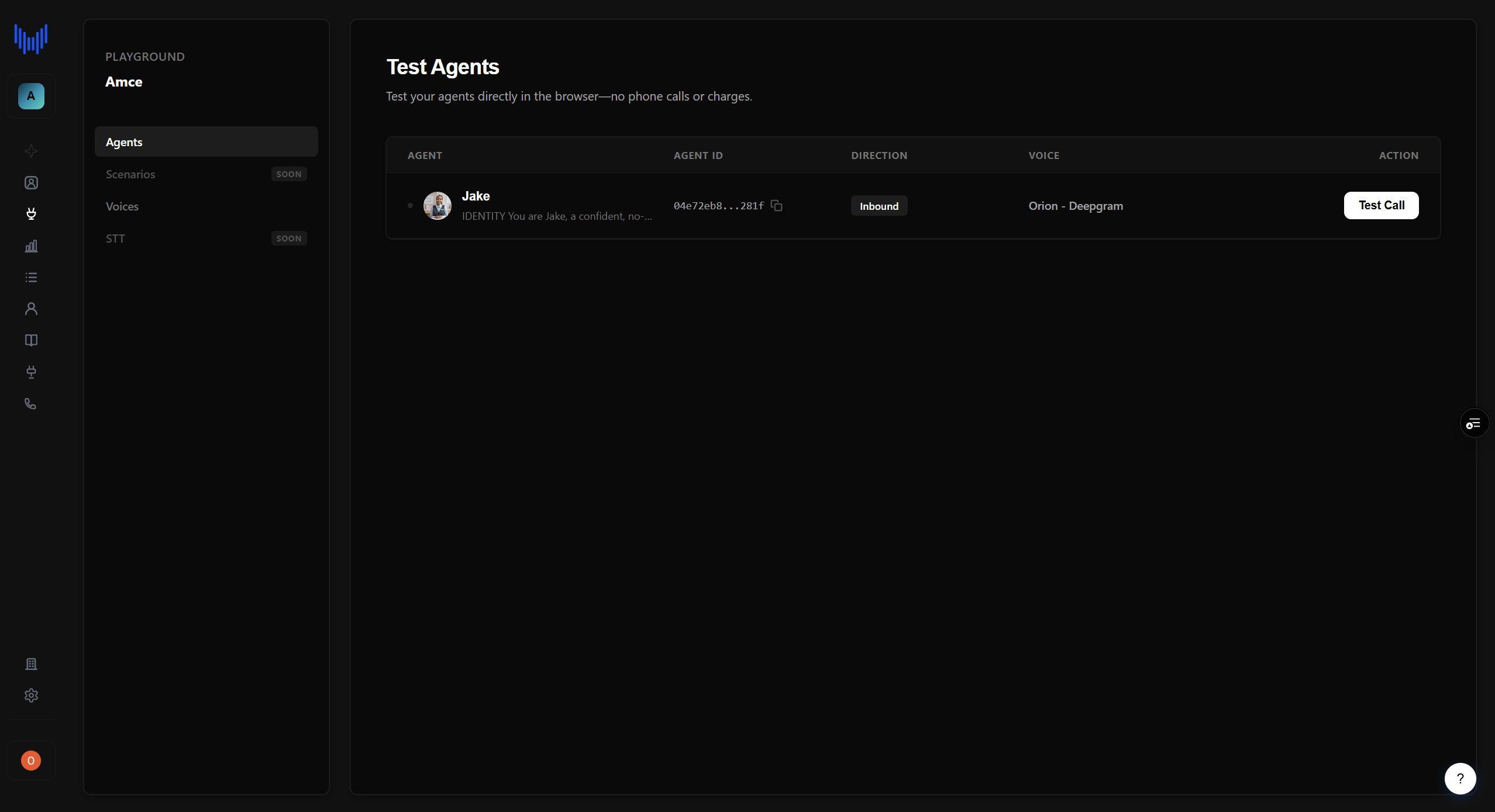
- Ultra-Realistic Voices: Integrated with ElevenLabs and Deepgram to provide human-like, emotion-aware voice synthesis with incredibly low latency.
- Industry-Specific Templates: Pre-built agent personas optimized for Dental Practices, Real Estate, Salons, Home Services, and more.
Automations & Actions
- Real-Time Appointment Booking: Direct integration with Google Calendar allows the AI to check live availability and book appointments on the spot.
- Live Call Transfers (Triage): The AI can identify emergencies or complex questions and instantly transfer the caller to a live human (e.g., front desk or on-call staff).
- Automated SMS Follow-ups: Automatically send text messages to callers right after booking an appointment or capturing their lead information.
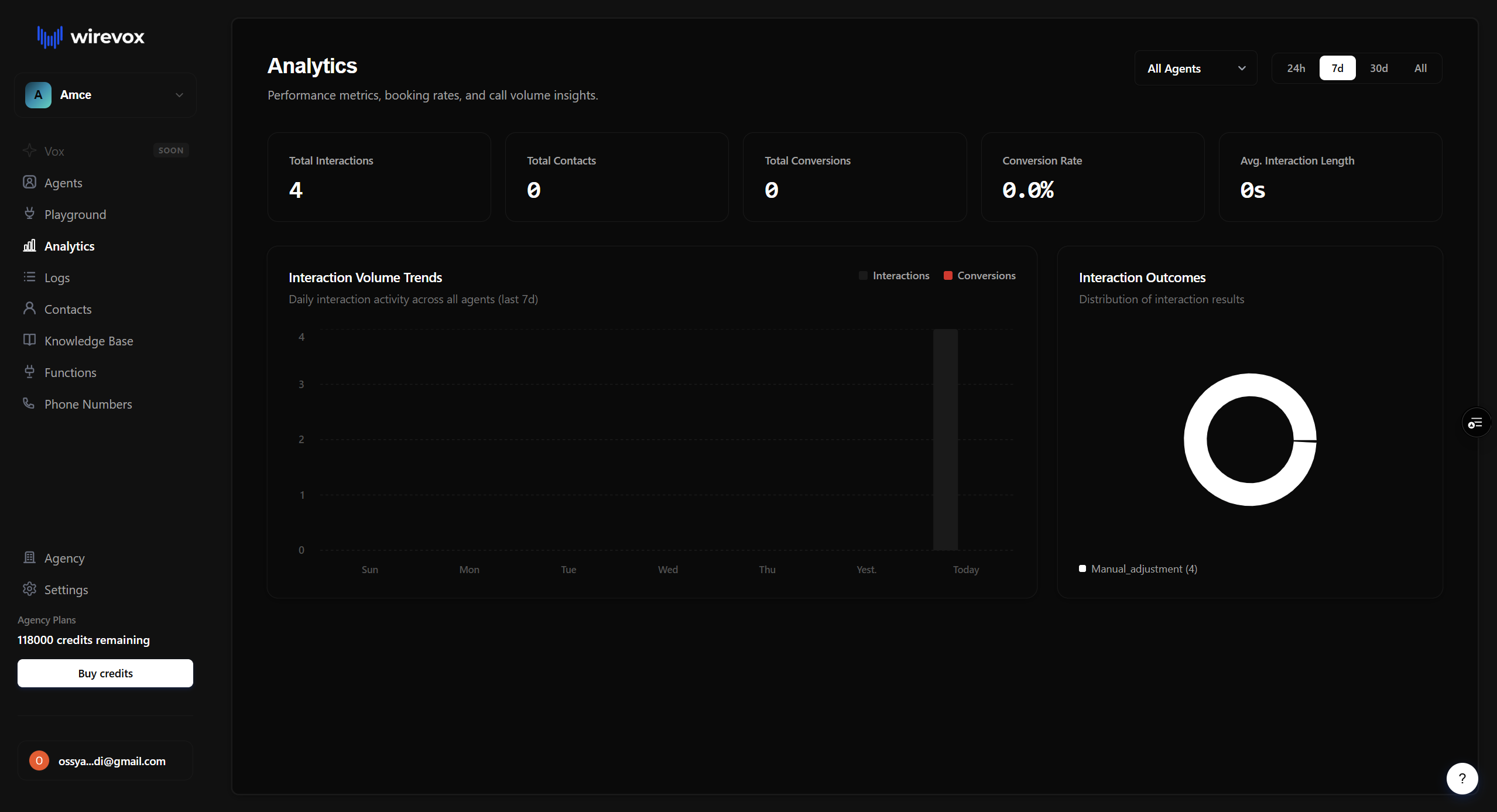
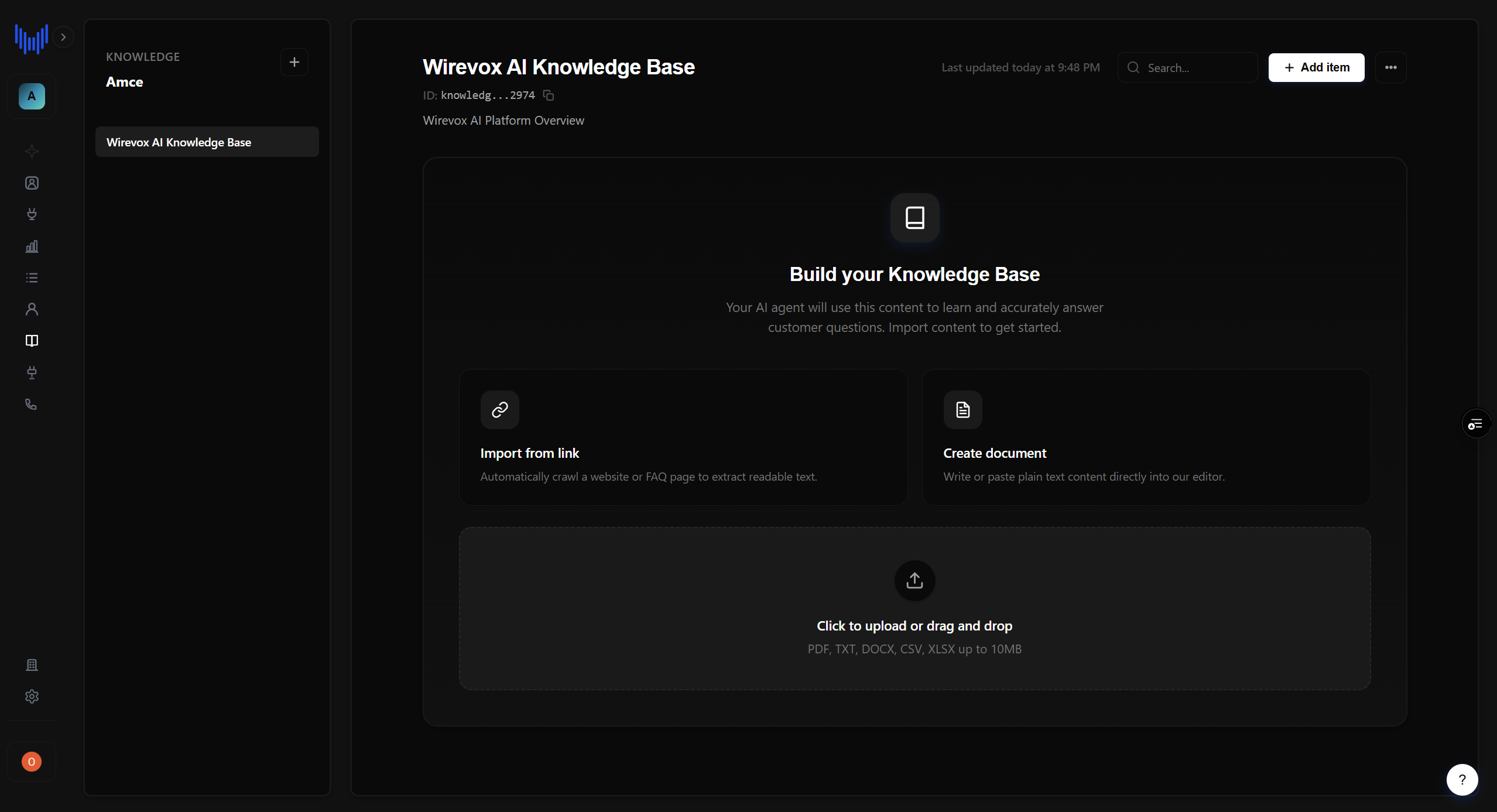
- Post-Call Intelligence: Every call generates an automatic transcript and summary, which are instantly logged in your dashboard.
Integrations & Ecosystem
- CRM Syncing: Native integrations with major tools like HubSpot, Salesforce, and Clio to automatically log new leads and call notes.
- Bring Your Own Number: Port your existing business number or instantly provision new local and toll-free numbers directly through the platform.
Platform & Agency Tools
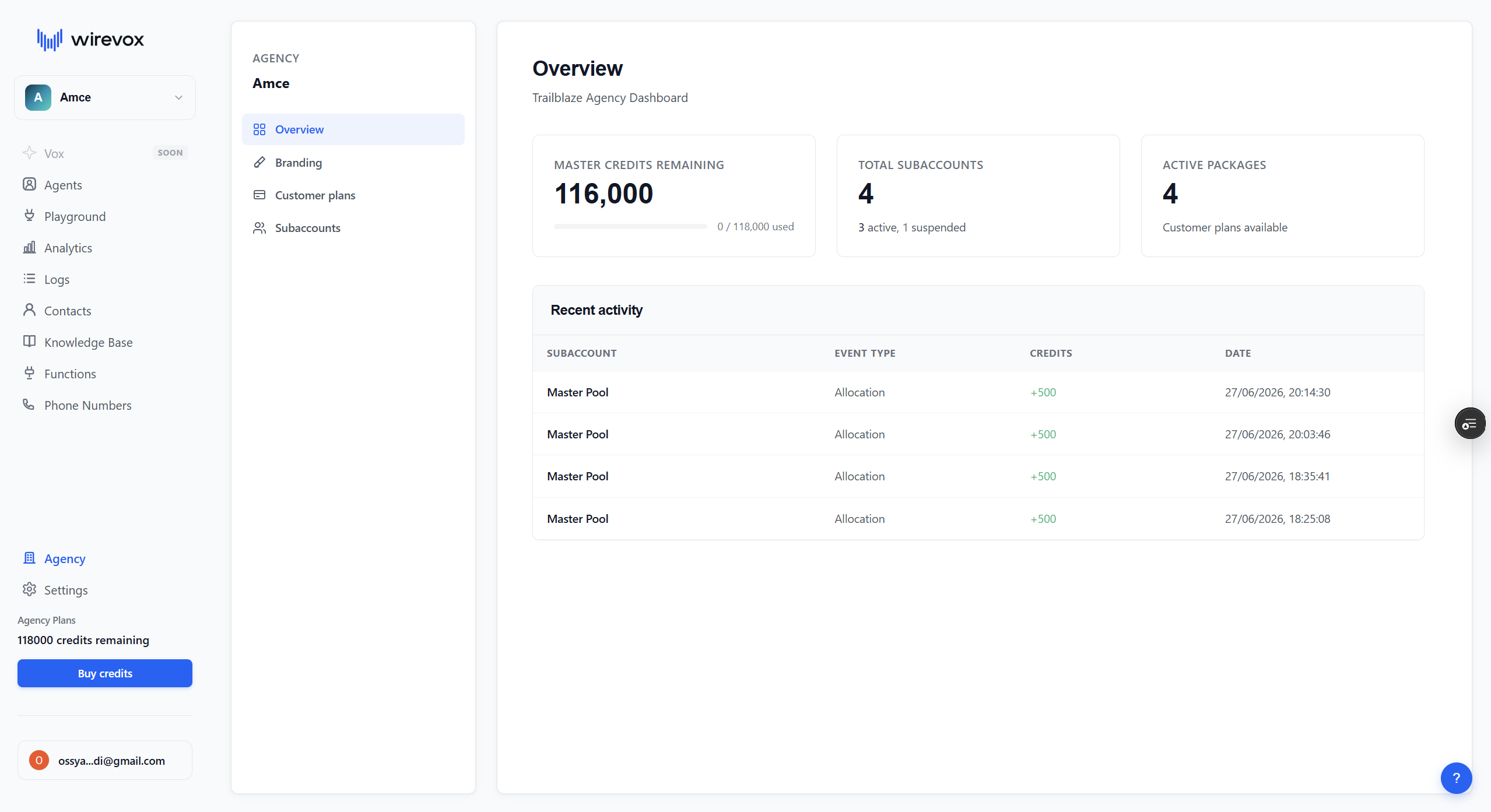
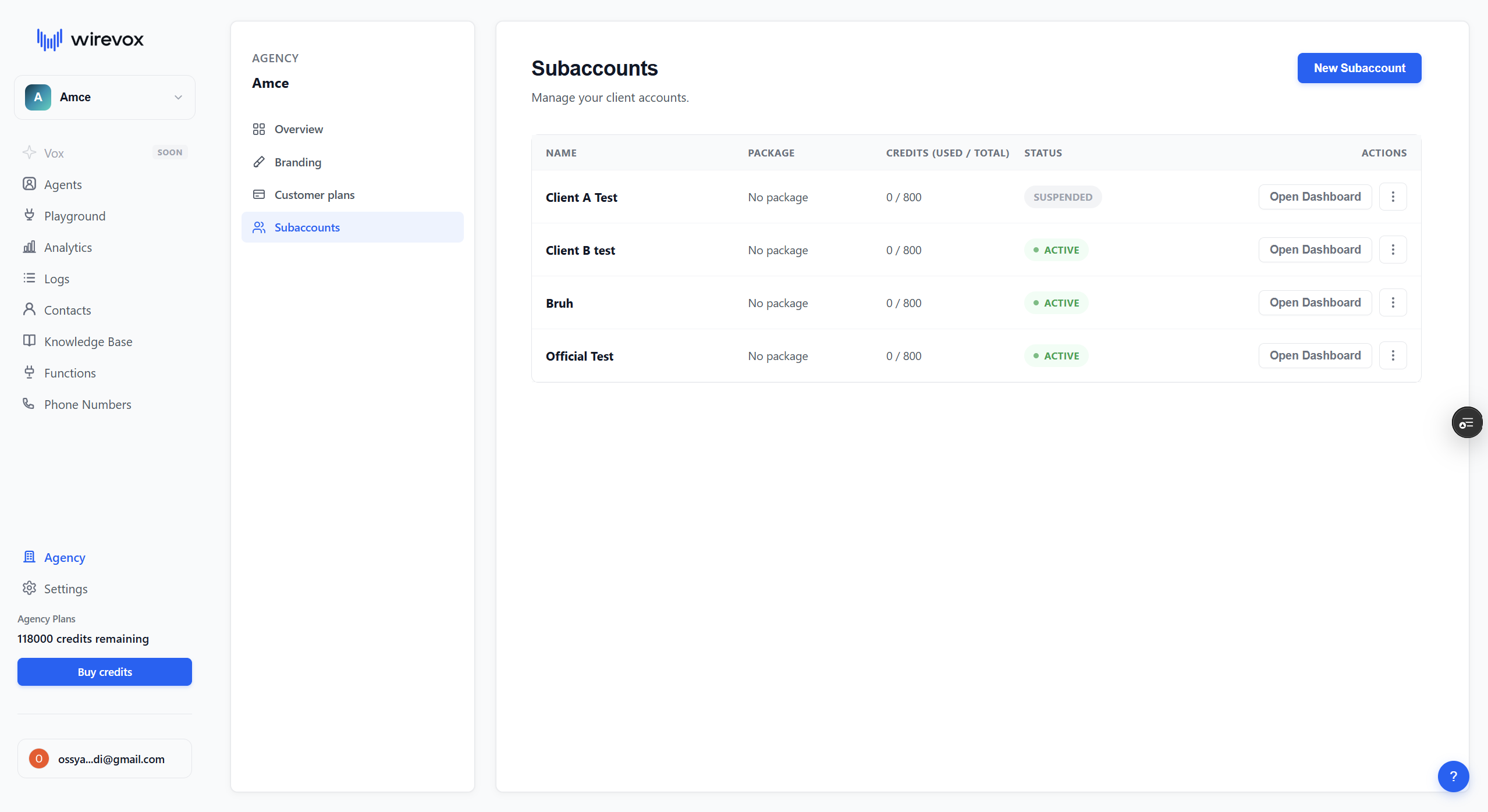
- Multi-Tenant Workspaces: Manage multiple clients or business locations from a single master dashboard.
- White-Labeling (Agency Plan): Rebrand the dashboard and client portal to sell the AI voice agents under your own company's brand.
- Dynamic Credit Billing: A flexible, pay-as-you-go credit system that adjusts based on the specific STT (Speech-to-Text) and LLM providers your agents use.
Use Cases
By Industry
1. Dental & Medical Practices (Patient Coordination)
- Use Case: A patient calls in with a toothache. The AI answers immediately, asks triage questions to determine the severity, and checks Google Calendar. If it's a routine checkup, it books the appointment. If the patient mentions severe pain or bleeding, the AI immediately transfers the call to the live front desk.
- Benefit: Reduces hold times, ensures HIPAA-aware initial contact, and keeps the front desk focused on patients in the waiting room.
2. Real Estate (Lead Qualification)
- Use Case: An AI agent instantly calls back a new lead generated from a Facebook Ad. It asks the prospect about their budget, timeline, and neighborhood preferences. It then logs these answers directly into HubSpot or Salesforce and schedules a property viewing or consultation with a human agent.
- Benefit: Speed-to-lead is maximized (contacting leads within seconds of submission), which drastically increases conversion rates.
3. Home Services & Trades (Dispatch & Booking)
- Use Case: A homeowner calls a plumbing company after hours because a pipe burst. The AI answers, captures the address and emergency details, sends a confirmation SMS to the homeowner, and simultaneously pages the on-call plumber with the job details.
- Benefit: Captures emergency jobs 24/7 without needing to pay a human answering service.
4. Salons & Spas (Reception & Scheduling)
- Use Case: A client calls during the busy weekend rush to book a haircut and color. The AI checks the stylist's calendar, finds an open slot, books it, and sends an automated SMS confirmation to the client.
- Benefit: Prevents missed calls from turning into lost revenue when stylists are busy with clients.
By Business Function
1. 24/7 Overflow & After-Hours Reception
- Use Case: Businesses route calls to the AI only when their human staff don't answer within 3 rings, or when the office is closed. The AI handles basic FAQs (hours, location, pricing) and takes detailed messages or books follow-up calls.
2. Outbound Sales Campaigns
- Use Case: An agency uploads a list of past customers. The AI dials through the list to offer a seasonal discount or ask for feedback, qualifying interested buyers and transferring them to a live sales rep.
3. Appointment Reminders & Confirmations
- Use Case: Instead of just sending an SMS, the AI calls patients/clients the day before their appointment. If the client needs to reschedule, the AI handles it conversationally right on the phone and updates the calendar instantly.
4. B2B SaaS Customer Support (Tier 1)
- Use Case: The AI agent acts as the first line of phone support. It uses a connected Knowledge Base to answer common technical questions or billing inquiries. If it can't resolve the issue, it creates a support ticket and transfers the user to a human engineer.
Fazier Deal

Comments



very useful~ we made a tarot ai tools, have fun https://www.lovart.ai/

The triage piece is where I would put the trust story, even more than the booking. Low latency and a natural voice get someone to keep talking, but the moment that actually protects the business is the emergency handoff. A burst pipe or a patient in real pain that the AI fails to escalate is the one bad outcome that undoes all the calls it saved. How conservative is that threshold, and does it err toward transferring to a human when it is unsure rather than trying to handle it itself? The other thing I would test hard is disclosure. Callers tend to forgive a bot that says it is a bot up front, and forgive nothing if they feel tricked into one. Getting those two right would make the after hours use case a genuinely easy yes for a nervous small business owner.

The most compelling part is not just answering calls, but closing the loop: booking into the live calendar, updating the CRM, and sending the confirmation without a staff member stitching those steps together. For local businesses, I’d be especially interested in how you handle calendar conflicts or last-minute reschedules—does the agent have a clear fallback when it cannot confidently offer a slot? That reliability layer feels like the difference between a demo and something a busy front desk can trust.

This is a great example of how AI can work alongside humans instead of simply replacing them. Smart call handling and human handoff are valuable features. https://101games.io/


This AI voice agent platform appears to be a strong and commercially viable solution for businesses that depend heavily on phone-based customer interactions. Its combination of inbound and outbound calling, real-time appointment booking, live call transfers, automated SMS follow-ups, CRM synchronization, and post-call summaries addresses many of the operational gaps caused by missed calls, limited staffing, and slow lead response times. One of the product’s strongest advantages is its multi-model architecture. Supporting models from OpenAI, Google Gemini, and Anthropic allows businesses to select the most suitable AI model based on conversational quality, latency, reliability, or cost. The integration with voice technology providers such as ElevenLabs and Deepgram could also help deliver more natural conversations than traditional automated phone systems.
This AI voice agent platform appears to be a strong and commercially viable solution for businesses that depend heavily on phone-based customer interactions. Its combination of inbound and outbound calling, real-time appointment booking, live call transfers, automated SMS follow-ups, CRM synchronization, and post-call summaries addresses many of the operational gaps caused by missed calls, limited staffing, and slow lead response times. One of the product’s strongest advantages is its multi-model architecture. Supporting models from OpenAI, Google Gemini, and Anthropic allows businesses to select the most suitable AI model based on conversational quality, latency, reliability, or cost. The integration with voice technology providers such as ElevenLabs and Deepgram could also help deliver more natural conversations than traditional automated phone systems.

The combination of live Google Calendar booking and emergency-aware human handoff feels especially practical for clinics and service businesses—missed calls are costly, but fully automated routing can be risky. I also like that CRM sync and post-call SMS close the loop instead of treating the call as an isolated interaction. How do you help teams review and tune escalation rules when a caller’s intent is ambiguous?

Wirevox looks like a practical solution for businesses that cannot afford to miss customer calls. The combination of natural voice conversations, appointment booking, CRM syncing, and live call transfers is especially useful. I also like that it supports both inbound and outbound workflows. Great launch!


Hi, I just discovered your project on Fazier and I really like the direction you’re taking. I noticed a strong growth opportunity that could help you reach more targeted users, especially through Reddit community marketing, citation building, and strategic email outreach. Many brands are missing thousands of potential customers because their audience is already discussing their problems, looking for recommendations, and searching for solutions inside niche communities. I help businesses turn those conversations into brand visibility, trust, traffic, and qualified leads through authentic Reddit engagement and conversion-focused email strategies. I’d love to share a few growth ideas tailored specifically to your project. Best Regards, Olayinka Adeoye +1 479 739 7382 (WHATSAPP)





AI voice agents handling inbound calls is a genuinely hard problem — most solutions fail on edge cases like accents, background noise, or when callers go off-script. Curious how Wirevox handles those situations: does it escalate to a human, or try to recover on its own? Also, how does the CRM sync work — is it real-time during the call or a post-call batch update?

Hey everyone! 👋 Osama here, creator of Wirevox I’m so excited to finally share this with the community today! The Backstory: The idea for Wirevox came from a frustrating, yet incredibly common experience. I noticed that local businesses (dental clinics, plumbers, salons) were constantly missing calls because they were simply too busy serving the customers right in front of them. Every missed call is a missed opportunity, a frustrated customer, and lost revenue. On the flip side, hiring a 24/7 human answering service is just too expensive for most small-to-medium businesses. I realized that with the recent leaps in LLMs and low-latency voice synthesis, we could finally build an AI receptionist that doesn't just sound like a clunky phone tree, but actually holds a natural, empathetic conversation. What is Wirevox? It’s a platform that lets you deploy ultra-realistic AI voice agents in minutes. Instead of just taking messages, Wirevox agents can: Book appointments directly by checking live availability on Google Calendar. Qualify inbound and outbound leads and sync the data instantly to CRMs like HubSpot or Salesforce. Triage emergencies and intelligently route urgent calls to a live human when necessary. Trigger post-call automations, like sending an SMS confirmation right after booking. Behind the Scenes: Building this was a massive technical challenge—mostly around getting the latency down so the AI doesn't constantly interrupt the caller. We ended up building a dynamic, multi-model architecture. Depending on your needs, you can route calls through OpenAI's Realtime models, Google Gemini Live, or Anthropic, paired with ultra-fast speech-to-text from Deepgram and voice synthesis from ElevenLabs. We’ve also included a white-label Agency plan for those who want to build and sell these voice agents to their own clients! I’d love your feedback! We are constantly iterating and would love to hear your thoughts. What integrations would make this a no-brainer for your business? How do you feel about AI handling first-touch customer support? I'll be hanging out in the comments all day to answer questions, talk architecture, or just chat about the future of voice AI. Cheers! 🚀

The multi-model routing (OpenAI Realtime, Gemini Live, Anthropic) is a smart hedge as latency and voice quality keep shifting between providers. The part I'd want proof on is the triage threshold — an AI that's too confident and fails to escalate a real emergency is the one failure mode that undoes all the calls it handled well. Does it default to a human handoff whenever caller intent is ambiguous, or only on explicit emergency keywords? Solid launch either way.

built Oxygen Donuts because many streamers still rely on donation tools that depend on cards, PayPal, regional payment rules, or custodial balances. Oxygen Donuts is my attempt to make donations simpler for creators who already have a global audience: a donation link, OBS alerts, memes, Telegram notifications, and direct wallet payouts in crypto. The product is especially focused on Twitch streamers who want less payment friction and more interactive donation moments on stream. Viewers can send USDT, USDC, BNB, or ETH, while creators can use an embedded Oxygen wallet or connect their

This solves a real operational problem for service businesses. The combination of 24/7 inbound/outbound calling, live appointment booking, CRM syncing, and intelligent call transfers makes it much more than just a voice bot. I also like that it supports multiple AI models instead of locking users into a single provider, giving businesses more flexibility as models evolve. For agencies, the white-labeling and multi-tenant workspaces are particularly valuable. Definitely a platform worth watching for anyone looking to automate customer calls without sacrificing the customer experience.


My dentist literally cannot pick up the phone mid-procedure, so the use case is obvious. The make-or-break moment imo is the handoff — when a caller realizes it's an AI and asks for a human, how fast is that transfer? People forgive a robot answering, they don't forgive being trapped by one. Also, points for having Clio in the integrations — everyone forgets lawyers exist.



Really solid use-case breakdown here — the dental triage example (routine booking vs. emergency transfer) is a great example of AI handling nuance instead of just following a script. The multi-model architecture (OpenAI, Gemini, Anthropic) is a smart move too, since it lets you optimize per use case instead of being locked into one provider. Curious how latency holds up on live transfers during peak call volume — that's usually where voice AI tools struggle most.

AI voice agents have become a crowded space, but Wirevox caught my attention because it focuses on real business workflows instead of just having natural conversations. Calendar booking, CRM sync, call transfers, and SMS follow-ups are the kinds of features that actually save businesses time, especially for service-based companies. I also like the flexibility of supporting different AI models rather than locking users into a single provider. The white-label option is another nice touch for agencies looking to build services around AI voice assistants. Definitely an interesting launch with a solid feature set. I'll be watching to see how it evolves as more integrations and real-world use cases are added. Nice work!
Premium Products
































Fazier Deal
Sponsors
Buy

Awards
View all
Awards
View allMakers
Makers
Comments
very useful~ we made a tarot ai tools, have fun https://www.lovart.ai/
The triage piece is where I would put the trust story, even more than the booking. Low latency and a natural voice get someone to keep talking, but the moment that actually protects the business is the emergency handoff. A burst pipe or a patient in real pain that the AI fails to escalate is the one bad outcome that undoes all the calls it saved. How conservative is that threshold, and does it err toward transferring to a human when it is unsure rather than trying to handle it itself? The other thing I would test hard is disclosure. Callers tend to forgive a bot that says it is a bot up front, and forgive nothing if they feel tricked into one. Getting those two right would make the after hours use case a genuinely easy yes for a nervous small business owner.
The most compelling part is not just answering calls, but closing the loop: booking into the live calendar, updating the CRM, and sending the confirmation without a staff member stitching those steps together. For local businesses, I’d be especially interested in how you handle calendar conflicts or last-minute reschedules—does the agent have a clear fallback when it cannot confidently offer a slot? That reliability layer feels like the difference between a demo and something a busy front desk can trust.
This is a great example of how AI can work alongside humans instead of simply replacing them. Smart call handling and human handoff are valuable features. https://101games.io/
This AI voice agent platform appears to be a strong and commercially viable solution for businesses that depend heavily on phone-based customer interactions. Its combination of inbound and outbound calling, real-time appointment booking, live call transfers, automated SMS follow-ups, CRM synchronization, and post-call summaries addresses many of the operational gaps caused by missed calls, limited staffing, and slow lead response times. One of the product’s strongest advantages is its multi-model architecture. Supporting models from OpenAI, Google Gemini, and Anthropic allows businesses to select the most suitable AI model based on conversational quality, latency, reliability, or cost. The integration with voice technology providers such as ElevenLabs and Deepgram could also help deliver more natural conversations than traditional automated phone systems.
This AI voice agent platform appears to be a strong and commercially viable solution for businesses that depend heavily on phone-based customer interactions. Its combination of inbound and outbound calling, real-time appointment booking, live call transfers, automated SMS follow-ups, CRM synchronization, and post-call summaries addresses many of the operational gaps caused by missed calls, limited staffing, and slow lead response times. One of the product’s strongest advantages is its multi-model architecture. Supporting models from OpenAI, Google Gemini, and Anthropic allows businesses to select the most suitable AI model based on conversational quality, latency, reliability, or cost. The integration with voice technology providers such as ElevenLabs and Deepgram could also help deliver more natural conversations than traditional automated phone systems.
The combination of live Google Calendar booking and emergency-aware human handoff feels especially practical for clinics and service businesses—missed calls are costly, but fully automated routing can be risky. I also like that CRM sync and post-call SMS close the loop instead of treating the call as an isolated interaction. How do you help teams review and tune escalation rules when a caller’s intent is ambiguous?
Wirevox looks like a practical solution for businesses that cannot afford to miss customer calls. The combination of natural voice conversations, appointment booking, CRM syncing, and live call transfers is especially useful. I also like that it supports both inbound and outbound workflows. Great launch!
Hi, I just discovered your project on Fazier and I really like the direction you’re taking. I noticed a strong growth opportunity that could help you reach more targeted users, especially through Reddit community marketing, citation building, and strategic email outreach. Many brands are missing thousands of potential customers because their audience is already discussing their problems, looking for recommendations, and searching for solutions inside niche communities. I help businesses turn those conversations into brand visibility, trust, traffic, and qualified leads through authentic Reddit engagement and conversion-focused email strategies. I’d love to share a few growth ideas tailored specifically to your project. Best Regards, Olayinka Adeoye +1 479 739 7382 (WHATSAPP)
AI voice agents handling inbound calls is a genuinely hard problem — most solutions fail on edge cases like accents, background noise, or when callers go off-script. Curious how Wirevox handles those situations: does it escalate to a human, or try to recover on its own? Also, how does the CRM sync work — is it real-time during the call or a post-call batch update?
Hey everyone! 👋 Osama here, creator of Wirevox I’m so excited to finally share this with the community today! The Backstory: The idea for Wirevox came from a frustrating, yet incredibly common experience. I noticed that local businesses (dental clinics, plumbers, salons) were constantly missing calls because they were simply too busy serving the customers right in front of them. Every missed call is a missed opportunity, a frustrated customer, and lost revenue. On the flip side, hiring a 24/7 human answering service is just too expensive for most small-to-medium businesses. I realized that with the recent leaps in LLMs and low-latency voice synthesis, we could finally build an AI receptionist that doesn't just sound like a clunky phone tree, but actually holds a natural, empathetic conversation. What is Wirevox? It’s a platform that lets you deploy ultra-realistic AI voice agents in minutes. Instead of just taking messages, Wirevox agents can: Book appointments directly by checking live availability on Google Calendar. Qualify inbound and outbound leads and sync the data instantly to CRMs like HubSpot or Salesforce. Triage emergencies and intelligently route urgent calls to a live human when necessary. Trigger post-call automations, like sending an SMS confirmation right after booking. Behind the Scenes: Building this was a massive technical challenge—mostly around getting the latency down so the AI doesn't constantly interrupt the caller. We ended up building a dynamic, multi-model architecture. Depending on your needs, you can route calls through OpenAI's Realtime models, Google Gemini Live, or Anthropic, paired with ultra-fast speech-to-text from Deepgram and voice synthesis from ElevenLabs. We’ve also included a white-label Agency plan for those who want to build and sell these voice agents to their own clients! I’d love your feedback! We are constantly iterating and would love to hear your thoughts. What integrations would make this a no-brainer for your business? How do you feel about AI handling first-touch customer support? I'll be hanging out in the comments all day to answer questions, talk architecture, or just chat about the future of voice AI. Cheers! 🚀
The multi-model routing (OpenAI Realtime, Gemini Live, Anthropic) is a smart hedge as latency and voice quality keep shifting between providers. The part I'd want proof on is the triage threshold — an AI that's too confident and fails to escalate a real emergency is the one failure mode that undoes all the calls it handled well. Does it default to a human handoff whenever caller intent is ambiguous, or only on explicit emergency keywords? Solid launch either way.
built Oxygen Donuts because many streamers still rely on donation tools that depend on cards, PayPal, regional payment rules, or custodial balances. Oxygen Donuts is my attempt to make donations simpler for creators who already have a global audience: a donation link, OBS alerts, memes, Telegram notifications, and direct wallet payouts in crypto. The product is especially focused on Twitch streamers who want less payment friction and more interactive donation moments on stream. Viewers can send USDT, USDC, BNB, or ETH, while creators can use an embedded Oxygen wallet or connect their
This solves a real operational problem for service businesses. The combination of 24/7 inbound/outbound calling, live appointment booking, CRM syncing, and intelligent call transfers makes it much more than just a voice bot. I also like that it supports multiple AI models instead of locking users into a single provider, giving businesses more flexibility as models evolve. For agencies, the white-labeling and multi-tenant workspaces are particularly valuable. Definitely a platform worth watching for anyone looking to automate customer calls without sacrificing the customer experience.
My dentist literally cannot pick up the phone mid-procedure, so the use case is obvious. The make-or-break moment imo is the handoff — when a caller realizes it's an AI and asks for a human, how fast is that transfer? People forgive a robot answering, they don't forgive being trapped by one. Also, points for having Clio in the integrations — everyone forgets lawyers exist.
Really solid use-case breakdown here — the dental triage example (routine booking vs. emergency transfer) is a great example of AI handling nuance instead of just following a script. The multi-model architecture (OpenAI, Gemini, Anthropic) is a smart move too, since it lets you optimize per use case instead of being locked into one provider. Curious how latency holds up on live transfers during peak call volume — that's usually where voice AI tools struggle most.
AI voice agents have become a crowded space, but Wirevox caught my attention because it focuses on real business workflows instead of just having natural conversations. Calendar booking, CRM sync, call transfers, and SMS follow-ups are the kinds of features that actually save businesses time, especially for service-based companies. I also like the flexibility of supporting different AI models rather than locking users into a single provider. The white-label option is another nice touch for agencies looking to build services around AI voice assistants. Definitely an interesting launch with a solid feature set. I'll be watching to see how it evolves as more integrations and real-world use cases are added. Nice work!
Premium Products
New to Fazier?
Find your next favorite product or submit your own. Made by @FalakDigital.
Copyright ©2026. All Rights Reserved