
Whyleft
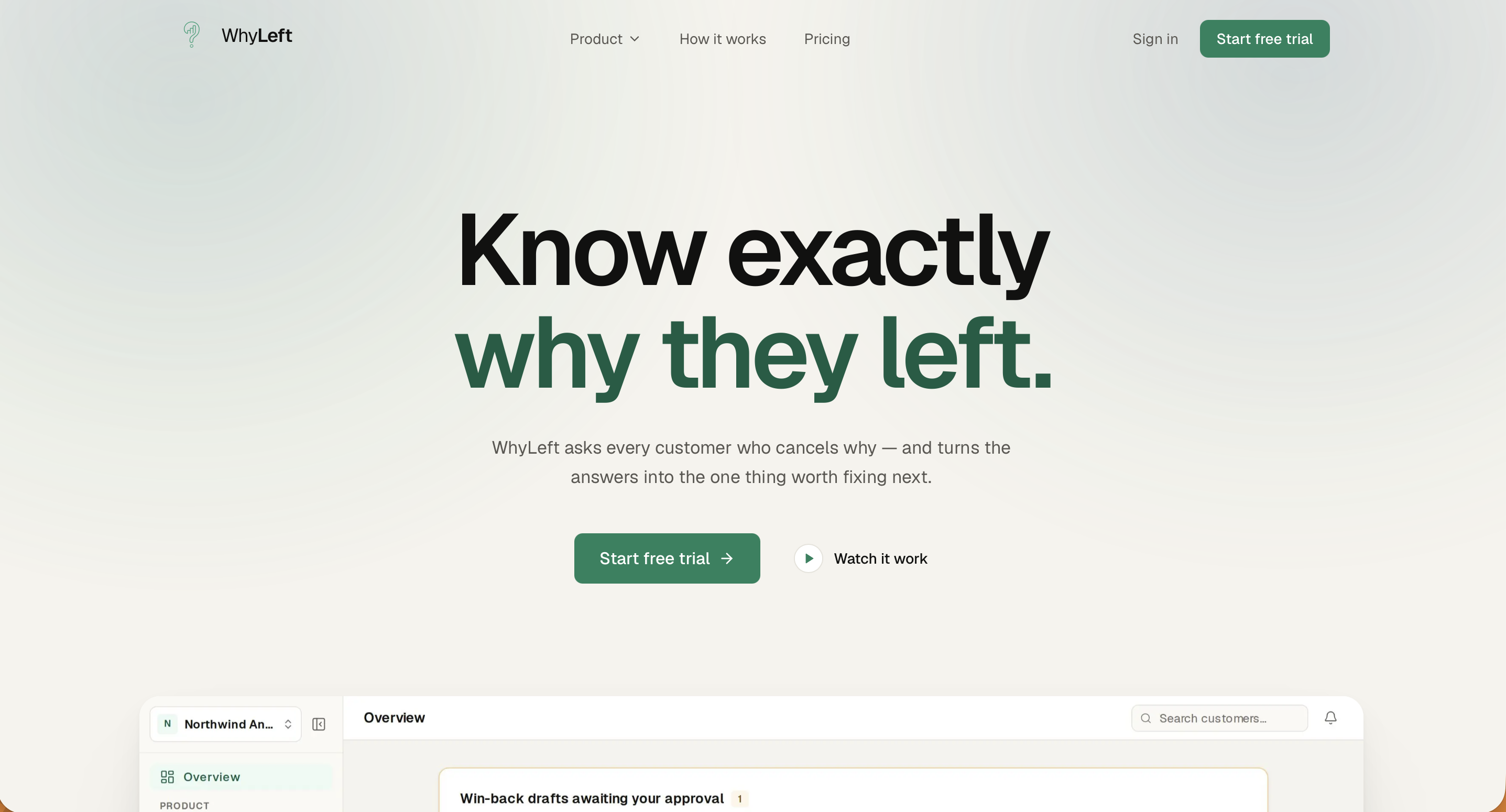
Know exactly why they left.
WhyLeft asks every customer who cancels why — and turns the answers into the one thing worth fixing next.
A cancelled customer is the most honest person in your funnel. Almost nobody ever asks them.
Features
Exit interviews
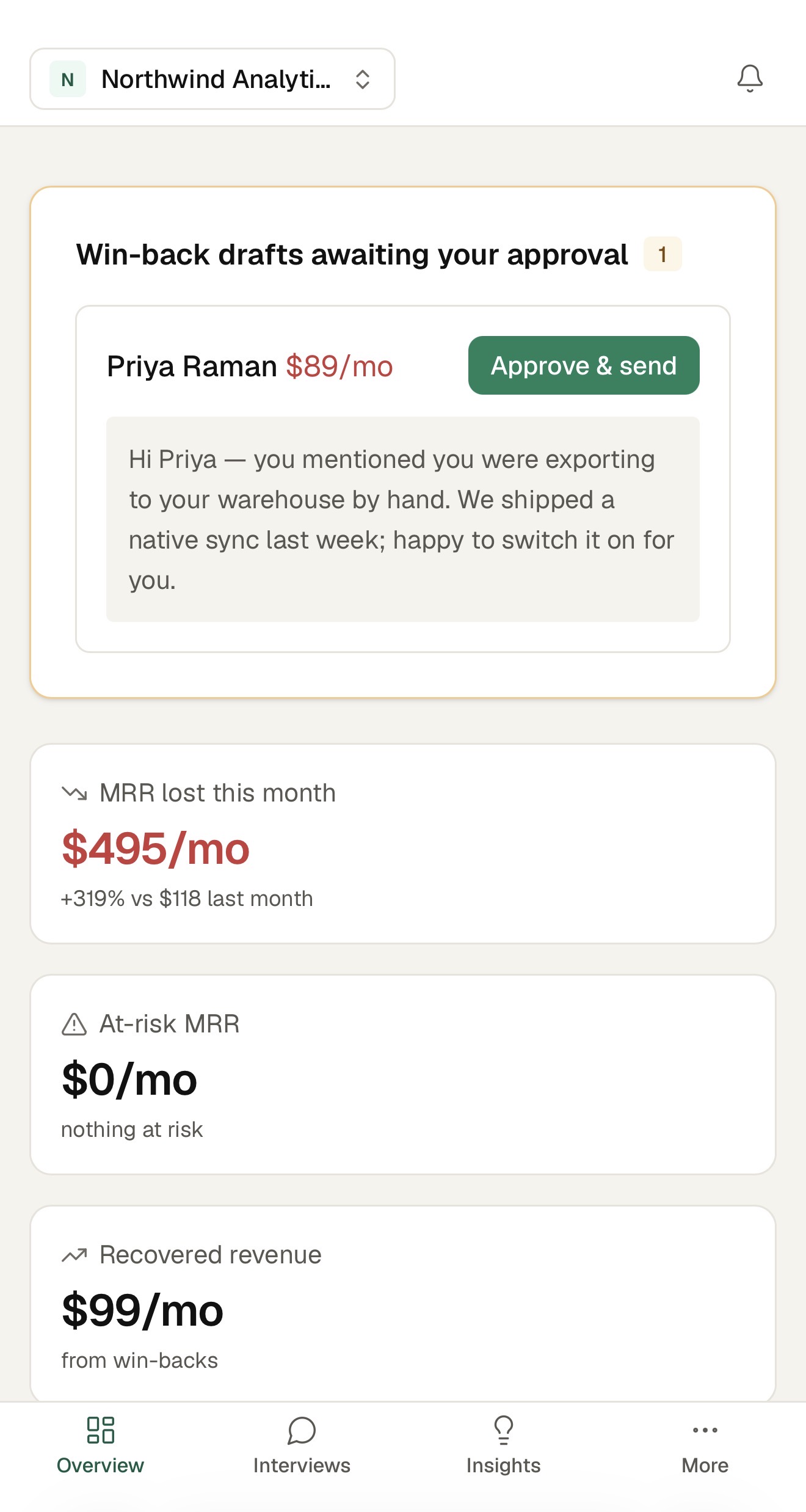
The email you'd write yourself, if you had the time
Cancellation Capture
Ask before they're gone, not after
Payment Recovery
Some churn was never a decision
AI follow-ups
The second question is where the answer is
Insights & tagging
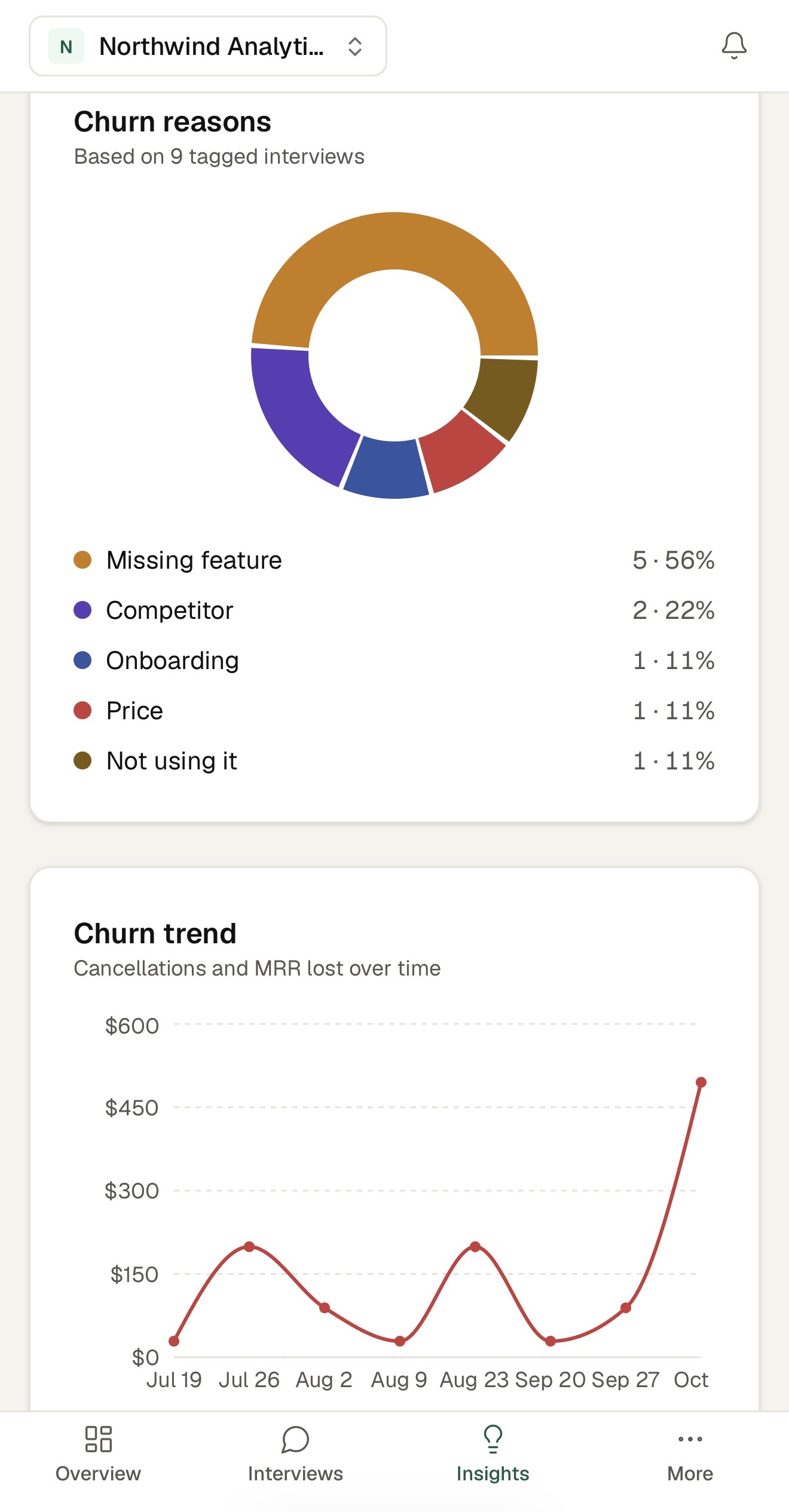
One reply is an anecdote. Forty is a decision.
Wylo Copilot
Ask your churn data a question
Retention Playbooks
See the whole pipeline, and tune it
Use Cases
We run WhyLeft on WhyLeft. When you cancel, you get the exit interview — same email, same follow-up. It would be strange to sell a product I wasn't willing to point at myself.

Comments


Love the framing that a cancelled customer is the most honest person in the funnel. The AI follow-up idea stands out too, since the second question is usually where the real reason shows up. Curious: how do you keep the follow-ups from feeling pushy for someone who has already decided to leave? And does Payment Recovery keep failed-card churn separate from intentional cancellations in the insights?

Running WhyLeft on WhyLeft is a great trust signal. It shows you believe the exit email isn’t annoying. For a very small SaaS with only a handful of cancellations a month, how long does it take before the insights become useful rather than anecdotal? And can the exit interview be sent in the customer’s own language?


Running WhyLeft on WhyLeft is the best proof you could give. One thing I'd find useful: grouping answers by how long the customer stayed. Someone who leaves in the first week usually leaves for onboarding reasons, while someone who leaves after a year is often reacting to price or a missing feature, and mixing both can hide the real fix. Do the insights split by tenure or plan?

We see the same thing in survey work: the first answer to "why did you leave?" is almost always "too expensive", and the real reason only shows up on the second question. Do you let the founder edit the follow-up logic, or is it fully generated? And when you tag reasons across 40+ replies, can you click a tag and read the exact quotes behind it? That's what makes people trust the summary.

Are most WhyLeft users subscription SaaS founders with a steady trickle of cancellations, or bigger teams whose exit surveys nobody reads? Asking the follow-up after "too expensive" is where the real insight is. Happy to record a free feedback video trying the demo and setup as a new user and pointing out anything confusing.

The point about the second question is spot on. The first answer is usually polite, the follow-up is where the real reason shows. We sell made-to-measure leather goods rather than subscriptions, and our version of a cancellation is a return. Could WhyLeft run the same exit interview after a return and tag the reasons, such as sizing, colour or delivery time? That would tell us exactly what to fix on the product pages.
The "ask before they are gone, not after" framing is the sharp part here. Post-churn email surveys get terrible response rates, so catching people at the cancel moment makes a real difference. Does the exit interview also trigger in-app, or is it email only? The insights and tagging angle is well put too: one reply is an anecdote, forty is a decision.


Separating payment-recovery cases from deliberate cancellations is important, because those call for different fixes. Could the dashboard tag each reason with the account’s tenure and plan, while still showing the verbatim response behind the summary? That would help a small team distinguish onboarding friction from pricing or missing-feature churn without overreading a handful of replies.

Treating failed payments separately from real cancellations is the detail that stood out to me, those two get mixed into one churn number far too often. For a small SaaS with low-priced plans and page packs, where a lot of people simply stop using it without cancelling anything, does WhyLeft have a way to reach those silent drop-offs, or is it built around the explicit cancel event?

Asking cancelling customers before they leave, and running the exit interview on your own product, is a convincing way to show the idea works. The Payment Recovery feature stands out, since failed-card churn is easy to mistake for a real decision. When a customer gives a vague first answer, can the AI follow-up be adjusted by the founder, and does the insights view show exact customer quotes behind each tag?


The cancellation-capture timing is the strongest part here — asking before someone leaves, rather than emailing after the account is closed, should give much cleaner answers. Separating failed payments from deliberate cancellations is also important, since those need very different follow-ups. Do you tag answers automatically so a team can see the top one or two reasons to fix next?


Do you separate cancellations that land on a scheduled date (annual renewal, card expiry) from ones that happen mid-cycle? In the insider-trading data I work with, a planned sale says very little and an unplanned one says much more. I'd guess a mid-cycle cancel is the more informative signal here too.
Running the exit interview on your own product is the right proof. The measurement I would want built in is a closed loop: of the cancels that got an interview, how many reactivated within 30 days versus the cancels where the email failed to send? Without that split, a founder can see forty replies and still not know whether the interview itself recovers anyone, or only documents the loss. Pairing each reply with two silent facts (weeks active, last feature used) also keeps a "too expensive" answer from being read as a pricing problem when the account never got past onboarding.

The point about asking at cancellation rather than sending a survey afterward feels especially practical, and separating payment recovery from deliberate churn should make the insights much more actionable. Can teams view verbatim responses alongside the AI tags, so they can tell whether a suggested theme really fits?
The cancellation-capture idea works because it asks at the moment of leaving, when the answer is freshest. I like that you tag replies so patterns emerge instead of leaving a pile of anecdotes. Do you let founders set a minimum reply count before an insight is surfaced, so one angry response doesn't steer the roadmap?

Asking at the moment of cancellation is the right timing - most churn surveys fire days later when the frustration is already blurred. Two suggestions: let responses be tagged by plan tier, since why a team plan downgrades usually differs a lot from a solo user, and add a CSV export so the raw wording can be analyzed offline. The "one thing worth fixing next" summary is a clever way to keep the output actionable instead of ending up as a dashboard nobody reads.

The cancellation interview angle is smart because churn data is usually much more useful when you capture the reason at the moment someone leaves, rather than trying to infer it later from analytics. I also like that WhyLeft goes beyond collecting feedback and connects it to follow-up and retention workflows. I’d be curious to see how you separate actionable product feedback from price-related or situational churn, especially when the sample size is still small.
Premium Products










































Sponsors
Buy
Awards
View all
Awards
View allMakers

Makers
Comments
Love the framing that a cancelled customer is the most honest person in the funnel. The AI follow-up idea stands out too, since the second question is usually where the real reason shows up. Curious: how do you keep the follow-ups from feeling pushy for someone who has already decided to leave? And does Payment Recovery keep failed-card churn separate from intentional cancellations in the insights?
Running WhyLeft on WhyLeft is a great trust signal. It shows you believe the exit email isn’t annoying. For a very small SaaS with only a handful of cancellations a month, how long does it take before the insights become useful rather than anecdotal? And can the exit interview be sent in the customer’s own language?
Running WhyLeft on WhyLeft is the best proof you could give. One thing I'd find useful: grouping answers by how long the customer stayed. Someone who leaves in the first week usually leaves for onboarding reasons, while someone who leaves after a year is often reacting to price or a missing feature, and mixing both can hide the real fix. Do the insights split by tenure or plan?
We see the same thing in survey work: the first answer to "why did you leave?" is almost always "too expensive", and the real reason only shows up on the second question. Do you let the founder edit the follow-up logic, or is it fully generated? And when you tag reasons across 40+ replies, can you click a tag and read the exact quotes behind it? That's what makes people trust the summary.
Are most WhyLeft users subscription SaaS founders with a steady trickle of cancellations, or bigger teams whose exit surveys nobody reads? Asking the follow-up after "too expensive" is where the real insight is. Happy to record a free feedback video trying the demo and setup as a new user and pointing out anything confusing.
The point about the second question is spot on. The first answer is usually polite, the follow-up is where the real reason shows. We sell made-to-measure leather goods rather than subscriptions, and our version of a cancellation is a return. Could WhyLeft run the same exit interview after a return and tag the reasons, such as sizing, colour or delivery time? That would tell us exactly what to fix on the product pages.
The "ask before they are gone, not after" framing is the sharp part here. Post-churn email surveys get terrible response rates, so catching people at the cancel moment makes a real difference. Does the exit interview also trigger in-app, or is it email only? The insights and tagging angle is well put too: one reply is an anecdote, forty is a decision.
Separating payment-recovery cases from deliberate cancellations is important, because those call for different fixes. Could the dashboard tag each reason with the account’s tenure and plan, while still showing the verbatim response behind the summary? That would help a small team distinguish onboarding friction from pricing or missing-feature churn without overreading a handful of replies.
Treating failed payments separately from real cancellations is the detail that stood out to me, those two get mixed into one churn number far too often. For a small SaaS with low-priced plans and page packs, where a lot of people simply stop using it without cancelling anything, does WhyLeft have a way to reach those silent drop-offs, or is it built around the explicit cancel event?
Asking cancelling customers before they leave, and running the exit interview on your own product, is a convincing way to show the idea works. The Payment Recovery feature stands out, since failed-card churn is easy to mistake for a real decision. When a customer gives a vague first answer, can the AI follow-up be adjusted by the founder, and does the insights view show exact customer quotes behind each tag?
The cancellation-capture timing is the strongest part here — asking before someone leaves, rather than emailing after the account is closed, should give much cleaner answers. Separating failed payments from deliberate cancellations is also important, since those need very different follow-ups. Do you tag answers automatically so a team can see the top one or two reasons to fix next?
Do you separate cancellations that land on a scheduled date (annual renewal, card expiry) from ones that happen mid-cycle? In the insider-trading data I work with, a planned sale says very little and an unplanned one says much more. I'd guess a mid-cycle cancel is the more informative signal here too.
Running the exit interview on your own product is the right proof. The measurement I would want built in is a closed loop: of the cancels that got an interview, how many reactivated within 30 days versus the cancels where the email failed to send? Without that split, a founder can see forty replies and still not know whether the interview itself recovers anyone, or only documents the loss. Pairing each reply with two silent facts (weeks active, last feature used) also keeps a "too expensive" answer from being read as a pricing problem when the account never got past onboarding.
The point about asking at cancellation rather than sending a survey afterward feels especially practical, and separating payment recovery from deliberate churn should make the insights much more actionable. Can teams view verbatim responses alongside the AI tags, so they can tell whether a suggested theme really fits?
The cancellation-capture idea works because it asks at the moment of leaving, when the answer is freshest. I like that you tag replies so patterns emerge instead of leaving a pile of anecdotes. Do you let founders set a minimum reply count before an insight is surfaced, so one angry response doesn't steer the roadmap?
Asking at the moment of cancellation is the right timing - most churn surveys fire days later when the frustration is already blurred. Two suggestions: let responses be tagged by plan tier, since why a team plan downgrades usually differs a lot from a solo user, and add a CSV export so the raw wording can be analyzed offline. The "one thing worth fixing next" summary is a clever way to keep the output actionable instead of ending up as a dashboard nobody reads.
The cancellation interview angle is smart because churn data is usually much more useful when you capture the reason at the moment someone leaves, rather than trying to infer it later from analytics. I also like that WhyLeft goes beyond collecting feedback and connects it to follow-up and retention workflows. I’d be curious to see how you separate actionable product feedback from price-related or situational churn, especially when the sample size is still small.
Premium Products
New to Fazier?

Find your next favorite product or submit your own. Made by @FalakDigital.
Copyright ©2026. All Rights Reserved