Wakeup Dev
Critical alerts Monitoring system. Automated on-call cascade
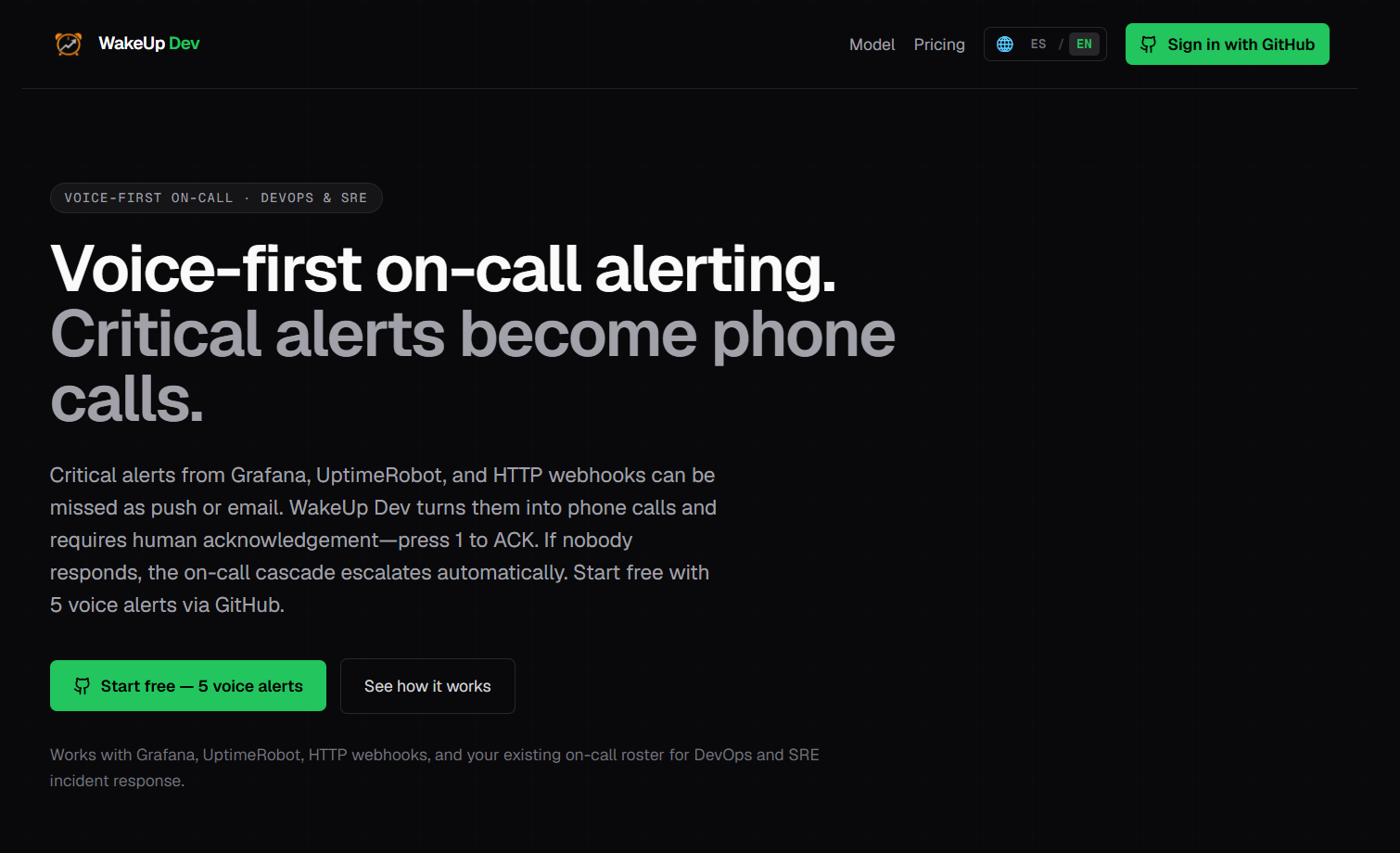
WakeUp Dev changes how dev teams handle incident response. Instead of drowning in ignored emails or missed push notifications, critical alerts from Grafana and UptimeRobot are instantly turned into automated phone calls. Responders can easily acknowledge by pressing 1, or the platform triggers an automatic on-call cascade. Built for modern DevOps and SRE teams with an honest pay-per-alert pricing model. No forced per-seat subscriptions.
Features
- oice-First On-Call: Converts critical HTTP webhooks from Grafana or UptimeRobot into immediate phone calls.
- Interactive Digit-1 ACK: Requires a human to press 1 to acknowledge, preventing voicemail false positives.
- Automated Escalation Cascade: Routes the incident to the next engineer if the primary contact fails to respond.
- CSV Roster Management: Clean setup of shifts and schedules using a standard CSV file with atomic replace.
- No Per-Seat Pricing: Pay strictly for the volume of alerts dispatched, keeping your team expansion free.
- Unlimited Workspace Users: Add your entire DevOps and SRE squad without opening a new invoice line.
- Global Infrastructure Integration: Powered by Twilio, Cloudflare Workers, Lemon Squeezy, and local billing in Chile via Transbank.
Use Cases
- DevOps Infrastructure Failures: Ensuring high-severity Grafana alerts for server crashes or database downtime instantly wake up the engineer on duty.
- Uptime Monitoring Upgrades: Converting basic UptimeRobot email or push notifications into phone calls for mission-critical web applications.
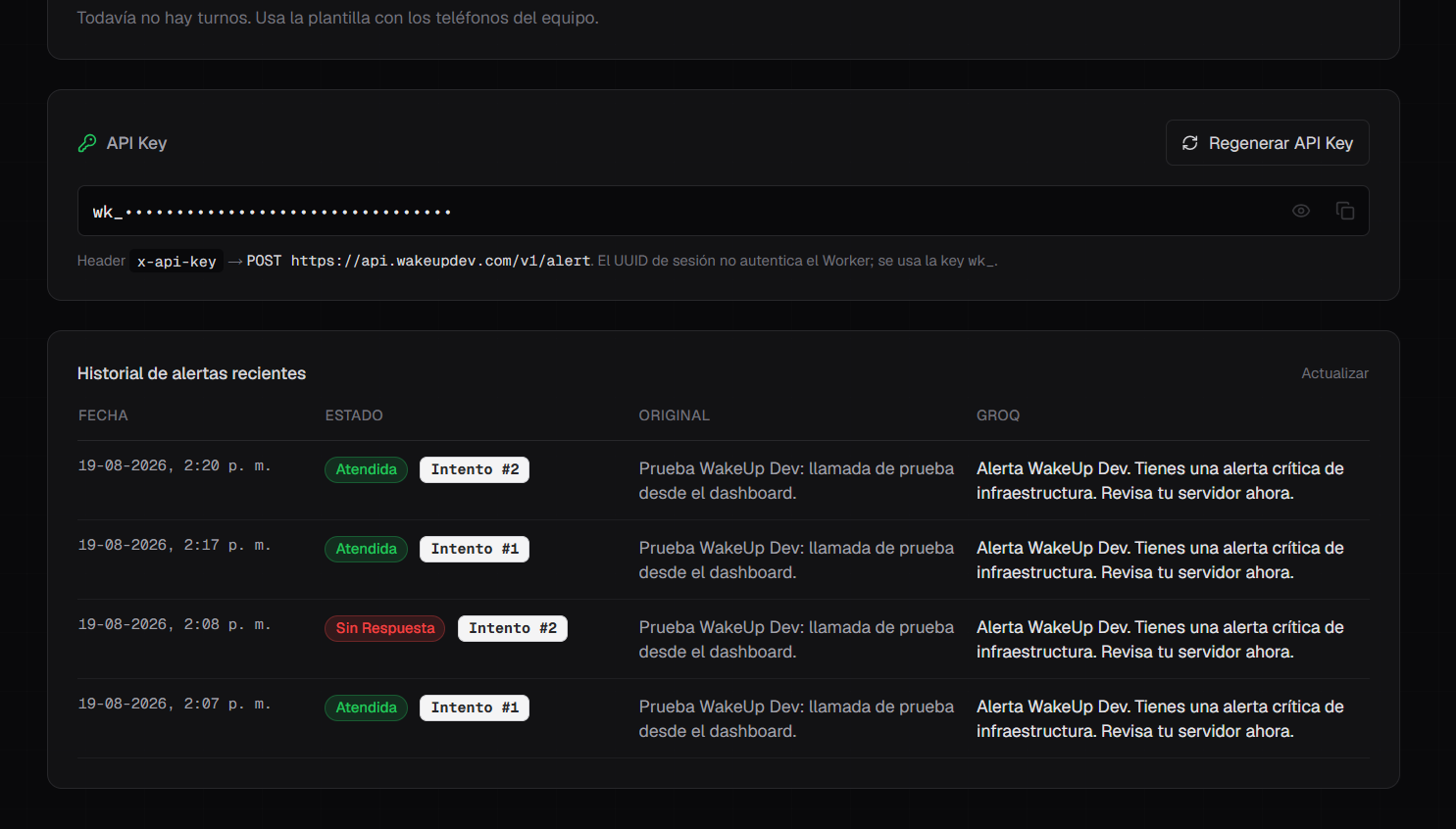
- Custom Health-Check Alerts: Triggering immediate voice streams directly from your in-house scripts via a simple API POST request to the alert endpoint.
- Budget-Friendly Squad Scaling: Managing on-call shifts for growing engineering teams without paying per-seat license fees to legacy platforms.
- Voicemail False-Positive Filtering: Using interactive touch-tone responses to verify that a real human answered the emergency call instead of an automated answering machine.

Comments

Pay-per-alert pricing is a real differentiator for small teams, where per-seat on-call tools cost more than the incidents they catch. One question on the cascade: when it reaches the last engineer and nobody presses 1, does it loop back to the first responder, or stop and post a summary somewhere, like Slack or email, so the morning shift sees what went unanswered?
Press 1 to acknowledge is the right call; a voicemail pickup should never count as someone being awake. Two questions from running on-call before: how do you handle an alert storm, when Grafana fires twenty webhooks for one outage? With pay-per-alert pricing, grouping or deduplication by alert name would matter a lot. And is there a fallback to SMS when a call cannot connect, for responders travelling abroad?

Requiring a human to press 1 avoids the voicemail acknowledgement problem. How are retries from Grafana or UptimeRobot handled when an incident is already acknowledged? An idempotency key and a visible incident timeline would help teams avoid duplicate calls and understand exactly when escalation stopped.

The CSV roster's atomic replace raises an on-call handover question: if the roster changes while an escalation is already running, does that incident keep the original contact sequence or use the new one? Keeping the roster version in the incident history would make missed handovers easier to investigate.



Hi Fazier community! I’m Enrique, the creator of WakeUp Dev. As a developer, I’ve been on-call many times and experienced the anxiety of missing a critical server alert just because it was buried under a pile of Slack notifications or promotional emails during the night. Standard push notifications simply don't wake you up when production goes down. That’s why I built WakeUp Dev. I wanted a bulletproof system that transforms standard HTTP webhooks (from Grafana, UptimeRobot, or any monitoring tool) into immediate, loud phone calls. To make it developer-friendly and fair, I focused on two core pillars: 1. Eliminating voicemail false-positives by requiring an interactive touch-tone response (Press 1 to ACK). If there is no answer, it automatically triggers an on-call cascade to the next engineer. 2. Fair pricing: No forced monthly subscriptions per user seat. You only pay for the actual volume of alerts dispatched, making it perfect for growing teams and side projects.
🤖 For technical teams and custom monitors, we've just open-sourced our official Integration Toolbox. You can grab copy-paste scripts for Python, Node.js, and Bash/cURL directly from our GitHub: https://github.com/enriquecasadesign1957/wakeup-dev-integrations

Premium Products


































Makers
Makers
Comments
Pay-per-alert pricing is a real differentiator for small teams, where per-seat on-call tools cost more than the incidents they catch. One question on the cascade: when it reaches the last engineer and nobody presses 1, does it loop back to the first responder, or stop and post a summary somewhere, like Slack or email, so the morning shift sees what went unanswered?
Press 1 to acknowledge is the right call; a voicemail pickup should never count as someone being awake. Two questions from running on-call before: how do you handle an alert storm, when Grafana fires twenty webhooks for one outage? With pay-per-alert pricing, grouping or deduplication by alert name would matter a lot. And is there a fallback to SMS when a call cannot connect, for responders travelling abroad?
Requiring a human to press 1 avoids the voicemail acknowledgement problem. How are retries from Grafana or UptimeRobot handled when an incident is already acknowledged? An idempotency key and a visible incident timeline would help teams avoid duplicate calls and understand exactly when escalation stopped.
The CSV roster's atomic replace raises an on-call handover question: if the roster changes while an escalation is already running, does that incident keep the original contact sequence or use the new one? Keeping the roster version in the incident history would make missed handovers easier to investigate.
Hi Fazier community! I’m Enrique, the creator of WakeUp Dev. As a developer, I’ve been on-call many times and experienced the anxiety of missing a critical server alert just because it was buried under a pile of Slack notifications or promotional emails during the night. Standard push notifications simply don't wake you up when production goes down. That’s why I built WakeUp Dev. I wanted a bulletproof system that transforms standard HTTP webhooks (from Grafana, UptimeRobot, or any monitoring tool) into immediate, loud phone calls. To make it developer-friendly and fair, I focused on two core pillars: 1. Eliminating voicemail false-positives by requiring an interactive touch-tone response (Press 1 to ACK). If there is no answer, it automatically triggers an on-call cascade to the next engineer. 2. Fair pricing: No forced monthly subscriptions per user seat. You only pay for the actual volume of alerts dispatched, making it perfect for growing teams and side projects.
🤖 For technical teams and custom monitors, we've just open-sourced our official Integration Toolbox. You can grab copy-paste scripts for Python, Node.js, and Bash/cURL directly from our GitHub: https://github.com/enriquecasadesign1957/wakeup-dev-integrations
Premium Products
New to Fazier?

Find your next favorite product or submit your own. Made by @FalakDigital.
Copyright ©2026. All Rights Reserved