
Voice Art
AI voice generator for text to speech and voice cloning
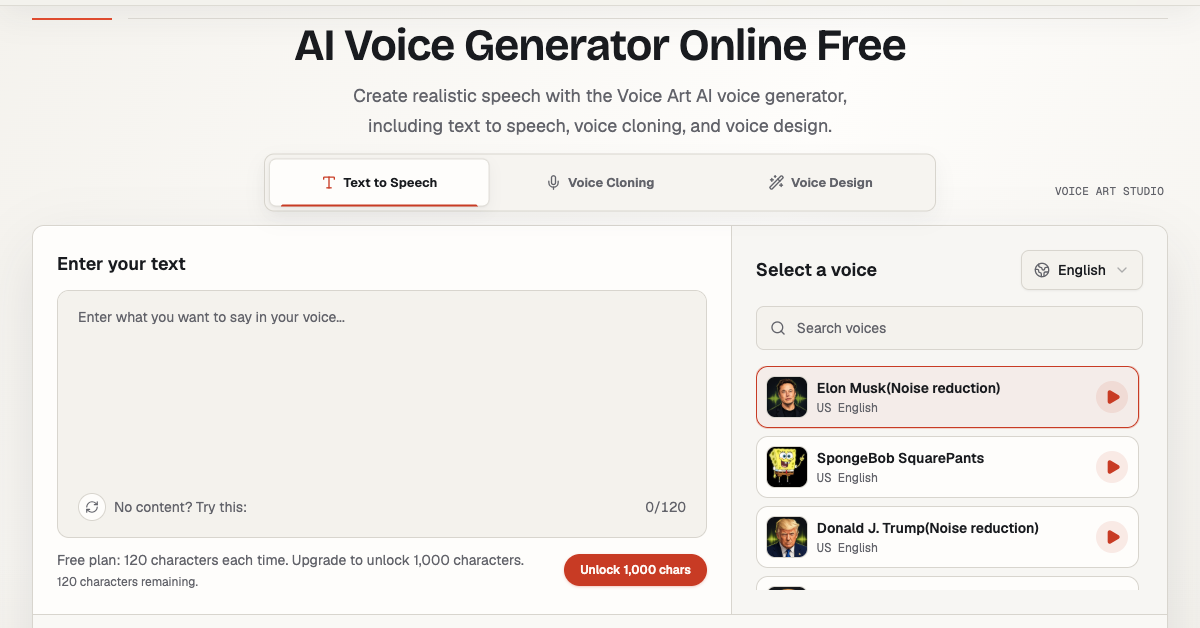
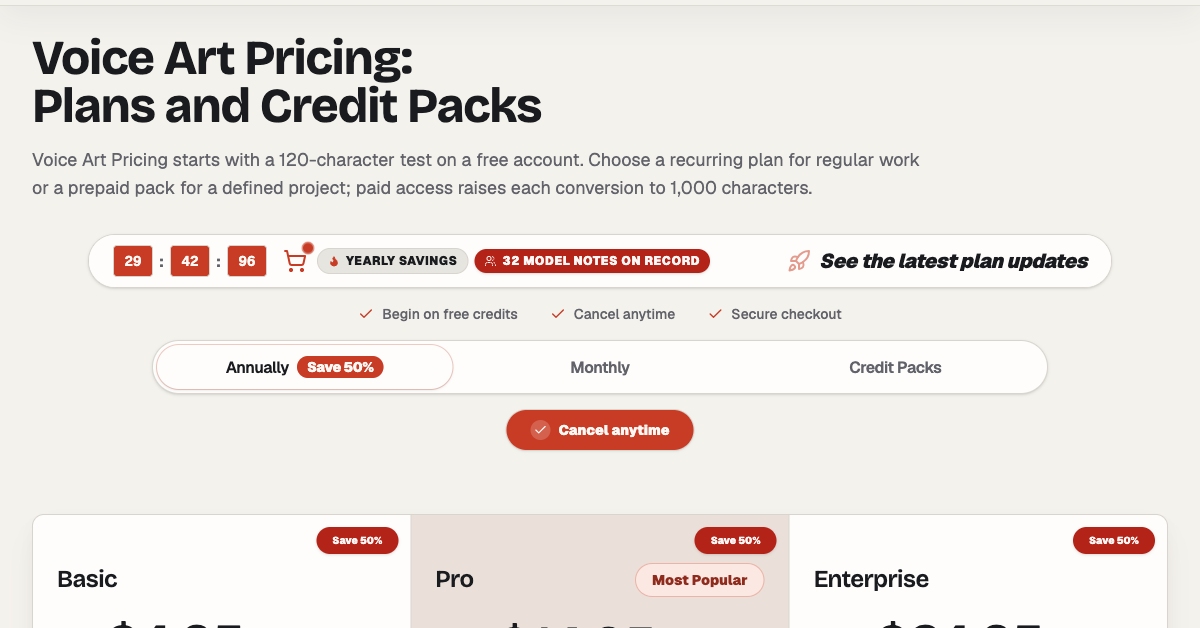
Voice Art is a browser-based AI voice generator that brings text to speech, consent-first voice cloning, and prompt-driven voice design into a single studio at voiceart.app. Voice Art is built around the idea that the useful unit of voice work is an approved take, not a first render, so the studio keeps the script editable and every generation retrievable. The AI voice generator treats punctuation, line breaks, and wording as direction, so a paragraph reads with emphasis and pauses instead of a flat, mechanical delivery. Free accounts convert 120 characters at a time and paid plans raise each conversion to 1,000 characters, with a public catalog of more than 300 voices to audition before credits are spent.
Features
Text to speech with direction-aware phrasing, emphasis, and pauses
Consent-first private voice cloning from a short approved sample, kept as a reusable voice model
Voice design that builds a new synthetic voice from a written description
Public voice library with more than 300 auditionable voices
Generation history that keeps every render retrievable and re-downloadable
Speech to text for turning existing recordings back into editable copy
One shared credit balance across text to speech, cloning, and voice design
Use Cases
Video creators producing narration, campaign hooks, and social clips
Course owners replacing or updating a single lesson's audio without re-recording a module
Developers prototyping voice agents, in-product prompts, and game dialogue
Teams keeping one brand narrator consistent across launches
Localization work preparing product demos and course audio for several audiences

Comments


We built Voice Art because voice work rarely ends at the first render. A script changes, a line needs a different emphasis, or a lesson gets updated months later — and most tools make you start over. Voice Art keeps the script editable, previews cheap, and every generation retrievable, so the useful unit is an approved take rather than a lucky first result. Text to speech, consent-first voice cloning, and voice design all share one credit balance in the same browser workspace. Happy to answer questions about the cloning consent flow or how the voice design prompts work.
Premium Products































Sponsors
Buy

Makers
Makers
Comments
We built Voice Art because voice work rarely ends at the first render. A script changes, a line needs a different emphasis, or a lesson gets updated months later — and most tools make you start over. Voice Art keeps the script editable, previews cheap, and every generation retrievable, so the useful unit is an approved take rather than a lucky first result. Text to speech, consent-first voice cloning, and voice design all share one credit balance in the same browser workspace. Happy to answer questions about the cloning consent flow or how the voice design prompts work.
Premium Products
New to Fazier?

Find your next favorite product or submit your own. Made by @FalakDigital.
Copyright ©2025. All Rights Reserved