
VNDLY
Inventory and order management for growing product businesse
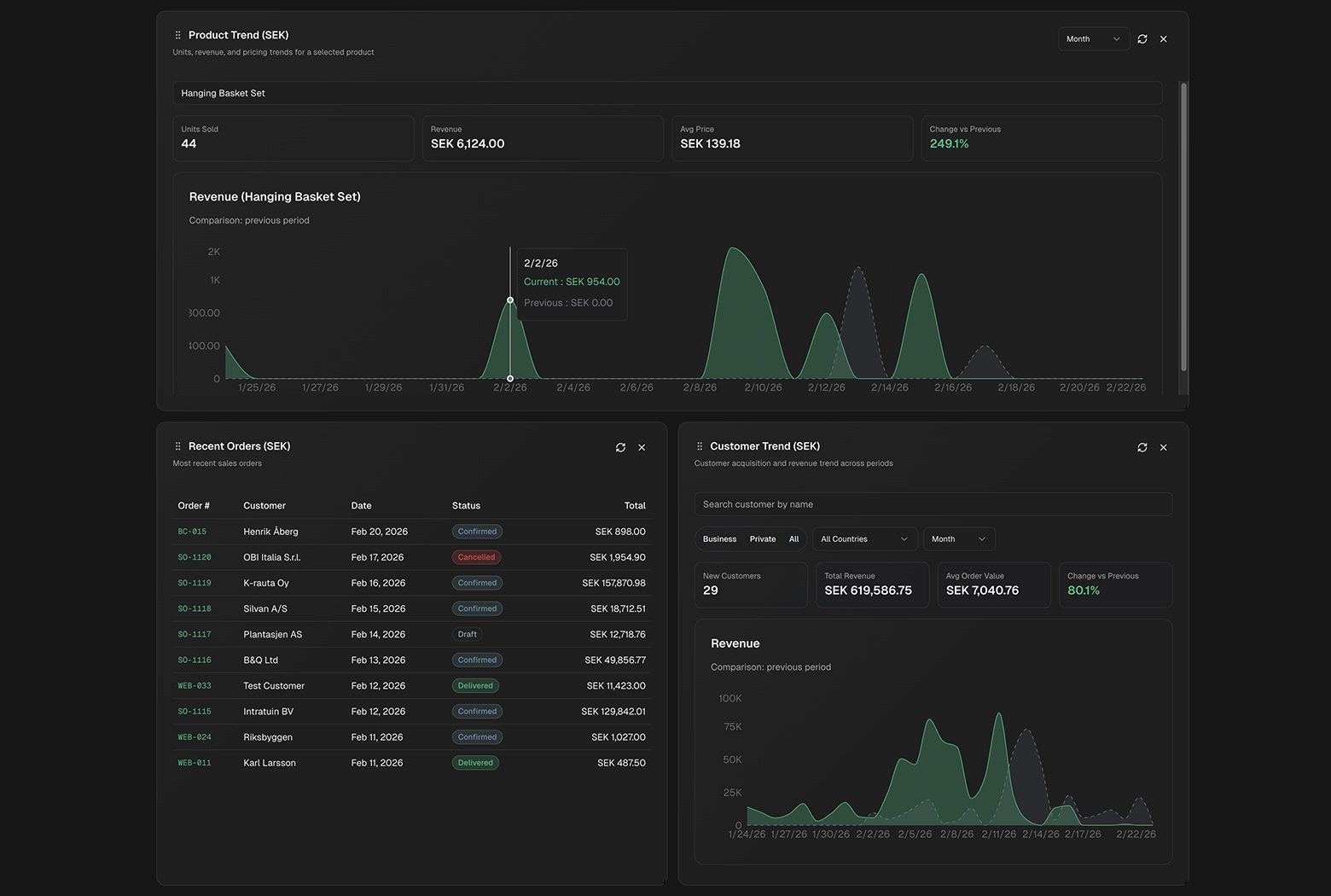
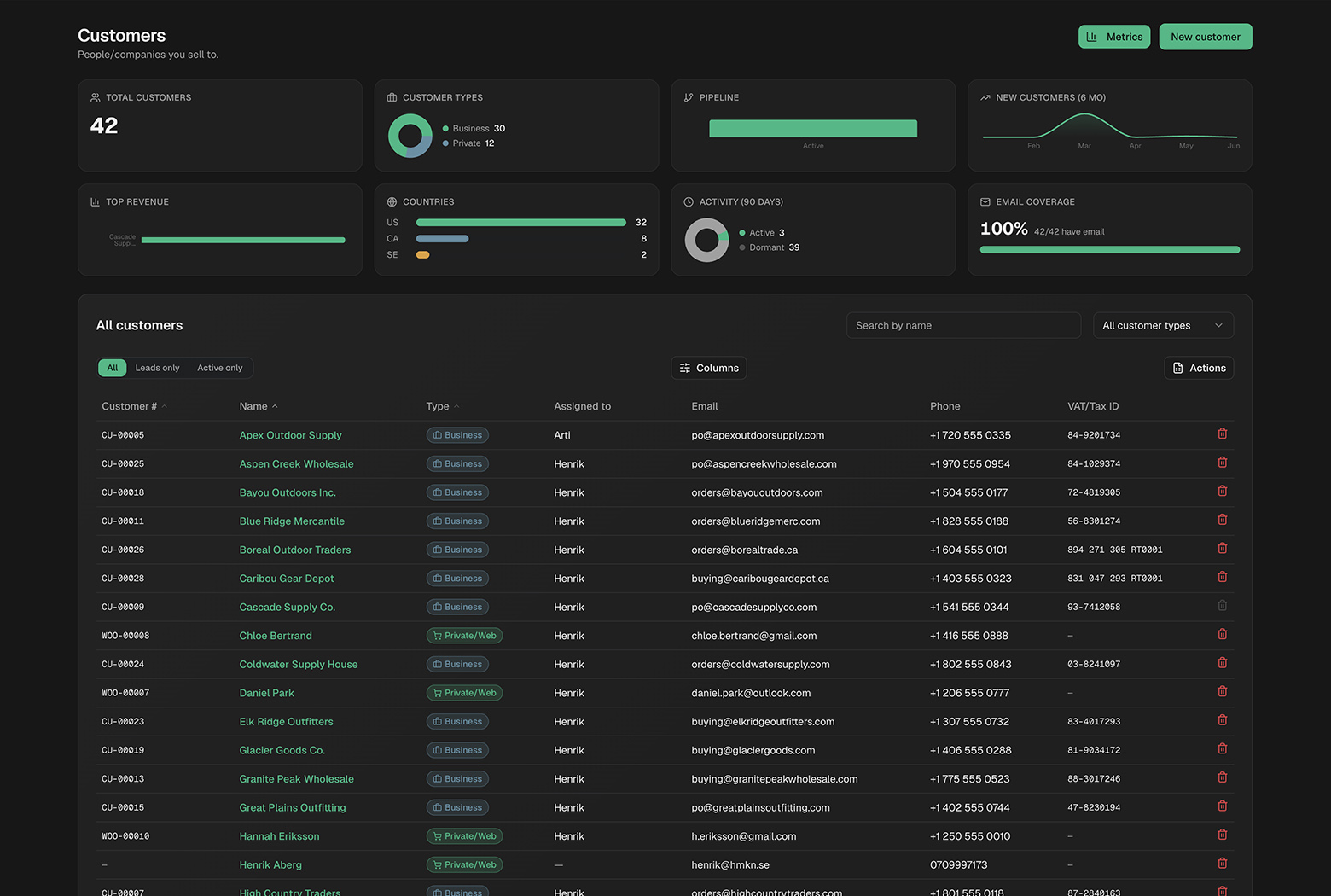
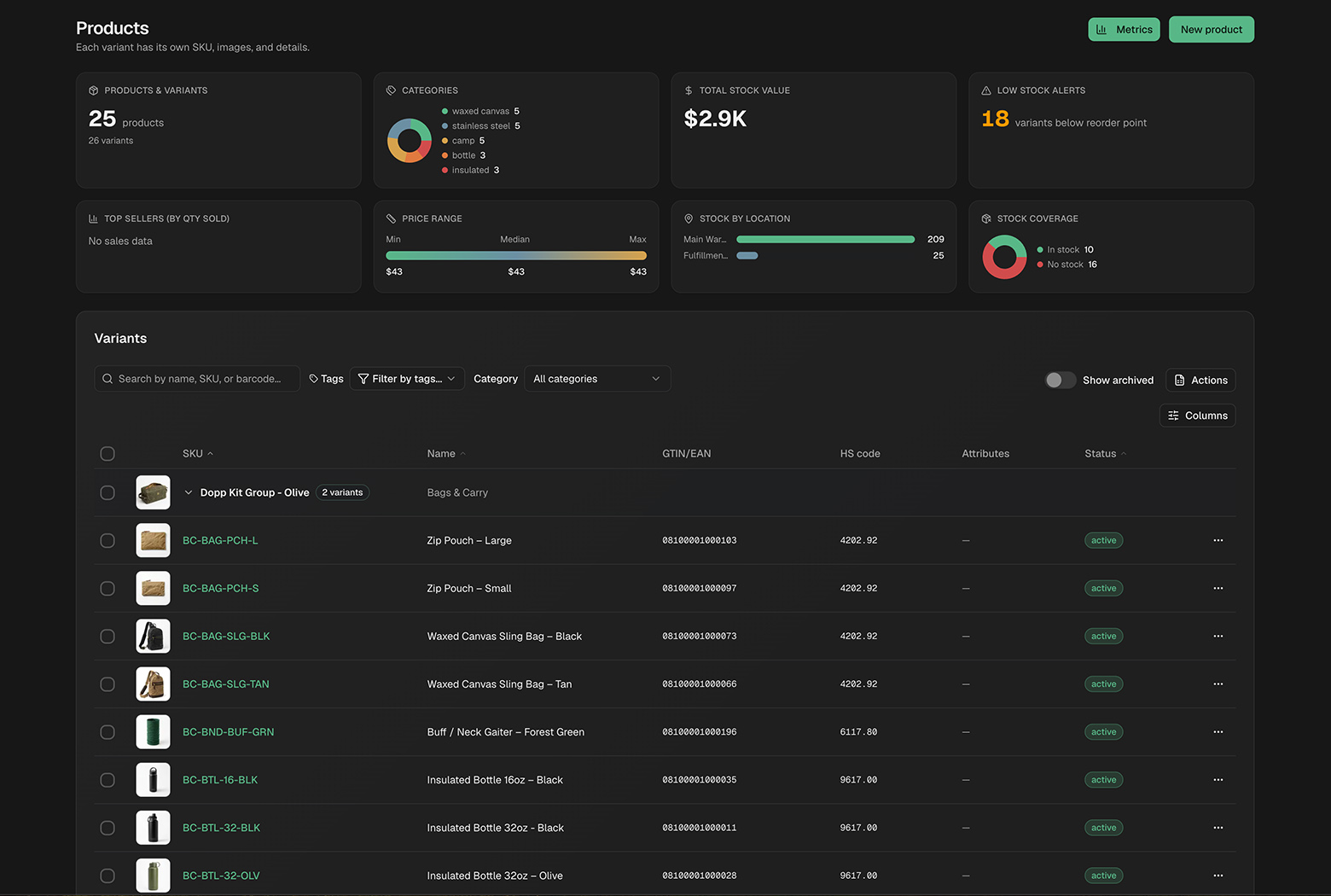
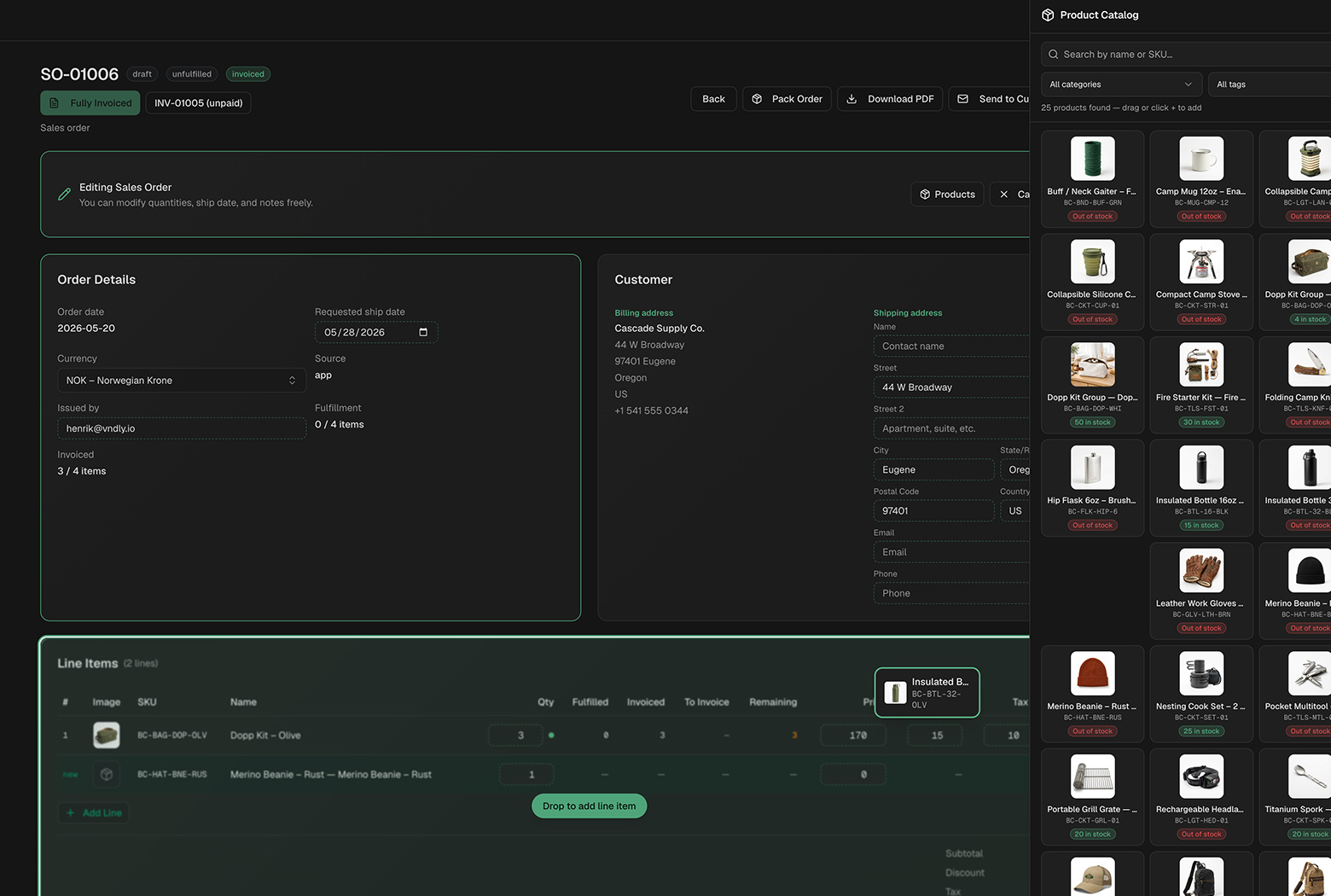
VNDLY is inventory and order management built for growing product businesses that have outgrown spreadsheets but do not want enterprise complexity. Track stock across locations, manage purchase and sales orders, and sync inventory across your storefronts (Shopify, WooCommerce, and more) so you never oversell. Real costing with weighted-average (AVCO) gives you true stock value and margins, not guesses. Add a self-serve B2B wholesale portal for your trade customers, connect your accounting (Xero, QuickBooks), and get the reports that actually tell you what is selling, what to reorder, and where the money is. One system for purchasing, inventory, fulfillment, and wholesale.
Features
- Multichannel inventory sync across Shopify, WooCommerce, and more, so you never oversell
- Purchase orders with receiving, supplier prices, and landed-cost tracking
- Sales orders and fulfillment in one place
- Real costing with weighted-average (AVCO): true stock value and margins
- Self-serve B2B wholesale portal for your trade customers
- Accounting integrations: Xero and QuickBooks
- Reorder points, safety stock, and low-stock alerts so you buy at the right time
- Reports and dashboards for what is selling, stock value, and margins
- Free inventory tools: barcode and QR generators, reorder point, EOQ, and SKU generators
Use Cases
- Ecommerce brands selling on multiple storefronts that need one source of truth for stock
- Wholesalers and distributors who want a self-serve B2B ordering portal
- Growing product businesses replacing spreadsheets without going full enterprise ERP
- Retailers and makers managing purchasing, receiving, and reorder timing
- Teams that need real stock value and margins for accounting and decisions
- Businesses syncing inventory and orders into Xero or QuickBooks

Comments



Maker here. I built VNDLY for the awkward middle stage every growing product business hits: too big for spreadsheets, but nowhere near ready for a heavy, expensive enterprise ERP. That gap is where orders get oversold, stock value is a guess, and nobody actually knows what to reorder. VNDLY pulls purchasing, inventory, fulfillment, and wholesale into one system. It syncs stock across your storefronts so you stop overselling, does real weighted-average costing so your stock value and margins are accurate instead of made up, and includes a self-serve B2B portal so trade customers can order without emailing you. It connects to Xero and QuickBooks, and there is a free tier of inventory tools to try. Would genuinely love feedback from anyone running a multichannel or wholesale business: what is the part of inventory and orders that still eats your week?






VNDLY is aimed at a painful and very real transition: keeping the simplicity of a spreadsheet while adding trustworthy inventory and margin data. The combination of multichannel sync, landed-cost tracking, and AVCO costing is a strong core. I’d love to see a short example of how an exception is handled—for example, a Shopify sale arriving during a stock correction or partial receiving. Confidence around conflict resolution is often what makes a growing team willing to move its source of truth.


The "outgrown spreadsheets but don't want enterprise complexity" positioning is spot on — that gap is exactly where most small product businesses get stuck, because the step up from a spreadsheet is usually a NetSuite quote that scares them back to the spreadsheet. Weighted-average costing as a default is a nice touch too; a lot of tools bury real margins. Question: when you sync stock across Shopify and WooCommerce, how fast does it reconcile after a sale — is it near-instant, or is there a window where you could still oversell during a busy drop?



VNDLY looks solid! 👏 Helping businesses outgrow spreadsheets without enterprise bloat is a real painkiller. Multi-channel inventory sync + real costing solves a massive headache. Curious—how do you handle GDPR compliance for customer data across Europe? I build ConsentKeep (GDPR consent logging API). Would love to explore integration possibilities!

VNDLY has great potential! A few improvements could make it even better. I'd love to share my feedback and suggestions. WhatsApp: https://wa.me/447307349530 Telegram: t.me/rforrank
Premium Products






























Sponsors
Buy

Awards
View all
Awards
View allMakers
Makers
Comments
Maker here. I built VNDLY for the awkward middle stage every growing product business hits: too big for spreadsheets, but nowhere near ready for a heavy, expensive enterprise ERP. That gap is where orders get oversold, stock value is a guess, and nobody actually knows what to reorder. VNDLY pulls purchasing, inventory, fulfillment, and wholesale into one system. It syncs stock across your storefronts so you stop overselling, does real weighted-average costing so your stock value and margins are accurate instead of made up, and includes a self-serve B2B portal so trade customers can order without emailing you. It connects to Xero and QuickBooks, and there is a free tier of inventory tools to try. Would genuinely love feedback from anyone running a multichannel or wholesale business: what is the part of inventory and orders that still eats your week?
VNDLY is aimed at a painful and very real transition: keeping the simplicity of a spreadsheet while adding trustworthy inventory and margin data. The combination of multichannel sync, landed-cost tracking, and AVCO costing is a strong core. I’d love to see a short example of how an exception is handled—for example, a Shopify sale arriving during a stock correction or partial receiving. Confidence around conflict resolution is often what makes a growing team willing to move its source of truth.
The "outgrown spreadsheets but don't want enterprise complexity" positioning is spot on — that gap is exactly where most small product businesses get stuck, because the step up from a spreadsheet is usually a NetSuite quote that scares them back to the spreadsheet. Weighted-average costing as a default is a nice touch too; a lot of tools bury real margins. Question: when you sync stock across Shopify and WooCommerce, how fast does it reconcile after a sale — is it near-instant, or is there a window where you could still oversell during a busy drop?
VNDLY looks solid! 👏 Helping businesses outgrow spreadsheets without enterprise bloat is a real painkiller. Multi-channel inventory sync + real costing solves a massive headache. Curious—how do you handle GDPR compliance for customer data across Europe? I build ConsentKeep (GDPR consent logging API). Would love to explore integration possibilities!
VNDLY has great potential! A few improvements could make it even better. I'd love to share my feedback and suggestions. WhatsApp: https://wa.me/447307349530 Telegram: t.me/rforrank
Premium Products
New to Fazier?

Find your next favorite product or submit your own. Made by @FalakDigital.
Copyright ©2026. All Rights Reserved