
VideoText
AI workflows for transcription, QA, subtitles & formatting
VideoText.io is an AI-powered workflow platform for transcriptionists, proofreaders, translators, creators, agencies, and teams that need far more than raw speech-to-text.
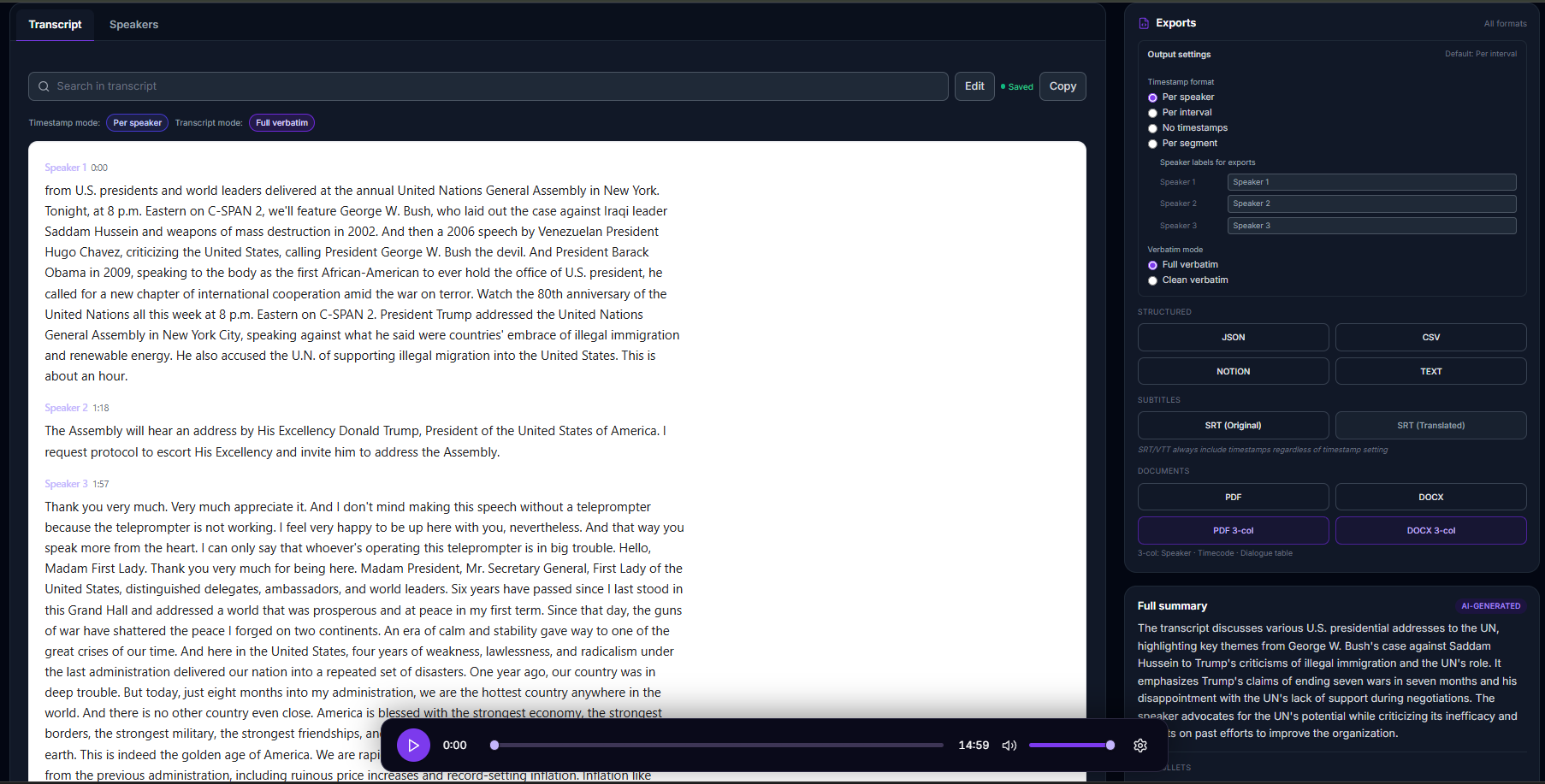
Transform audio, video, meetings, podcasts, interviews, and YouTube content into delivery-ready transcripts, subtitles, summaries, chapters, and exports — in a single workflow.
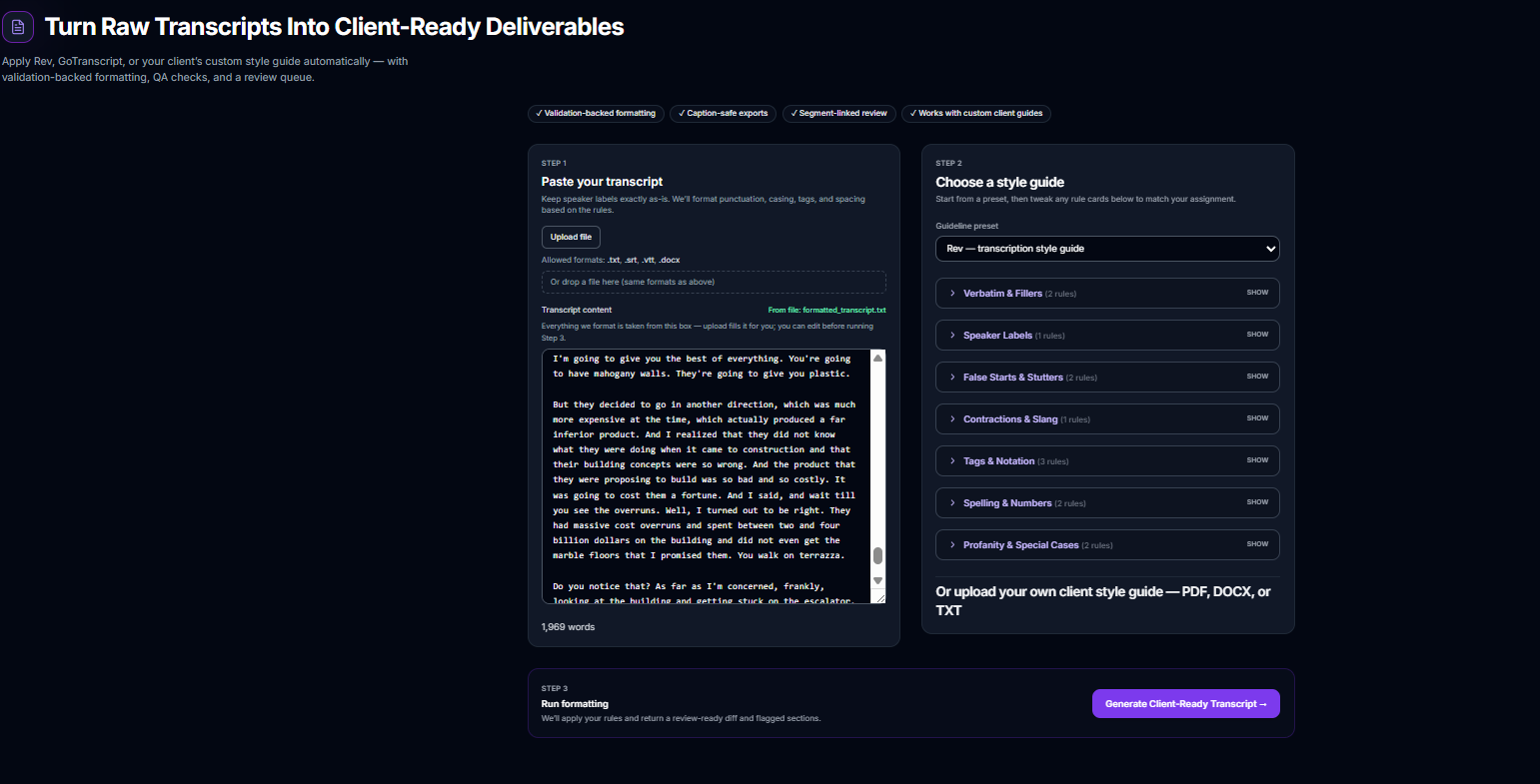
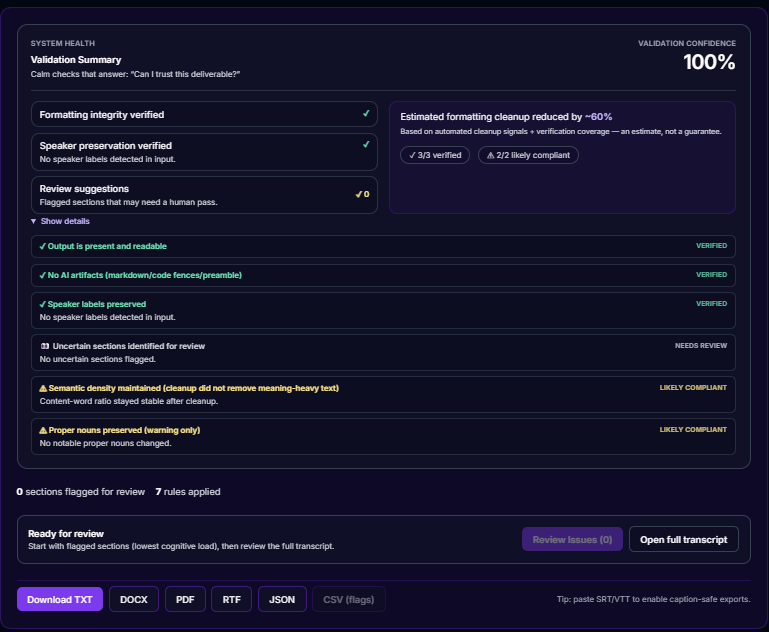
What makes VideoText.io different is Guideline Formatting & QA Automation. Upload client guidelines, formatting rules, QA documents, or style guides, and VideoText.io automatically extracts and applies rules to transcripts at scale.
Instead of manually fixing:
* punctuation
* timestamps
* speaker labels
* formatting inconsistencies
* capitalization
* subtitle structure
* transcript layouts …the platform automates the repetitive cleanup layer while keeping humans in control of final QA.
Built for workflows inspired by Rev, GoTranscript, Scribie, and custom enterprise transcription pipelines. Privacy-focused.
Features
Core features:
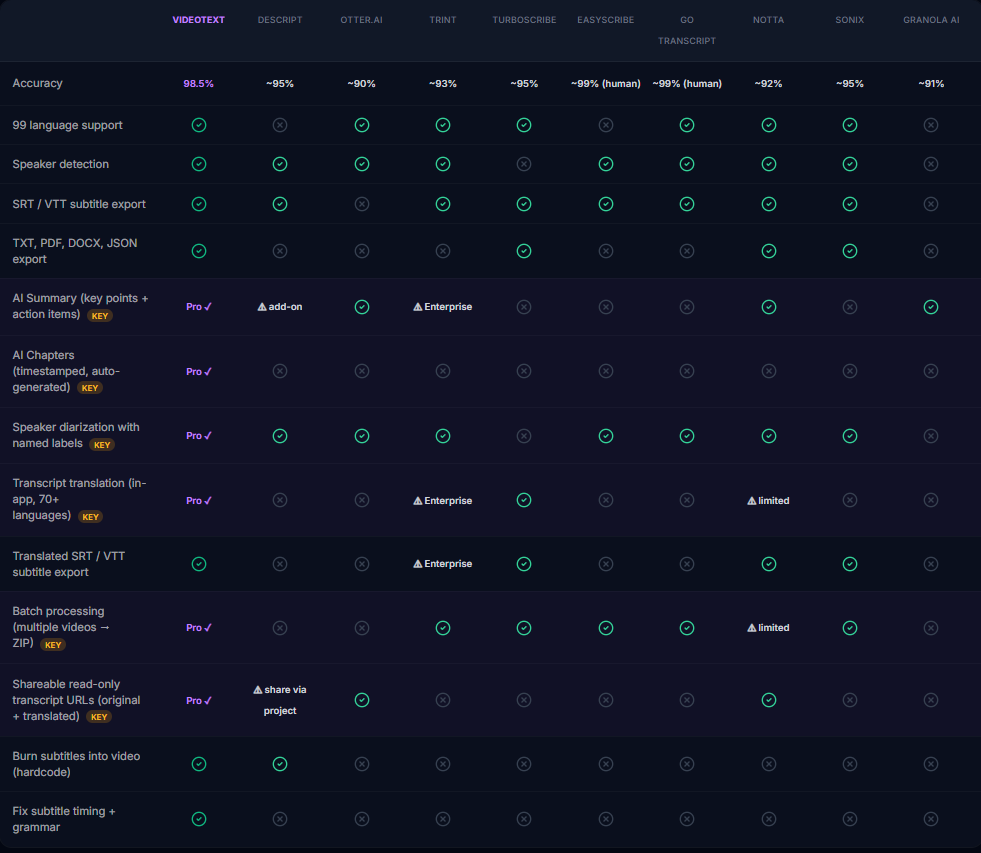
• AI video/audio transcription
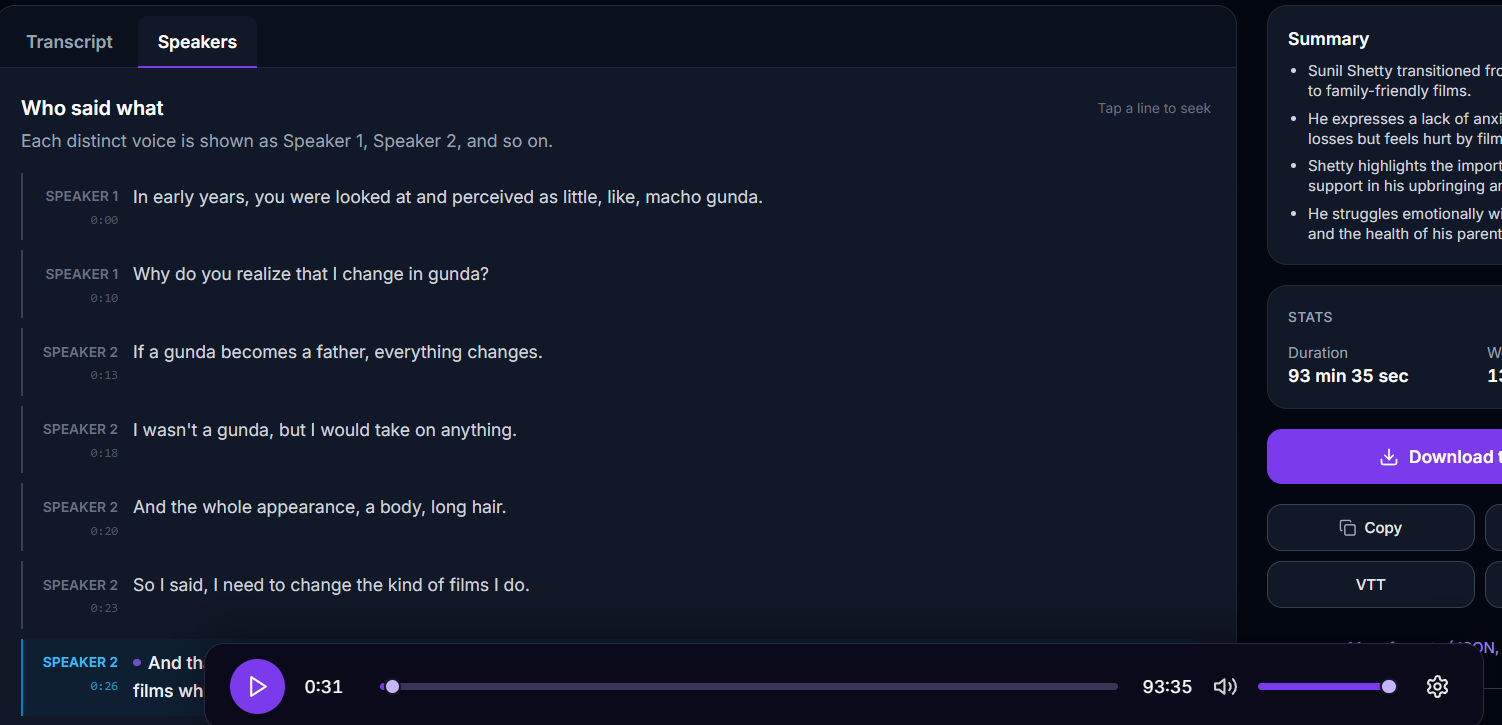
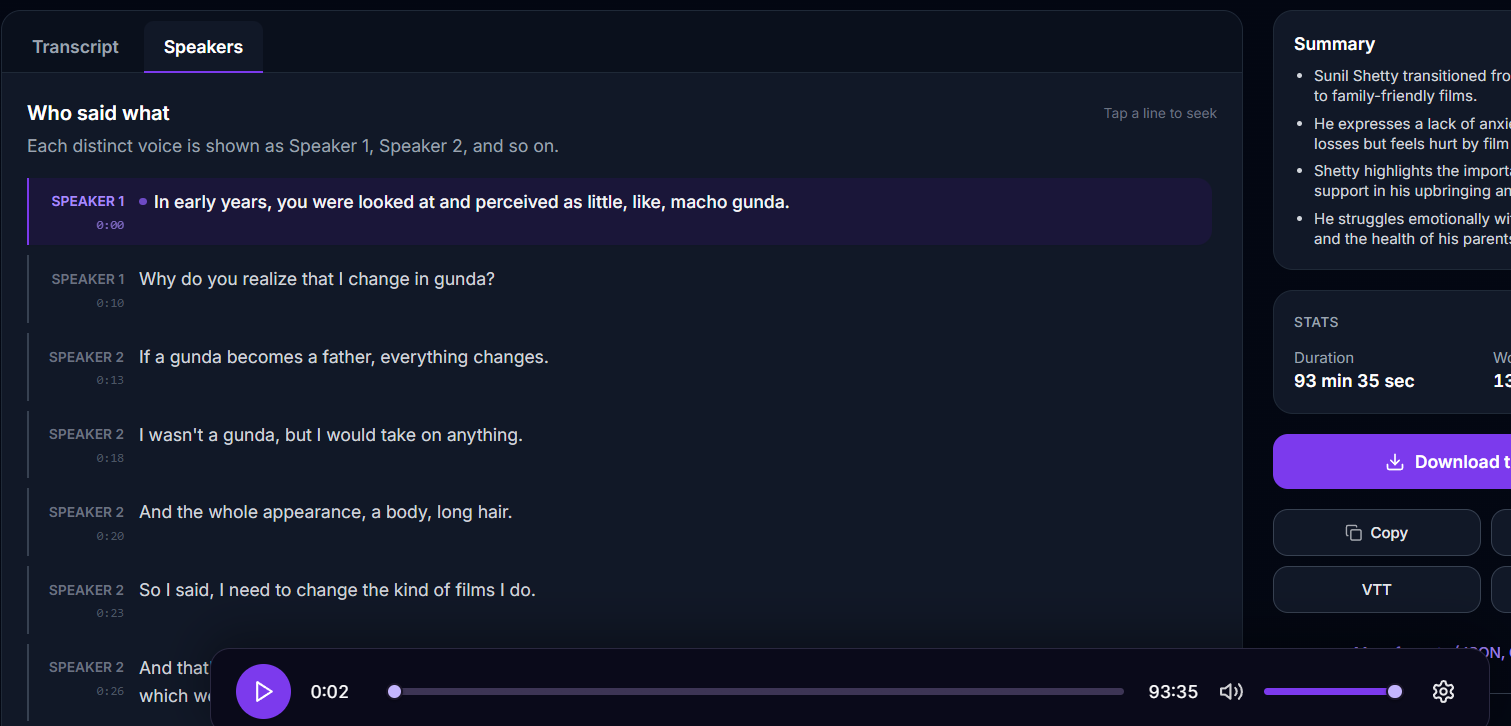
• Speaker diarization & speaker labeling
• YouTube transcription • Multi-language transcription & translation
• Subtitle generation (SRT/VTT)
• Subtitle fixing & burn-in workflows
• AI summaries & chapters
• Batch processing
• DOCX, PDF, TXT, SRT, VTT exports
• Timestamp controls
• Clean & full verbatim modes
Use Cases
- Transcription workflows
- Transcript QA & proofreading
- Subtitle generation & fixing
- Client guideline enforcement
- Speaker diarization cleanup
- Timestamp formatting
- Translation workflows
- Delivery-ready transcript exports
- Podcast transcription
- Interview transcription
- Meeting transcription
- YouTube transcript extraction
- Agency transcript operations
- Caption compliance validation
- Bulk audio/video processing

Comments


Hey 👋 I’m building VideoText.io specifically for transcriptionists, QA reviewers, subtitle editors, and agencies who spend hours fixing formatting after transcription is already “done.” Most tools stop at raw speech-to-text. We focused on the painful part after that: • guideline enforcement • QA workflows • speaker formatting • subtitle cleanup • timestamp structures • export-ready transcripts A lot of the recent workflow improvements actually came directly from feedback from transcription professionals. If you work in transcription/QA/subtitles, I’d genuinely love to know: What is the most repetitive or frustrating part of your current workflow?




Premium Products



































Makers
Makers
Comments
Hey 👋 I’m building VideoText.io specifically for transcriptionists, QA reviewers, subtitle editors, and agencies who spend hours fixing formatting after transcription is already “done.” Most tools stop at raw speech-to-text. We focused on the painful part after that: • guideline enforcement • QA workflows • speaker formatting • subtitle cleanup • timestamp structures • export-ready transcripts A lot of the recent workflow improvements actually came directly from feedback from transcription professionals. If you work in transcription/QA/subtitles, I’d genuinely love to know: What is the most repetitive or frustrating part of your current workflow?
Premium Products
New to Fazier?

Find your next favorite product or submit your own. Made by @FalakDigital.
Copyright ©2026. All Rights Reserved