
VAT Engine
EU VAT API for ecommerce, SaaS, and headless commerce
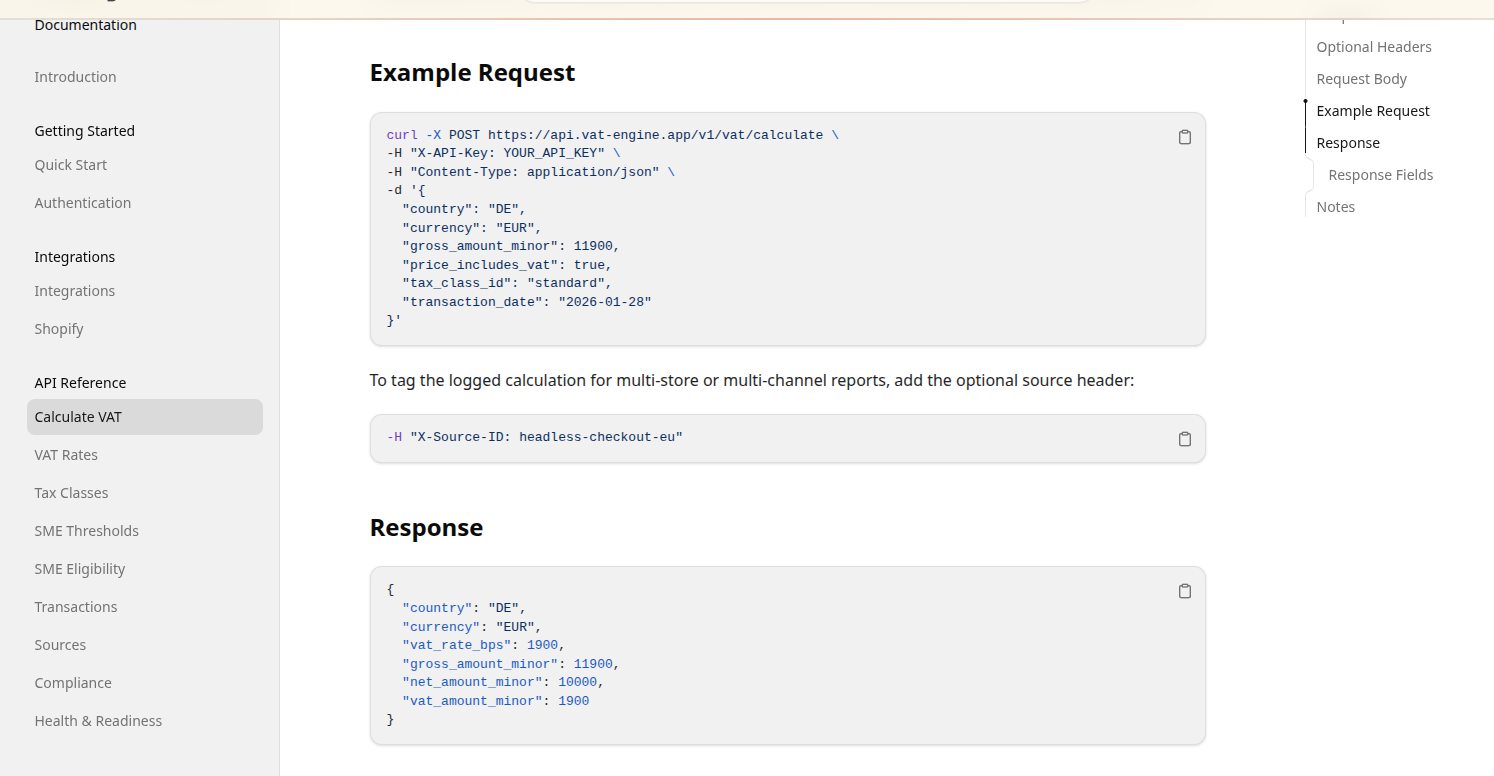
VAT Engine is an EU VAT calculation and compliance platform for developers, ecommerce businesses, SaaS products, and headless commerce.
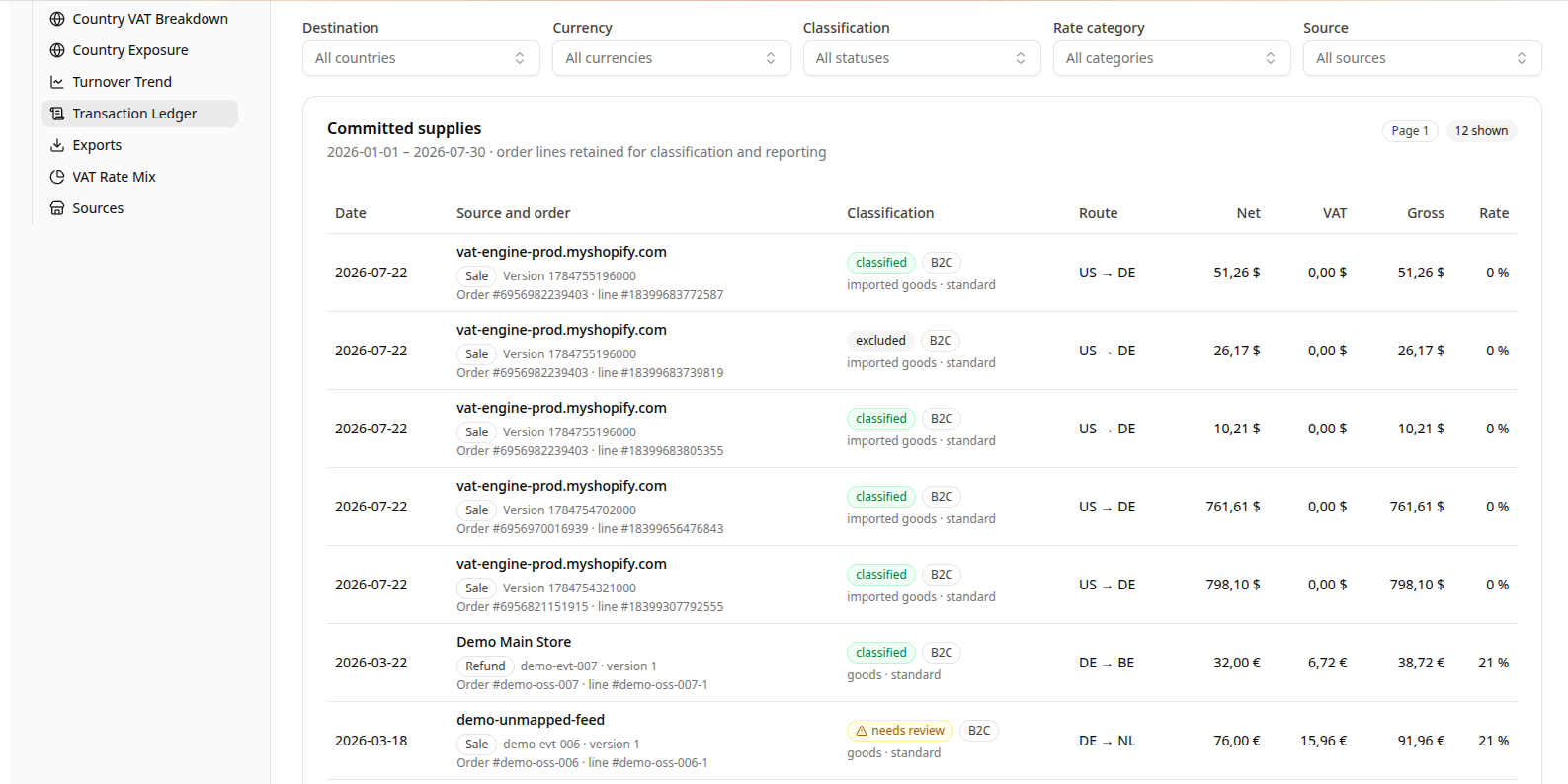
It provides a REST API and web dashboard for VAT calculations, VAT rate lookup, product tax classes, VAT-inclusive and VAT-exclusive pricing, SME VAT thresholds, transaction records, and source-aware reporting.
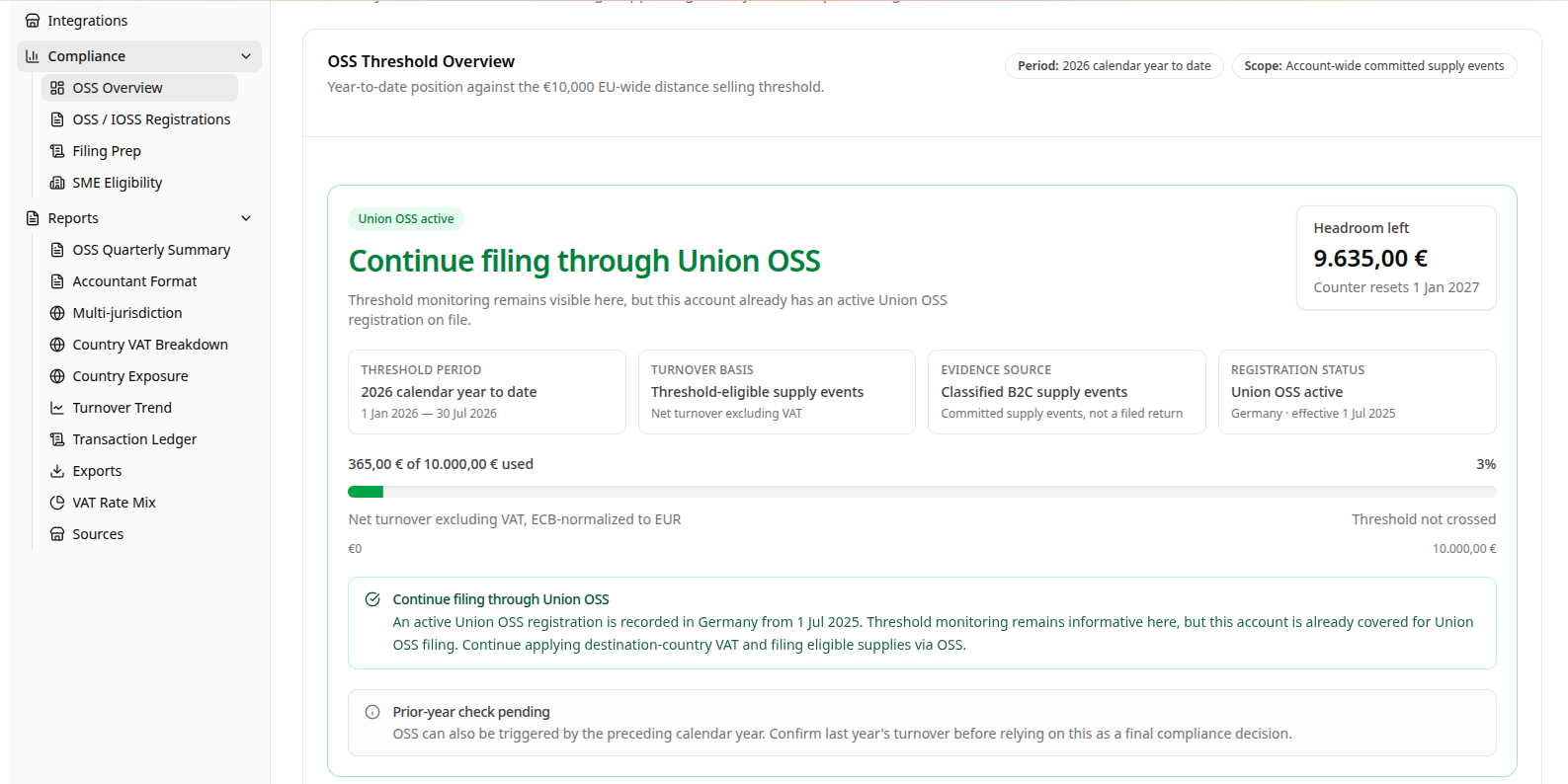
Date-indexed rate lookup is available where recorded/imported history provides coverage. VAT Engine also includes OSS/IOSS preparation workflows, multi-store reporting, managed source profiles, and an alpha Shopify integration.
The product is currently available with free alpha access while the API, compliance workflows, and integrations continue to be validated.
Features
- EU VAT calculation API
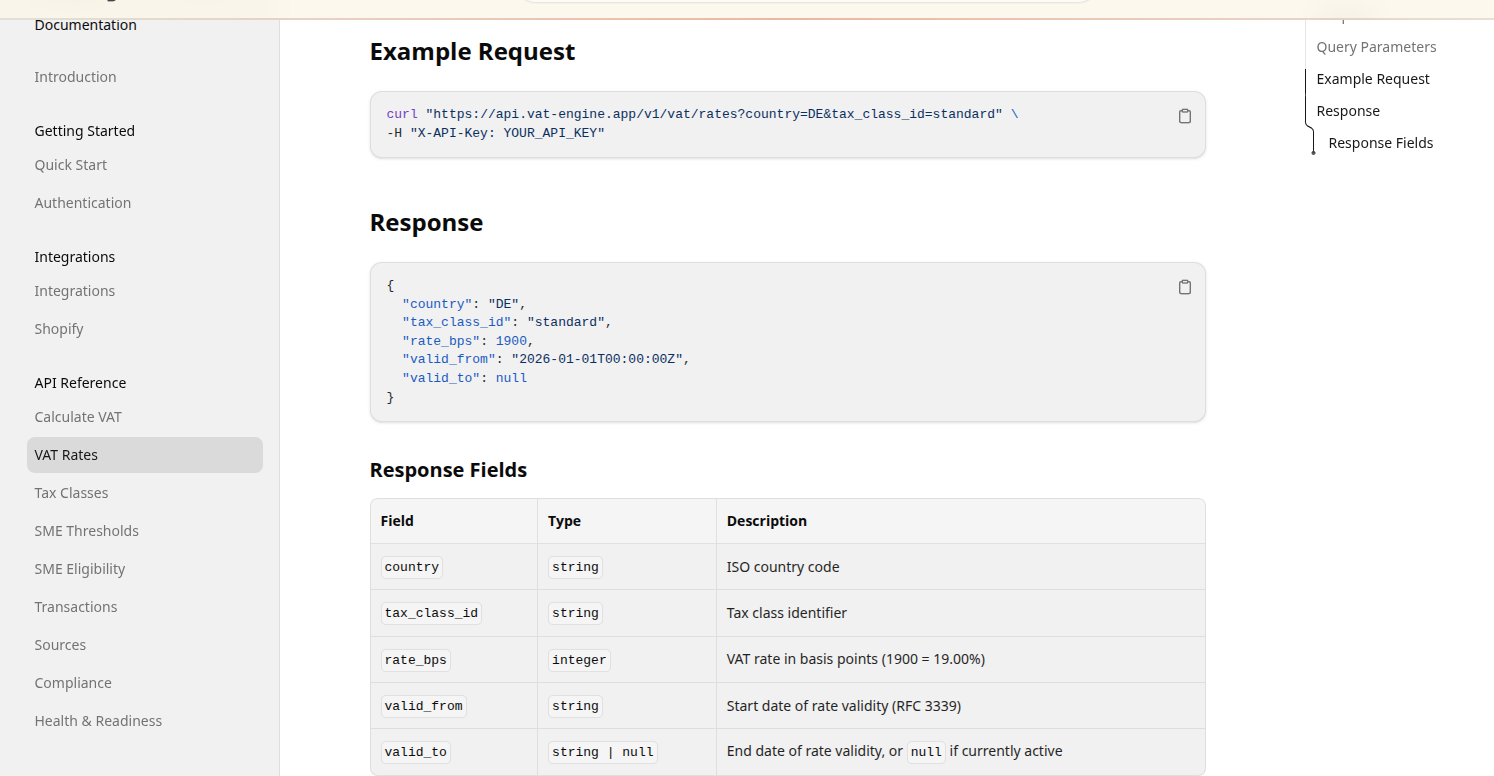
- Current and date-indexed VAT rate lookup
- Product tax classes
- VAT-inclusive and VAT-exclusive pricing
- SME VAT thresholds
- Transaction history and source profiles
- OSS/IOSS preparation workflows
- Multi-store and multi-channel reporting
- Shopify integration
- Scoped API keys and account security
Use Cases
- Add EU VAT calculation to a headless checkout
- Integrate VAT logic into SaaS subscription billing
- Resolve rates by country, tax class, and transaction date
- Track VAT calculations by store or sales channel
- Prepare OSS/IOSS reporting data for review
- Import and review Shopify commerce data
- Build internal finance or compliance tools on top of the API

Comments


I started VAT Engine because EU VAT becomes much harder once you move beyond a simple rate lookup. Developers end up dealing with product tax classes, transaction dates, multiple stores, OSS/IOSS workflows, and the need to understand later why a certain VAT result was produced. I’m building VAT Engine as a developer-first API and dashboard around those problems. It’s currently in free alpha, and I’m especially interested in feedback from developers and ecommerce teams using VAT in real integrations.

Keeping a record of why a VAT result was produced is the part most tools skip. We hit the same problem with mileage rates: when the rate changes, old transactions have to keep the rate they were calculated with. If a rate in your table gets corrected later, does an existing transaction record keep its original rate and source, or get recalculated?

Premium Products




































Makers
Makers
Comments
I started VAT Engine because EU VAT becomes much harder once you move beyond a simple rate lookup. Developers end up dealing with product tax classes, transaction dates, multiple stores, OSS/IOSS workflows, and the need to understand later why a certain VAT result was produced. I’m building VAT Engine as a developer-first API and dashboard around those problems. It’s currently in free alpha, and I’m especially interested in feedback from developers and ecommerce teams using VAT in real integrations.
Keeping a record of why a VAT result was produced is the part most tools skip. We hit the same problem with mileage rates: when the rate changes, old transactions have to keep the rate they were calculated with. If a rate in your table gets corrected later, does an existing transaction record keep its original rate and source, or get recalculated?
Premium Products
New to Fazier?

Find your next favorite product or submit your own. Made by @FalakDigital.
Copyright ©2026. All Rights Reserved