
Uindow
AI browser immune to prompt injections
Uindow drives a real, signed Chromium/Electron browser with genuine OS-level input - actual cursor movement, real keystrokes, and native file dialogs rather than synthetic page events. It runs entirely on your own machine and your own network, and every line of code it executes sits in plain sight in this repository.
Features
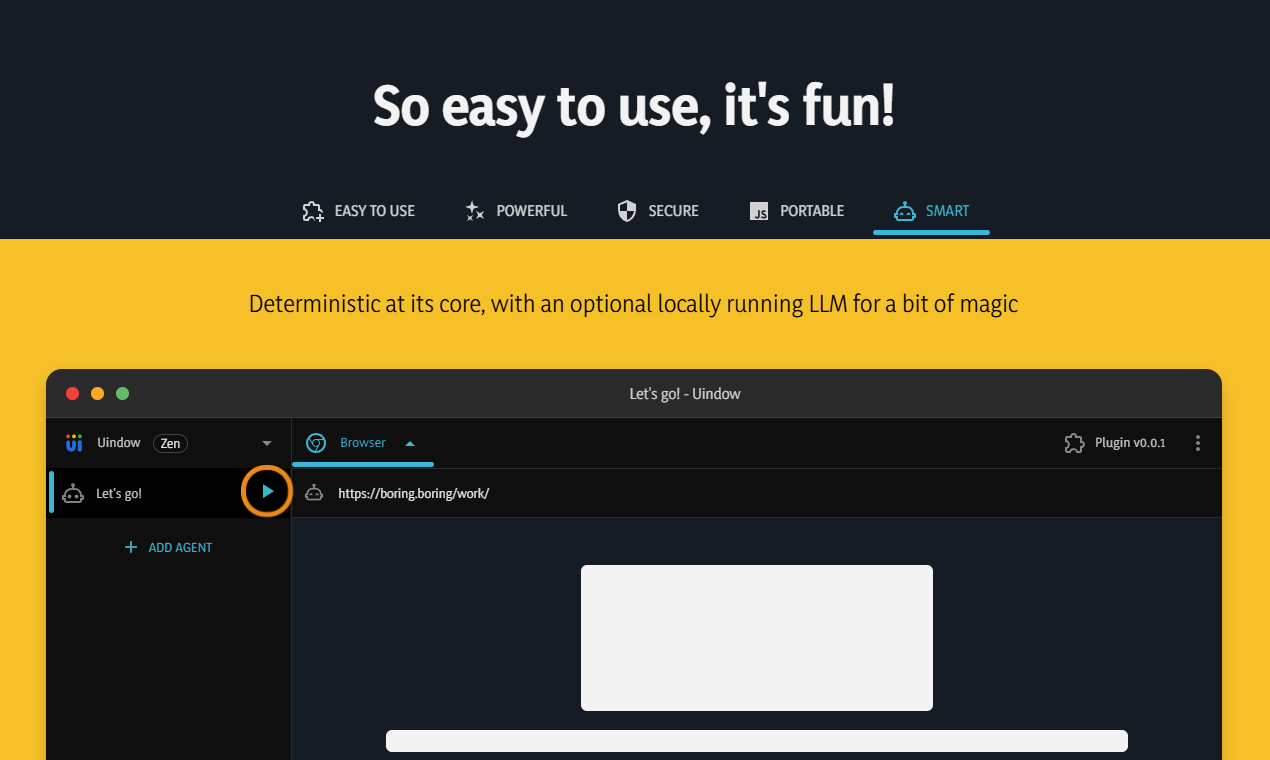
- Locally running LLM
- Locally running MCP server
- No-code recorder
- Shareable modules
- IDE with linting, parsing and auto-complete
Use Cases
- front-end testing (QA)
- web scraping
- web automation

Comments


Prompt injection is the thing that actually worries me building browser-automation workflows day to day — most defenses I've seen are prompt-level ("don't follow embedded instructions"), which is brittle. Is your approach architectural (isolating what the model treats as data vs. instructions) or still model-level judgment calls?



The real-OS-input bet is the smart part here. Most automation stacks fire synthetic DOM events that sites can fingerprint, so driving genuine cursor movement and keystrokes should sail past a lot of the bot-detection that trips up Playwright and Puppeteer. The "every line sits in plain sight in this repo" stance is a nice trust signal too. One genuine question: how do you keep runs deterministic for CI when you depend on real OS-level input timing rather than synthetic events? Curious whether input-latency flakiness becomes a problem at scale.

The real OS-level input approach is genuinely clever — most automation tools rely on synthetic events that modern sites fingerprint and block. What's your experience with headless vs headed mode for tasks requiring CAPTCHA solving? Also curious whether the signed Chromium requirement limits deployment in containerized environments like Docker. This looks like a great fit for AI agents that need to interact with sites defensively designed against bots.
The local-first approach is compelling, especially paired with visible source code and native file-dialog support. For teams using this in CI, I’d be interested in how you recommend balancing realistic OS-level input with repeatable tests — e.g., whether recorder output includes enough waits/assertions to keep runs stable across different machines.

Impressive approach to browser automation! Running on genuine OS-level input instead of synthetic page events is a smart move most automation tools break on sites that detect headless browsers. The prompt injection immunity is what really stands out here, especially for teams running scraping or QA pipelines where untrusted content

The real-OS-input approach is a genuinely clever move. Most automation stacks rely on synthetic DOM events that modern anti-bot systems (like Cloudflare or Akamai) can easily fingerprint and block, so driving a real cursor and actual keystrokes should bypass a lot of those hurdles. That said, from a QA and stability perspective, I have one question regarding CI/CD pipelines: How do you maintain determinism when relying on real OS-level input timing rather than synthetic events? Does input latency flakiness become an issue at scale, and are there any recommended best practices for balancing "realistic input" with "test speed" in a headless environment?




Premium Products













































Sponsors
Buy




Makers

Makers
Comments
Prompt injection is the thing that actually worries me building browser-automation workflows day to day — most defenses I've seen are prompt-level ("don't follow embedded instructions"), which is brittle. Is your approach architectural (isolating what the model treats as data vs. instructions) or still model-level judgment calls?
The real-OS-input bet is the smart part here. Most automation stacks fire synthetic DOM events that sites can fingerprint, so driving genuine cursor movement and keystrokes should sail past a lot of the bot-detection that trips up Playwright and Puppeteer. The "every line sits in plain sight in this repo" stance is a nice trust signal too. One genuine question: how do you keep runs deterministic for CI when you depend on real OS-level input timing rather than synthetic events? Curious whether input-latency flakiness becomes a problem at scale.
The real OS-level input approach is genuinely clever — most automation tools rely on synthetic events that modern sites fingerprint and block. What's your experience with headless vs headed mode for tasks requiring CAPTCHA solving? Also curious whether the signed Chromium requirement limits deployment in containerized environments like Docker. This looks like a great fit for AI agents that need to interact with sites defensively designed against bots.
The local-first approach is compelling, especially paired with visible source code and native file-dialog support. For teams using this in CI, I’d be interested in how you recommend balancing realistic OS-level input with repeatable tests — e.g., whether recorder output includes enough waits/assertions to keep runs stable across different machines.
Impressive approach to browser automation! Running on genuine OS-level input instead of synthetic page events is a smart move most automation tools break on sites that detect headless browsers. The prompt injection immunity is what really stands out here, especially for teams running scraping or QA pipelines where untrusted content
The real-OS-input approach is a genuinely clever move. Most automation stacks rely on synthetic DOM events that modern anti-bot systems (like Cloudflare or Akamai) can easily fingerprint and block, so driving a real cursor and actual keystrokes should bypass a lot of those hurdles. That said, from a QA and stability perspective, I have one question regarding CI/CD pipelines: How do you maintain determinism when relying on real OS-level input timing rather than synthetic events? Does input latency flakiness become an issue at scale, and are there any recommended best practices for balancing "realistic input" with "test speed" in a headless environment?
Premium Products
New to Fazier?

Find your next favorite product or submit your own. Made by @FalakDigital.
Copyright ©2026. All Rights Reserved