
TruIntel
Analytics built for AI Search
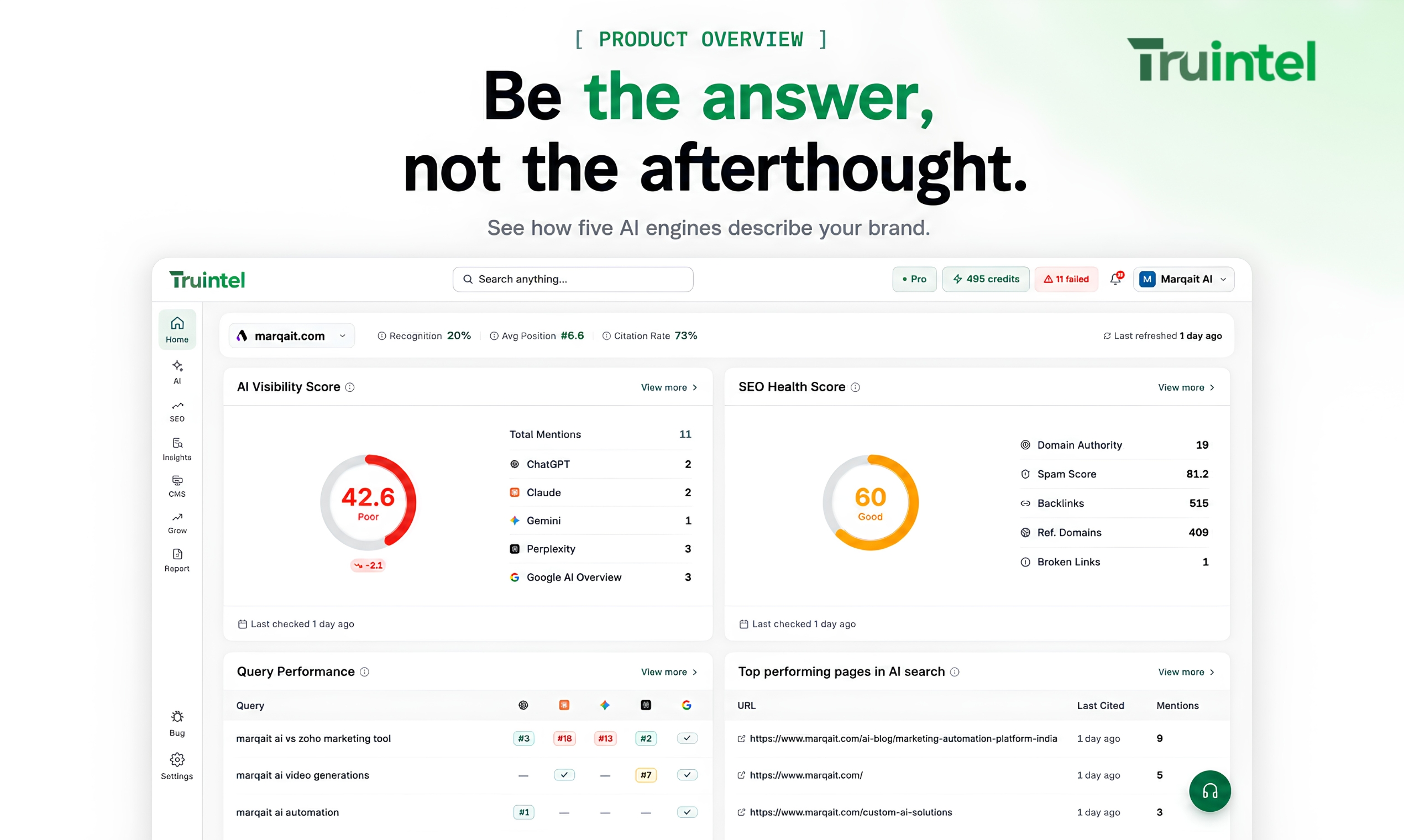
TruIntel is an AI Visibility and AEO platform built for the shift from Google to AI search. People are increasingly asking ChatGPT, Claude, Gemini, Perplexity, and Google AI Overview what to buy, which companies to trust, and which products to consider. The problem is that most brands have no idea how often they appear in those answers, why they are being mentioned, or why competitors are showing up instead. TruIntel gives you one place to track your brand across the major AI engines, monitor mentions, citations, rankings, sentiment, and share of voice, and see exactly where you are losing visibility. More importantly, TruIntel turns that data into actionable recommendations. If your brand is missing from an important question, you can see what is missing, what competitors are doing differently, and what content or SEO changes could help. You can create the recommended content directly in TruIntel, connect your domain, and publish it to your website in one click. It is built for founders, marketers, agencies, and growing businesses that want to compete in AI search without hiring an expensive agency or piecing together a dozen different tools.
Features
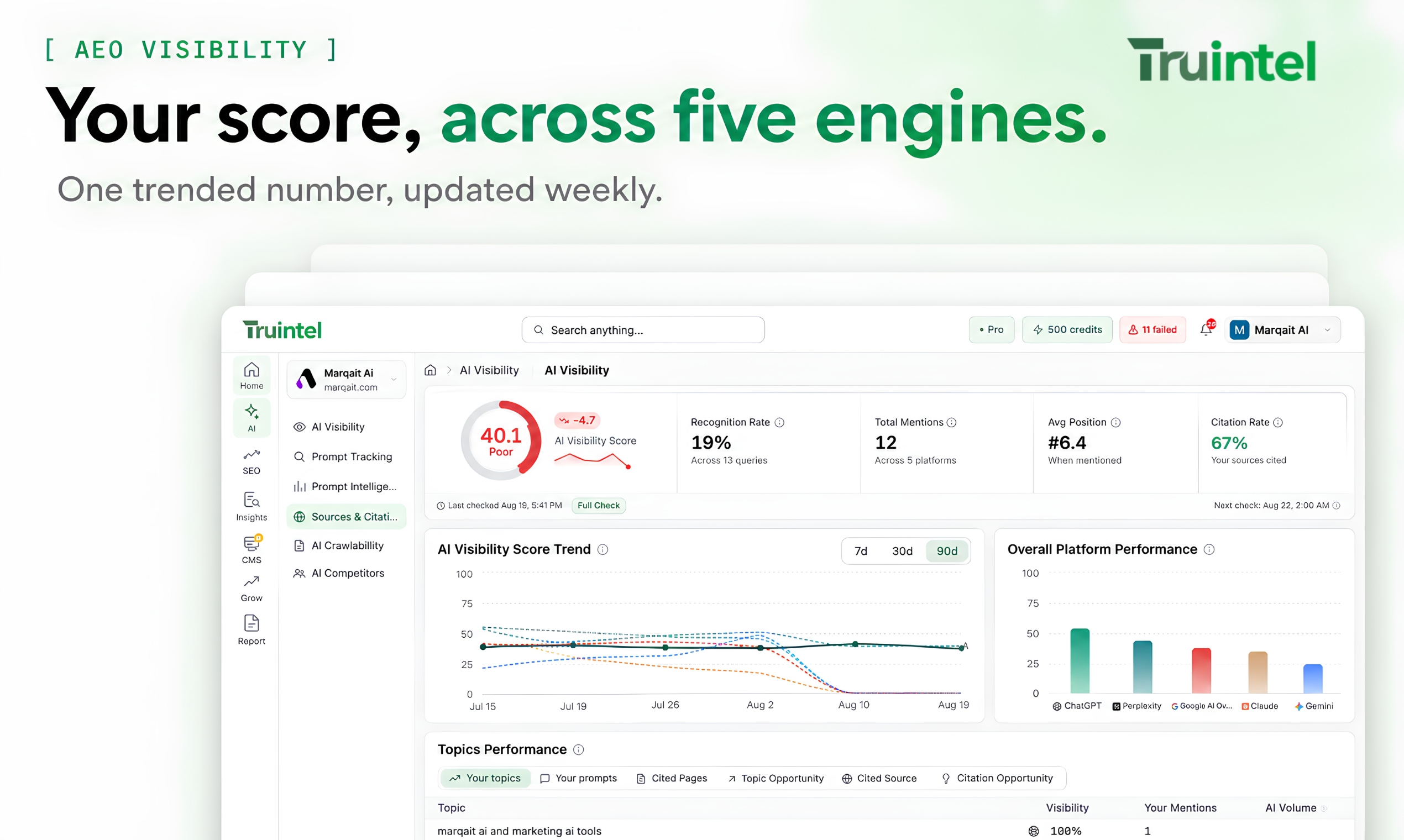
• AI Visibility Score (0–100): See your overall visibility across AI search based on Recognition, Position, Sentiment, and Citation.
• Multi Engine Tracking: Monitor your brand across ChatGPT, Claude, Gemini, Perplexity, and Google AI Overview.
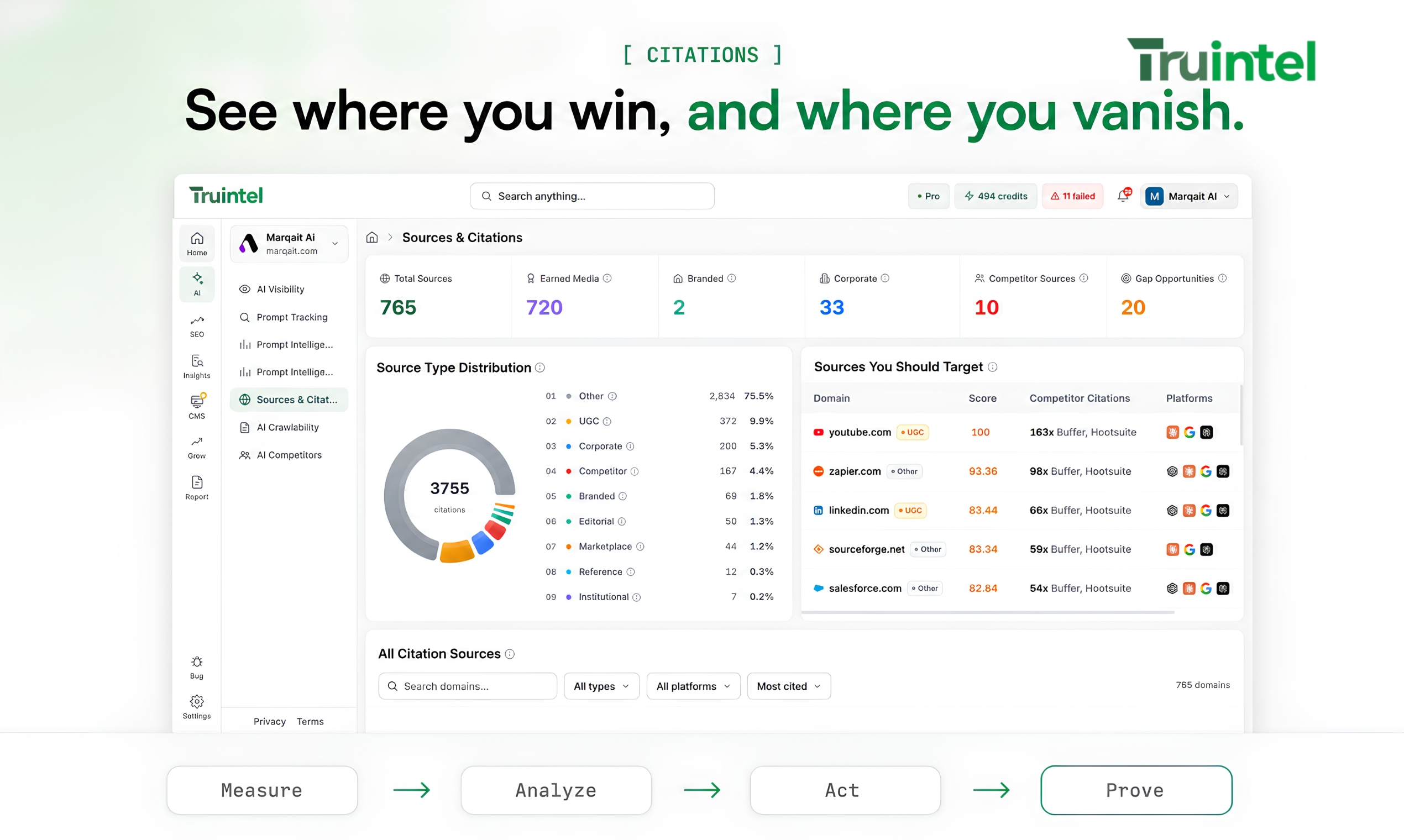
• Citation & Source Analysis: See which websites AI engines cite, where your brand is being cited, and where citation opportunities are being missed.
• Competitor Benchmarking: Compare your AI visibility and share of voice directly against the competitors you care about.
• AI Suggested Tracking Queries: Get relevant questions to track based on your brand, industry, products, and competitors.
• Content Gap Recommendations: See the questions and topics where competitors are getting visibility but your brand is missing, along with recommendations for what you should create.
• AI Content Creation & Publishing: Create the content you need inside TruIntel, connect your domain, and publish it to your website in one click.
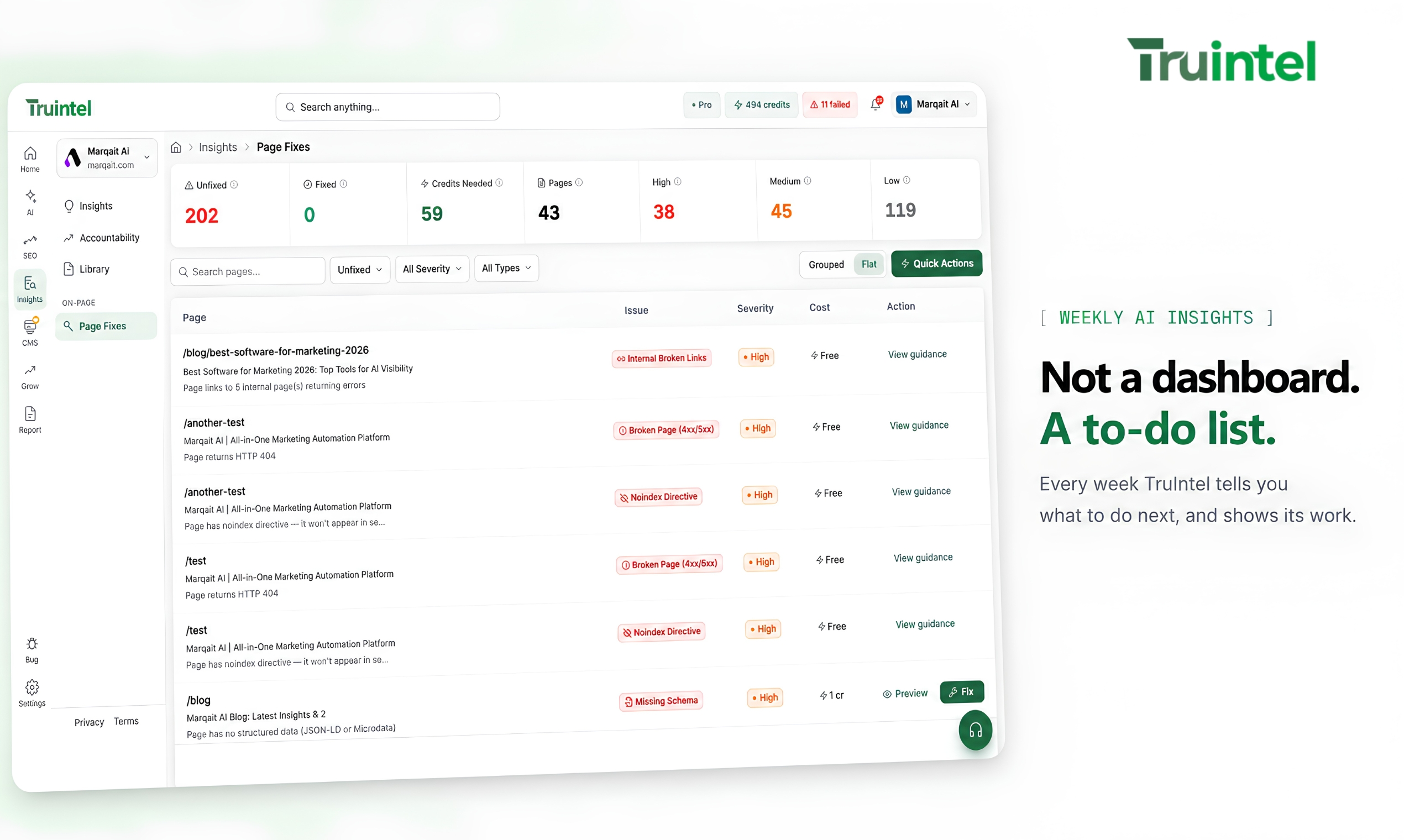
• Site Audit & AI Crawlability: Check whether AI crawlers can access your website and get a clear list of issues that may be limiting your visibility.
• SEO Health Monitoring: Track the SEO fundamentals that continue to influence both traditional search and AI visibility.
• Prompt & Topic Research: Organize your tracking queries by topic and intent, including informational, commercial, and comparison searches.
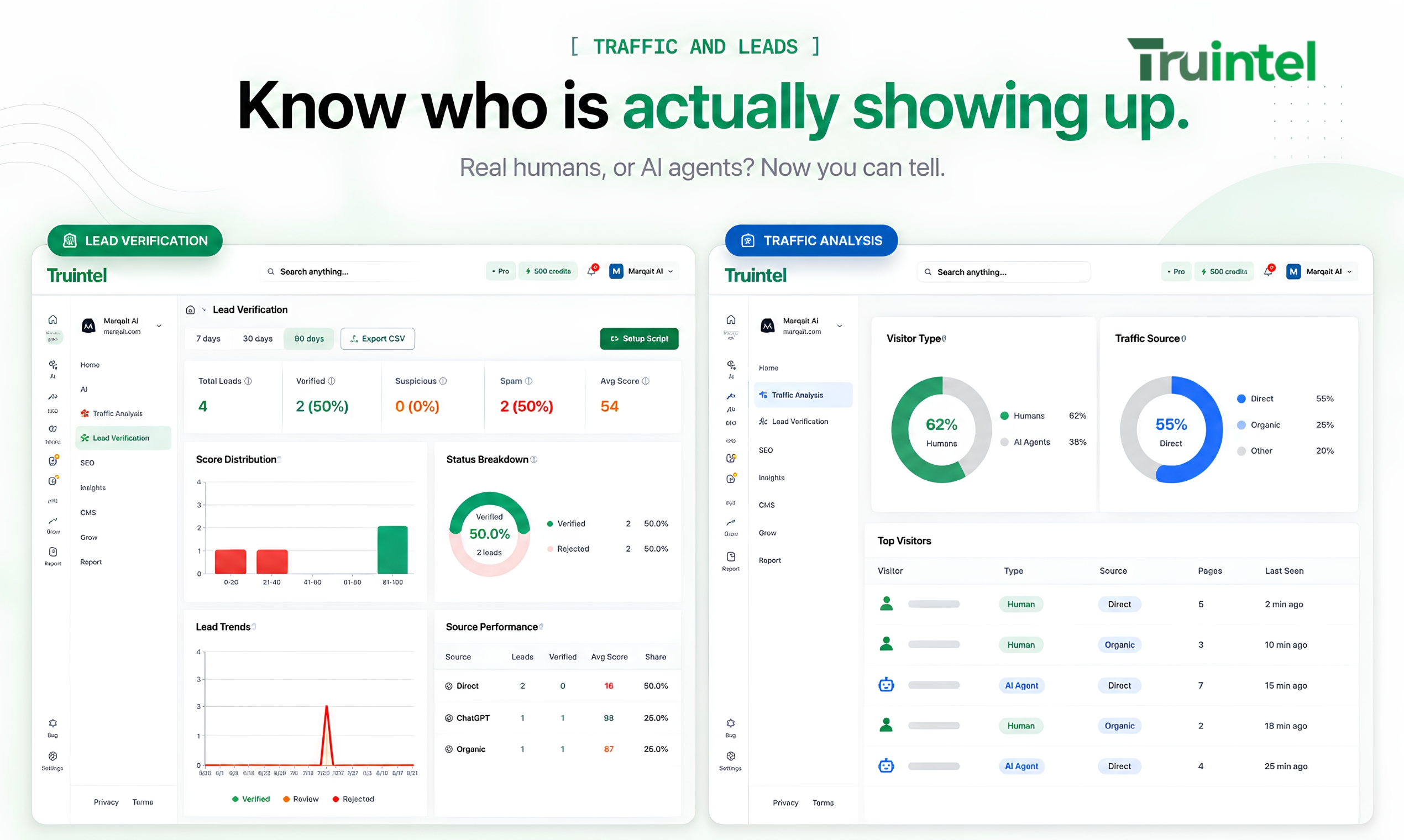
• Traffic & Lead Intelligence: Separate real human traffic from AI agents and bots, while identifying potentially fake or invalid leads.
• Weekly Actionable Insights: Get a prioritized list of what to fix, create, and improve based on the data TruIntel is seeing.
• Executive Reporting: Create clear reports that show AI visibility, progress, competitors, and opportunities for your team, clients, or leadership.
Use Cases
• Startups & DTC brands: See whether AI assistants recommend your brand when customers are looking for products like yours.
• SaaS companies: Track whether your product appears when buyers ask AI for software recommendations, alternatives, and comparisons.
• Marketing agencies: Run AI visibility audits for clients and offer AEO as a new service without building your own tracking infrastructure.
• Content teams: Identify the topics and questions creating visibility for competitors and turn those gaps into content opportunities.
• Founders & solopreneurs: Get actionable AI search insights without paying for an expensive agency or managing multiple tools.
• Enterprise brands: Monitor AI share of voice, citations, competitors, and brand visibility across the major AI platforms.
• E commerce brands: See whether AI assistants surface your products when shoppers ask for recommendations, alternatives, or the best products in a category.

Comments


The citation & source analysis feature stands out to me — knowing which sites AI engines actually cite is the actionable part of AEO, since that's where content investment pays off. Question: do you track how citations change over time for the same query, or is it a point-in-time snapshot? Also curious how you handle the same prompt returning different answers across runs — is there any averaging or confidence interval behind the visibility score?

Hey everyone! I’m Aamir, co-founder of TruIntel. We built TruIntel because we kept running into a pretty weird problem. We could see how our brand was doing on Google. We could see our traffic. We could see leads. But when someone asked ChatGPT or Perplexity about us, we had basically no idea what was happening. Were we being mentioned? Who was getting cited instead? Which pages were the models actually reading? So we started building the tool we wished we had. TruIntel shows you your visibility across AI search, the sources being cited, the pages that need attention, and what you can actually do to improve things. It also helps you understand the traffic coming to your site and whether it’s humans or AI agents. If you have a website or run a brand, give it a shot. I’d genuinely love to know what you find. Really excited (and slightly nervous) to finally put this out there. 👋



Tracking share of voice across ChatGPT, Claude, Gemini and Perplexity in one place is useful, since the answers often differ a lot between engines. How do you handle that variability? Do you run the same prompt several times and average the results, or take one snapshot per day? It would also be great to see which cited pages drive the mention, so we know which page to improve.


The citation and source analysis is the standout feature here — most visibility tools tell you where you appear, but knowing which sources AI engines actually cite gives you a concrete playbook for earning those citations. Curious whether you normalize the visibility score across engines, since ChatGPT and Perplexity cite so differently.

Tracking mentions, citations, rankings, sentiment, and share of voice across ChatGPT, Claude, Gemini, Perplexity, and Google AI Overview, with crawlability audits and content-gap recommendations, makes AI-search visibility something you can actually measure. When that monitoring stack starts driving model spend, PZERO is at pzero.studio.

The AI crawlability audit is the feature I'd try first — a surprising number of sites accidentally block AI crawlers in robots.txt or through CDN bot rules without realizing it, and all the visibility tracking in the world won't help if the bots can't fetch your pages. One question: does the audit distinguish between 'blocked specifically for AI crawlers' vs 'blocked for all bots'? That distinction matters, because many site owners want to block scrapers while still allowing AI search crawlers. Also curious about the recompute cadence for the visibility score — AI answers shift quickly, so anything slower than weekly would make trend tracking hard to trust.
Premium Products





















Sponsors
Buy
Makers
Makers
Comments
The citation & source analysis feature stands out to me — knowing which sites AI engines actually cite is the actionable part of AEO, since that's where content investment pays off. Question: do you track how citations change over time for the same query, or is it a point-in-time snapshot? Also curious how you handle the same prompt returning different answers across runs — is there any averaging or confidence interval behind the visibility score?
Hey everyone! I’m Aamir, co-founder of TruIntel. We built TruIntel because we kept running into a pretty weird problem. We could see how our brand was doing on Google. We could see our traffic. We could see leads. But when someone asked ChatGPT or Perplexity about us, we had basically no idea what was happening. Were we being mentioned? Who was getting cited instead? Which pages were the models actually reading? So we started building the tool we wished we had. TruIntel shows you your visibility across AI search, the sources being cited, the pages that need attention, and what you can actually do to improve things. It also helps you understand the traffic coming to your site and whether it’s humans or AI agents. If you have a website or run a brand, give it a shot. I’d genuinely love to know what you find. Really excited (and slightly nervous) to finally put this out there. 👋
Tracking share of voice across ChatGPT, Claude, Gemini and Perplexity in one place is useful, since the answers often differ a lot between engines. How do you handle that variability? Do you run the same prompt several times and average the results, or take one snapshot per day? It would also be great to see which cited pages drive the mention, so we know which page to improve.
The citation and source analysis is the standout feature here — most visibility tools tell you where you appear, but knowing which sources AI engines actually cite gives you a concrete playbook for earning those citations. Curious whether you normalize the visibility score across engines, since ChatGPT and Perplexity cite so differently.
Tracking mentions, citations, rankings, sentiment, and share of voice across ChatGPT, Claude, Gemini, Perplexity, and Google AI Overview, with crawlability audits and content-gap recommendations, makes AI-search visibility something you can actually measure. When that monitoring stack starts driving model spend, PZERO is at pzero.studio.
The AI crawlability audit is the feature I'd try first — a surprising number of sites accidentally block AI crawlers in robots.txt or through CDN bot rules without realizing it, and all the visibility tracking in the world won't help if the bots can't fetch your pages. One question: does the audit distinguish between 'blocked specifically for AI crawlers' vs 'blocked for all bots'? That distinction matters, because many site owners want to block scrapers while still allowing AI search crawlers. Also curious about the recompute cadence for the visibility score — AI answers shift quickly, so anything slower than weekly would make trend tracking hard to trust.
Premium Products
New to Fazier?
Find your next favorite product or submit your own. Made by @FalakDigital.
Copyright ©2026. All Rights Reserved