
Talaria
Interactive tourism guide for exploring cities at your pace
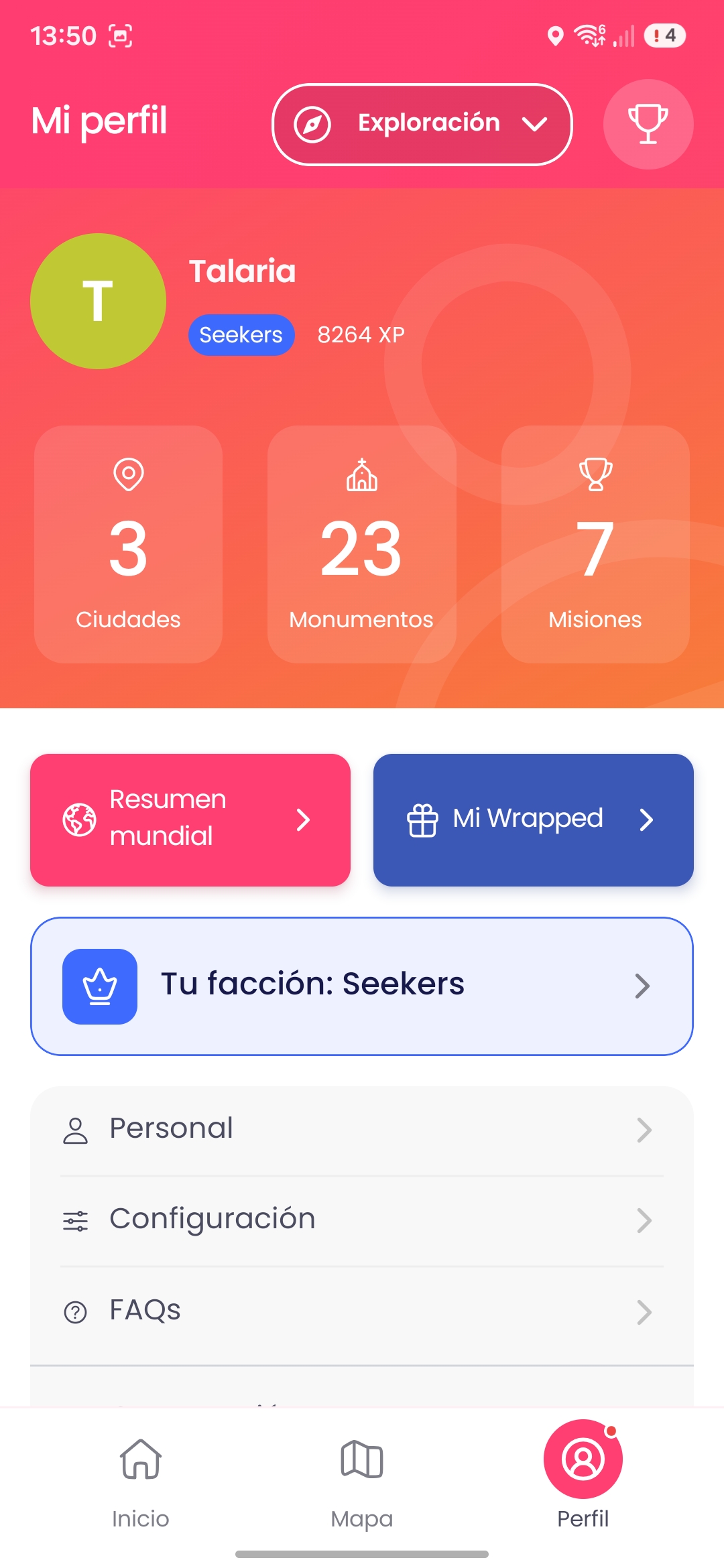
Talaria turns a city into a conquest game. Monuments appear on a live map, but you can only unlock one by physically walking to it — GPS required.
Arrive and you get its history and a narrated audio guide, then plant your faction's flag to claim it. Every claimed site adds territory for your
faction, and four factions compete for control of each city. Three modes let you play it as pure sightseeing, full conquest, or fog-of-war exploration.
Features
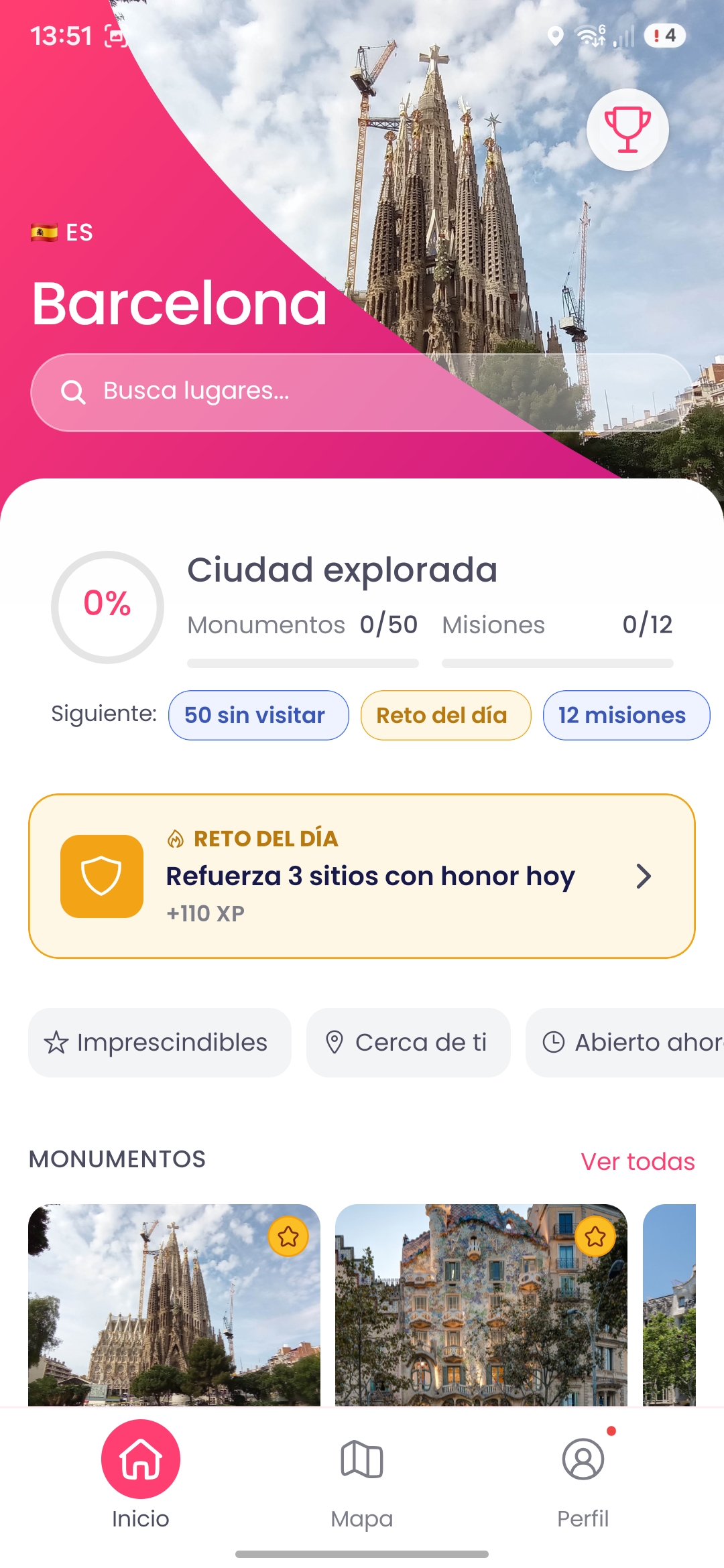
- Monument Guide — Unlock detailed stories, history and cultural context for hundreds of monuments, automatically unlocked as you visit them in person.
- Audio Guides — Narrated stories for each monument, told by historians and local voices, delivered right as you stand in front of it.
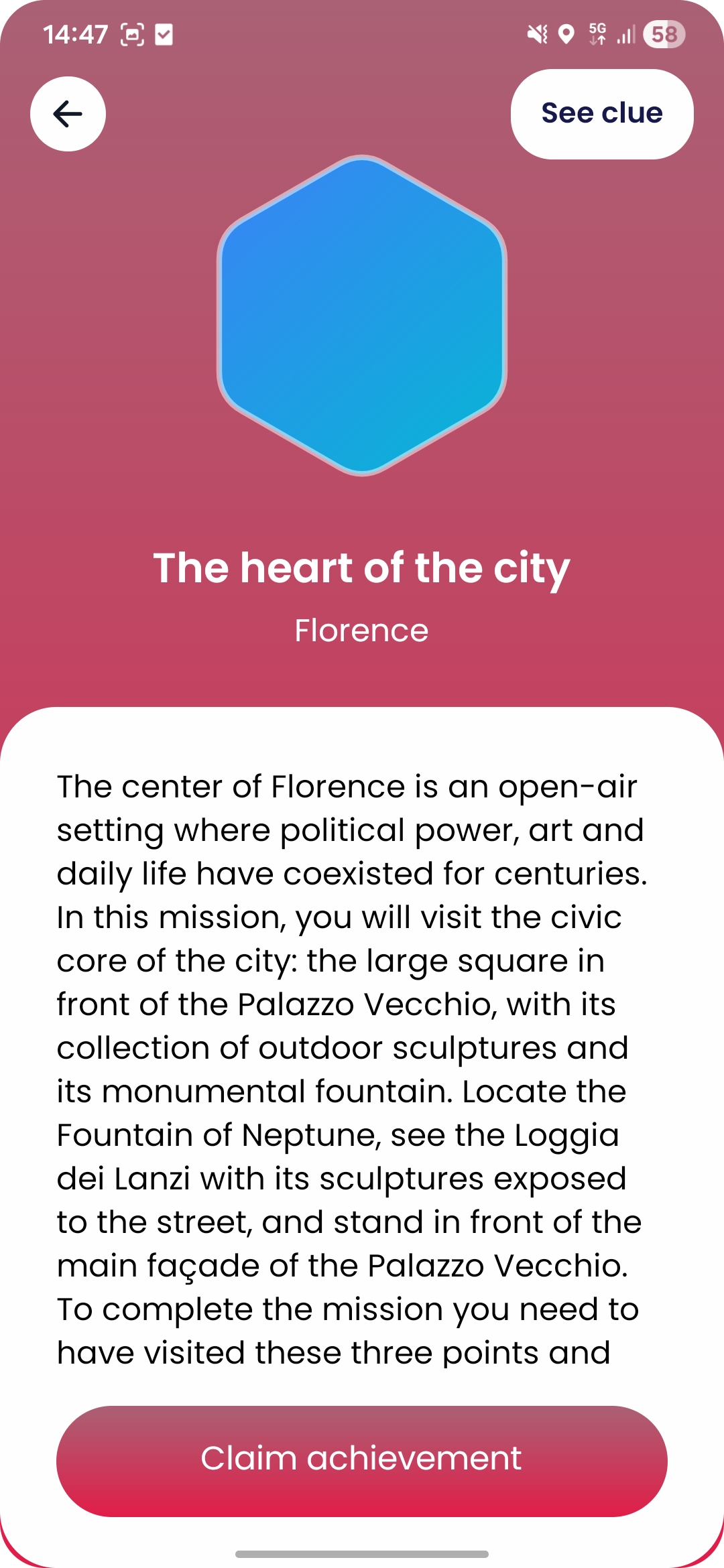
- Achievements — Hundreds of badges across Common, Epic and Legendary tiers, all tied to real physical exploration.
- Daily Challenges — Fresh objectives every day: new districts, beat-the-clock runs, streaks to keep alive.
- Three game modes — Guide (pure travel companion, no pressure), Exploration (the full game with factions and conquest) and Mystery (fog-of-war map with a 25 XP Scout mechanic).
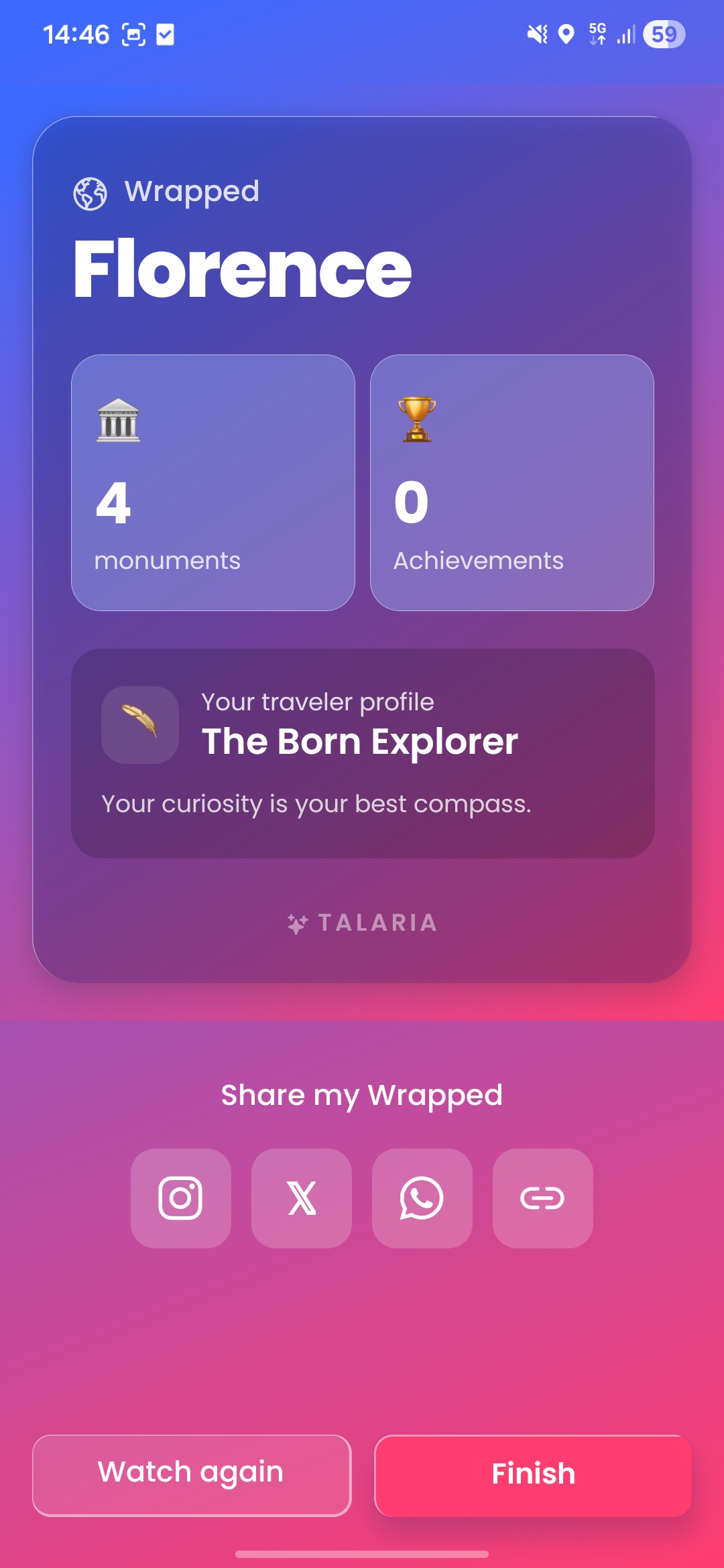
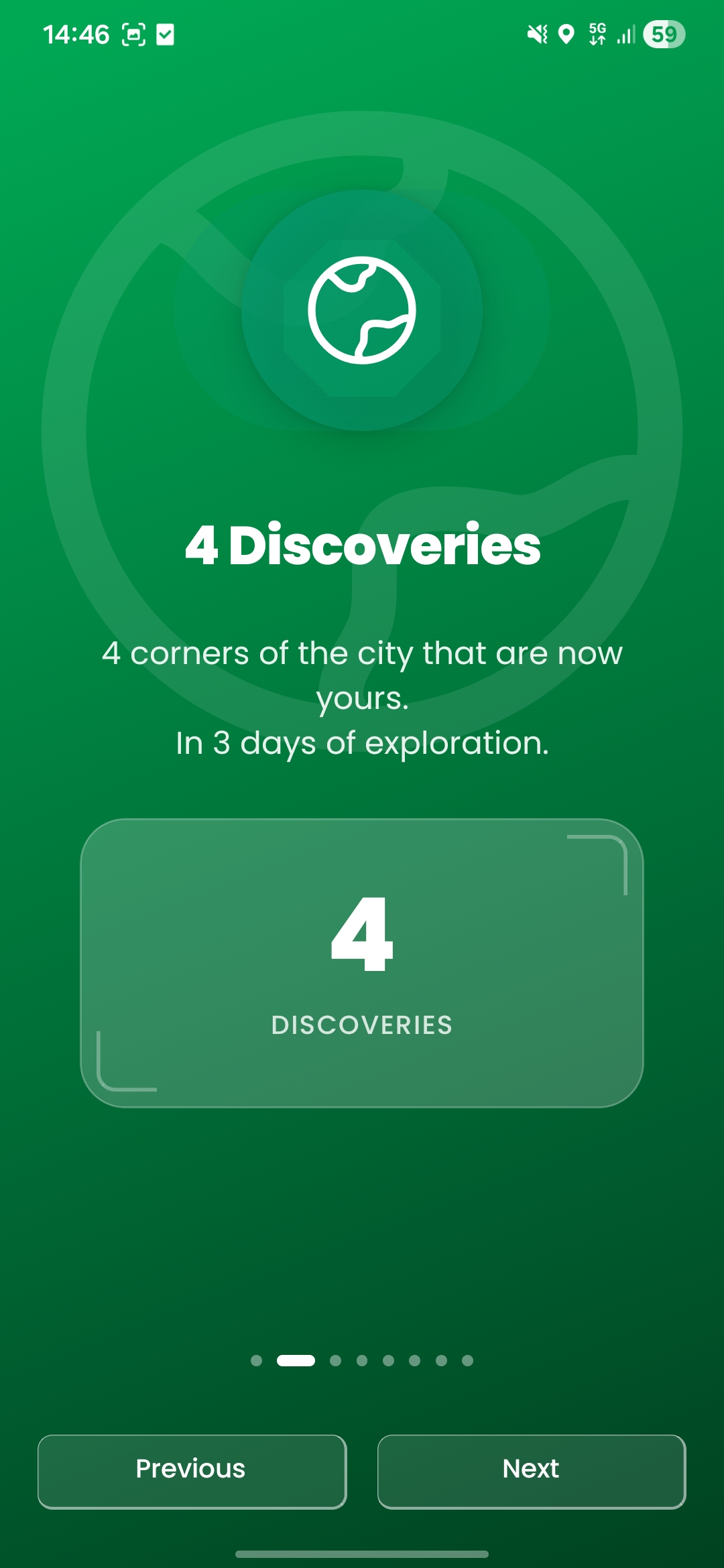
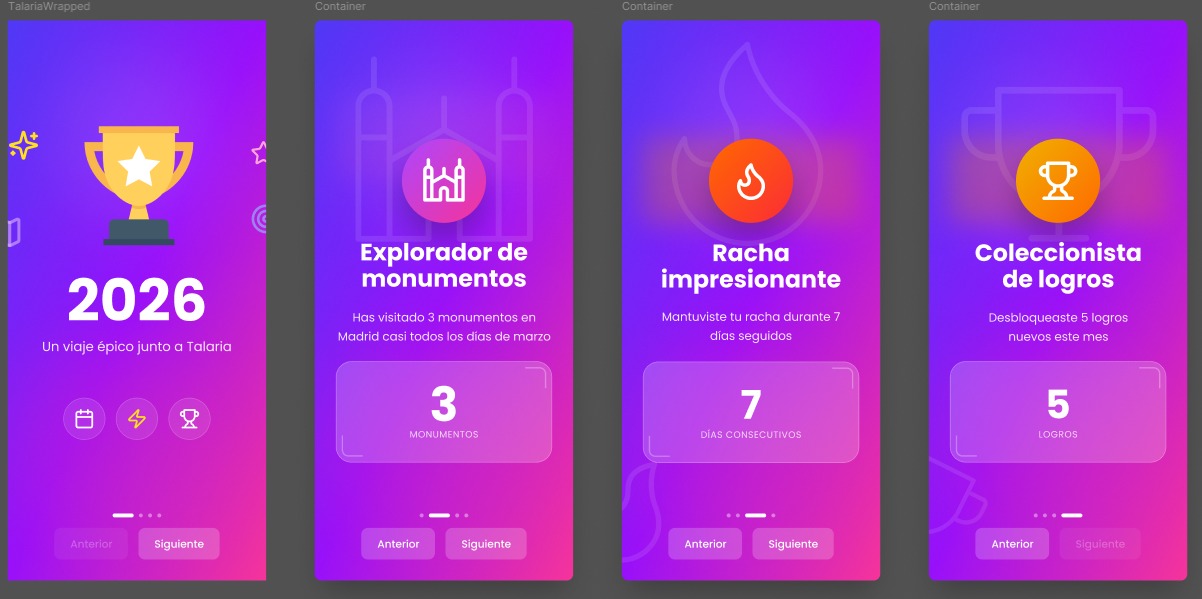
- Year Wrapped — A cinematic end-of-year recap of your exploration: cities, monuments, routes and your global impact.
Use Cases
- First-time visitors — Guide Mode works as a full audio guide and monument companion, no paid tour required.
- Rediscovering your own city — Daily Challenges and curated routes give you a reason to go outside and explore districts you thought you knew.
- A replacement for guided tours — On-demand audio guides at your own pace, with no schedules and no group to follow.
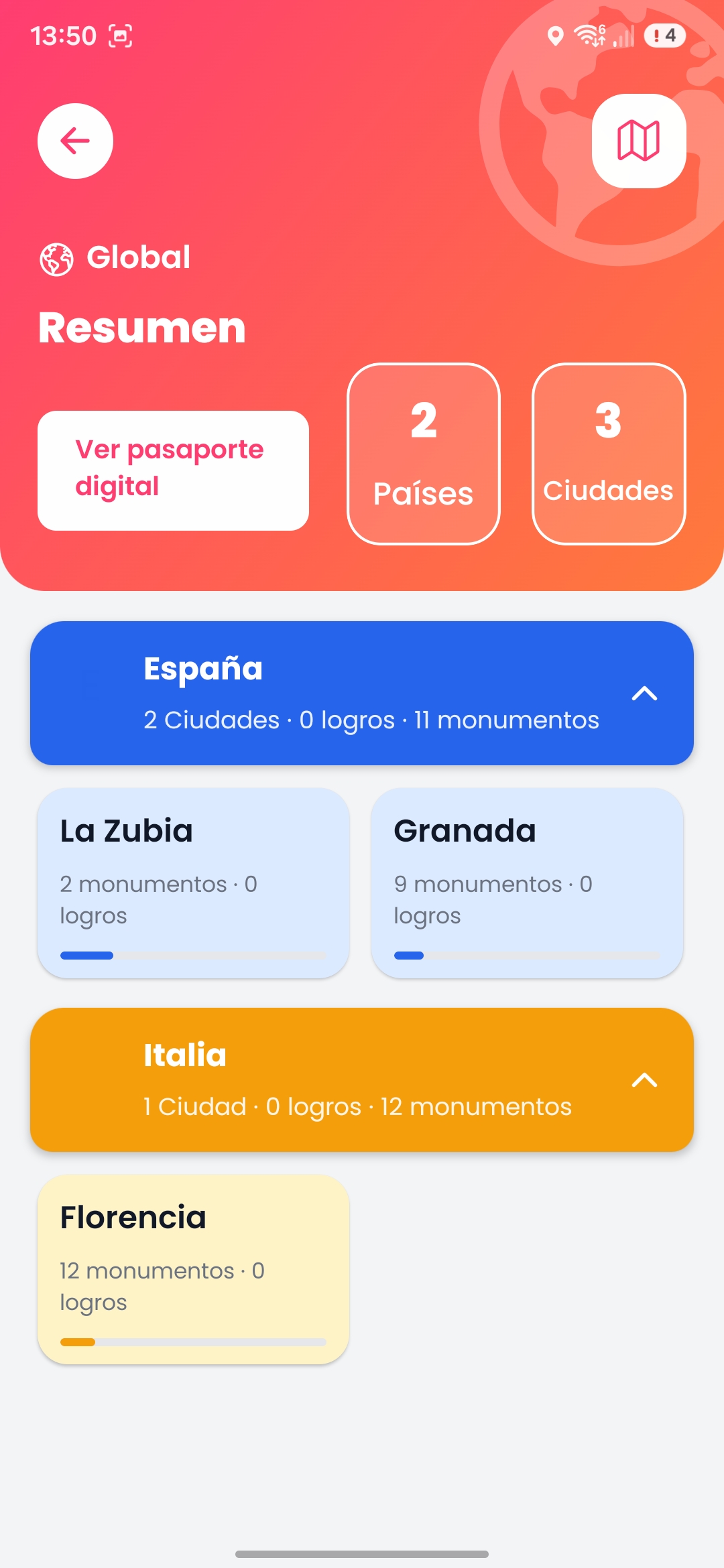
- Travel journaling — The World Passport and Year Wrapped act as a visual diary of everywhere you've been.

Comments


The GPS gate is the clever part — you can't unlock a monument from the sofa, so the reward is tied to actually being there. That's the thing most city guides get wrong, where the content works just as well at home. One thought from the travel trade side: tourist boards and small city operators spend real money trying to spread visitors beyond the same three landmarks. The fog-of-war mode looks like it would do that on its own. Have you tried taking it to a destination marketing organisation rather than only to travellers?
Audio guide on arrival is the part that lands with me: the story told at the spot, not read on the sofa. The question I'd have before recommending it is coverage: how many monuments does a mid-sized city like Cape Town or Porto have on launch, and who writes the narrations for cities that aren't Paris or Rome? A guide that goes quiet after the top ten sights is the failure mode I've seen most.

Most travel guides funnel you through pre-built routes and tourist traps. The fact that Talaria lets you explore at your own pace and discover things on your terms is the real insight. Travelers want autonomy, not curated experiences. This gives them that freedom while still providing structure and discovery. The self-directed exploration angle is a genuinely fresh approach to city guides.


The GPS-gated unlock is what makes this different from a generic audio guide app -- it forces the "did you actually go there" honesty that most travel content skips. We build AI-generated trip itineraries and one thing we deliberately avoid is inventing specific venue recommendations, since hallucinated place names are a real trust problem in this category. Curious how you handle monument data for smaller/less-documented cities -- is it manually researched per city, or crowd-contributed once local guides start using it?
Premium Products





































Sponsors
Buy
Makers

Makers
Comments
The GPS gate is the clever part — you can't unlock a monument from the sofa, so the reward is tied to actually being there. That's the thing most city guides get wrong, where the content works just as well at home. One thought from the travel trade side: tourist boards and small city operators spend real money trying to spread visitors beyond the same three landmarks. The fog-of-war mode looks like it would do that on its own. Have you tried taking it to a destination marketing organisation rather than only to travellers?
Audio guide on arrival is the part that lands with me: the story told at the spot, not read on the sofa. The question I'd have before recommending it is coverage: how many monuments does a mid-sized city like Cape Town or Porto have on launch, and who writes the narrations for cities that aren't Paris or Rome? A guide that goes quiet after the top ten sights is the failure mode I've seen most.
Most travel guides funnel you through pre-built routes and tourist traps. The fact that Talaria lets you explore at your own pace and discover things on your terms is the real insight. Travelers want autonomy, not curated experiences. This gives them that freedom while still providing structure and discovery. The self-directed exploration angle is a genuinely fresh approach to city guides.
The GPS-gated unlock is what makes this different from a generic audio guide app -- it forces the "did you actually go there" honesty that most travel content skips. We build AI-generated trip itineraries and one thing we deliberately avoid is inventing specific venue recommendations, since hallucinated place names are a real trust problem in this category. Curious how you handle monument data for smaller/less-documented cities -- is it manually researched per city, or crowd-contributed once local guides start using it?
Premium Products
New to Fazier?

Find your next favorite product or submit your own. Made by @FalakDigital.
Copyright ©2026. All Rights Reserved