
Swanum Tariff Lookup
US import duty by product, every tariff layer shown
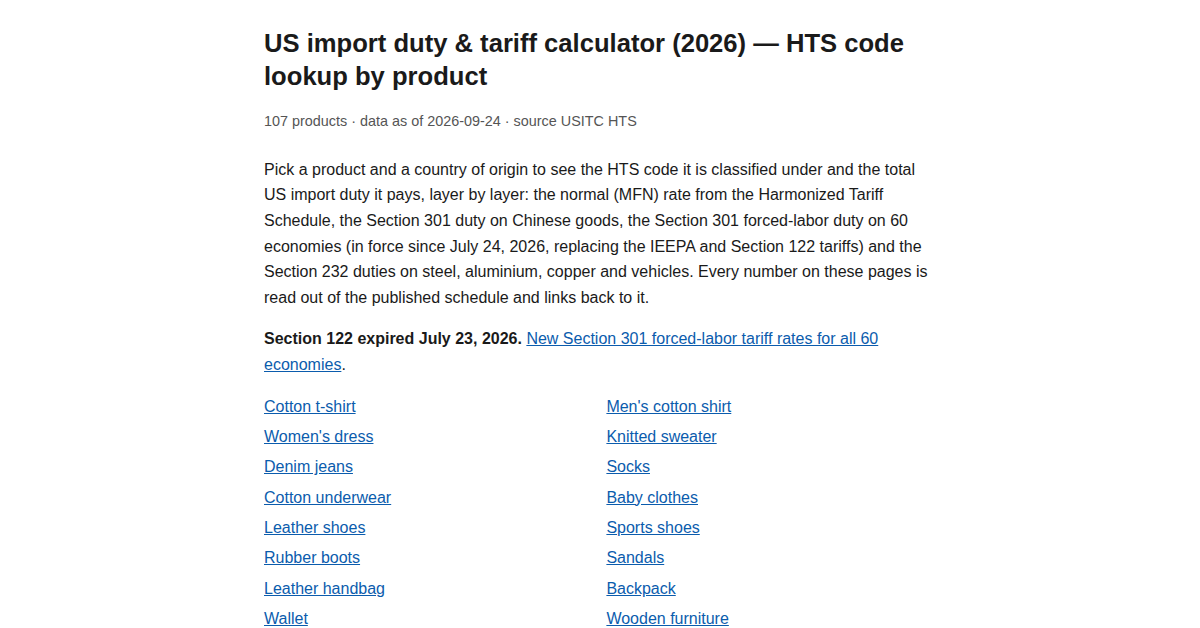
Look up the HTS code and total US import duty for 107 common products from China, Vietnam, India, Mexico and the EU. MFN, Section 301 and Section 232 duties are shown as separate layers, each linked to the Chapter 99 heading it comes from in the official USITC schedule. Free, no account.
Features
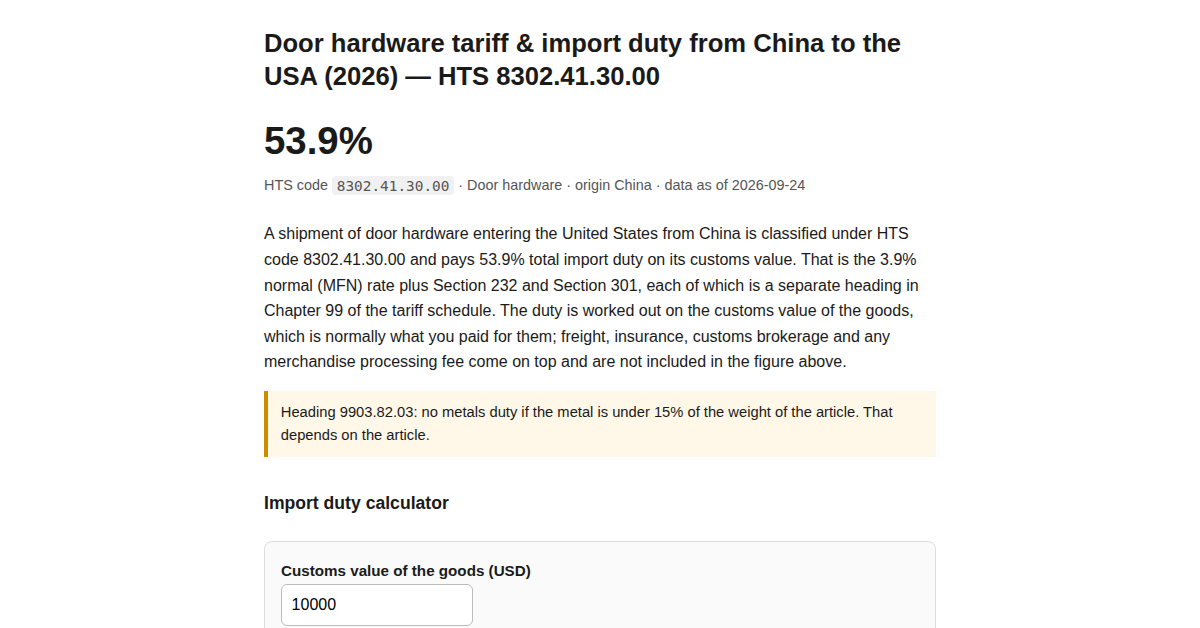
HTS code and total duty per product and country of origin
Each tariff layer shown separately with its source heading
Weekly re-check of the official schedule, rebuilt only when a rate moves
No guesses: lines charged by weight or piece show no percentage
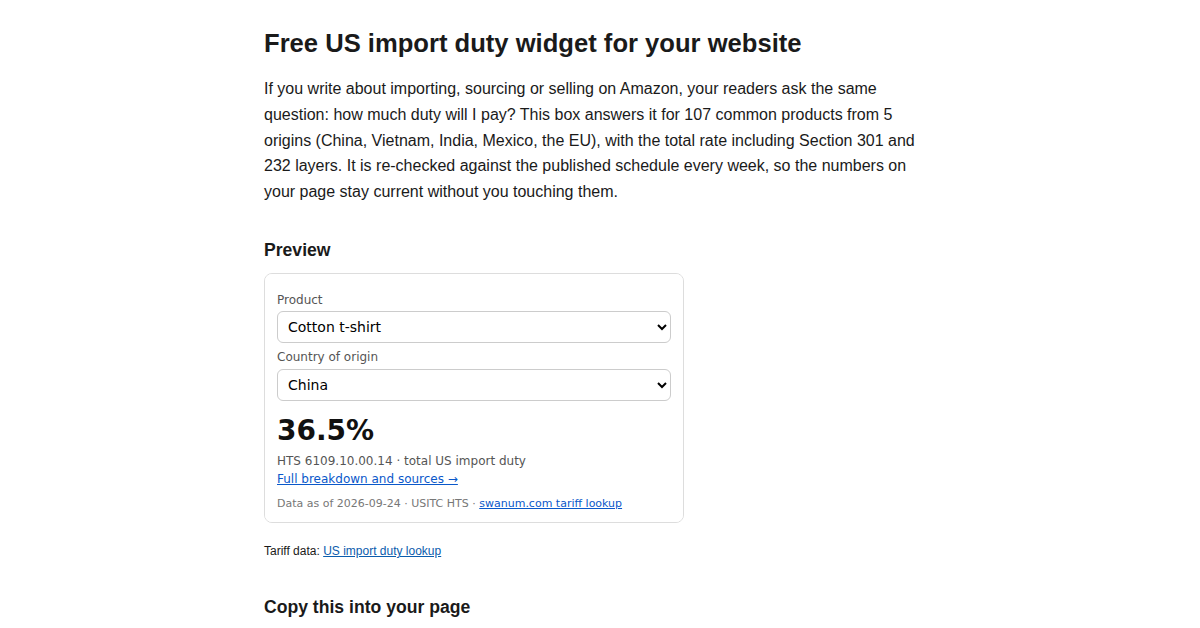
Free embeddable lookup box for blogs
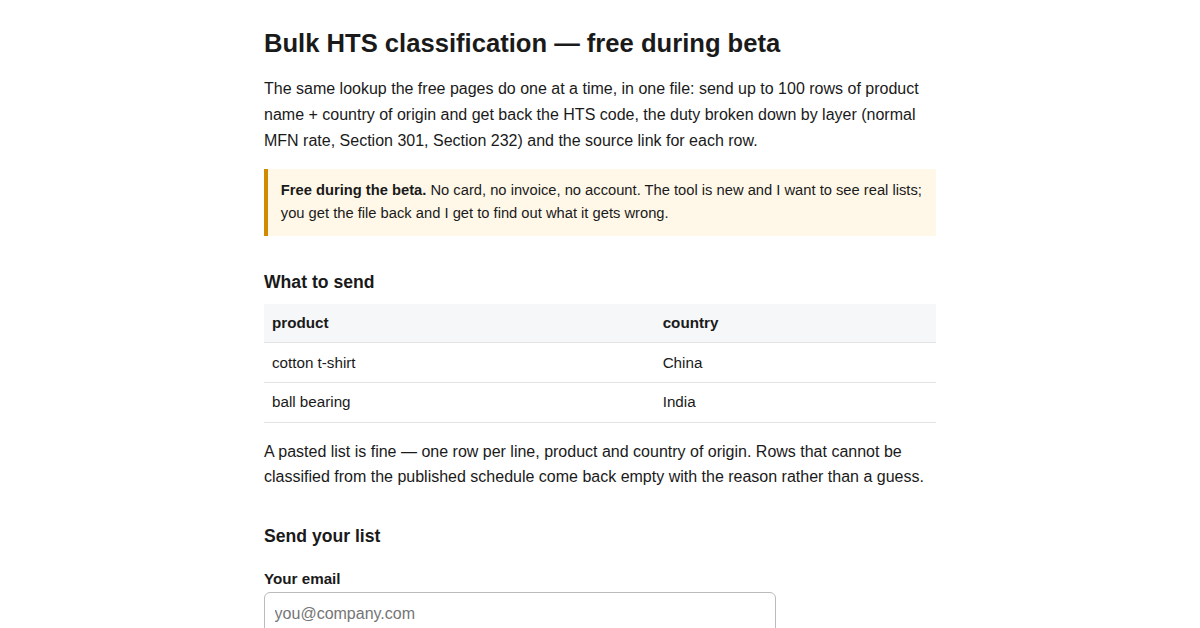
Bulk classification of a 100-row CSV (free during beta)
Use Cases
Small importers pricing a product before ordering from China or Vietnam
E-commerce sellers checking landed cost after a tariff change
Bloggers and trade newsletters embedding a duty lookup for readers

Comments


US tariffs changed several times this year, and most duty calculators I tried either lag behind or give one number without saying where it comes from. This one is generated from the USITC Harmonized Tariff Schedule. For each product and origin it shows the HTS code and the duty split into layers (MFN, Section 301, Section 232), each with the Chapter 99 heading it comes from. A weekly job re-downloads the schedule and rebuilds only when a rate moved. Nothing is estimated: lines charged by weight or piece show no percentage rather than a guess. There's also a small embeddable box for blogs (/tariff/embed/). I'd love to hear where a classification or rate looks wrong.
Splitting MFN, Section 301, and Section 232 into separate layers, each linked to its Chapter 99 heading, is much clearer than a single duty number. The note that Section 122 expired on July 23, 2026 is easy to miss elsewhere. Do you flag expired layers inside the lookup itself, or only in the write-up?
Showing the Chapter 99 heading for each layer is the part I'd actually use, since that's what a customs broker will ask about. How do you handle goods where the origin depends on substantial transformation, like parts made in one country and assembled in another? Does the lookup let you compare two origins side by side for the same HTS code?
Splitting MFN, Section 301, and Section 232 into separate layers, each linked to its Chapter 99 heading, is much clearer than a single duty number. The note that Section 122 expired on July 23, 2026 is easy to miss elsewhere. Do you flag expired layers inside the lookup itself, or only in the write-up?
Splitting MFN, Section 301, and Section 232 into separate layers, each linked to its Chapter 99 heading, is much clearer than a single duty number. The note that Section 122 expired on July 23, 2026 is easy to miss elsewhere. Do you flag expired layers inside the lookup itself, or only in the write-up?
Splitting MFN, Section 301, and Section 232 into separate layers, each linked to its Chapter 99 heading, is much clearer than a single duty number. The note that Section 122 expired on July 23, 2026 is easy to miss elsewhere. Do you flag expired layers inside the lookup itself, or only in the write-up?
Splitting MFN, Section 301, and Section 232 into separate layers, each linked to its Chapter 99 heading, is much clearer than a single duty number. The note that Section 122 expired on July 23, 2026 is easy to miss elsewhere. Do you flag expired layers inside the lookup itself, or only in the write-up?
Splitting MFN, Section 301, and Section 232 into separate layers, each tied to a Chapter 99 heading, is more useful than a single landed-cost number. Showing no percentage when a line is charged by weight or piece, instead of guessing, is the part I would trust when pricing a small import from Vietnam. Is the weekly USITC rebuild shown as a last-checked date on each product?
Premium Products





















































Sponsors
Buy

Makers
Makers
Comments
US tariffs changed several times this year, and most duty calculators I tried either lag behind or give one number without saying where it comes from. This one is generated from the USITC Harmonized Tariff Schedule. For each product and origin it shows the HTS code and the duty split into layers (MFN, Section 301, Section 232), each with the Chapter 99 heading it comes from. A weekly job re-downloads the schedule and rebuilds only when a rate moved. Nothing is estimated: lines charged by weight or piece show no percentage rather than a guess. There's also a small embeddable box for blogs (/tariff/embed/). I'd love to hear where a classification or rate looks wrong.
Splitting MFN, Section 301, and Section 232 into separate layers, each linked to its Chapter 99 heading, is much clearer than a single duty number. The note that Section 122 expired on July 23, 2026 is easy to miss elsewhere. Do you flag expired layers inside the lookup itself, or only in the write-up?
Showing the Chapter 99 heading for each layer is the part I'd actually use, since that's what a customs broker will ask about. How do you handle goods where the origin depends on substantial transformation, like parts made in one country and assembled in another? Does the lookup let you compare two origins side by side for the same HTS code?
Splitting MFN, Section 301, and Section 232 into separate layers, each linked to its Chapter 99 heading, is much clearer than a single duty number. The note that Section 122 expired on July 23, 2026 is easy to miss elsewhere. Do you flag expired layers inside the lookup itself, or only in the write-up?
Splitting MFN, Section 301, and Section 232 into separate layers, each linked to its Chapter 99 heading, is much clearer than a single duty number. The note that Section 122 expired on July 23, 2026 is easy to miss elsewhere. Do you flag expired layers inside the lookup itself, or only in the write-up?
Splitting MFN, Section 301, and Section 232 into separate layers, each linked to its Chapter 99 heading, is much clearer than a single duty number. The note that Section 122 expired on July 23, 2026 is easy to miss elsewhere. Do you flag expired layers inside the lookup itself, or only in the write-up?
Splitting MFN, Section 301, and Section 232 into separate layers, each linked to its Chapter 99 heading, is much clearer than a single duty number. The note that Section 122 expired on July 23, 2026 is easy to miss elsewhere. Do you flag expired layers inside the lookup itself, or only in the write-up?
Splitting MFN, Section 301, and Section 232 into separate layers, each tied to a Chapter 99 heading, is more useful than a single landed-cost number. Showing no percentage when a line is charged by weight or piece, instead of guessing, is the part I would trust when pricing a small import from Vietnam. Is the weekly USITC rebuild shown as a last-checked date on each product?
Premium Products
New to Fazier?

Find your next favorite product or submit your own. Made by @FalakDigital.
Copyright ©2026. All Rights Reserved