
Sunder
Build your workspace from installable packages
Sunder is an open-source, local-first desktop platform for building your own workspace from installable packages.
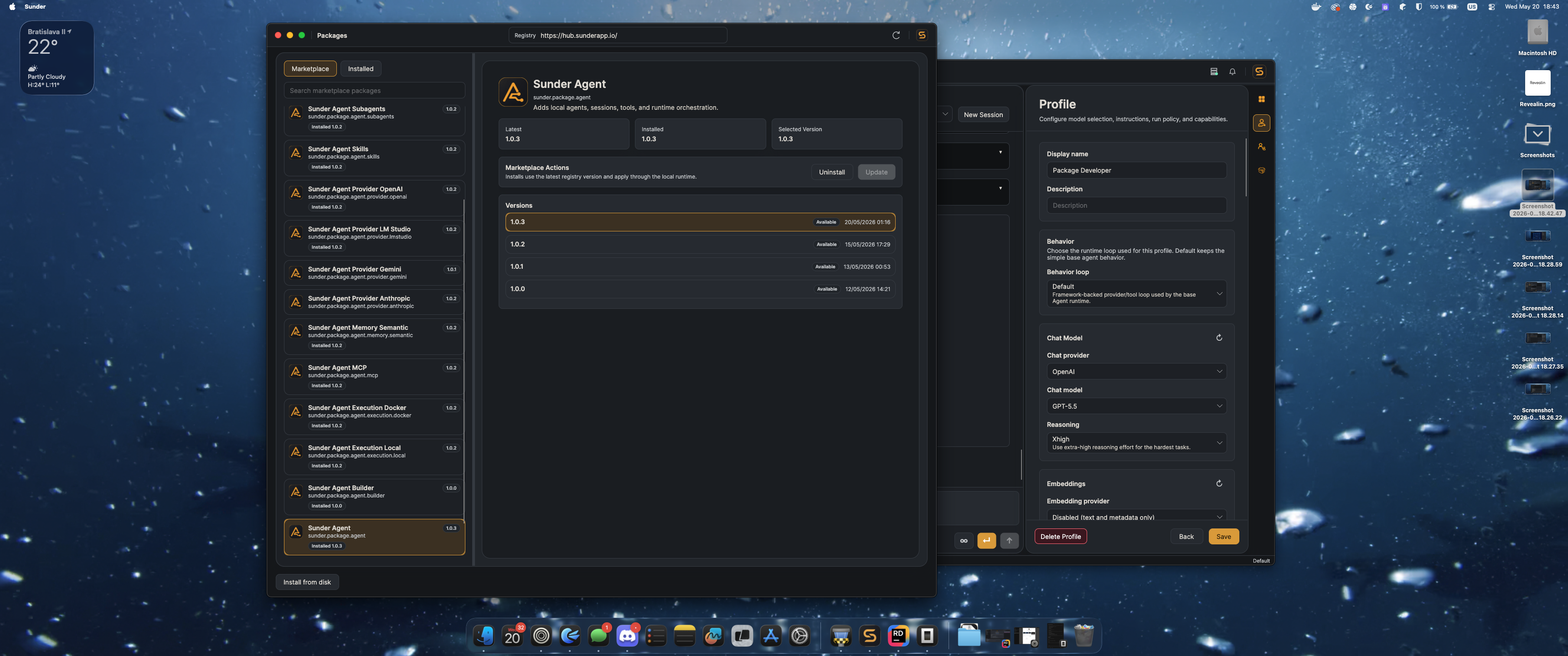
It is not one fixed productivity app. Sunder gives you a desktop shell, local runtime, CLI, SDK, package templates, and a package format so anyone can extend the app with new capabilities.
What can packages add?
Packages can transform Sunder into almost anything:
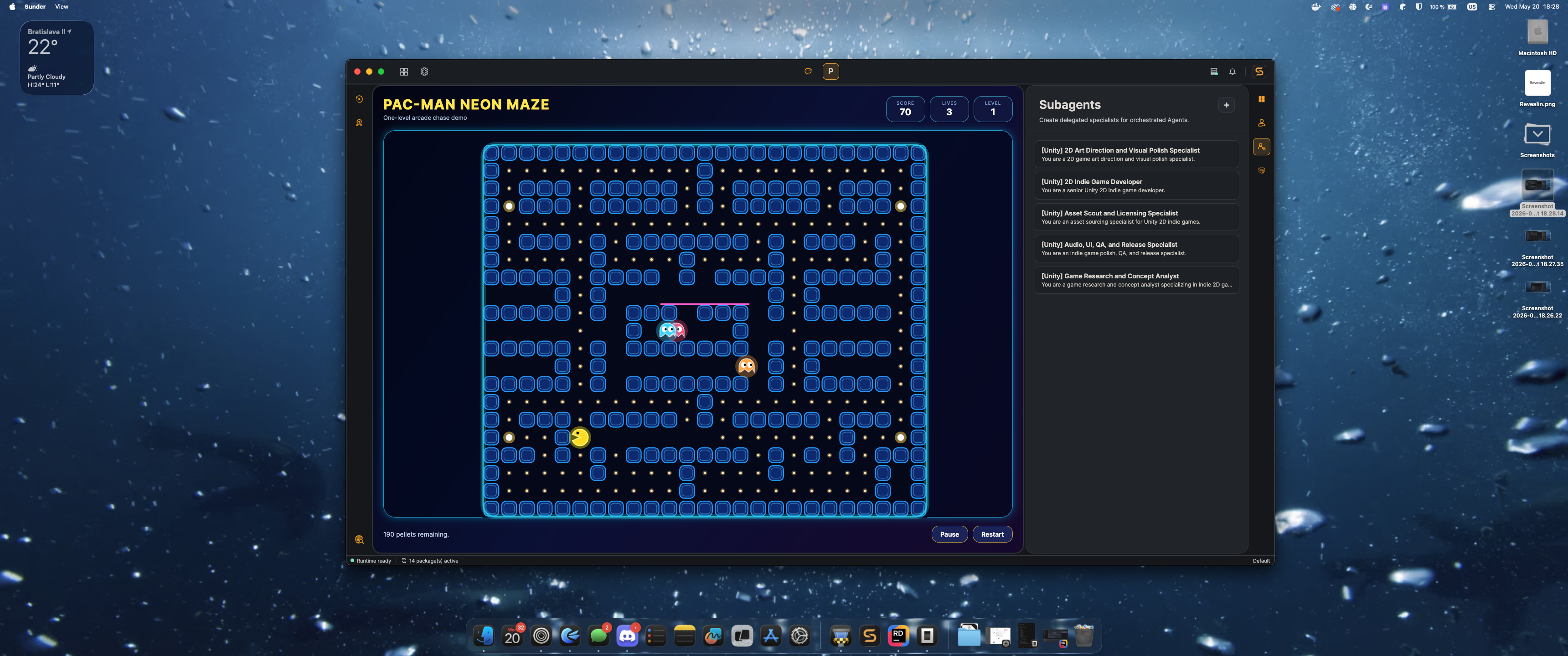
- Custom workspace views
- Developer tools
- AI agents
- Dashboards
- Local automation
- Integrations
- Settings pages
- Background services
- Model providers
- Execution targets
- Memory systems
- File, shell, and web tools
The bigger idea
Sunder is an open desktop workspace platform where the community can build packages for any workflow: coding, research, operations, data, media, automation, internal tools, personal productivity, or completely new workspace experiences.
Features
The first package family is AI agent oriented
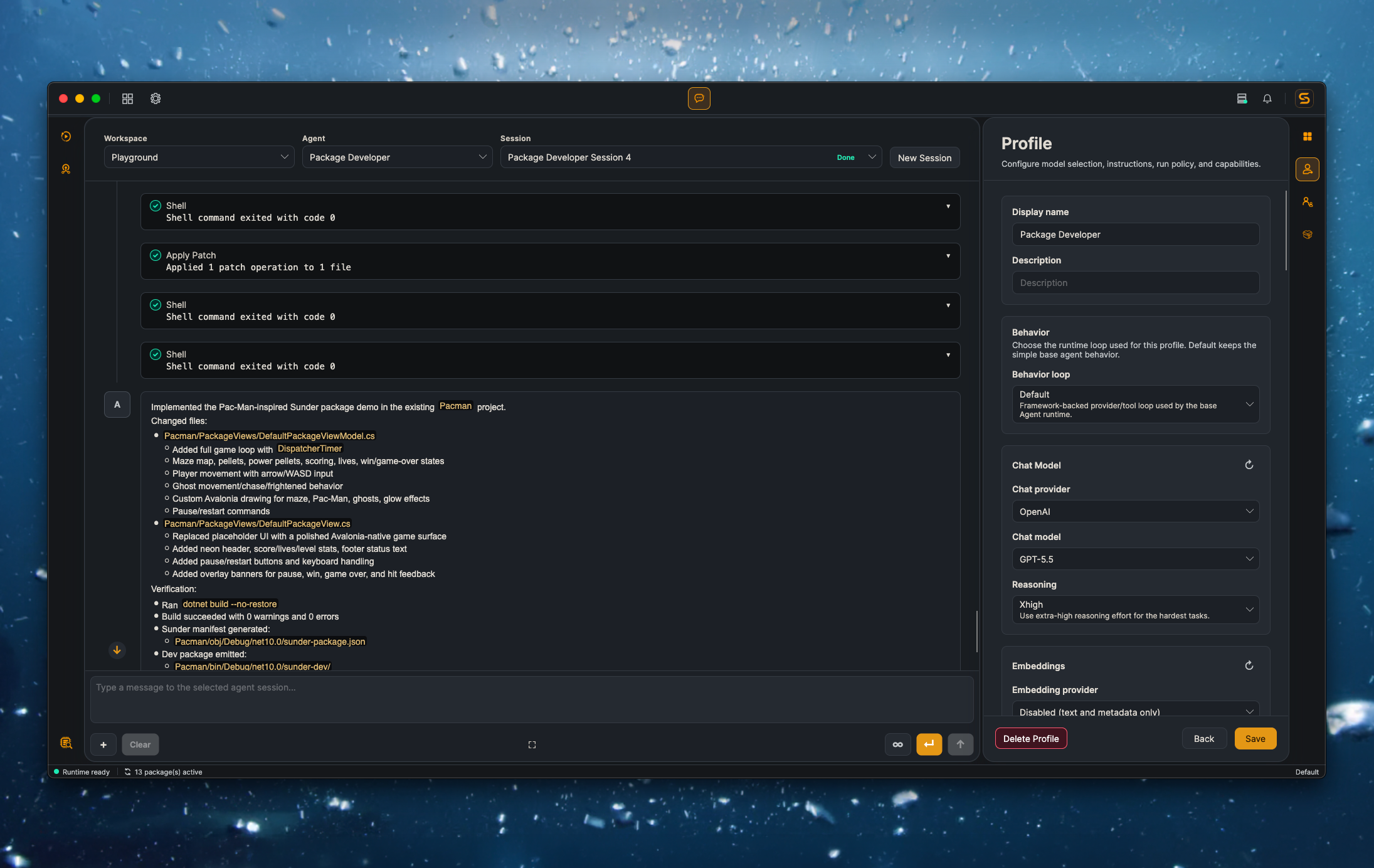
Sunder Agent is the first major package family built on top of the platform. It turns Sunder into a modular AI agent workspace with:
- Chat sessions and agent profiles
- OpenAI, Anthropic, Gemini, and LM Studio providers
- Local and Docker execution
- File, shell, and web tools
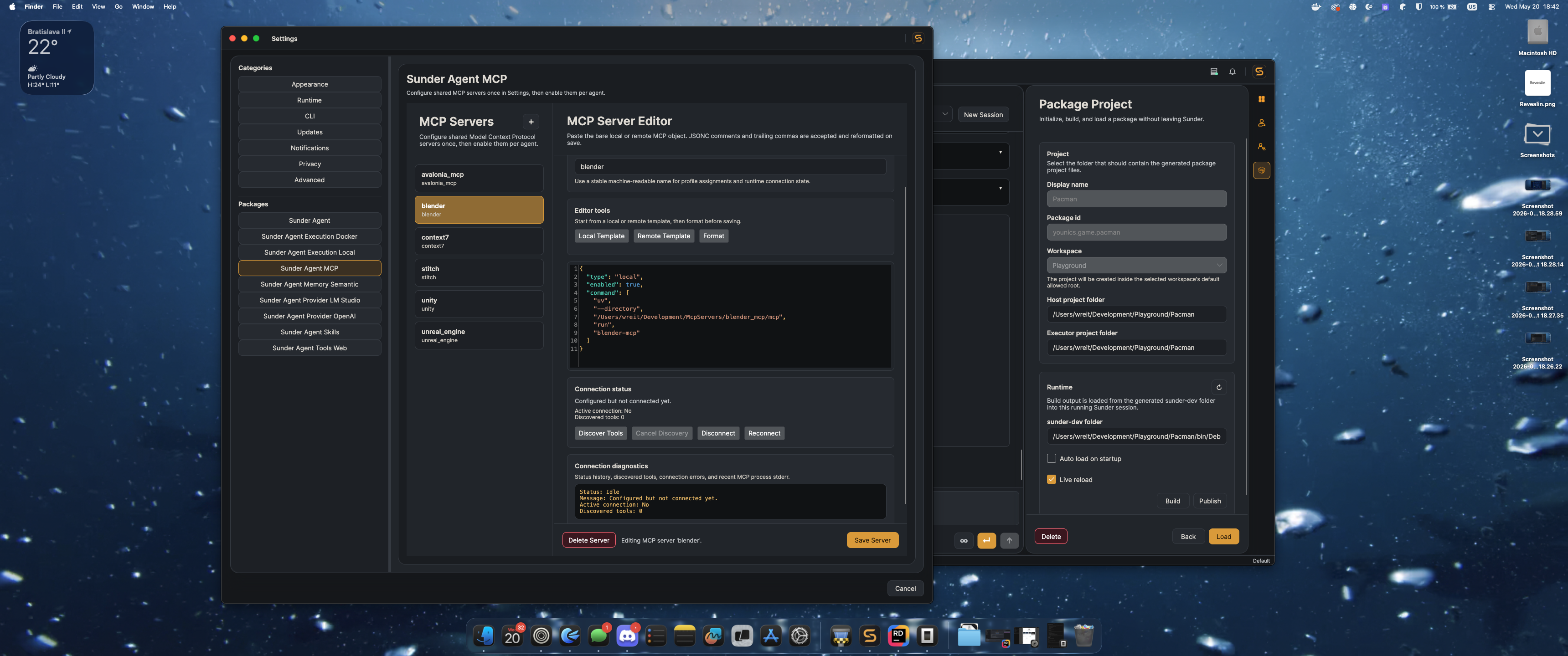
- MCP support
- Semantic memory
- Skills and subagents
But Sunder itself is not limited to AI.
Use Cases
- Own your workspace locally
- Install only the capabilities you want
- Extend the desktop app through packages
- Build packages with .NET, C#, Avalonia, and the Sunder SDK
- Let the community shape what the workspace can become
Think of Sunder as a package-powered desktop workspace: open-source, local-first, extensible, and built for people who want their tools to adapt to them.

Comments


Premium Products





















Find your next favorite product or submit your own. Made by @FalakDigital.
Copyright ©2025. All Rights Reserved