
Structura
Publish 3 SEO-optimized blog posts a day, hands-off
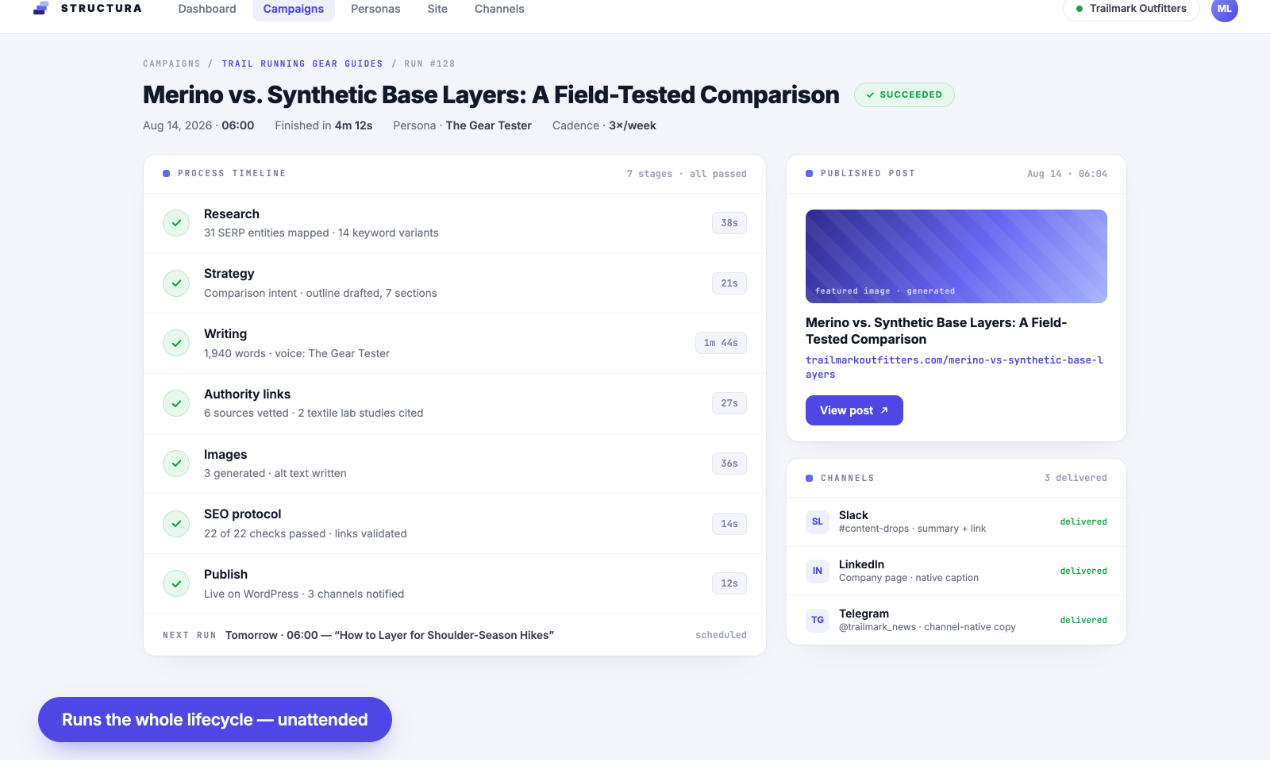
Structura runs the whole publishing lifecycle unattended: research, strategy, writing, authority links, images, a 20+ point SEO protocol, and publishing. Output is real Gutenberg blocks, not pasted HTML. Publishes to WordPress natively or to any stack via a Content API.
Features
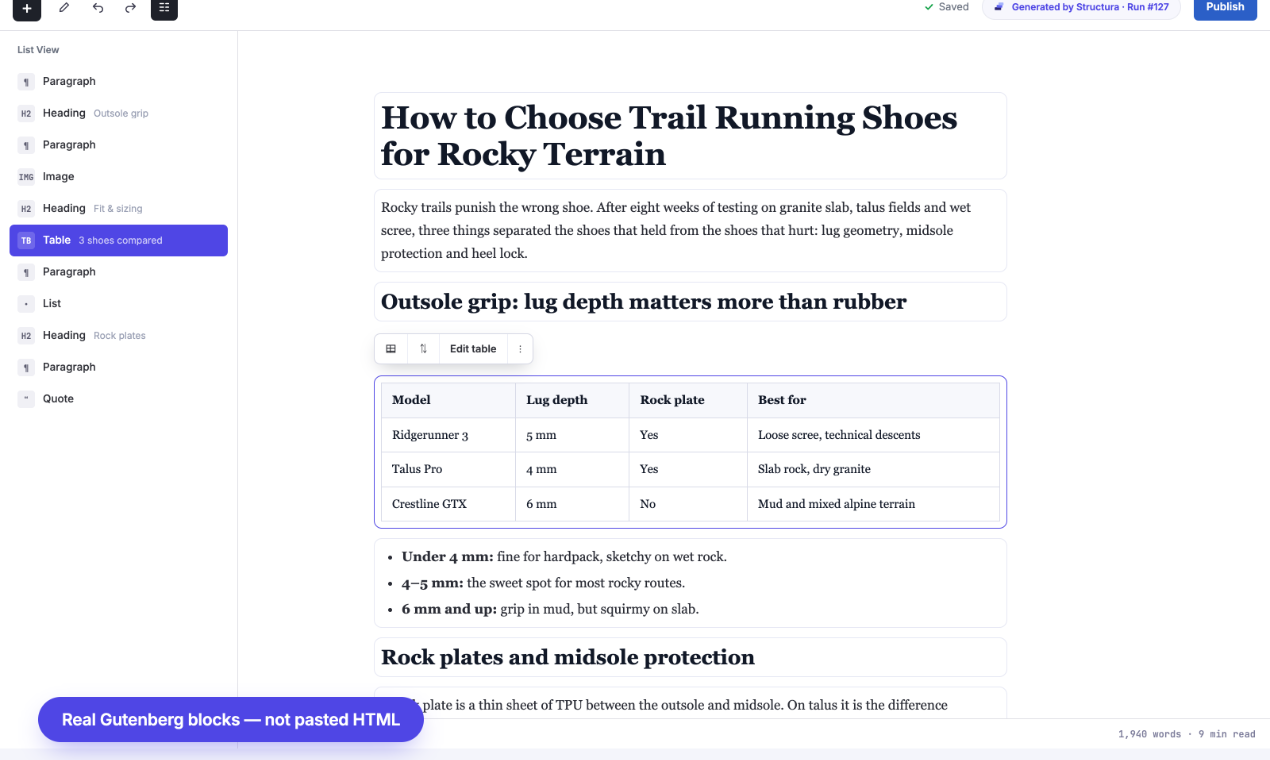
Real Gutenberg blocks — posts arrive as clean, editable, theme-agnostic blocks, not one HTML blob
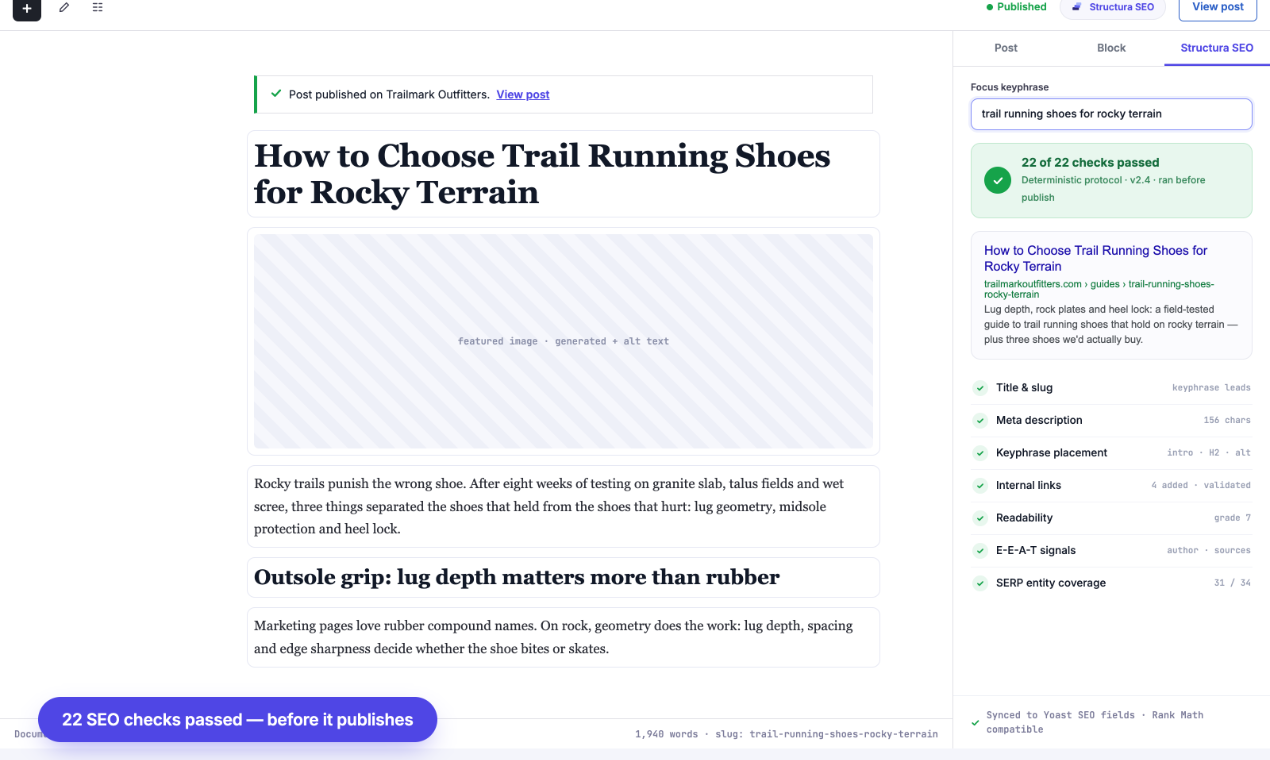
Deterministic 20+ point SEO protocol, compatible with Yoast and Rank Math; paid plans add live SERP gap analysis
Verified outbound authority links — every URL validated before publishing
Campaigns with personas: topic territory, keyword bank, cadence, and per-campaign writing voices
Publishes natively to WordPress or to any stack (Next.js, Astro, custom) via a hosted Content API
Channel fan-out on publish: Slack, Discord, Telegram, webhooks, and social cross-posting
Google Search Console feedback loop with per-post performance and ranked improvement suggestions
Content in any language; admin UI in English, German, Spanish, French
Bring your own OpenAI, Gemini, or Anthropic key — or managed plans; free plan available
Use Cases
Site owners publishing consistent SEO content without writing a word
Marketing agencies running content programs across many client sites
Headless sites (Next.js, Astro, custom CMS) that need a content engine through an API
Multilingual blogs — one campaign per language with native-quality output
Small teams replacing the research-write-optimize-publish loop with review-only workflows

Comments



I run a small content agency, and every AI writing tool we tried dumped a wall of HTML into WordPress and broke our clients' themes. Structura started as our internal fix: an engine that researches the live SERP before writing, validates every outbound link, and publishes real Gutenberg blocks on a schedule. It now also publishes to headless sites (Next.js, Astro) through a Content API. There's a free plan — I'd honestly rather hear where it falls short for your stack than get upvotes.

The real win here is automating the research and validation loop before writing. Most content tools just generate text, but Structura handles the part that actually takes time: finding good topics with search intent, validating SERP competition, and ensuring the output works in your specific publishing stack. Gutenberg blocks instead of pasted HTML is huge for quality control. This solves a genuine workflow friction point for anyone scaling content production.





The real win here is automating the research and validation loop before you even start writing. Most content tools focus on generating text, but Structura handles the part that actually takes the most time: finding topics with real search intent, validating SERP competition, and making sure the final output fits seamlessly into your publishing stack. The use of Gutenberg blocks instead of pasted HTML is also a huge win for quality control and workflow efficiency. Overall, this solves a genuine pain point for anyone looking to scale content production without sacrificing research quality or publishing consistency.






Structura Your product has strong potential, but I found a few key improvements that could make it even better. I'd love to share my feedback and suggestions—please contact me at [email protected].
The Search Console feedback loop is the part I would want to see data on. Google's spam policy on scaled content abuse targets exactly this pattern - high volume automated publishing - so the interesting number is not how posts rank at publish time but whether they are still indexed after 60-90 days. Do you have that yet? And when the loop sees a topic that never ranks, does it stop publishing on it, or only suggest improvements?

I tried Structura because I was looking for a more automated way to handle SEO content publishing, and the workflow is very straightforward. What I like most is that it covers more than just writing. The product connects research, content strategy, article generation, images, SEO checks, internal/authority links, and publishing into one workflow. That makes it feel closer to an actual publishing system than another AI writing tool. The campaign dashboard is also useful because you can clearly see which stage each article is in and whether something failed before publishing. For anyone managing multiple posts or sites, that visibility is important. Another strong point is the WordPress/Gutenberg publishing approach. Having structured content published directly instead of manually copying AI-generated HTML can save a lot of repetitive work. The product seems especially suitable for small SEO teams, niche-site operators, and founders who want to maintain a consistent publishing schedule without managing several separate tools. One thing I’d like to see improved over time is more control over the content-generation process, especially around tone, source selection, internal linking rules, and reviewing content before it goes live. Overall, Structura has a clear value proposition: automate the repetitive parts of SEO publishing while keeping the entire content lifecycle in one place.



A solid first-draft machine for content, but don't skip fact-checking I use Structura mainly for blog first drafts. I've been on it for a few weeks. The standout for me is that posts arrive as real Gutenberg blocks — clean and editable, not one big HTML blob — and every outbound authority link is verified before publishing, which saves a surprising amount of cleanup. My usual flow: set up a campaign with a persona and keyword bank, let it draft, then I edit. It easily saves me 30+ minutes per post. But once it got a statistic wrong in a draft, so I always double-check important facts myself now. Pros: 1) native WordPress publishing with a real 20+ point SEO checklist (Yoast/Rank Math compatible); 2) verified outbound links plus a Search Console feedback loop. Cons: 1) no published evidence yet of how these posts rank long-term; 2) with scaled AI content, Google's spam policy is a genuine concern — I wouldn't publish completely hands-off at volume. Good fit for bloggers who need fast first drafts; not for anyone who needs 100% accuracy out of the box. Worth trying, but don't expect it to replace a human editor.
Premium Products












































Sponsors
Buy

Awards
View all
Awards
View allMakers
Makers
Comments
I run a small content agency, and every AI writing tool we tried dumped a wall of HTML into WordPress and broke our clients' themes. Structura started as our internal fix: an engine that researches the live SERP before writing, validates every outbound link, and publishes real Gutenberg blocks on a schedule. It now also publishes to headless sites (Next.js, Astro) through a Content API. There's a free plan — I'd honestly rather hear where it falls short for your stack than get upvotes.
The real win here is automating the research and validation loop before writing. Most content tools just generate text, but Structura handles the part that actually takes time: finding good topics with search intent, validating SERP competition, and ensuring the output works in your specific publishing stack. Gutenberg blocks instead of pasted HTML is huge for quality control. This solves a genuine workflow friction point for anyone scaling content production.
The real win here is automating the research and validation loop before you even start writing. Most content tools focus on generating text, but Structura handles the part that actually takes the most time: finding topics with real search intent, validating SERP competition, and making sure the final output fits seamlessly into your publishing stack. The use of Gutenberg blocks instead of pasted HTML is also a huge win for quality control and workflow efficiency. Overall, this solves a genuine pain point for anyone looking to scale content production without sacrificing research quality or publishing consistency.
Structura Your product has strong potential, but I found a few key improvements that could make it even better. I'd love to share my feedback and suggestions—please contact me at [email protected].
The Search Console feedback loop is the part I would want to see data on. Google's spam policy on scaled content abuse targets exactly this pattern - high volume automated publishing - so the interesting number is not how posts rank at publish time but whether they are still indexed after 60-90 days. Do you have that yet? And when the loop sees a topic that never ranks, does it stop publishing on it, or only suggest improvements?
I tried Structura because I was looking for a more automated way to handle SEO content publishing, and the workflow is very straightforward. What I like most is that it covers more than just writing. The product connects research, content strategy, article generation, images, SEO checks, internal/authority links, and publishing into one workflow. That makes it feel closer to an actual publishing system than another AI writing tool. The campaign dashboard is also useful because you can clearly see which stage each article is in and whether something failed before publishing. For anyone managing multiple posts or sites, that visibility is important. Another strong point is the WordPress/Gutenberg publishing approach. Having structured content published directly instead of manually copying AI-generated HTML can save a lot of repetitive work. The product seems especially suitable for small SEO teams, niche-site operators, and founders who want to maintain a consistent publishing schedule without managing several separate tools. One thing I’d like to see improved over time is more control over the content-generation process, especially around tone, source selection, internal linking rules, and reviewing content before it goes live. Overall, Structura has a clear value proposition: automate the repetitive parts of SEO publishing while keeping the entire content lifecycle in one place.
A solid first-draft machine for content, but don't skip fact-checking I use Structura mainly for blog first drafts. I've been on it for a few weeks. The standout for me is that posts arrive as real Gutenberg blocks — clean and editable, not one big HTML blob — and every outbound authority link is verified before publishing, which saves a surprising amount of cleanup. My usual flow: set up a campaign with a persona and keyword bank, let it draft, then I edit. It easily saves me 30+ minutes per post. But once it got a statistic wrong in a draft, so I always double-check important facts myself now. Pros: 1) native WordPress publishing with a real 20+ point SEO checklist (Yoast/Rank Math compatible); 2) verified outbound links plus a Search Console feedback loop. Cons: 1) no published evidence yet of how these posts rank long-term; 2) with scaled AI content, Google's spam policy is a genuine concern — I wouldn't publish completely hands-off at volume. Good fit for bloggers who need fast first drafts; not for anyone who needs 100% accuracy out of the box. Worth trying, but don't expect it to replace a human editor.
Premium Products
New to Fazier?

Find your next favorite product or submit your own. Made by @FalakDigital.
Copyright ©2026. All Rights Reserved