StoreVetted
Free calculators that show what running an online store real
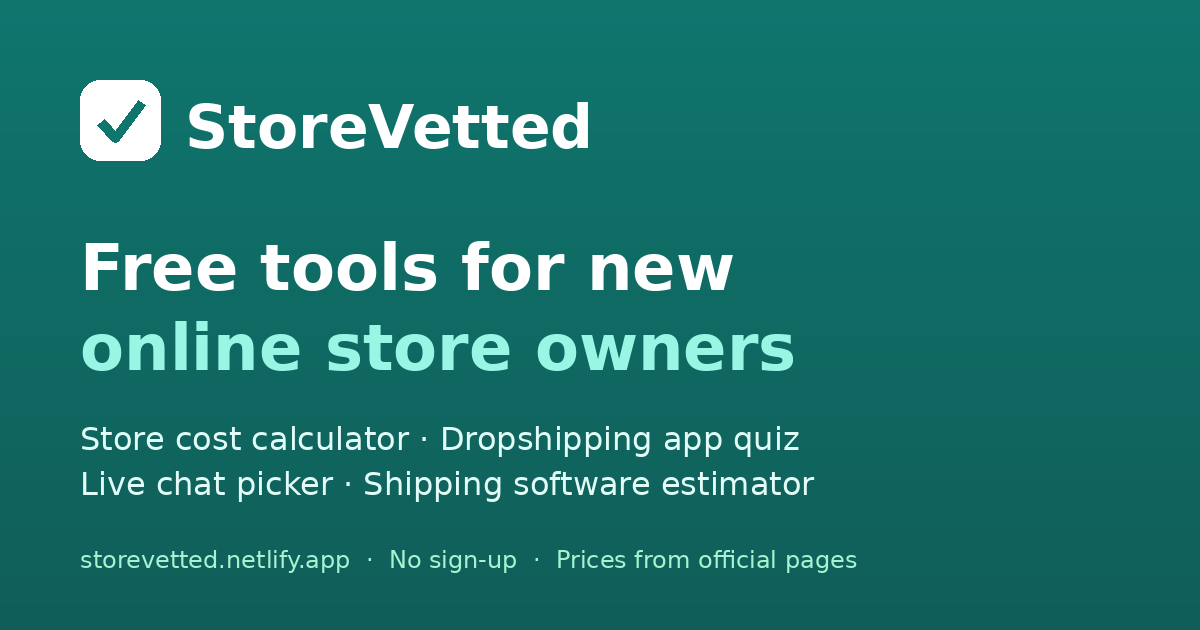
StoreVetted is a set of free, no-sign-up tools for people starting an online store:
• Store cost calculator — itemized monthly and first-year estimate for own-product, dropshipping, print-on-demand or digital stores, including platform, domain, card fees and optional tools.
• Dropshipping app quiz — Zendrop vs Spocket vs Doba in 6 questions with pros, cons and prices.
• Live chat picker — the cheapest chat setup for your volume, budget and team, including free alternatives.
• Shipping software estimator — which Easyship plan fits your shipment volume, plus a dimensional-weight check.
Every price comes from the vendor's official pricing page with a source link and check date; unverifiable prices are shown as "check current price". No accounts, no tracking scripts. An embeddable version of the calculator is available free for blogs. Some result links are affiliate links (disclosed).
Features
Store cost calculator with monthly and first-year estimates
Dropshipping app quiz comparing Zendrop, Spocket and Doba
Live chat picker with free alternatives
Shipping software estimator with dimensional-weight check
Use Cases
Plan startup costs for a new online store
Compare dropshipping apps and store tools
Choose affordable chat and shipping software

Comments


Hi PH! I built StoreVetted because "how much will my store cost?" is the first question every new merchant asks, and most answers quote outdated prices. Every number here is pulled from the vendor's official pricing page with a date, and the tool says "check current price" when it can't verify one. It's free, no sign-up. Transparency: result buttons are affiliate links; the rules that pick plans don't use commissions. I'd love feedback on what cost items are missing.

Showing a source link and a check date next to every price is the part that builds trust here, since vendor pricing changes often and most comparison tools never say how old their numbers are. Marking unverifiable prices as "check current price" instead of guessing is a good call too. A question: how do you keep the prices fresh, is it a manual review on a schedule or do you track when a vendor's pricing page changes?
Dating every price and saying "check current price" when you can't verify it is the right call, and it's rare in these calculators. One cost item new merchants often miss: payment processing on refunds and chargebacks, since most processors keep the original fee when you refund. Do you plan to model a refund rate, or app subscriptions that scale with order volume?

Showing the source link and check date next to every vendor price is the right call for a calculator, since stale numbers are what kill trust in this kind of tool. In our own calculators the hardest part has been keeping inputs honest when a default quietly changes the result, so I am curious how you handle that: do the estimates show which assumptions (card fee rate, platform tier) were applied by default? A short assumptions line under the total would make the first-year figure easier to defend.


Showing the source link and check date for each vendor price is exactly what makes a cost calculator trustworthy. A one page summary that totals the monthly and first-year estimates side by side would help new store owners compare the own-product, dropshipping, and print-on-demand paths more easily.
Premium Products









































Sponsors
Buy
Makers
Makers
Comments
Hi PH! I built StoreVetted because "how much will my store cost?" is the first question every new merchant asks, and most answers quote outdated prices. Every number here is pulled from the vendor's official pricing page with a date, and the tool says "check current price" when it can't verify one. It's free, no sign-up. Transparency: result buttons are affiliate links; the rules that pick plans don't use commissions. I'd love feedback on what cost items are missing.
Showing a source link and a check date next to every price is the part that builds trust here, since vendor pricing changes often and most comparison tools never say how old their numbers are. Marking unverifiable prices as "check current price" instead of guessing is a good call too. A question: how do you keep the prices fresh, is it a manual review on a schedule or do you track when a vendor's pricing page changes?
Dating every price and saying "check current price" when you can't verify it is the right call, and it's rare in these calculators. One cost item new merchants often miss: payment processing on refunds and chargebacks, since most processors keep the original fee when you refund. Do you plan to model a refund rate, or app subscriptions that scale with order volume?
Showing the source link and check date next to every vendor price is the right call for a calculator, since stale numbers are what kill trust in this kind of tool. In our own calculators the hardest part has been keeping inputs honest when a default quietly changes the result, so I am curious how you handle that: do the estimates show which assumptions (card fee rate, platform tier) were applied by default? A short assumptions line under the total would make the first-year figure easier to defend.
Showing the source link and check date for each vendor price is exactly what makes a cost calculator trustworthy. A one page summary that totals the monthly and first-year estimates side by side would help new store owners compare the own-product, dropshipping, and print-on-demand paths more easily.
Premium Products
New to Fazier?

Find your next favorite product or submit your own. Made by @FalakDigital.
Copyright ©2026. All Rights Reserved