
StackStats
Better analytics for your Substack

Features
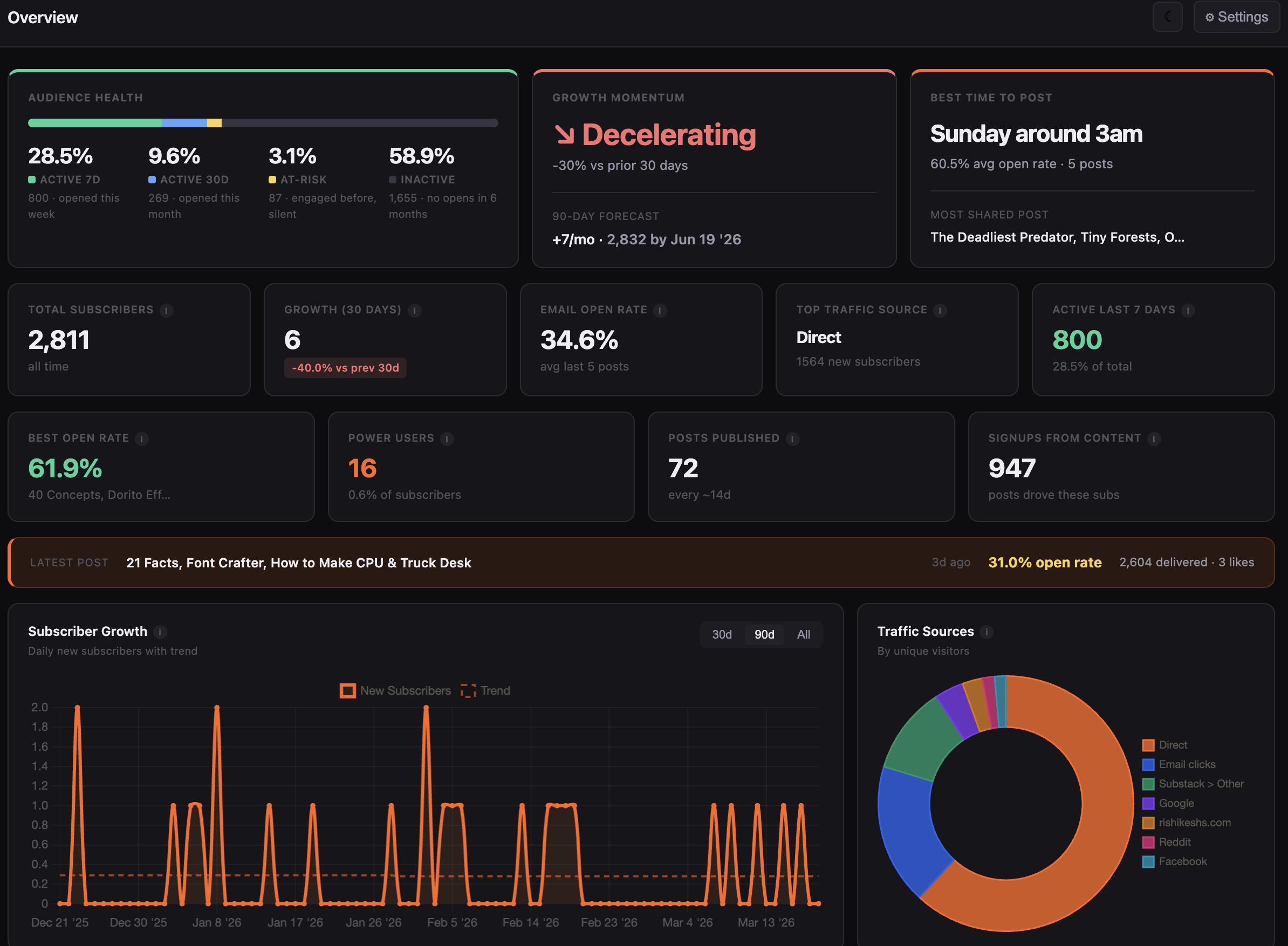
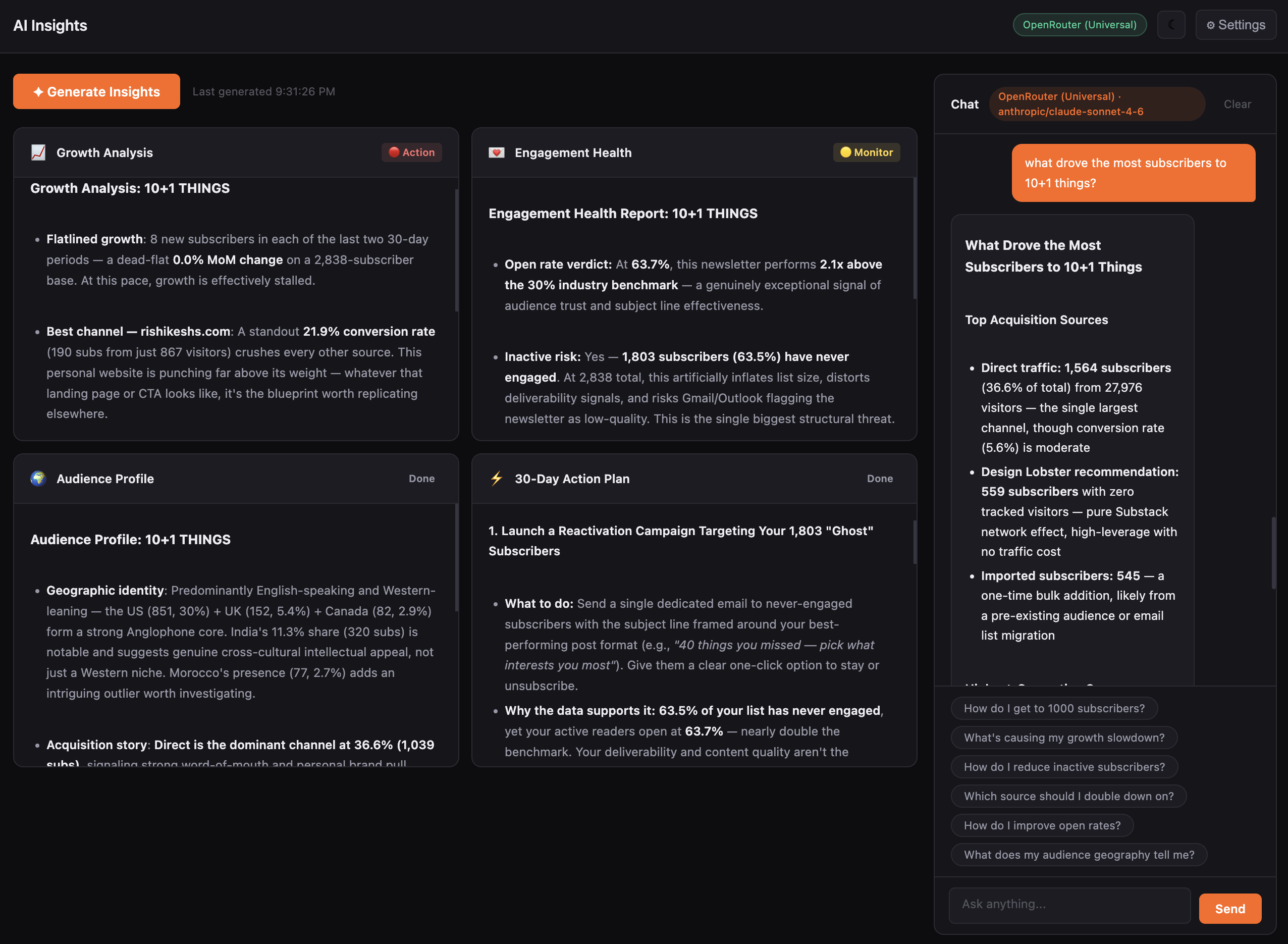
One-click Substack sync
180-day growth forecast
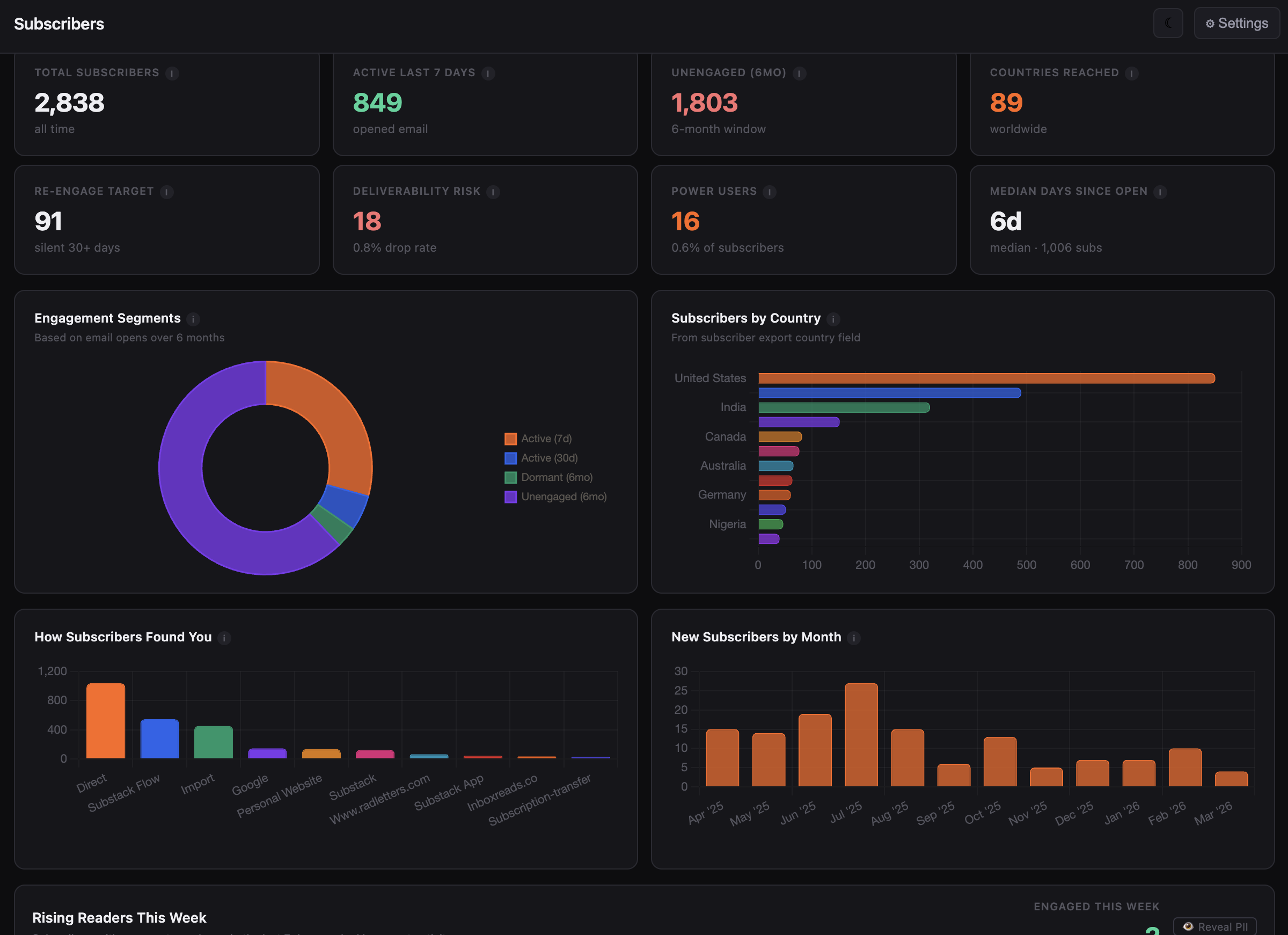
Churn risk detection
Superfans and upgrade-ready readers
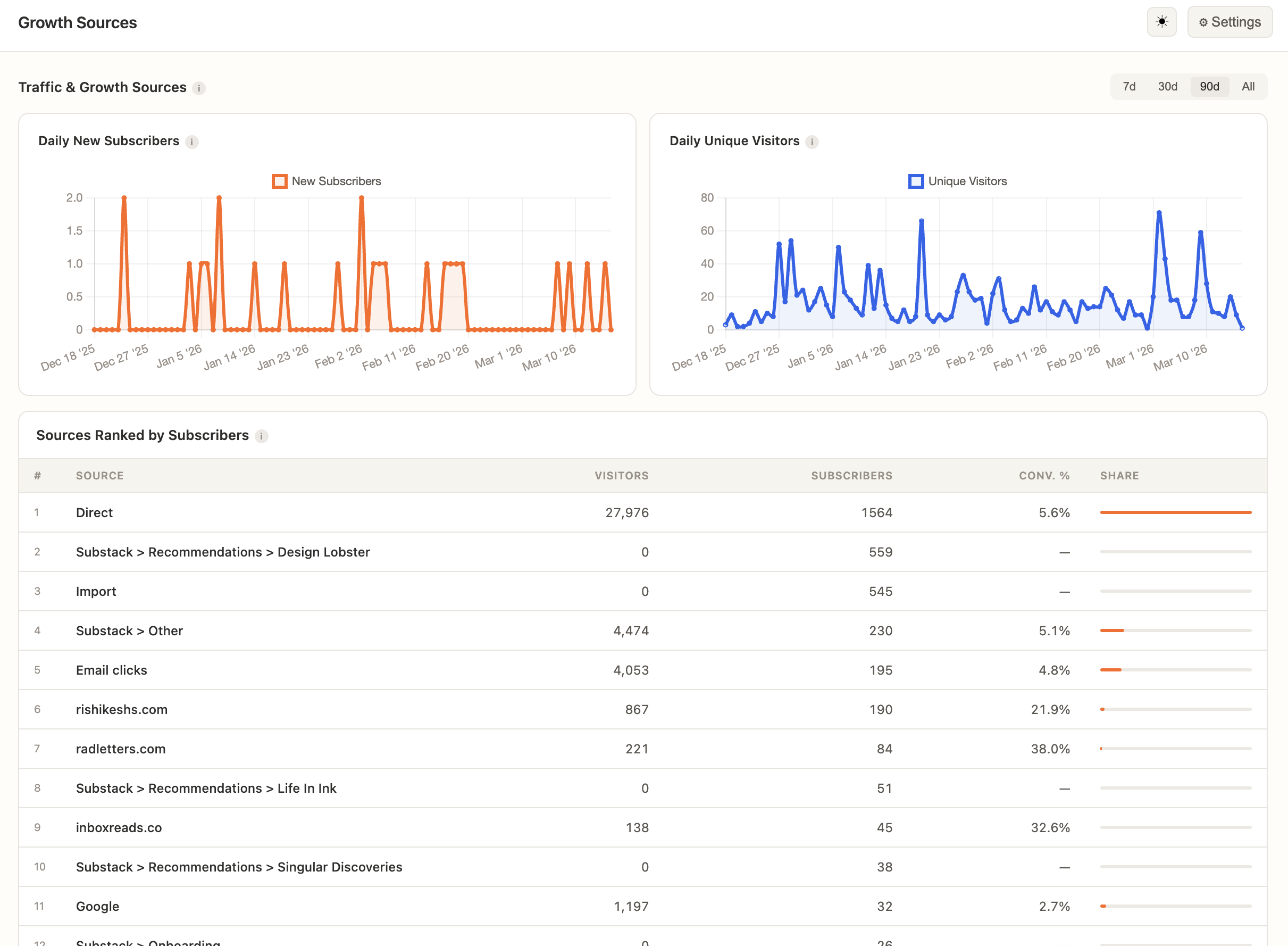
Best posting time and growth sources
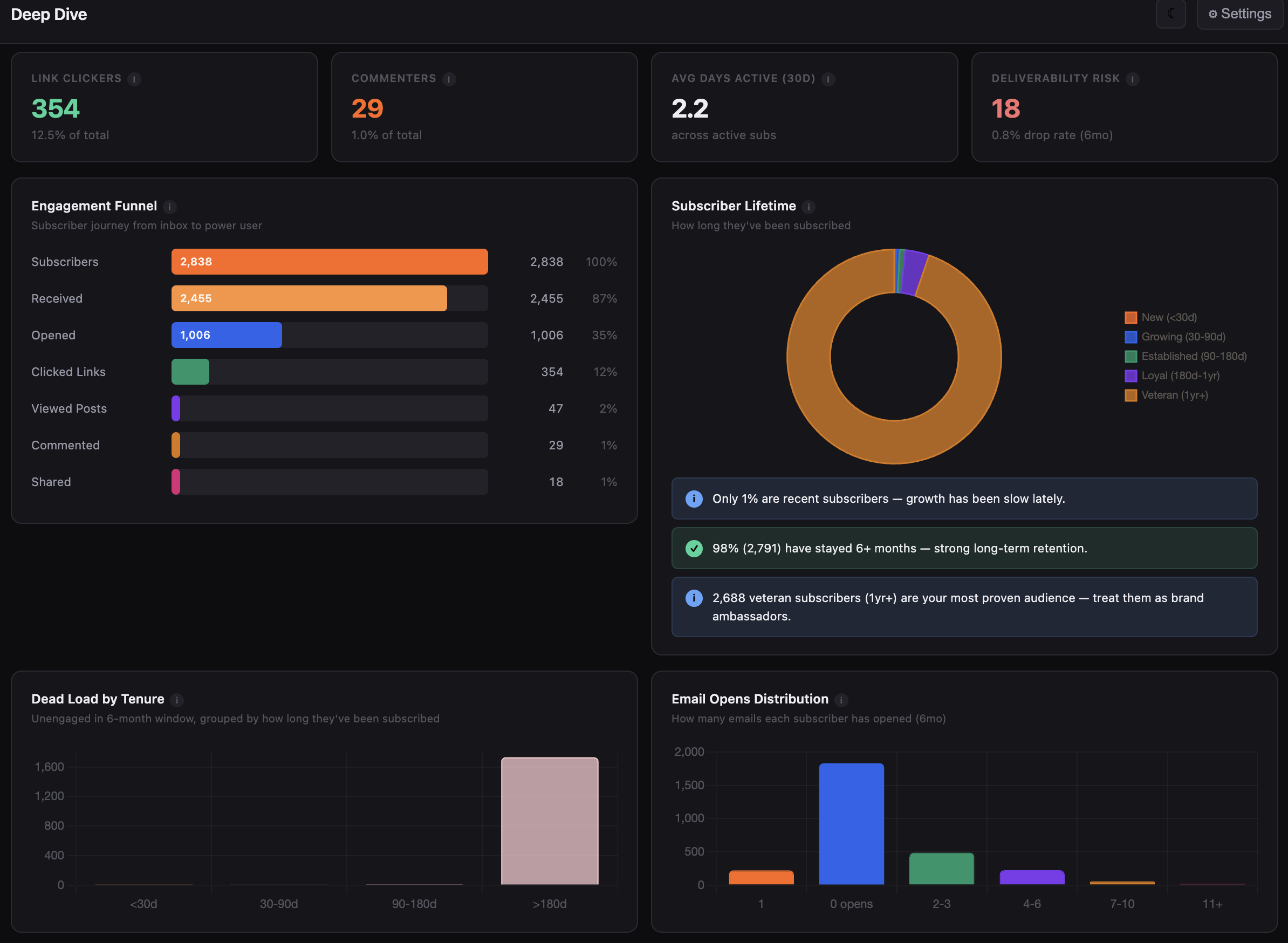
Publication deep dive
Optional offline or bring-your-own-key AI insights
Use Cases
Spot readers likely to churn before they leave
Forecast subscriber growth
Find the best time to post
Identify superfans and readers likely to upgrade to paid

Comments


Local-first analytics is the right architecture for this — subscriber data is exactly the kind of thing writers shouldn't ship to a third-party SaaS. Question on the churn-risk model: is it a heuristic (days-since-open style) or a trained model? We went the local-compute route for the same privacy reason, and the honest tradeoff is you can't retrain on aggregate patterns across users.

The growth sources view is the part I'd use most. Can it attribute new subscribers to a specific post or recommendation, or only at channel level (Substack network vs direct vs social)? Knowing which posts actually turn readers into subscribers would make the best-posting-time suggestion a lot more actionable.

Computing everything locally is a smart choice for a tool that handles subscriber lists, and a live demo with no sign-up lowers the barrier a lot. Question: how does the 180-day forecast handle growth that comes in spikes, like a viral post or a big recommendation? One unusual week seems like it could skew the trend line.




The churn-risk list is the feature I'd act on, but only if I can get it out of the app. Can I export the at-risk readers as a CSV (email + last open date) so I can send them a win-back note from Substack or my own mail tool? Also, for best posting time: is that worked out in each reader's local time zone or in mine? With readers split between the Pacific coast and Europe, those give very different answers.

In growth sources, do referrals from chatgpt.com and perplexity.ai show up as their own source? Older Substack posts get cited in AI answers more than people expect, and when that traffic is lumped into "direct" or "other" it's invisible. Seeing which posts those AI visitors land on, and whether they subscribe at a different rate than social traffic, would be a really useful view.
Premium Products















































Sponsors
Buy

Makers
Makers
Comments
Local-first analytics is the right architecture for this — subscriber data is exactly the kind of thing writers shouldn't ship to a third-party SaaS. Question on the churn-risk model: is it a heuristic (days-since-open style) or a trained model? We went the local-compute route for the same privacy reason, and the honest tradeoff is you can't retrain on aggregate patterns across users.
The growth sources view is the part I'd use most. Can it attribute new subscribers to a specific post or recommendation, or only at channel level (Substack network vs direct vs social)? Knowing which posts actually turn readers into subscribers would make the best-posting-time suggestion a lot more actionable.
Computing everything locally is a smart choice for a tool that handles subscriber lists, and a live demo with no sign-up lowers the barrier a lot. Question: how does the 180-day forecast handle growth that comes in spikes, like a viral post or a big recommendation? One unusual week seems like it could skew the trend line.
The churn-risk list is the feature I'd act on, but only if I can get it out of the app. Can I export the at-risk readers as a CSV (email + last open date) so I can send them a win-back note from Substack or my own mail tool? Also, for best posting time: is that worked out in each reader's local time zone or in mine? With readers split between the Pacific coast and Europe, those give very different answers.
In growth sources, do referrals from chatgpt.com and perplexity.ai show up as their own source? Older Substack posts get cited in AI answers more than people expect, and when that traffic is lumped into "direct" or "other" it's invisible. Seeing which posts those AI visitors land on, and whether they subscribe at a different rate than social traffic, would be a really useful view.
Premium Products
New to Fazier?

Find your next favorite product or submit your own. Made by @FalakDigital.
Copyright ©2026. All Rights Reserved