Ssabi
Streamline your workflow. Scale your rental business.
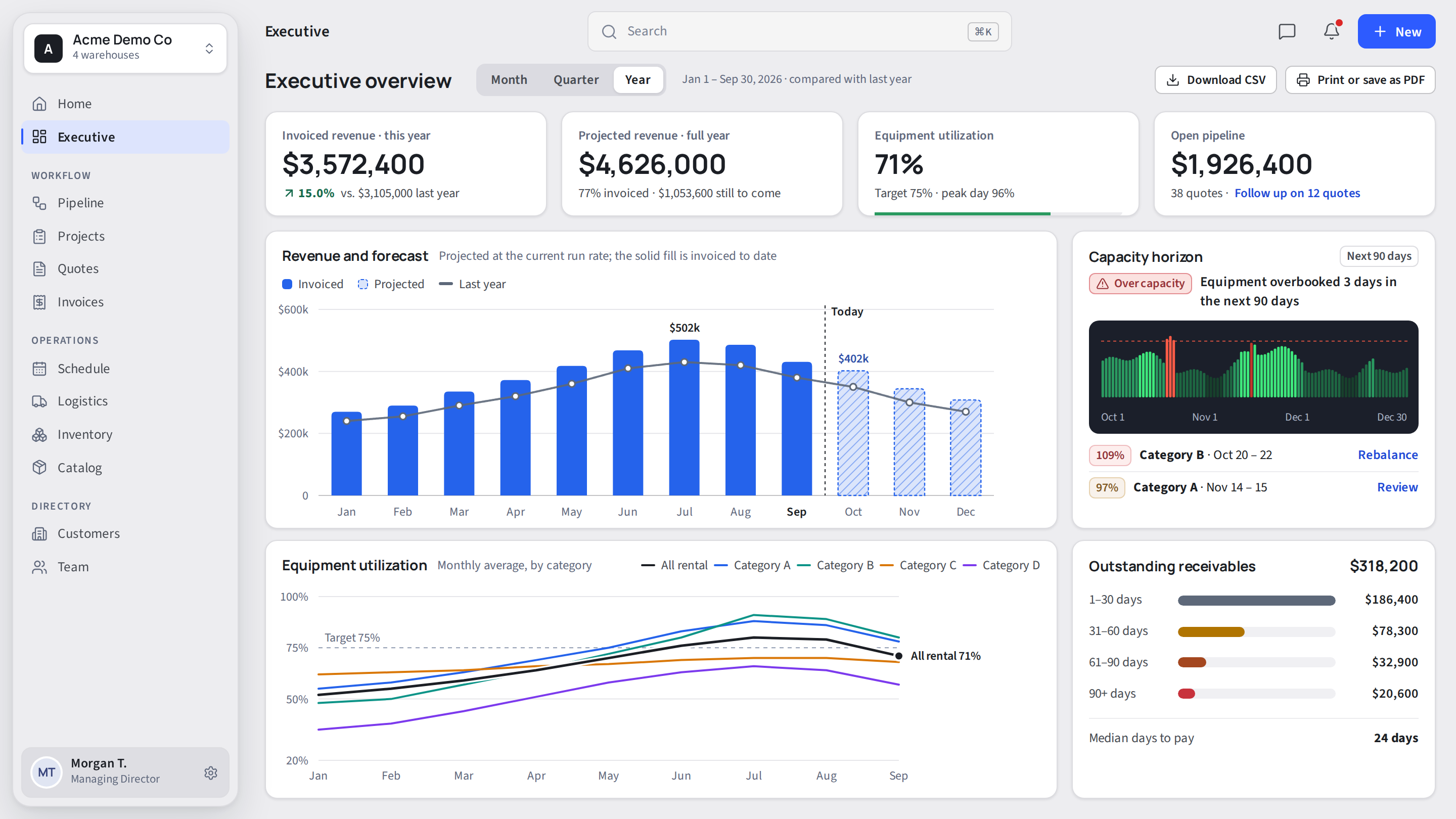
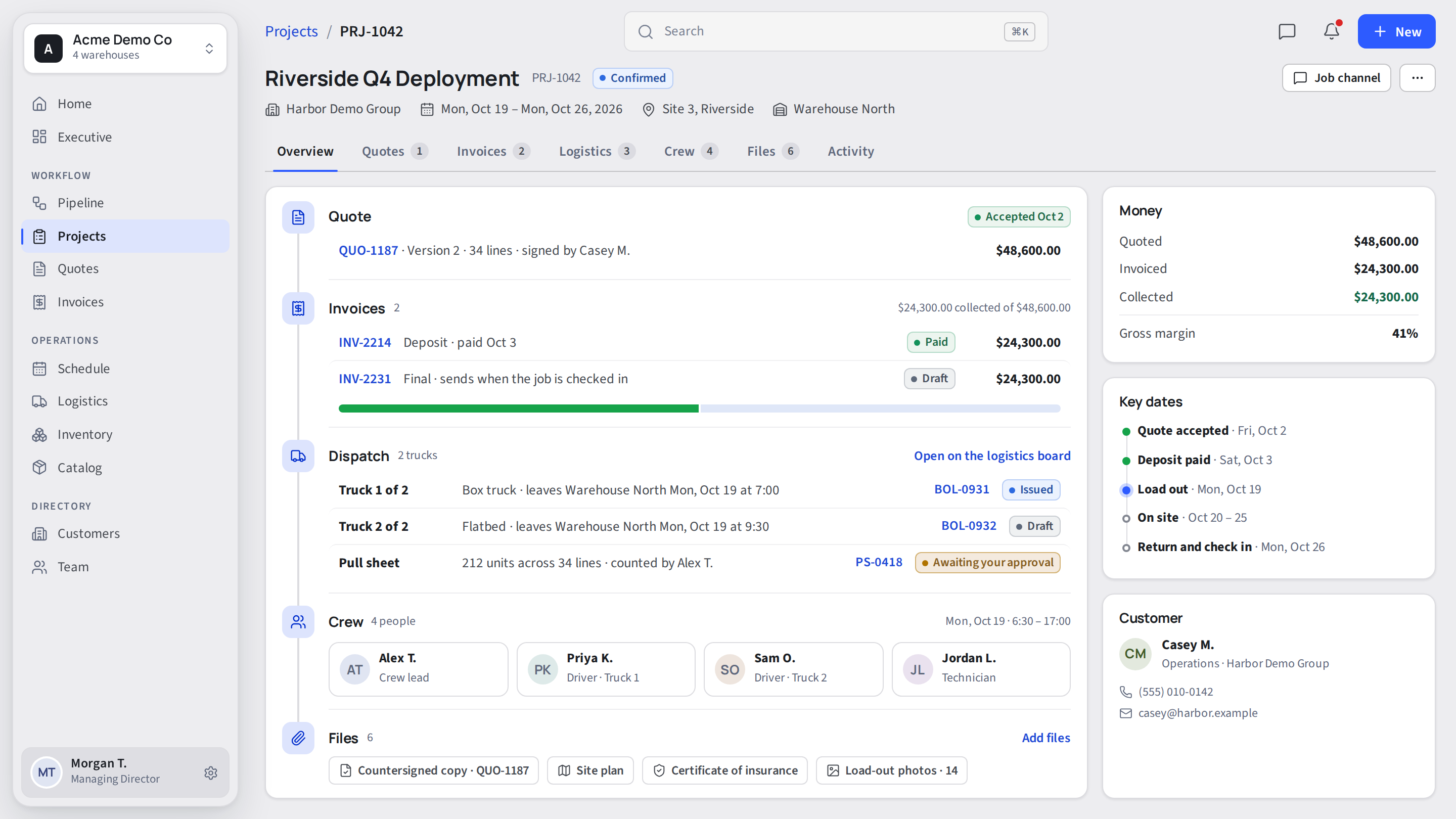
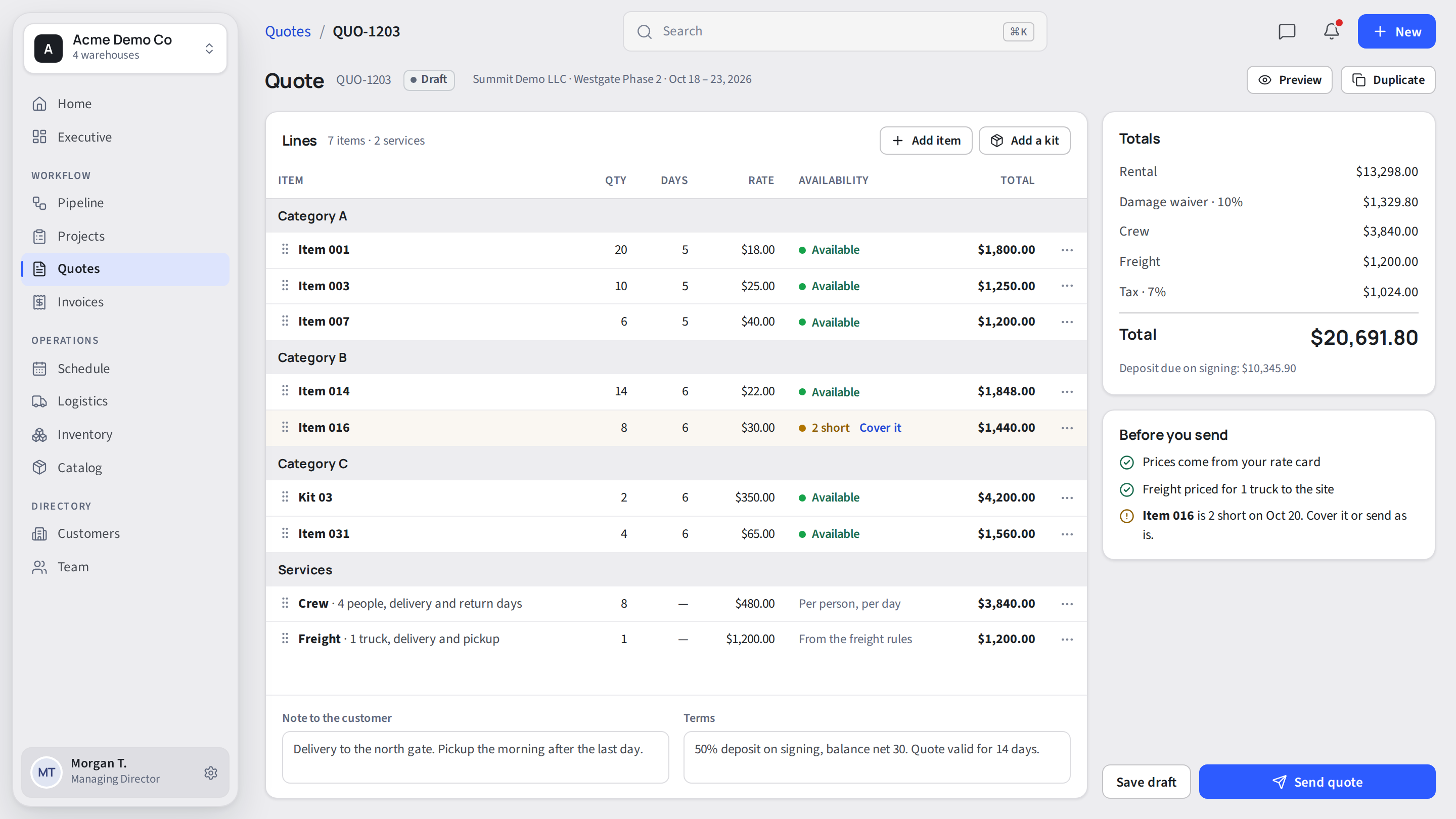
Ssabi is an operations platform for equipment rental and field service businesses. Projects, quotes, inventory, dispatch, scheduling, invoicing, CRM and team chat live in one system, so every department works from the same live data instead of spreadsheets and disconnected tools. A quote flows into a project, a pull sheet, a dispatch and an invoice without anyone retyping it. Availability is checked across every location to prevent double booking, and owners get clear analytics on revenue, utilization and where to invest next.
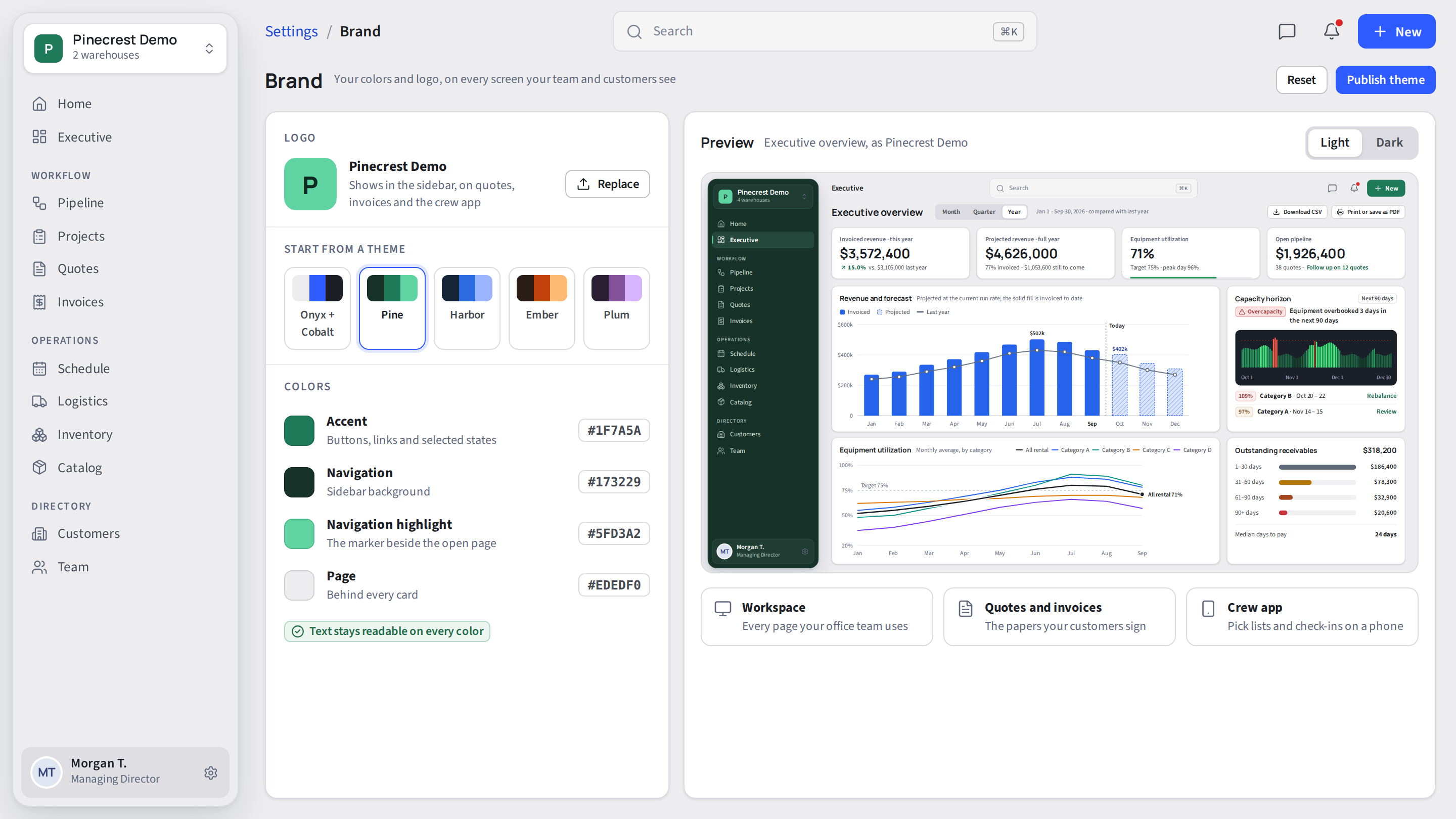
Features
- One connected record from quote to project, pull sheet, dispatch and invoice
- Real-time availability across every location, with double-booking prevention
- Early warnings for future shortfalls so you can plan transfers ahead of time
- Quotes, invoices, pull sheets and bills of lading built from your data and reviewed before sending
- Dispatch, crew and field scheduling in one shared calendar
- Executive analytics for revenue, utilization, capacity and inventory forecasting
- Built-in CRM and team channels tied to every job
- Role-based permissions, secure data isolation and multi-language support
Use Cases
- Rental companies managing inventory across one or more warehouses
- Field service teams scheduling crews, trucks and deliveries
- Operations managers replacing spreadsheets and disconnected tools
- Sales teams turning quotes into booked projects without retyping
- Owners and executives tracking performance and deciding where to invest in inventory
- Warehouse teams picking, loading and transferring stock with live updates

Comments


The quote to pull sheet to dispatch to invoice chain without retyping is where most rental shops lose hours, so this flow makes a lot of sense. The early warning for future shortfalls is a smart addition too. Does availability also account for items that are out for repair or being cleaned between jobs, or only for booked ones?
Rental disputes usually come down to two things: what condition the gear left in, and which terms the customer actually agreed to (damage waiver, late-return charges, cleaning fees). When a quote flows into a project, do the rental terms travel with it onto the signed quote and invoice? And can the return check-in be compared against photos or notes taken at dispatch, so a damage charge has something behind it?


The single connected record from quote to invoice is a strong pitch for rental businesses — retyping between tools is where errors creep in. Real-time availability and double-booking prevention also look essential for multi-location stock. The early-warning feature for future shortfalls could save a lot of last-minute scrambling.



I like how Ssabi connects rental operations, from quotations and inventory to dispatch and invoicing, in one system. The early warnings for inventory shortages are particularly useful for avoiding last-minute disruptions. I'm curious, does Ssabi also help businesses track customer retention and repeat bookings? From a growth marketing perspective, those insights could be valuable for identifying loyal customers and increasing recurring revenue.
Premium Products








































Sponsors
Buy
Makers

Makers
Comments
The quote to pull sheet to dispatch to invoice chain without retyping is where most rental shops lose hours, so this flow makes a lot of sense. The early warning for future shortfalls is a smart addition too. Does availability also account for items that are out for repair or being cleaned between jobs, or only for booked ones?
Rental disputes usually come down to two things: what condition the gear left in, and which terms the customer actually agreed to (damage waiver, late-return charges, cleaning fees). When a quote flows into a project, do the rental terms travel with it onto the signed quote and invoice? And can the return check-in be compared against photos or notes taken at dispatch, so a damage charge has something behind it?
The single connected record from quote to invoice is a strong pitch for rental businesses — retyping between tools is where errors creep in. Real-time availability and double-booking prevention also look essential for multi-location stock. The early-warning feature for future shortfalls could save a lot of last-minute scrambling.
I like how Ssabi connects rental operations, from quotations and inventory to dispatch and invoicing, in one system. The early warnings for inventory shortages are particularly useful for avoiding last-minute disruptions. I'm curious, does Ssabi also help businesses track customer retention and repeat bookings? From a growth marketing perspective, those insights could be valuable for identifying loyal customers and increasing recurring revenue.
Premium Products
New to Fazier?

Find your next favorite product or submit your own. Made by @FalakDigital.
Copyright ©2026. All Rights Reserved