
Sista AI
Hire Teams of AI Employees
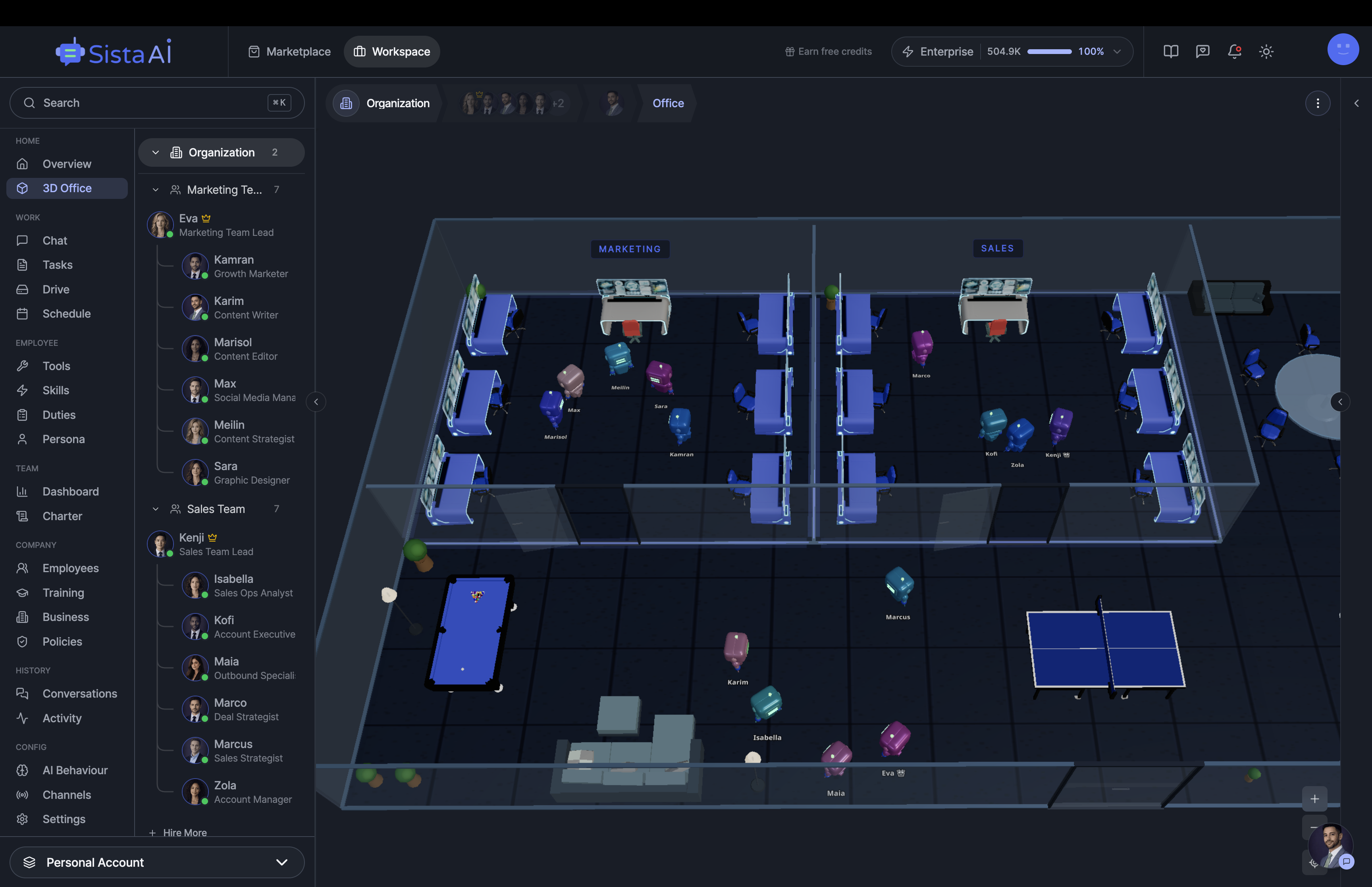
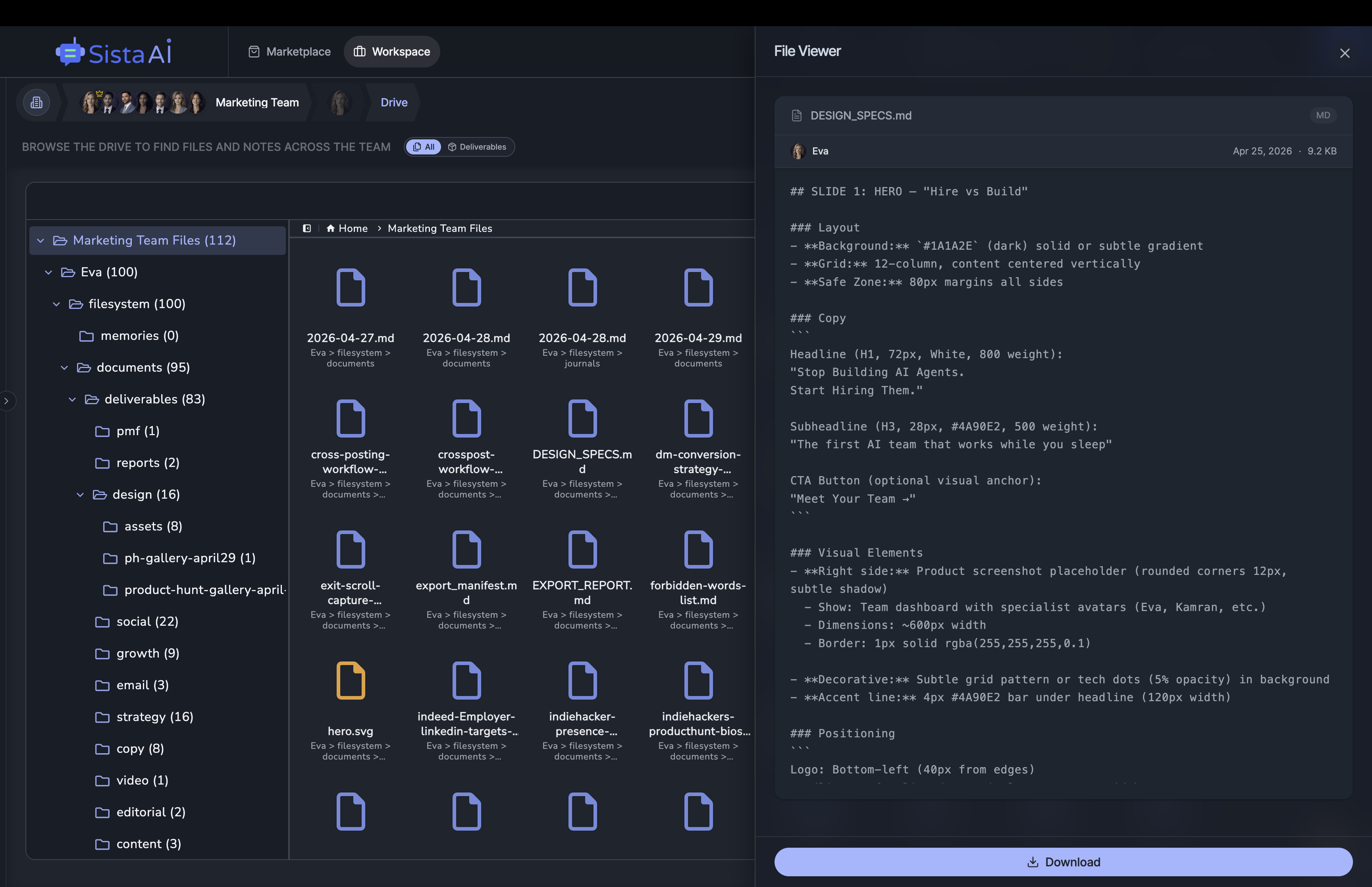
Sista AI is a fully autonomous AI workforce platform. You hire AI employees from a marketplace, individually or as full pre-built teams (Marketing, Sales, Support, HR), and they handle real work for you around the clock.
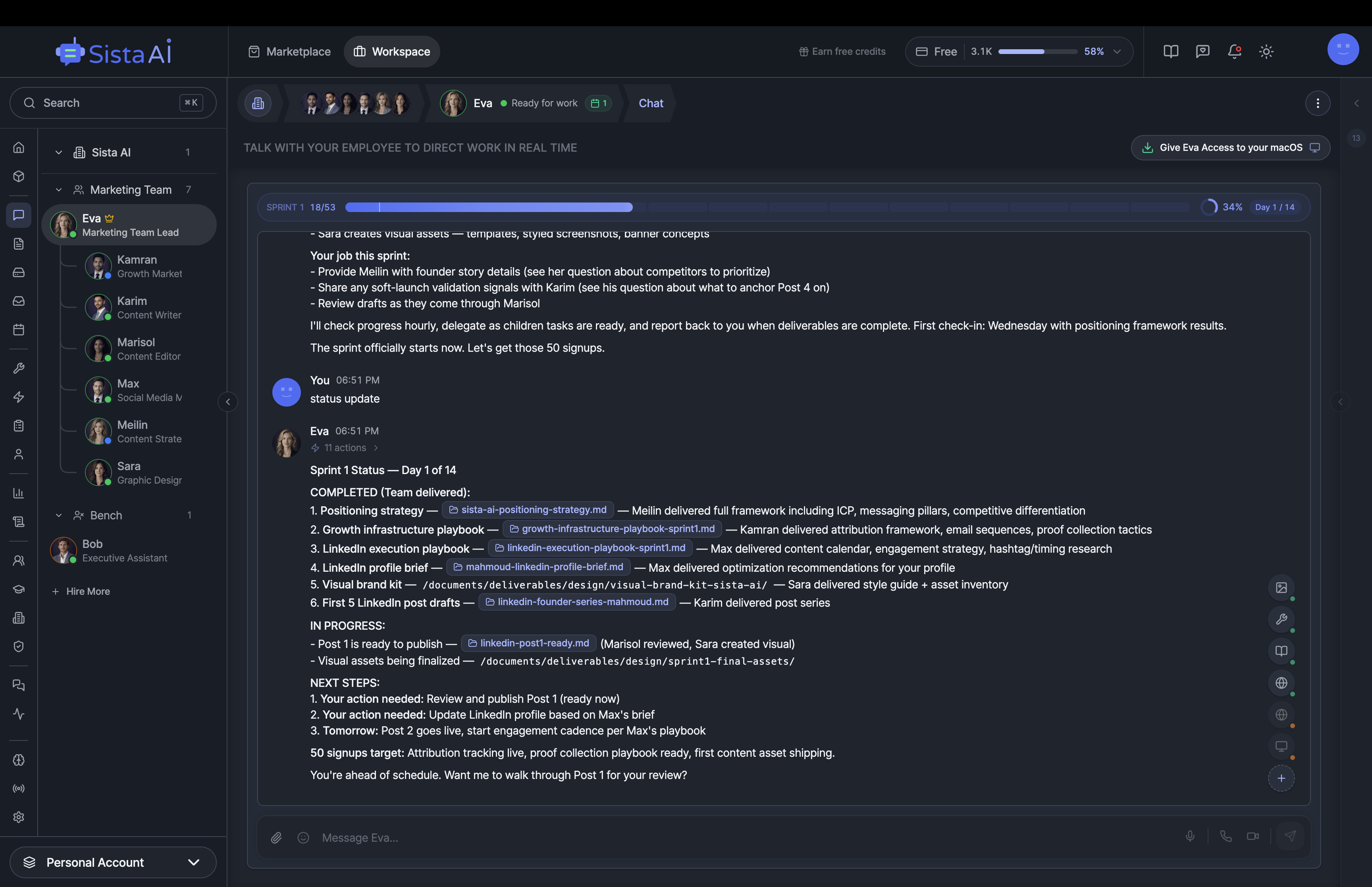
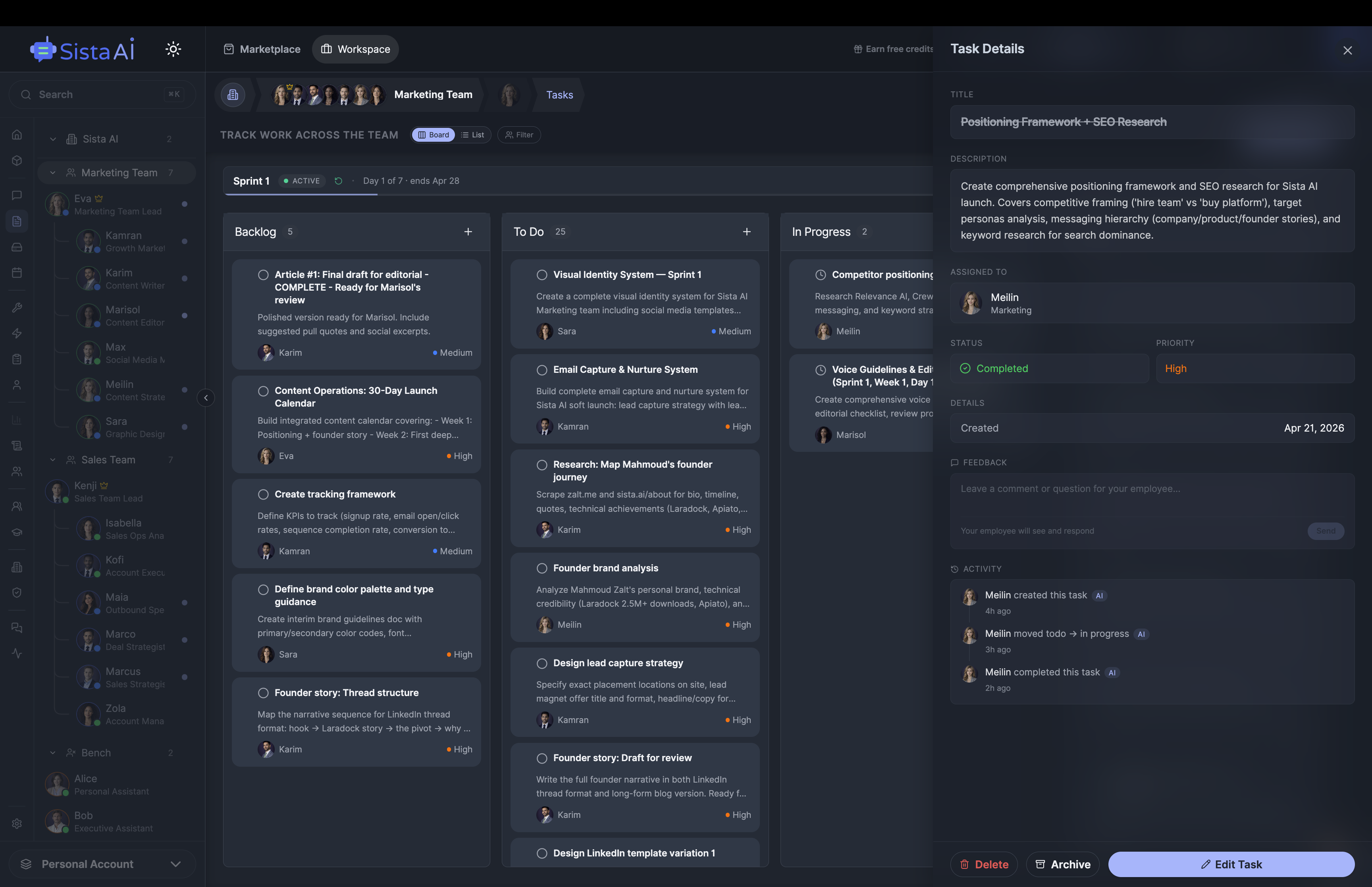
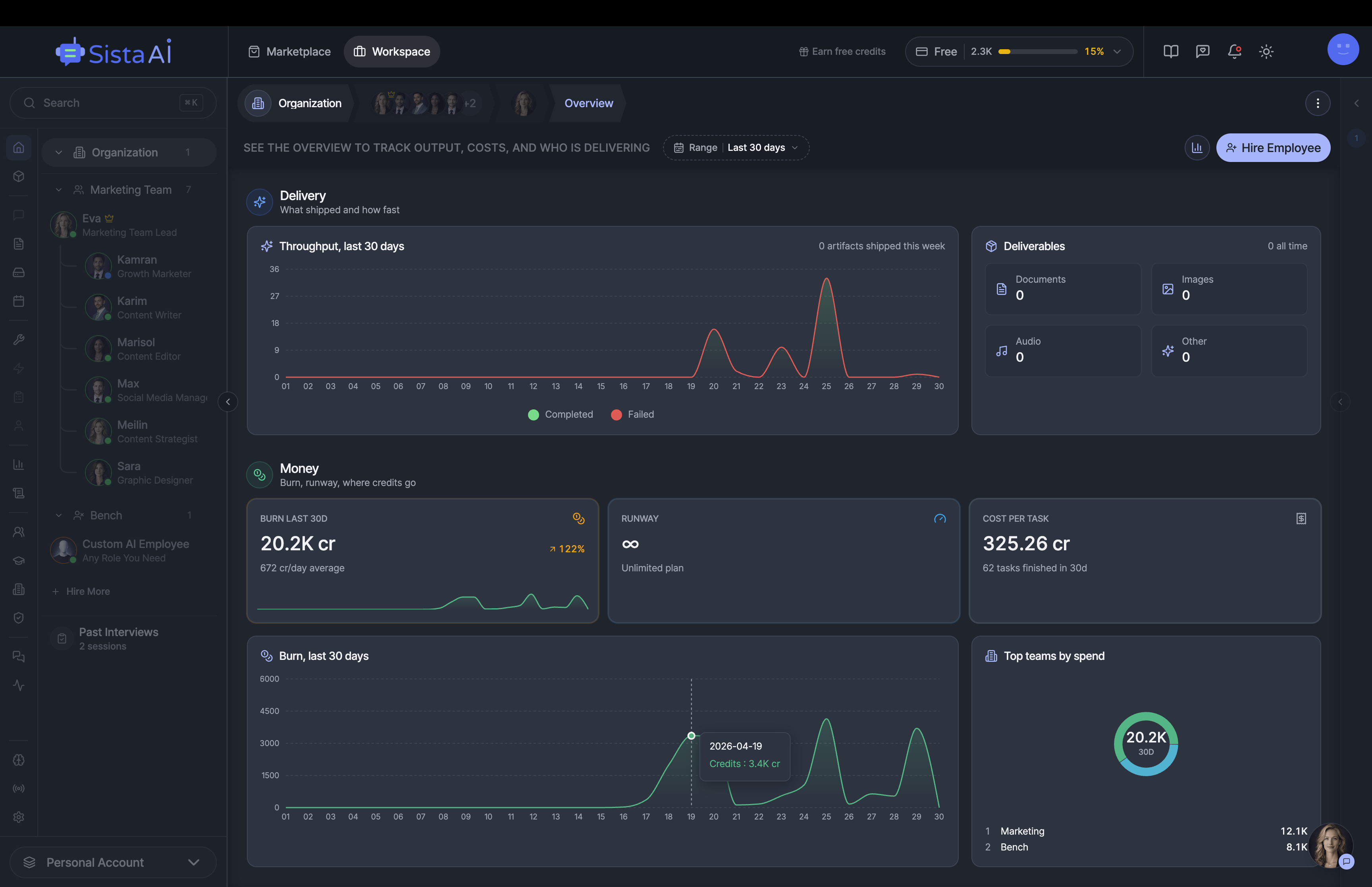
The way it works is simple. You chat with the team leader, who plans sprints, delegates tasks to six specialists, and reports back. There's nothing to configure or set up. Just talk, and your AI employee adjusts every setting and adapts to how you work over time. Behind the scenes, the platform connects to 1000+ tools, runs full sprint cycles with OKRs and KPIs, and gives you complete visibility through activity logs and approval gates.
Features
Key features and benefits:
- Pre-built teams ready to hire, no agent-building or workflows required
- Team leader plans sprints with OKRs, delegates to specialists, reports back to you
- Onboards like a real employee, learns your tools and style, adapts over time
- Controls your real browser and desktop using your existing logged-in sessions, joins your meetings
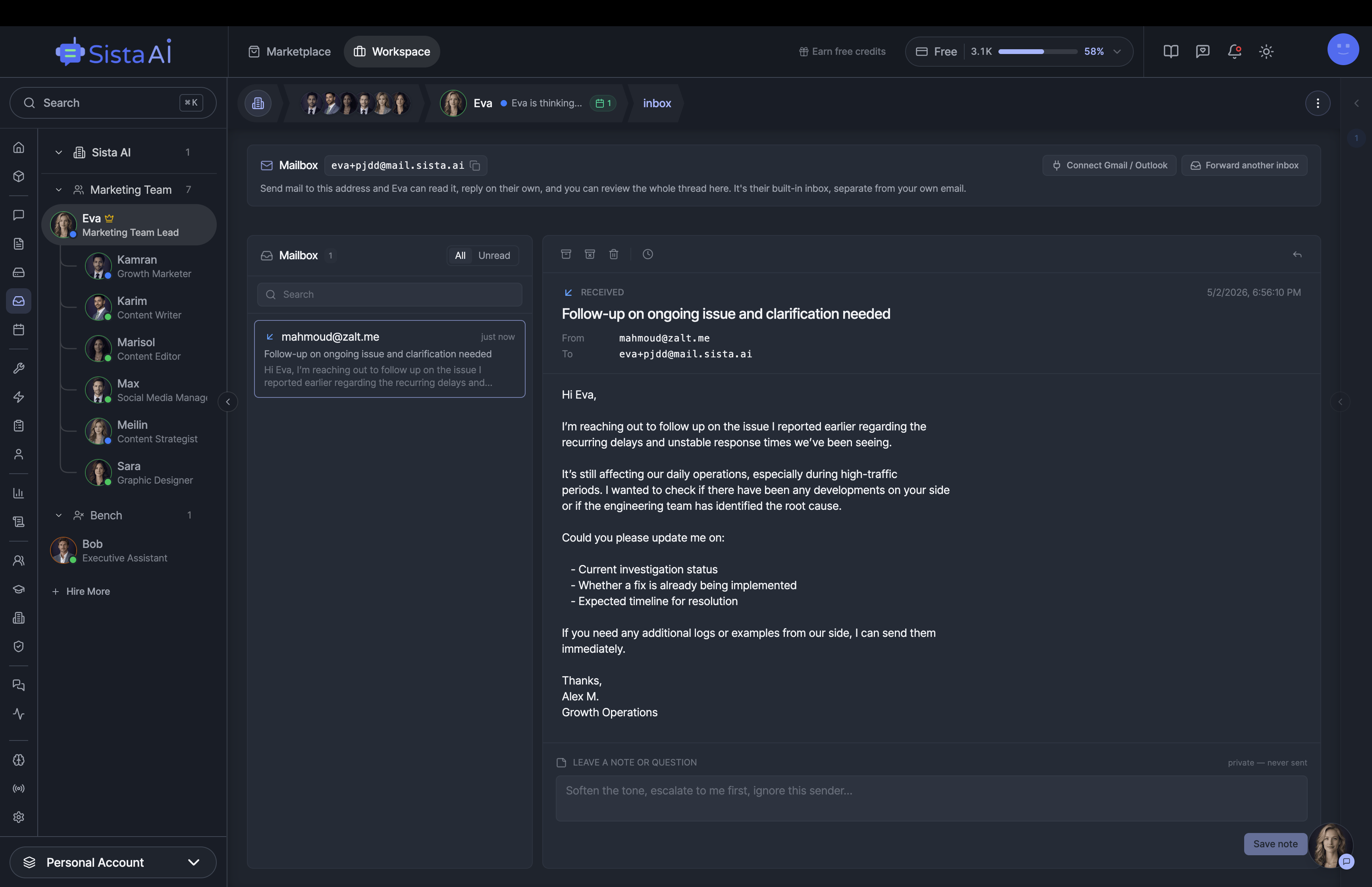
- 1000+ tool integrations, reaches you anywhere via email, Slack, SMS, WhatsApp, phone, or in-app
- Long memory with knowledge graphs, actually remembers you across conversations
- Built-in guardrails: human-in-the-loop approval gates, full audit traces, and privacy controls
Use Cases
Built for solo founders, small business operators, and digital-first teams (5-50 employees) who can't afford to staff full marketing, sales, support, or HR departments but still need the work to ship every week. Agencies running multiple clients use it to clone proven team configurations across their roster. Individuals can hire personal assistants too: Alice for life admin and Bob for executive work.

Comments


Hey Fazier 👋 Zalt here. I've been building software for 16+ years. When ChatGPT arrived in late 2022 I left the job market and went all-in on AI. The technical challenge fascinated me, and I shipped a few products on the way figuring out what AI could actually do for real work, not just for pretty answers. Sista AI is the version that finally clicked. It's a platform where you can hire teams of AI employees to handle real work for you around the clock. Pre-built teams of 7 cover marketing, sales, support, and HR. The team leader plans sprints with OKRs, delegates to 6 specialists, and reports back to you. Or hire a personal assistant for your inbox and life admin. What's different from typical agents: they onboard in a chat (no agent-building, no prompts to write), plug into 1000+ tools, control your real browser and desktop using your existing logged-in sessions (so they can join Zoom calls, navigate any app, work anywhere a human would), and reach you on email, Slack, SMS, WhatsApp, phone, or in-app. The personal moment came when I realized I was using AI for half my day already and wanted to trust it with the rest. So I built what I wanted: an AI employee I could brief like a normal person, connect to my real tools, and hand actual work to. My mission since I started: AI that's accessible to everyone. Simple, affordable, reliable. Helpful for me, and for anyone who needs the same thing. Live since April 15, 2026, bootstrapped and solo. Free tier with 5K credits, no card required. I'd love your feedback, especially the brutal kind: what feels weak, what feels off, what would make you actually pull the trigger. Try it: https://hire.sista.ai Zalt


The concept of pre-built AI teams is genuinely exciting — especially for HR and people ops where specialized workflows matter. The sprint-based delegation model with OKR tracking is a smart way to give AI workers real accountability. Would love to see deeper integrations with HRIS systems like Workday or BambooHR. Congrats on launching!

The concept of pre-built AI teams is genuinely exciting — especially for HR and people ops where specialized workflows matter. The sprint-based delegation model with OKR tracking is a smart way to give AI workers real accountability. Would love to see deeper integrations with HRIS systems like Workday or BambooHR. Congrats on launching!

Really interesting concept — framing AI agents as "employees you hire" rather than "tools you configure" is a smart UX shift. The pre-built team approach (Marketing, Sales, Support, HR) lowers the barrier significantly for non-technical founders. A few thoughts after reading the page and existing comments: 1️⃣ **The sprint-based delegation model with OKRs** is clever. Most AI agent platforms are task-oriented; this one is outcome-oriented, which aligns better with how business owners actually think. Amber's question about long-term contextual memory across multi-step tasks is key — knowledge graphs are a good start but execution consistency will be the real test. 2️⃣ **Human-in-the-loop approval gates + audit traces** are critical. For HR and legal-sensitive tasks, trust isn't just about accuracy — it's about accountability. The guardrails built in from day one are a big differentiator vs. generic AI agent builders. 3️⃣ **Adoption challenge**: The biggest gap I see is onboarding. Getting AI employees to learn "your tools and style" is ambitious. If the setup friction is too high (connecting 1000+ integrations, teaching context), users might bounce. A guided ramp — start with 1 specialist, expand to full teams — could help reduce the learning curve. 4️⃣ **Who this is really for**: SOLO founders and lean teams (5-50 employees) who can't hire a full marketing or support department but still need consistent output. The agency use case (cloning team configs across clients) is also a strong wedge. Would love to see case studies of real sprint cycles completed end-to-end. Congrats on the launch Zalt! 🚀

The concept of shifting from static APIs to dynamically adaptive AI agents for app integration is a massive leap forward. What impresses me most is the potential reduction in ongoing maintenance costs for complex ecosystems. I do have a question regarding state management: how does Sista AI handle long-term contextual memory and rate-limiting when multiple intertwined autonomous agents are executing multi-step tasks simultaneously?


Sista AI is a very ambitious and exciting product. The idea of hiring pre-built AI teams instead of manually building agents or setting up complex workflows feels like a strong step toward making AI truly useful for everyday business operations. I especially like the team leader concept, where one AI plans sprints, delegates tasks, tracks OKRs, and reports back. That makes it feel less like a tool and more like an operating layer for solo founders, small teams, and agencies that need execution support without hiring a full department. The approval gates, audit trails, memory, and privacy controls also make the product feel more practical for real business use.
Premium Products































Sponsors
Buy

Awards
View all
Awards
View allMakers
Makers
Comments
Hey Fazier 👋 Zalt here. I've been building software for 16+ years. When ChatGPT arrived in late 2022 I left the job market and went all-in on AI. The technical challenge fascinated me, and I shipped a few products on the way figuring out what AI could actually do for real work, not just for pretty answers. Sista AI is the version that finally clicked. It's a platform where you can hire teams of AI employees to handle real work for you around the clock. Pre-built teams of 7 cover marketing, sales, support, and HR. The team leader plans sprints with OKRs, delegates to 6 specialists, and reports back to you. Or hire a personal assistant for your inbox and life admin. What's different from typical agents: they onboard in a chat (no agent-building, no prompts to write), plug into 1000+ tools, control your real browser and desktop using your existing logged-in sessions (so they can join Zoom calls, navigate any app, work anywhere a human would), and reach you on email, Slack, SMS, WhatsApp, phone, or in-app. The personal moment came when I realized I was using AI for half my day already and wanted to trust it with the rest. So I built what I wanted: an AI employee I could brief like a normal person, connect to my real tools, and hand actual work to. My mission since I started: AI that's accessible to everyone. Simple, affordable, reliable. Helpful for me, and for anyone who needs the same thing. Live since April 15, 2026, bootstrapped and solo. Free tier with 5K credits, no card required. I'd love your feedback, especially the brutal kind: what feels weak, what feels off, what would make you actually pull the trigger. Try it: https://hire.sista.ai Zalt
The concept of pre-built AI teams is genuinely exciting — especially for HR and people ops where specialized workflows matter. The sprint-based delegation model with OKR tracking is a smart way to give AI workers real accountability. Would love to see deeper integrations with HRIS systems like Workday or BambooHR. Congrats on launching!
The concept of pre-built AI teams is genuinely exciting — especially for HR and people ops where specialized workflows matter. The sprint-based delegation model with OKR tracking is a smart way to give AI workers real accountability. Would love to see deeper integrations with HRIS systems like Workday or BambooHR. Congrats on launching!
Really interesting concept — framing AI agents as "employees you hire" rather than "tools you configure" is a smart UX shift. The pre-built team approach (Marketing, Sales, Support, HR) lowers the barrier significantly for non-technical founders. A few thoughts after reading the page and existing comments: 1️⃣ **The sprint-based delegation model with OKRs** is clever. Most AI agent platforms are task-oriented; this one is outcome-oriented, which aligns better with how business owners actually think. Amber's question about long-term contextual memory across multi-step tasks is key — knowledge graphs are a good start but execution consistency will be the real test. 2️⃣ **Human-in-the-loop approval gates + audit traces** are critical. For HR and legal-sensitive tasks, trust isn't just about accuracy — it's about accountability. The guardrails built in from day one are a big differentiator vs. generic AI agent builders. 3️⃣ **Adoption challenge**: The biggest gap I see is onboarding. Getting AI employees to learn "your tools and style" is ambitious. If the setup friction is too high (connecting 1000+ integrations, teaching context), users might bounce. A guided ramp — start with 1 specialist, expand to full teams — could help reduce the learning curve. 4️⃣ **Who this is really for**: SOLO founders and lean teams (5-50 employees) who can't hire a full marketing or support department but still need consistent output. The agency use case (cloning team configs across clients) is also a strong wedge. Would love to see case studies of real sprint cycles completed end-to-end. Congrats on the launch Zalt! 🚀
The concept of shifting from static APIs to dynamically adaptive AI agents for app integration is a massive leap forward. What impresses me most is the potential reduction in ongoing maintenance costs for complex ecosystems. I do have a question regarding state management: how does Sista AI handle long-term contextual memory and rate-limiting when multiple intertwined autonomous agents are executing multi-step tasks simultaneously?
Sista AI is a very ambitious and exciting product. The idea of hiring pre-built AI teams instead of manually building agents or setting up complex workflows feels like a strong step toward making AI truly useful for everyday business operations. I especially like the team leader concept, where one AI plans sprints, delegates tasks, tracks OKRs, and reports back. That makes it feel less like a tool and more like an operating layer for solo founders, small teams, and agencies that need execution support without hiring a full department. The approval gates, audit trails, memory, and privacy controls also make the product feel more practical for real business use.
Premium Products
New to Fazier?

Find your next favorite product or submit your own. Made by @FalakDigital.
Copyright ©2026. All Rights Reserved