
ShieldLabs identifies anonymous visitors and detects anonymity at any level with up to 99% accuracy, so you can assess traffic quality and prevent abuse and fraud: multi-accounting, bonus abuse and fake signups.
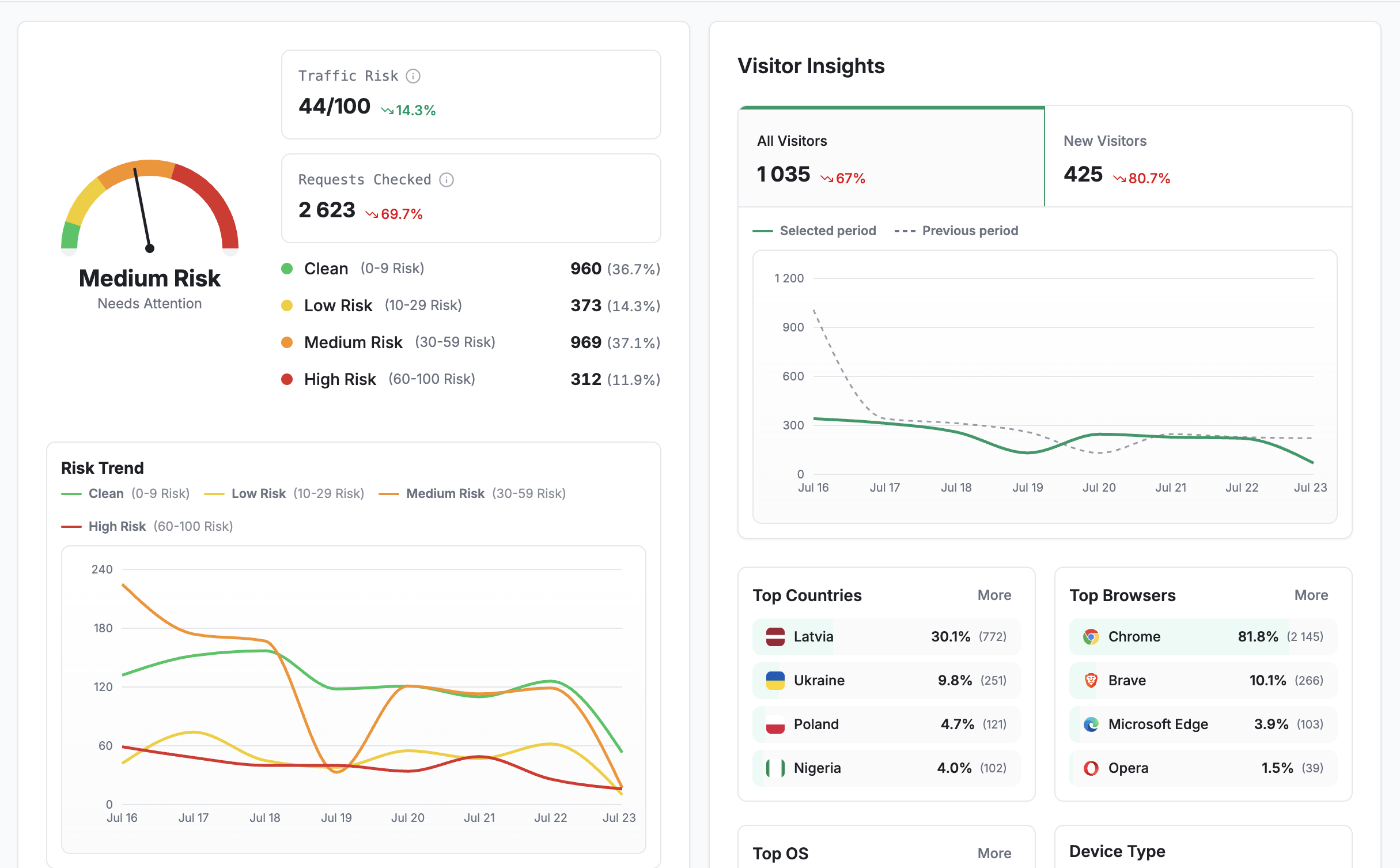
It recognises visitors behind VPNs, proxies, Tor and anti-detect browsers, then returns a risk score from 0 to 100 with the named signals behind it. Your code decides what happens next.
One JavaScript snippet, about five minutes to the first signal, then a REST API and webhooks. 5,000 free identifications, no credit card. Paid plans are published and flat, self-serve throughout.
Features
- Identification: recognises a returning visitor through cleared cookies, incognito and IP rotation
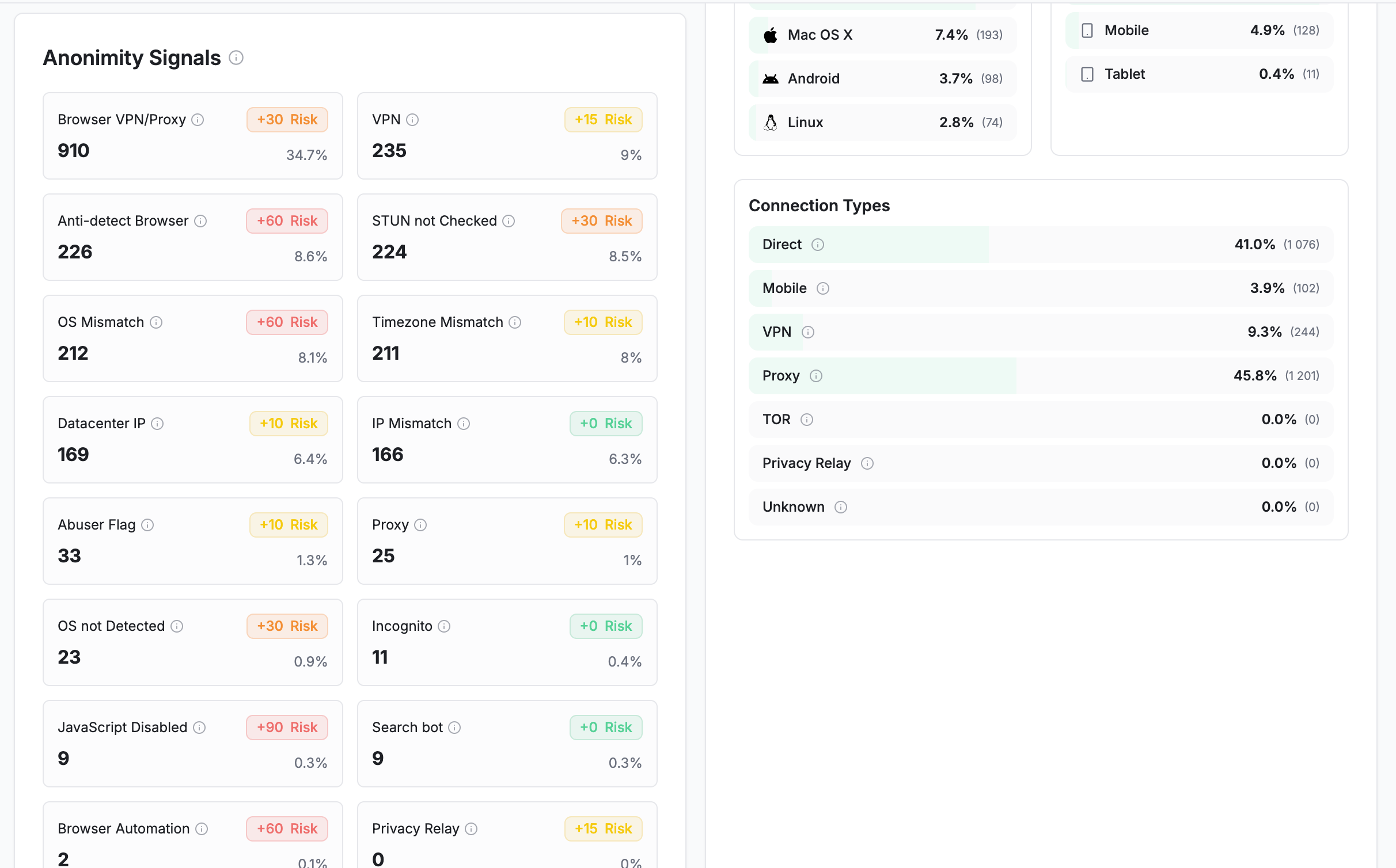
- Network Intelligence: detects VPN, proxy, Tor, Privacy Relay and datacenter IP
- Device Intelligence: detects anti-detect browsers, browser automation and OS mismatch
- Risk score: every visit scored 0 to 100 with the named signals that produced it
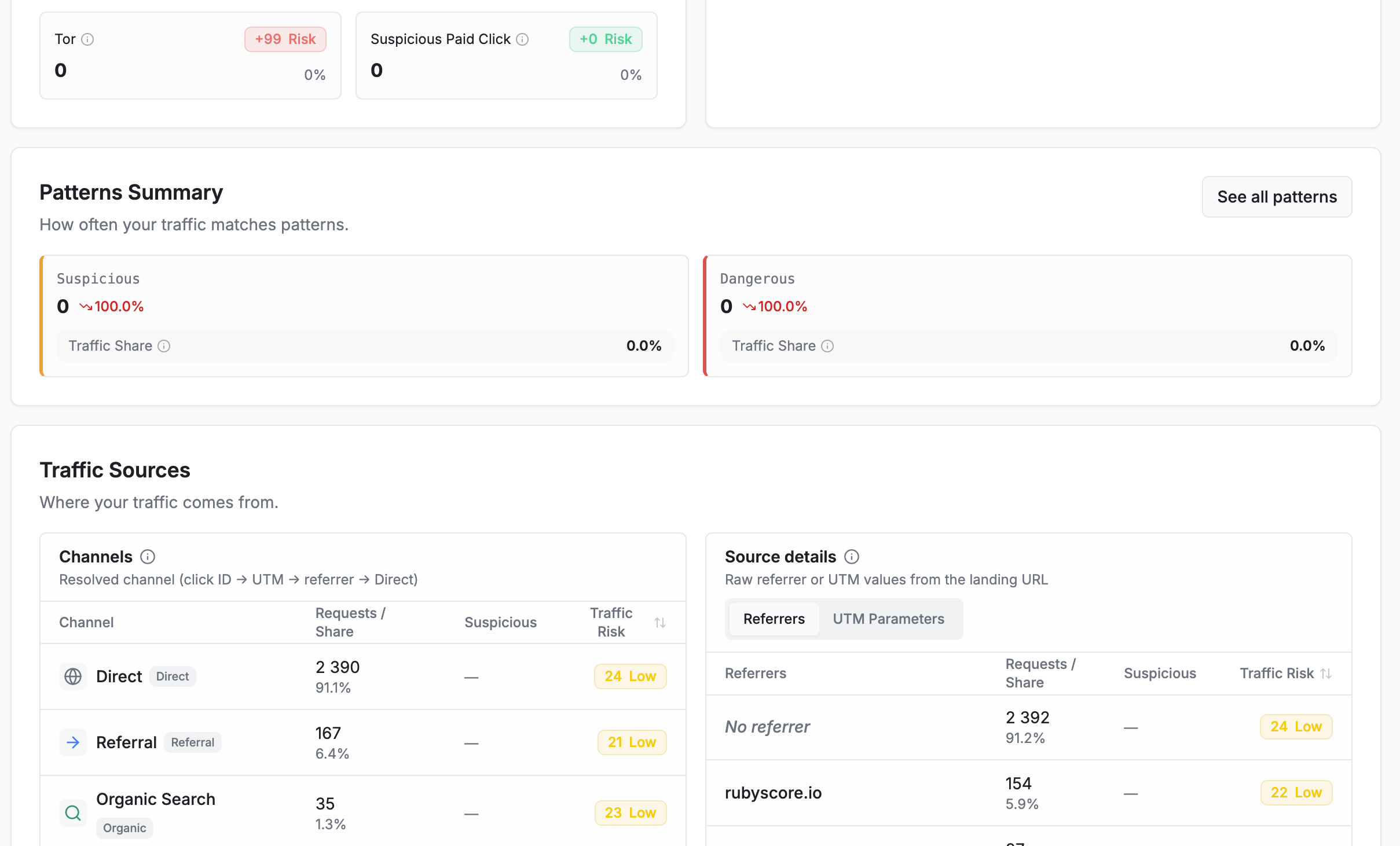
- Patterns: correlation across accounts and devices, pointing to multi-accounting and account takeover
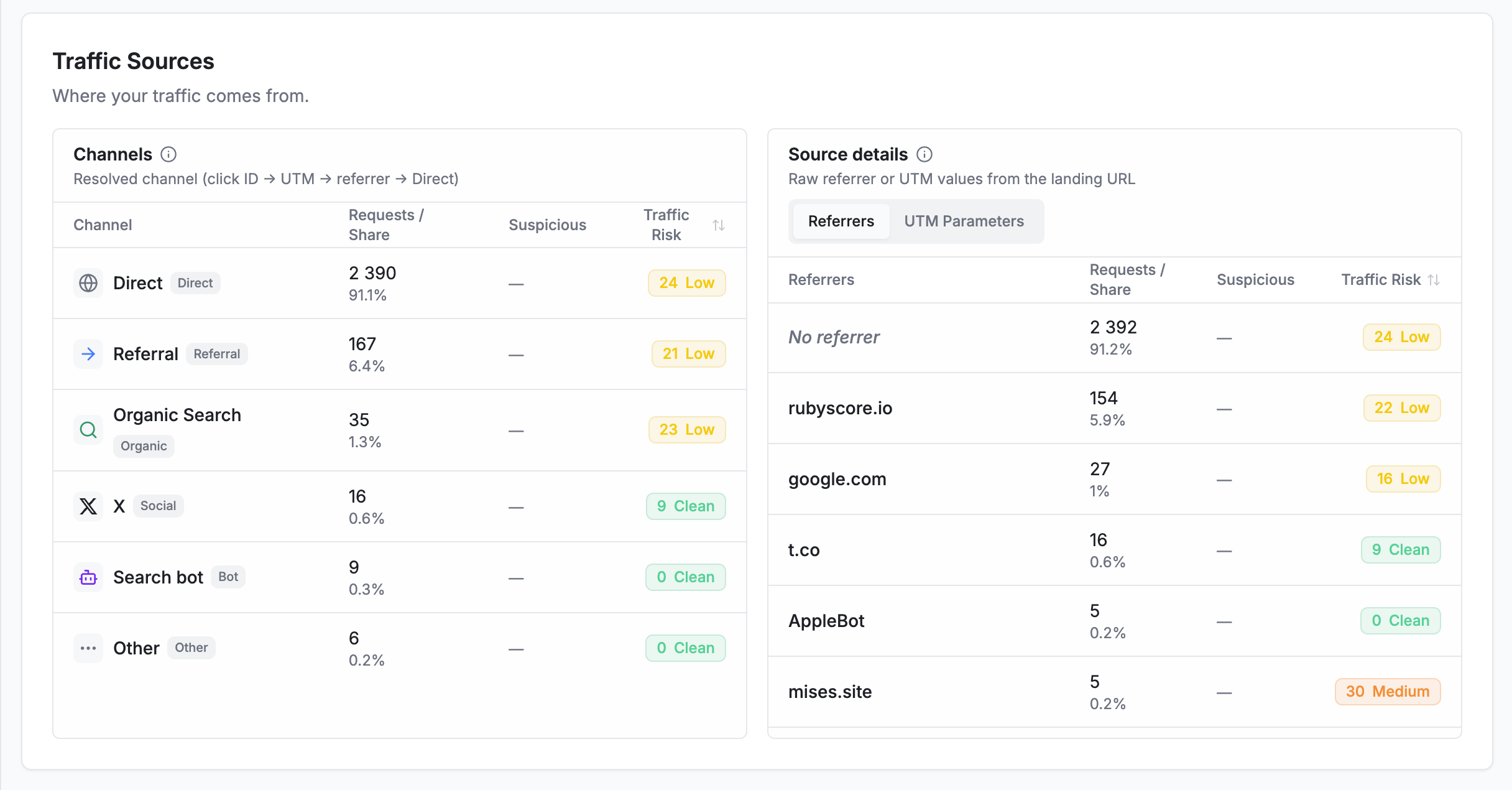
- Traffic analytics: risk bands and traffic quality by channel, referrer and UTM
- Setup: one JavaScript snippet, then REST API and webhooks
Use Cases
- Multi-accounting: one person running many accounts to farm a benefit
- Free-trial abuse: endless new trials from the same person
- Bonus abuse: signup bonuses claimed repeatedly by the same person
- Promo abuse: discount codes redeemed far beyond intent
- Referral fraud: self-referrals and fake invitees
- Loyalty fraud: points and rewards farmed illegitimately
- New-account fraud: fraudulent signups at registration
- Account takeover: someone else logging into a real user's account
- Account sharing: one subscription used by many people
- Ban evasion: banned users returning under new identities
- Paywall bypass: reading paid content without paying
- Payment fraud: fraudulent transactions
- Ad fraud: paid traffic that is not real people
- Location spoofing: faked geography to reach restricted content or pricing
- Sybil attack: many fake identities to sway a system, common in crypto and Web3
- Returning visitor recognition: the positive side, recognising a good customer instead of asking them to prove who they are again

Comments


This is exactly the kind of music player local music enthusiasts have been waiting for. The folder-based approach, native C++/Qt performance, CUE sheet support, built-in tag editor, lyrics, and cross-platform compatibility make it a fantastic choice for managing large offline collections. It's refreshing to see a free, open-source player that prioritizes speed, functionality, and user control without unnecessary bloat. Great work to the developers—looking forward to seeing how the project evolves!
Why this exists, short version. Two things bothered me. First, the tooling that reliably identifies visitors and detects anonymity is priced and packaged for enterprise. Book a demo, wait for a quote, survive procurement, then integrate for weeks. The teams actually losing money to free-trial farming, promo abuse and fake signups are small and self-serve, and that path was never built for them. Second, in most stacks anonymity detection is a side feature: a binary VPN yes or no bolted onto a product built for something else, usually resting on IP reputation lists that go stale as fast as residential proxy pools rotate through consumer addresses. Anti-detect browsers, the working tool of anyone doing multi-accounting at volume, are rarely a first-class signal at all. So ShieldLabs treats anonymity as the product, with up to 99% accuracy in detecting it. VPN, proxy, Tor, Privacy Relay, datacenter IP, anti-detect browsers, browser automation, OS and timezone mismatch, each surfaced under its own name rather than one opaque flag. Every visit gets a risk score from 0 to 100 that breaks down into the signals behind it, so when a paying customer trips over your own rules you can look up why instead of guessing. Correlation across accounts and devices is already computed when you open the dashboard, not left as an exercise. Traffic analytics break down by channel, referrer and UTM and read without code, so the person who needs the answer is not waiting on the person who can write the query. One JavaScript snippet, about five minutes to the first signal. Pricing is published and flat, and the whole detection stack is on every tier. The rate per 1,000 identifications drops as you move up, from $3.96 on the entry plan to $2.00 at the top, so growing traffic makes each identification cheaper rather than more expensive. Yearly billing saves 20%. Going over your plan keeps identification running instead of switching it off, because protection that stops at a quota is not protection. 5,000 identifications are free with no card and no expiry. Honestly curious what people find on their own traffic. Most teams are surprised in one direction or the other. Happy to go deep on anything technical here.

I like that ShieldLabs focuses on giving clear risk signals instead of just flagging traffic as suspicious. The setup looks straightforward, and being able to see why a visitor received a certain risk score makes it much easier to build sensible rules. The free tier is also a nice way to test it without any upfront commitment. It seems like a practical option for anyone dealing with fake signups, abuse, or multi-accounting.

ShieldLabs has great potential and offers some useful features, but I encountered a few issues that could be improved. Please contact me so I can share detailed feedback and suggest the changes I'd like to see. Email: [email protected]
Premium Products

































Sponsors
Buy

Makers
Makers
Comments
This is exactly the kind of music player local music enthusiasts have been waiting for. The folder-based approach, native C++/Qt performance, CUE sheet support, built-in tag editor, lyrics, and cross-platform compatibility make it a fantastic choice for managing large offline collections. It's refreshing to see a free, open-source player that prioritizes speed, functionality, and user control without unnecessary bloat. Great work to the developers—looking forward to seeing how the project evolves!
Why this exists, short version. Two things bothered me. First, the tooling that reliably identifies visitors and detects anonymity is priced and packaged for enterprise. Book a demo, wait for a quote, survive procurement, then integrate for weeks. The teams actually losing money to free-trial farming, promo abuse and fake signups are small and self-serve, and that path was never built for them. Second, in most stacks anonymity detection is a side feature: a binary VPN yes or no bolted onto a product built for something else, usually resting on IP reputation lists that go stale as fast as residential proxy pools rotate through consumer addresses. Anti-detect browsers, the working tool of anyone doing multi-accounting at volume, are rarely a first-class signal at all. So ShieldLabs treats anonymity as the product, with up to 99% accuracy in detecting it. VPN, proxy, Tor, Privacy Relay, datacenter IP, anti-detect browsers, browser automation, OS and timezone mismatch, each surfaced under its own name rather than one opaque flag. Every visit gets a risk score from 0 to 100 that breaks down into the signals behind it, so when a paying customer trips over your own rules you can look up why instead of guessing. Correlation across accounts and devices is already computed when you open the dashboard, not left as an exercise. Traffic analytics break down by channel, referrer and UTM and read without code, so the person who needs the answer is not waiting on the person who can write the query. One JavaScript snippet, about five minutes to the first signal. Pricing is published and flat, and the whole detection stack is on every tier. The rate per 1,000 identifications drops as you move up, from $3.96 on the entry plan to $2.00 at the top, so growing traffic makes each identification cheaper rather than more expensive. Yearly billing saves 20%. Going over your plan keeps identification running instead of switching it off, because protection that stops at a quota is not protection. 5,000 identifications are free with no card and no expiry. Honestly curious what people find on their own traffic. Most teams are surprised in one direction or the other. Happy to go deep on anything technical here.
I like that ShieldLabs focuses on giving clear risk signals instead of just flagging traffic as suspicious. The setup looks straightforward, and being able to see why a visitor received a certain risk score makes it much easier to build sensible rules. The free tier is also a nice way to test it without any upfront commitment. It seems like a practical option for anyone dealing with fake signups, abuse, or multi-accounting.
ShieldLabs has great potential and offers some useful features, but I encountered a few issues that could be improved. Please contact me so I can share detailed feedback and suggest the changes I'd like to see. Email: [email protected]
Premium Products
New to Fazier?

Find your next favorite product or submit your own. Made by @FalakDigital.
Copyright ©2026. All Rights Reserved