
Scoutr
Validate, model, iterate and ship your next project
Building with AI is easy. Knowing what to build still isn't. Most builders skip product discovery entirely, assume the problem is real, assume people will pay, and launch. Scoutr guides you through an accurate product discovery process and gives you clarity as a compass, not just a feeling.
Features
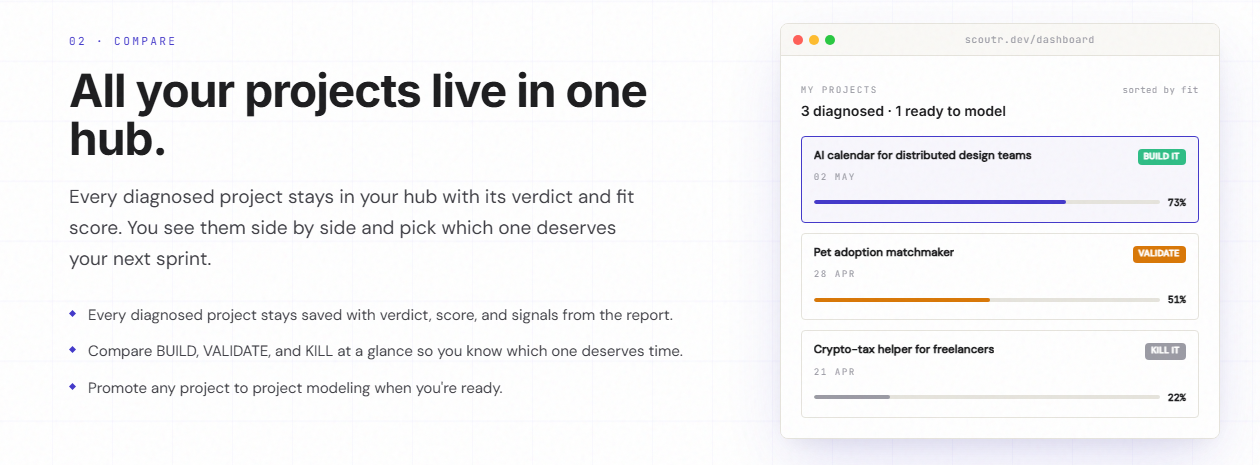
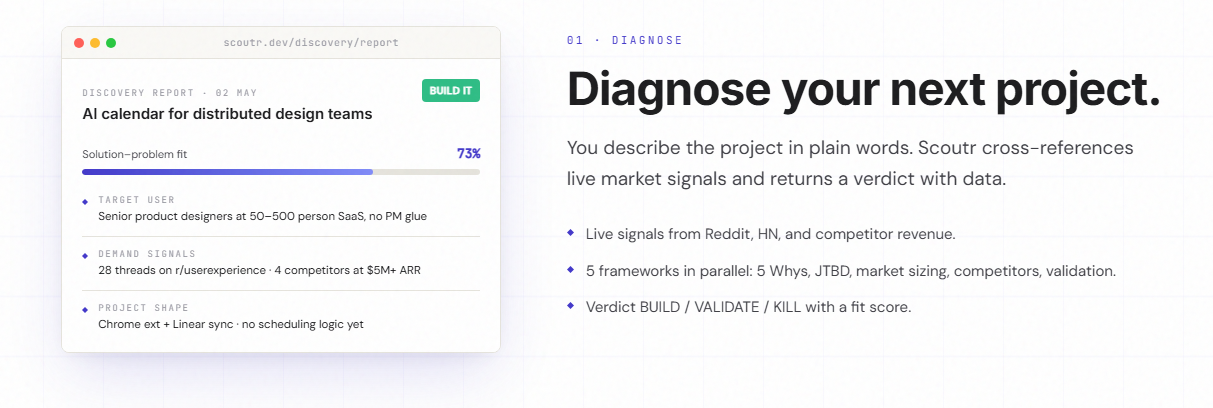
- Solution fit scoring
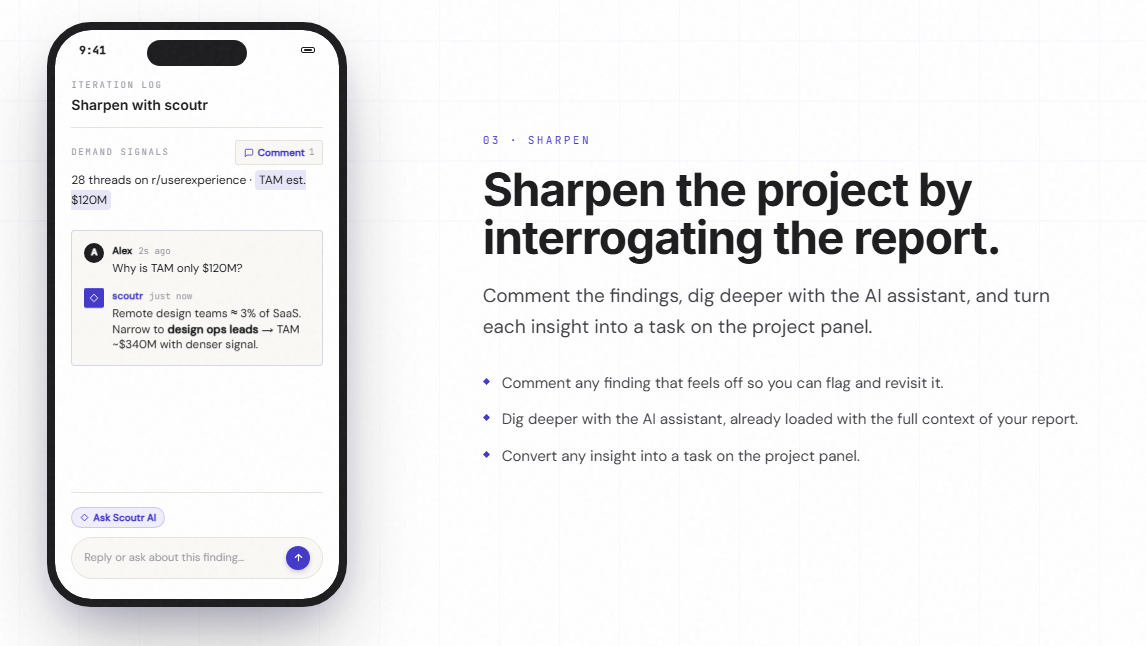
- Reddit threads
- Competitor Map
- Interview Guide
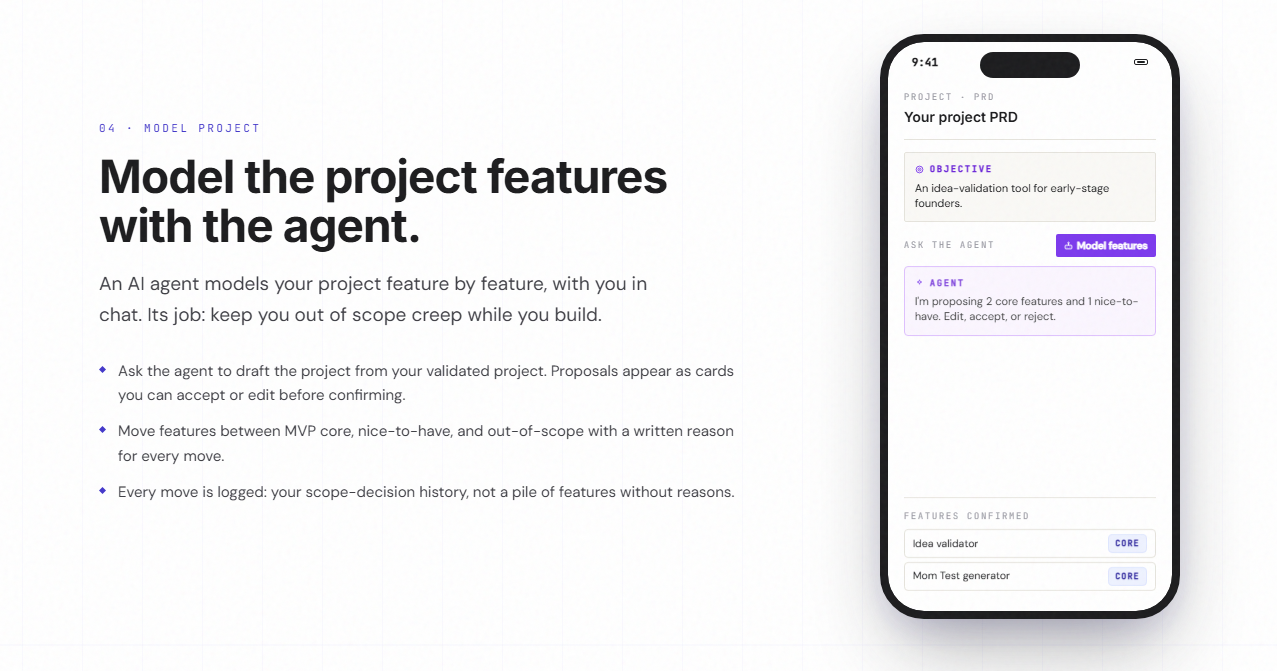
- MVP model agent
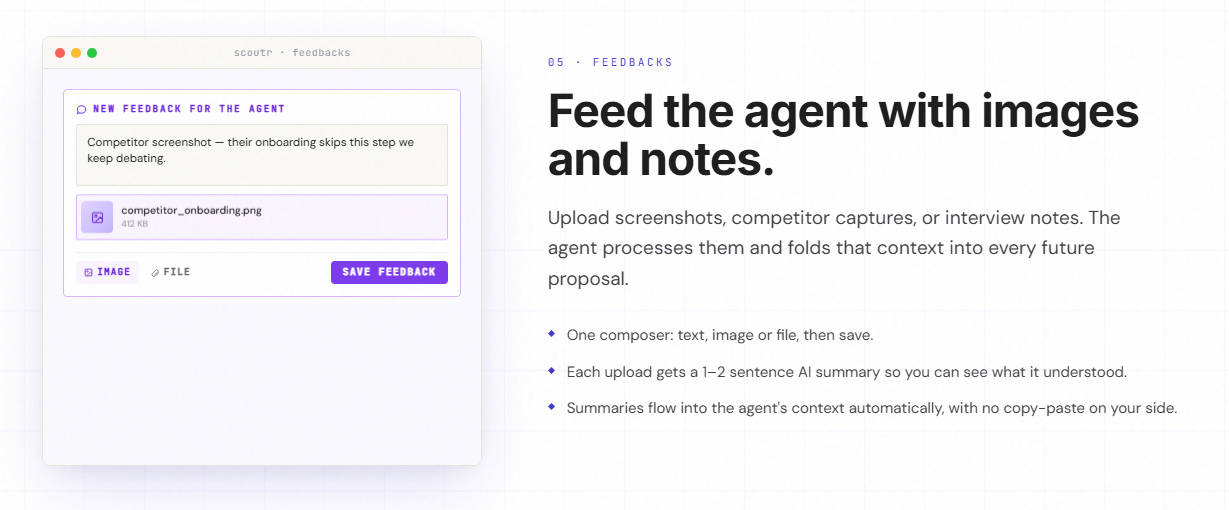
- Feedback process center
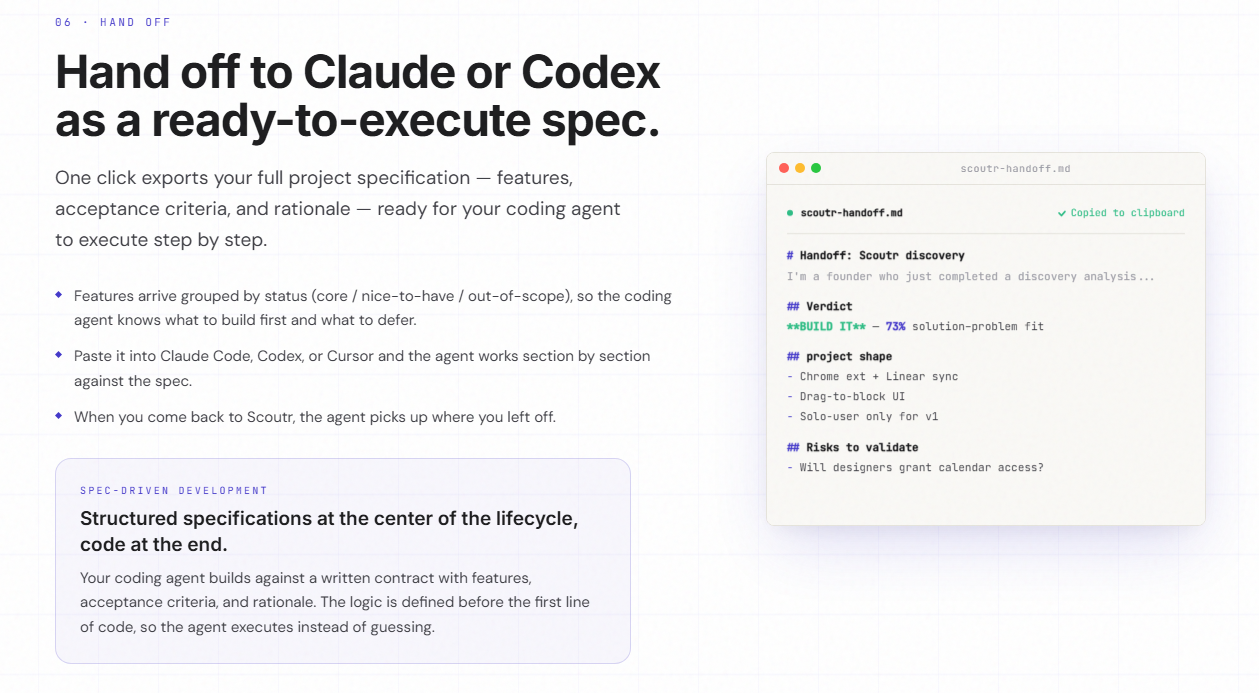
- SDD PRD Handoff document
Use Cases
- Early stage projects
- MVP feature building
- Anti scope creep

Comments


This tool looks extremely useful for solo builders and early-stage founders. Instead of rushing into development, Scoutr helps you properly validate, model, and iterate — which can save months of wasted effort. The “compass” approach for product discovery is a smart concept. Suggestion: It would be great if it integrated with no-code tools or had case studies of successful projects that went through the process.

This is such an important point. AI has made building faster than ever, but validating whether a problem actually exists and whether customers will pay for a solution is still the hardest part. Product discovery isn't optional-it's the foundation of every successful product. Love the focus on clarity over assumptions.


Love this approach. Too many founders jump straight into building without validating the problem first. Scoutr focuses on the most important part of product development, understanding customer needs and market demand before investing time and resources. A valuable tool for anyone looking to build smarter and launch with confidence. 🚀


Scoutr addresses one of the most common early-stage failure modes: building something no one actually wants. The combination of solution fit scoring, Reddit thread discovery for real customer pain points, and competitor mapping in one tool is a smart workflow. The MVP model agent concept is especially interesting because it forces founders to articulate the minimum viable version before writing a line of code. The SDD PRD Handoff is a practical touch for teams transitioning from validation to development.


Spec-as-contract before any code matches how I actually work with coding agents, the failure mode is always the agent guessing intent you never wrote down. The solution-fit score (the 73% BUILD IT verdict) is the interesting bet: a number like that only earns trust if I can see which inputs moved it and which "risks to validate" it's still blind to, otherwise it reads as a vibe with a percentage attached. Pairing Reddit threads with an interview guide is the smart part, real quotes beat a founder's own assumptions every time. How do you keep the discovery from going stale once the project shape shifts mid-build?

Premium Products








































Sponsors
Buy

Awards
View all
Awards
View allMakers

Makers
Comments
This tool looks extremely useful for solo builders and early-stage founders. Instead of rushing into development, Scoutr helps you properly validate, model, and iterate — which can save months of wasted effort. The “compass” approach for product discovery is a smart concept. Suggestion: It would be great if it integrated with no-code tools or had case studies of successful projects that went through the process.
This is such an important point. AI has made building faster than ever, but validating whether a problem actually exists and whether customers will pay for a solution is still the hardest part. Product discovery isn't optional-it's the foundation of every successful product. Love the focus on clarity over assumptions.
Love this approach. Too many founders jump straight into building without validating the problem first. Scoutr focuses on the most important part of product development, understanding customer needs and market demand before investing time and resources. A valuable tool for anyone looking to build smarter and launch with confidence. 🚀
Scoutr addresses one of the most common early-stage failure modes: building something no one actually wants. The combination of solution fit scoring, Reddit thread discovery for real customer pain points, and competitor mapping in one tool is a smart workflow. The MVP model agent concept is especially interesting because it forces founders to articulate the minimum viable version before writing a line of code. The SDD PRD Handoff is a practical touch for teams transitioning from validation to development.
Spec-as-contract before any code matches how I actually work with coding agents, the failure mode is always the agent guessing intent you never wrote down. The solution-fit score (the 73% BUILD IT verdict) is the interesting bet: a number like that only earns trust if I can see which inputs moved it and which "risks to validate" it's still blind to, otherwise it reads as a vibe with a percentage attached. Pairing Reddit threads with an interview guide is the smart part, real quotes beat a founder's own assumptions every time. How do you keep the discovery from going stale once the project shape shifts mid-build?
Premium Products
New to Fazier?

Find your next favorite product or submit your own. Made by @FalakDigital.
Copyright ©2026. All Rights Reserved