
Scientific Figure
Scientific Figure — Free AI Scientific Figure Generator
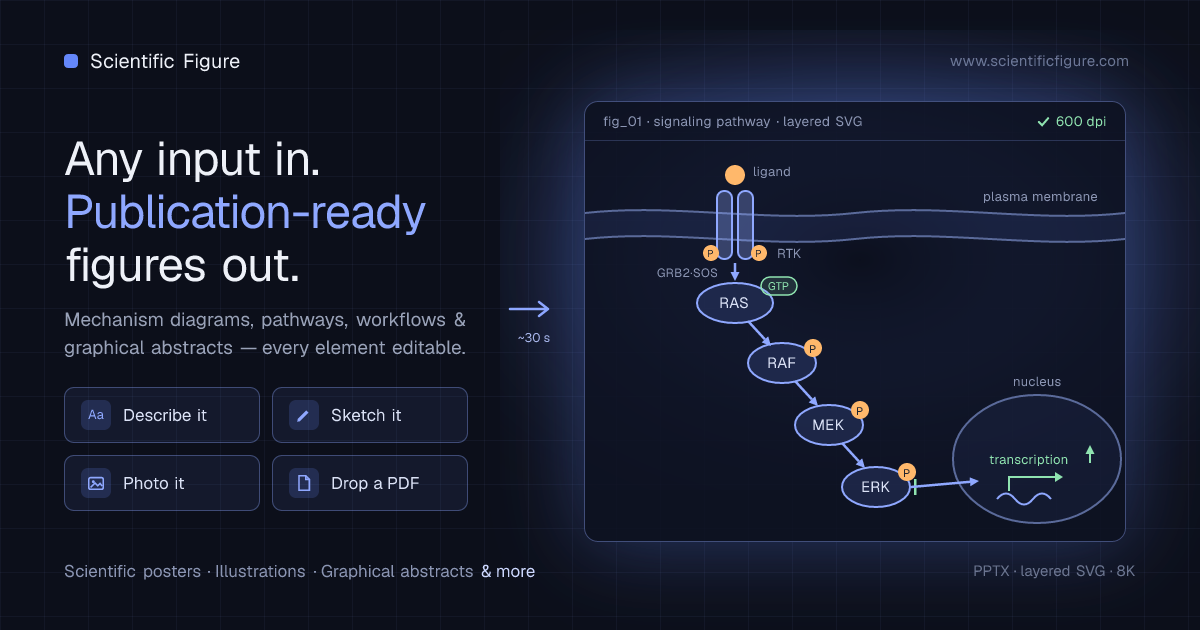
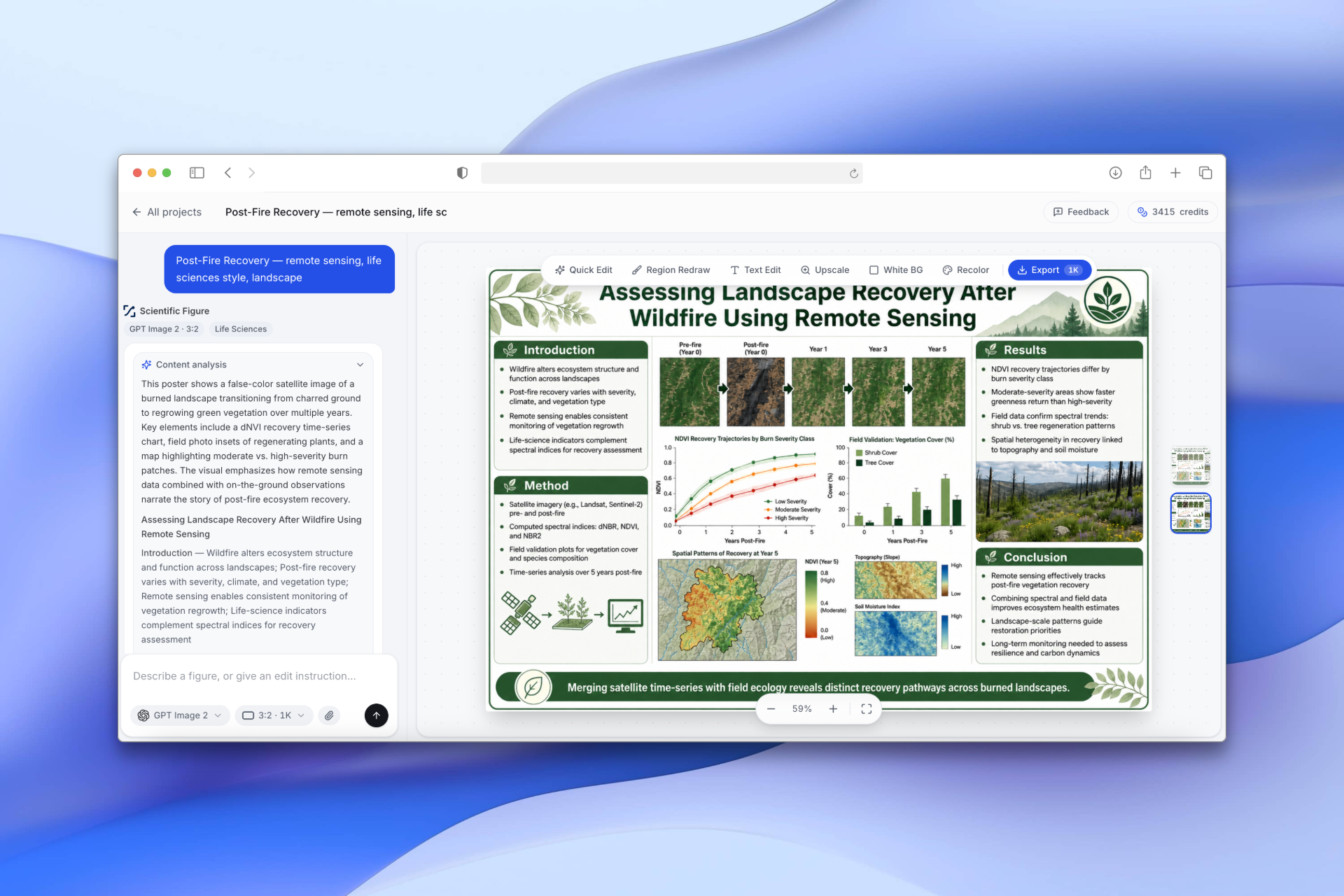
Scientific Figure is a Free AI-powered scientific figure generator built for
researchers. It creates editable figures from text, sketches, reference images,
or the paper itself, and exports them as layered SVG, editable PPTX, or
high-resolution PNG. Because every element stays editable, a reviewer comment
costs a two-minute edit instead of a full redraw.
* Text-to-Figure
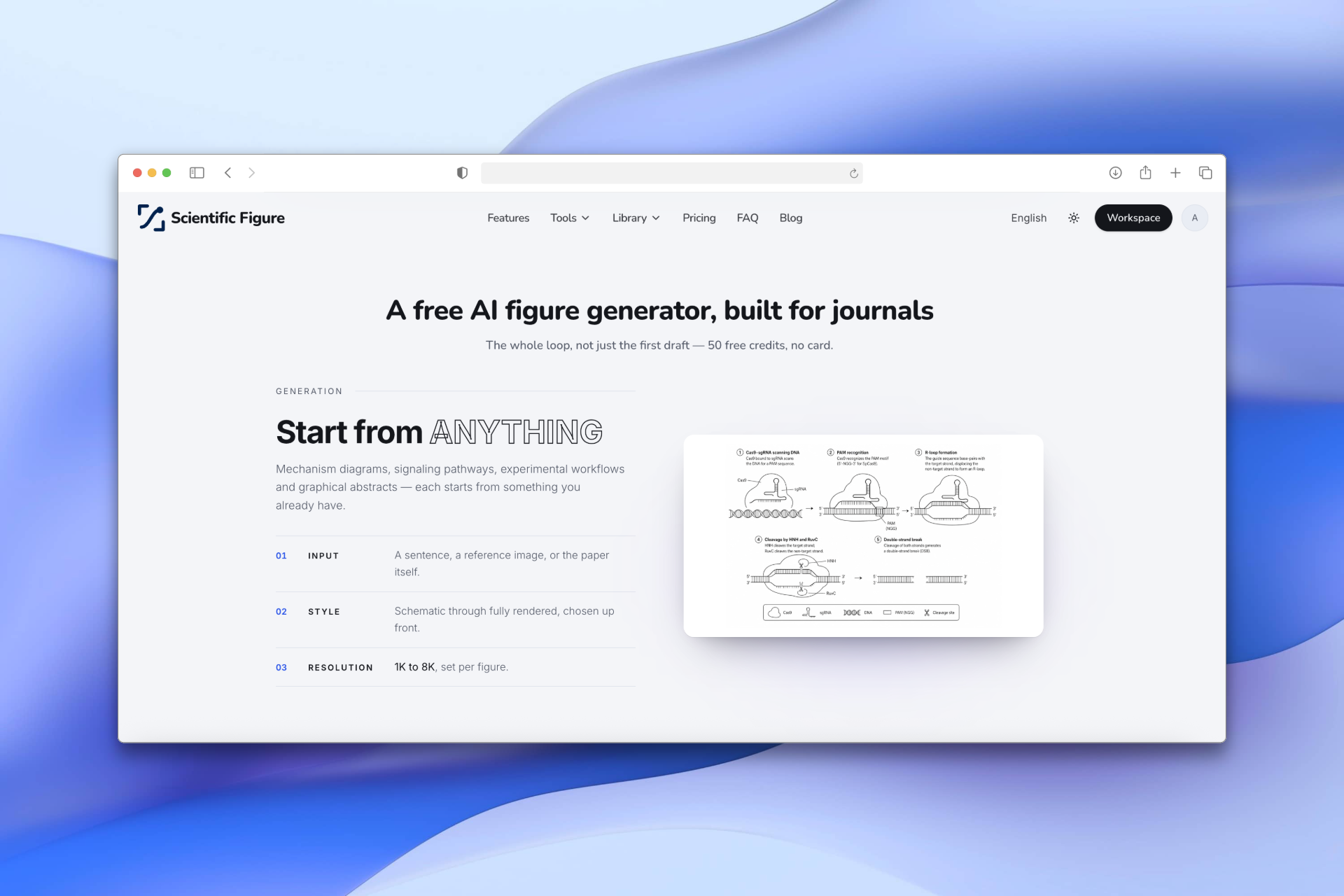
Converts a description of a mechanism, workflow, or experiment into a
structured draft that can be refined to publication quality.
* Sketch-to-Figure
Turns a hand-drawn lab-notebook sketch into a polished figure while preserving
its scientific logic, with everything still editable afterwards.
* Reference-to-Figure
Generates an original figure in the style of a reference image, applying its
composition, color palette, and information density to your own content.
* Selective Editing
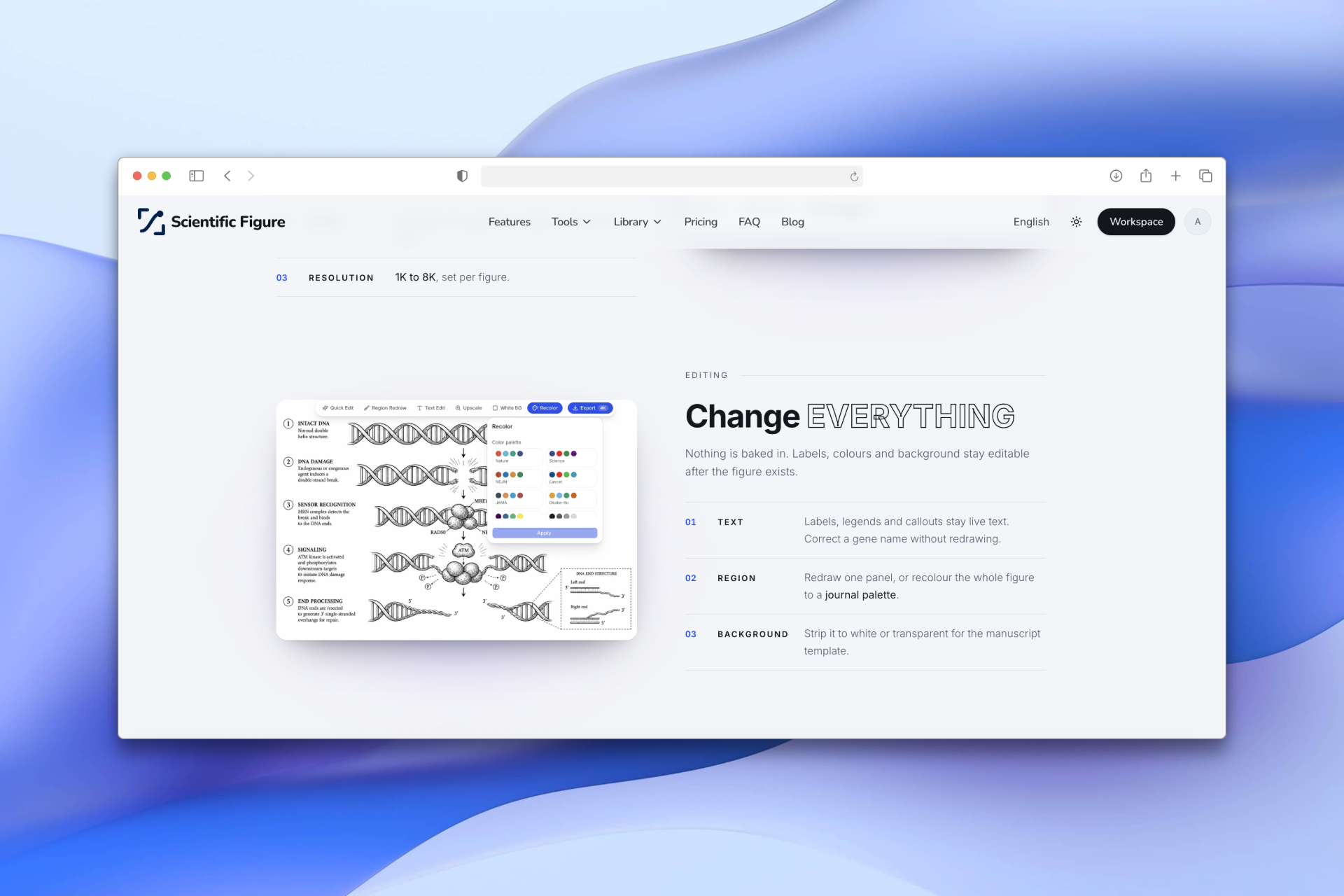
Select a single region and regenerate just that part: fix a label, redirect an
arrow, recolor one panel, without starting over.
* Editable Export
Exports layered SVG, editable PPTX, and PNG at 600+ DPI (up to 8K, no
watermarks), so files still open properly in Illustrator or PowerPoint months
later.
* Specialized Tools
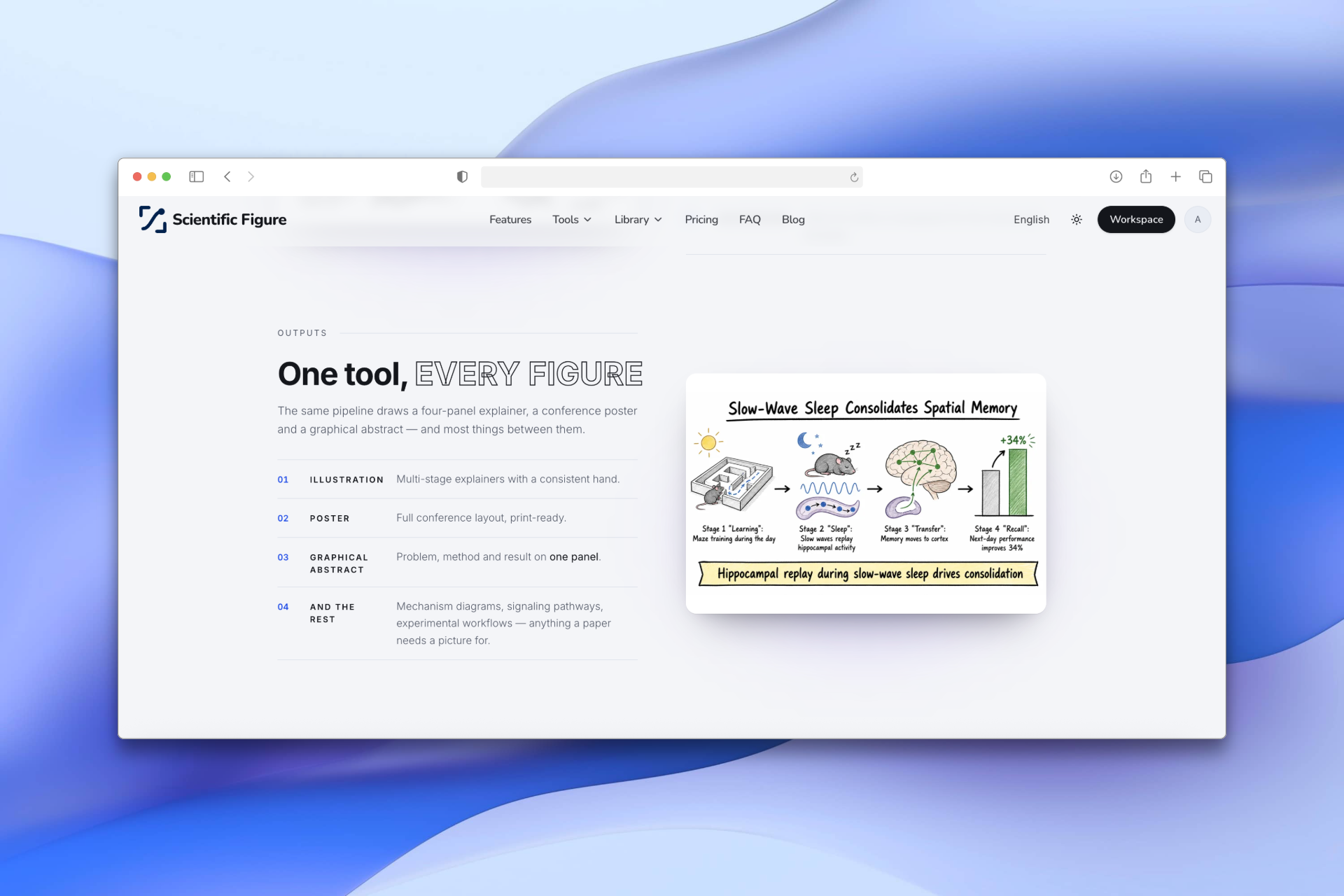
graphical abstract maker sized for journal submission portals
scientific poster maker with A0 and A1 layouts
scientific illustration generator for diagrams and schematics
* Multiple Image Models
Nano Banana, Nano Banana 2, Nano Banana Pro, GPT Image 1.5, and GPT Image 2,
across six visual styles: scientific schematic, line art, 3D render,
editorial, sketch, and watercolor.
* Three-Step Workflow
Define the scientific narrative, generate a structured draft, then review,
refine, and export for manuscripts, posters, or presentations.
Authors keep full publication and commercial rights to everything they generate,
and private uploads are encrypted in transit and at rest and are never used to
train models - which matters when the figure describes unpublished data.
For researchers who need to communicate their ideas visually, Scientific Figure
turns a rough idea into an editable, publication-ready figure. New accounts
start with 50 free credits and no credit card; paid plans begin at $20 per
month.


Comments


My name is john. I've been spending afternoons of my PhD working on figures - not drawing them, but redrawing them. A reviewer asks you to change one protein's name in Figure 3. The source file with layers is on your laptop, which was reimaged two months ago. The only thing that was saved from the original is flattened PNG version. So you redraw the entire panel from scratch, 1 AM, for one word. This is the problem Scientific Figure is solving for. You start from wherever you are now: from a sentence about the mechanism, from an image taken from your notebook, from the style of a reference figure you would like to use, or directly from the publication. Around 30 seconds later you have an editable structured figure in one of six styles, from clean schematic to a 3D render. What I really care about is how it continues. The result remains editable: edit one region, regenerate just that piece. Export layered SVG, PPTX file, or PNG at 600+ dpi. The exported file will still be able to be opened in Illustrator or PowerPoint six months later, when you receive the revisions. There are separate modes for graphical abstracts and A0/A1 conference posters. Straightforward disclaimer about the limitations: AI helps you get pretty close, not exactly there. You'll still have to double check every single label by yourself, and that's why everything remains editable, not because the output is ready for submitting. Check with your journal about their AI disclosure policy. Free to try — 50 credits, no card. One thing I would really appreciate to hear from this community: which fields of science are we missing? So far we went mostly for biochemistry and chemistry, and I feel like there should be better conventions for materials science, ecology, and clinical work. Please, tell me what do your figures need.
Premium Products
























Sponsors
Buy

Makers
Makers
Comments
My name is john. I've been spending afternoons of my PhD working on figures - not drawing them, but redrawing them. A reviewer asks you to change one protein's name in Figure 3. The source file with layers is on your laptop, which was reimaged two months ago. The only thing that was saved from the original is flattened PNG version. So you redraw the entire panel from scratch, 1 AM, for one word. This is the problem Scientific Figure is solving for. You start from wherever you are now: from a sentence about the mechanism, from an image taken from your notebook, from the style of a reference figure you would like to use, or directly from the publication. Around 30 seconds later you have an editable structured figure in one of six styles, from clean schematic to a 3D render. What I really care about is how it continues. The result remains editable: edit one region, regenerate just that piece. Export layered SVG, PPTX file, or PNG at 600+ dpi. The exported file will still be able to be opened in Illustrator or PowerPoint six months later, when you receive the revisions. There are separate modes for graphical abstracts and A0/A1 conference posters. Straightforward disclaimer about the limitations: AI helps you get pretty close, not exactly there. You'll still have to double check every single label by yourself, and that's why everything remains editable, not because the output is ready for submitting. Check with your journal about their AI disclosure policy. Free to try — 50 credits, no card. One thing I would really appreciate to hear from this community: which fields of science are we missing? So far we went mostly for biochemistry and chemistry, and I feel like there should be better conventions for materials science, ecology, and clinical work. Please, tell me what do your figures need.
Premium Products
New to Fazier?

Find your next favorite product or submit your own. Made by @FalakDigital.
Copyright ©2025. All Rights Reserved