
ScanChess
Chess OCR: board photos → FEN, scoresheets → PGN
ScanChess turns chess board photos and handwritten scoresheets into editable FEN and shareable PGN. Built for over-the-board players, coaches and school clubs who need a fast path from a phone photo to analysis or replay.
Features
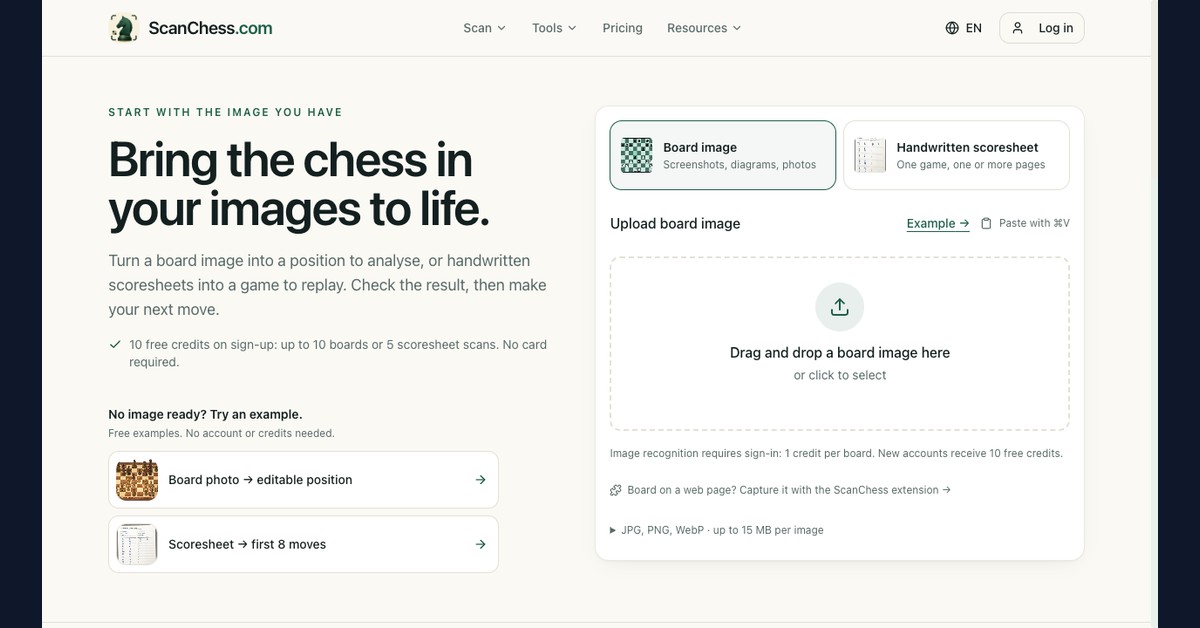
Board photo and diagram OCR to editable FEN
Handwritten scoresheet pages to reviewable PGN
Browser PGN/FEN viewers with no account
Freemium OCR with free starter credits after Google sign-in
Use Cases
OTB players photographing a board mid-game for analysis
Coaches digitizing student scoresheets after a tournament
School chess clubs archiving games without manual typing

Comments


Deadshot IO shows me that even basic mechanics of FPSs can be entertaining. You do not need a lot of complicated systems for a shooter to be enjoyable. Just decent movement, shooting, different kinds of weapons, and competitions are enough. https://deadshotgame.io/


The scoresheet-to-PGN direction is the harder half and the more useful one: digitising an OTB tournament game after the fact is exactly the chore that stops people from reviewing their own games. Two questions from someone who has photographed a lot of scoresheets: (1) when a player writes one move across two columns or crosses out a move and rewrites it, does the OCR follow the correction or does it produce two plies? (2) do you keep the original photo alongside the generated PGN so a coach can verify a questionable move against the paper? Being open source makes the second one easy to trust either way.
The scoresheet-to-PGN step seems like the place where legality checking could help a lot. If a handwritten move reads ambiguously (say Nf3 versus Nf5), does the app use the game's move sequence to pick the only legal option, or flag low-confidence moves for review? A simple highlight on uncertain plies before export would make proofreading much faster.



Separating board-photo FEN from handwritten scoresheet PGN is the right split. A coach photographing a dozen student sheets after a tournament needs the scoresheet path more than another board viewer, and a no-account browser viewer means the club can open the PGN without another signup. Are the free starter credits enough for one tournament's sheets, or do they run out after a few pages?
Premium Products













































Sponsors
Buy

Awards
View all
Awards
View allComments
Deadshot IO shows me that even basic mechanics of FPSs can be entertaining. You do not need a lot of complicated systems for a shooter to be enjoyable. Just decent movement, shooting, different kinds of weapons, and competitions are enough. https://deadshotgame.io/
The scoresheet-to-PGN direction is the harder half and the more useful one: digitising an OTB tournament game after the fact is exactly the chore that stops people from reviewing their own games. Two questions from someone who has photographed a lot of scoresheets: (1) when a player writes one move across two columns or crosses out a move and rewrites it, does the OCR follow the correction or does it produce two plies? (2) do you keep the original photo alongside the generated PGN so a coach can verify a questionable move against the paper? Being open source makes the second one easy to trust either way.
The scoresheet-to-PGN step seems like the place where legality checking could help a lot. If a handwritten move reads ambiguously (say Nf3 versus Nf5), does the app use the game's move sequence to pick the only legal option, or flag low-confidence moves for review? A simple highlight on uncertain plies before export would make proofreading much faster.
Separating board-photo FEN from handwritten scoresheet PGN is the right split. A coach photographing a dozen student sheets after a tournament needs the scoresheet path more than another board viewer, and a no-account browser viewer means the club can open the PGN without another signup. Are the free starter credits enough for one tournament's sheets, or do they run out after a few pages?
Premium Products
New to Fazier?

Find your next favorite product or submit your own. Made by @FalakDigital.
Copyright ©2026. All Rights Reserved