
Scalebrowser
Human browser capabilities. Now for AI agents.
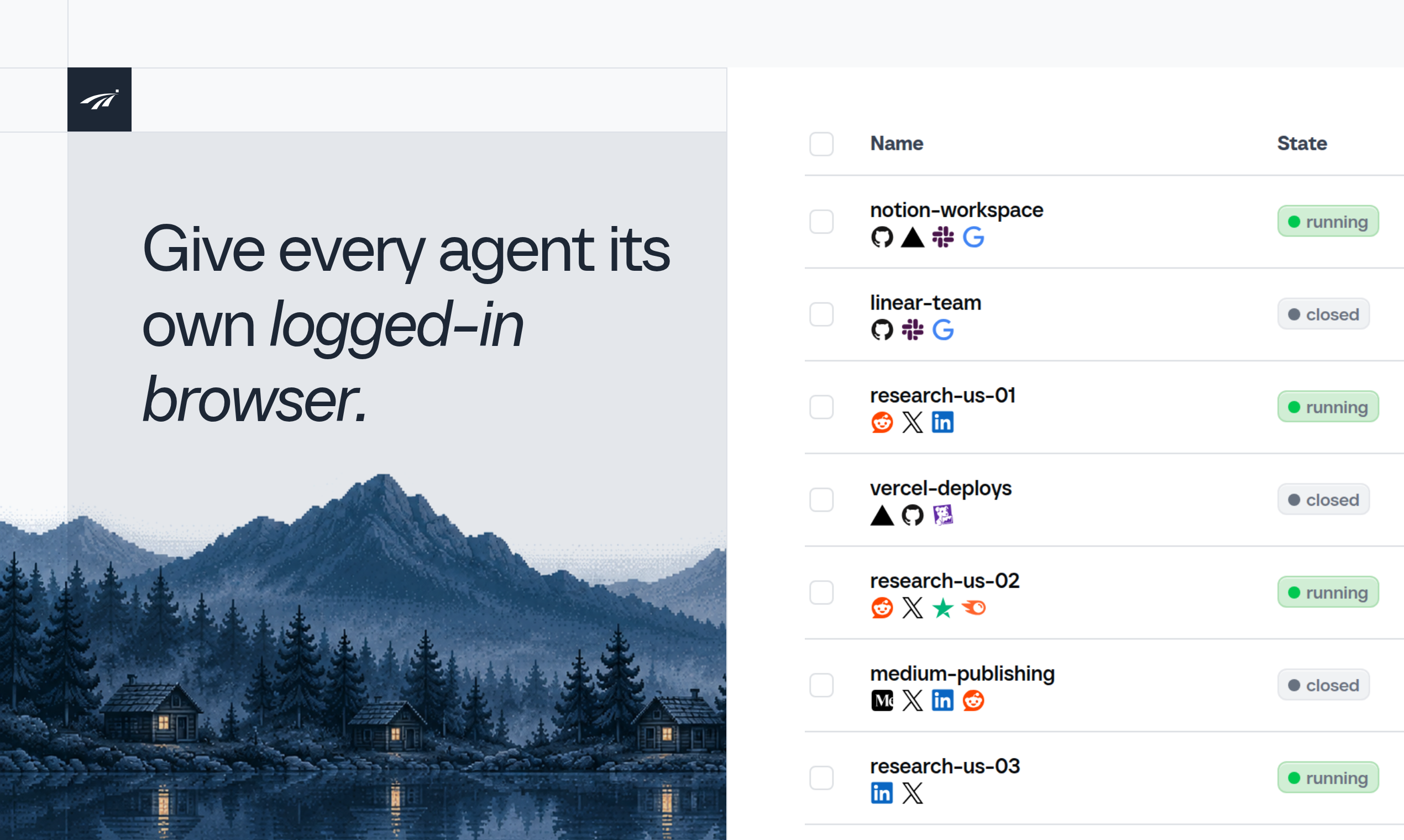
Scalebrowser is browser infrastructure for AI agents that runs on your own machines. Each agent gets its own profile, and the profile keeps its cookies, logins, passkeys, memory and task list across restarts, browser updates and moves between your computers.
Most browser agents fail before they reach the job. A site spots the control layer, the identity changes between runs, a login code goes to an inbox the agent can't read, or a captcha stops the flow. Scalebrowser works on those layers together. A patched Chromium removes automation traces inside the engine instead of covering them with scripts. It uses your real GPU and screen, and every click, keystroke and scroll goes through a human-like input layer.
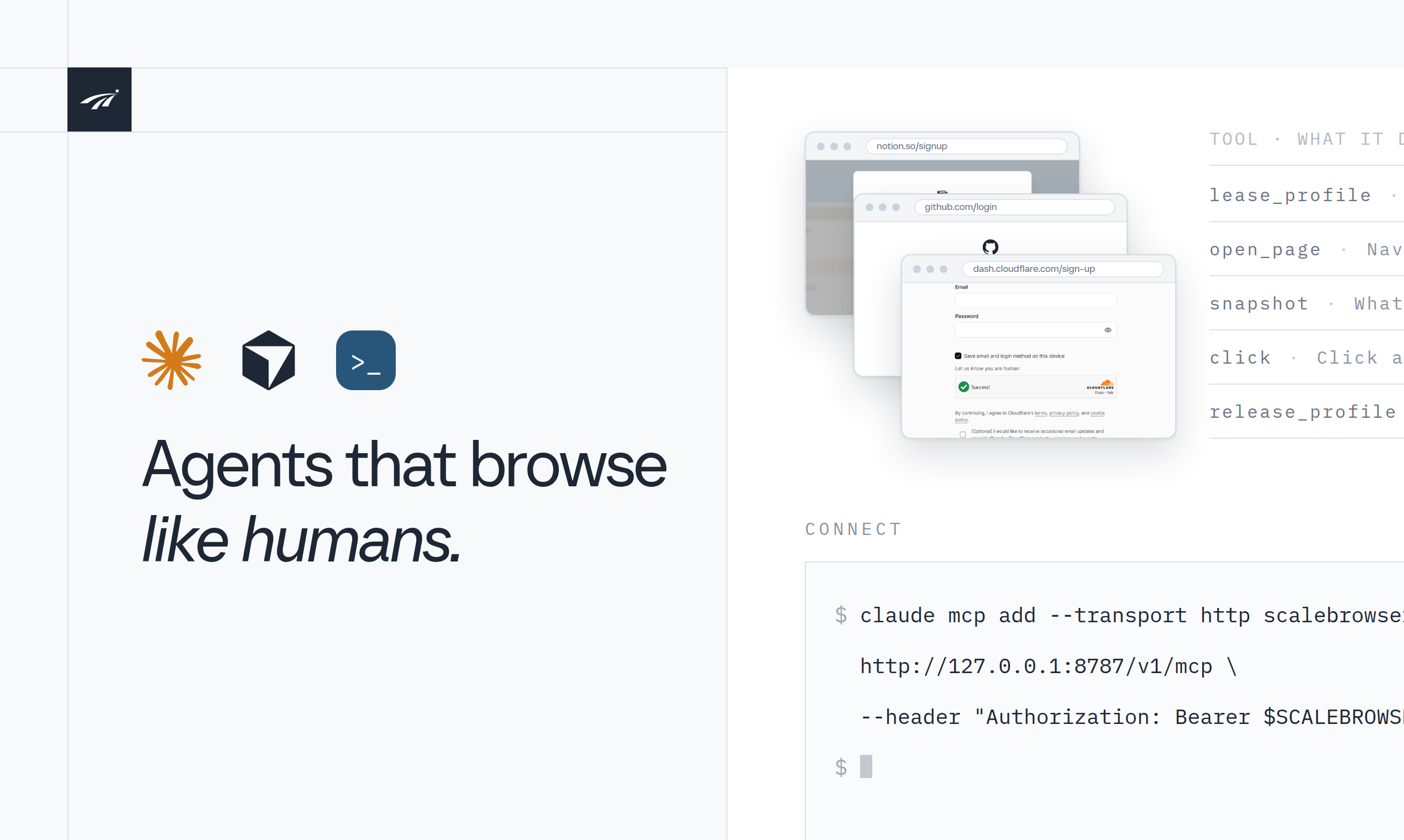
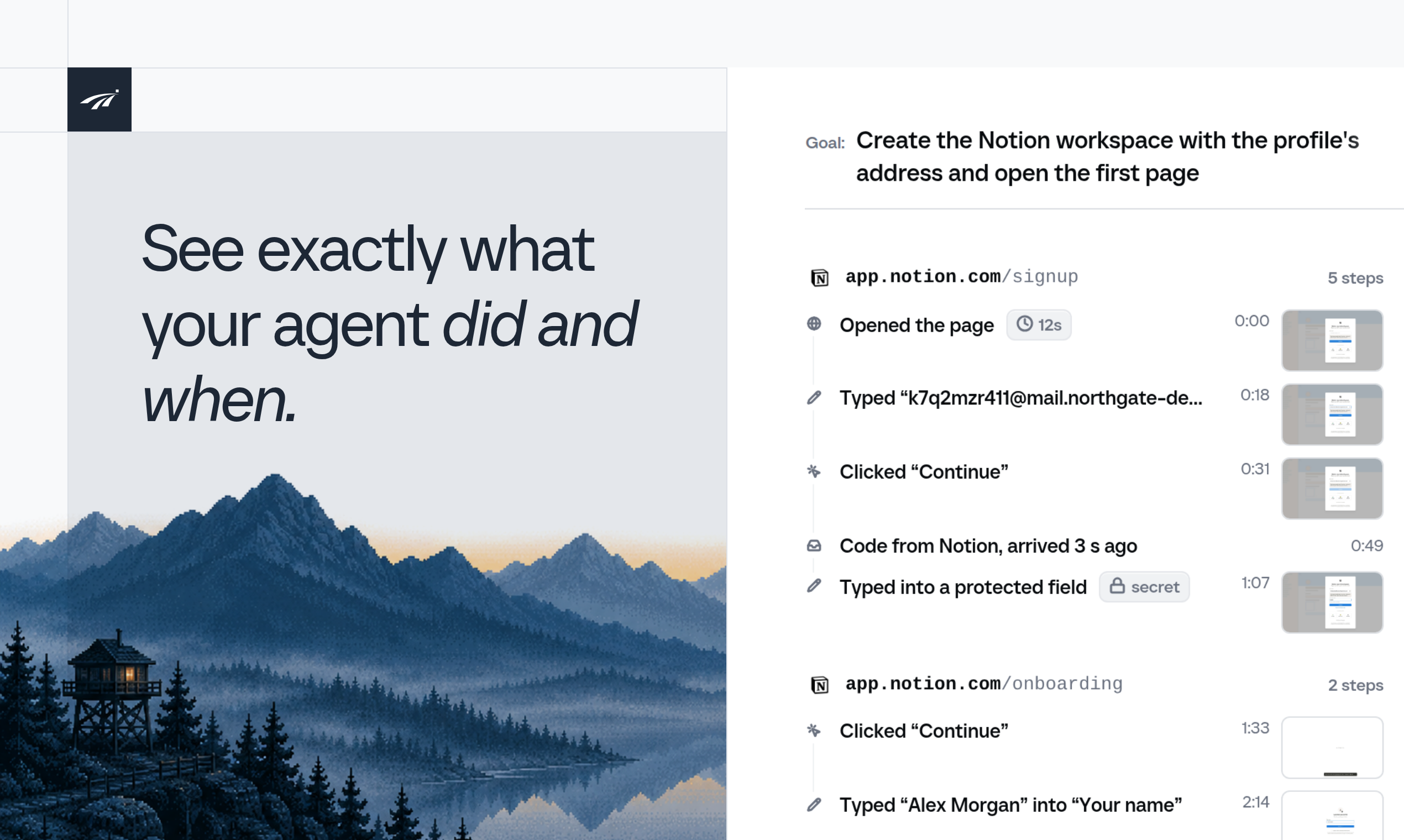
Agents connect over MCP, REST, Node.js, Python or plain CDP, and every step is recorded with a screenshot.
It's a desktop app and needs a normal PC. You bring your own residential or mobile proxy (if needed). Plans start at €19/month with a seven-day trial (card required), and every plan includes all features and unlimited profiles.
Features
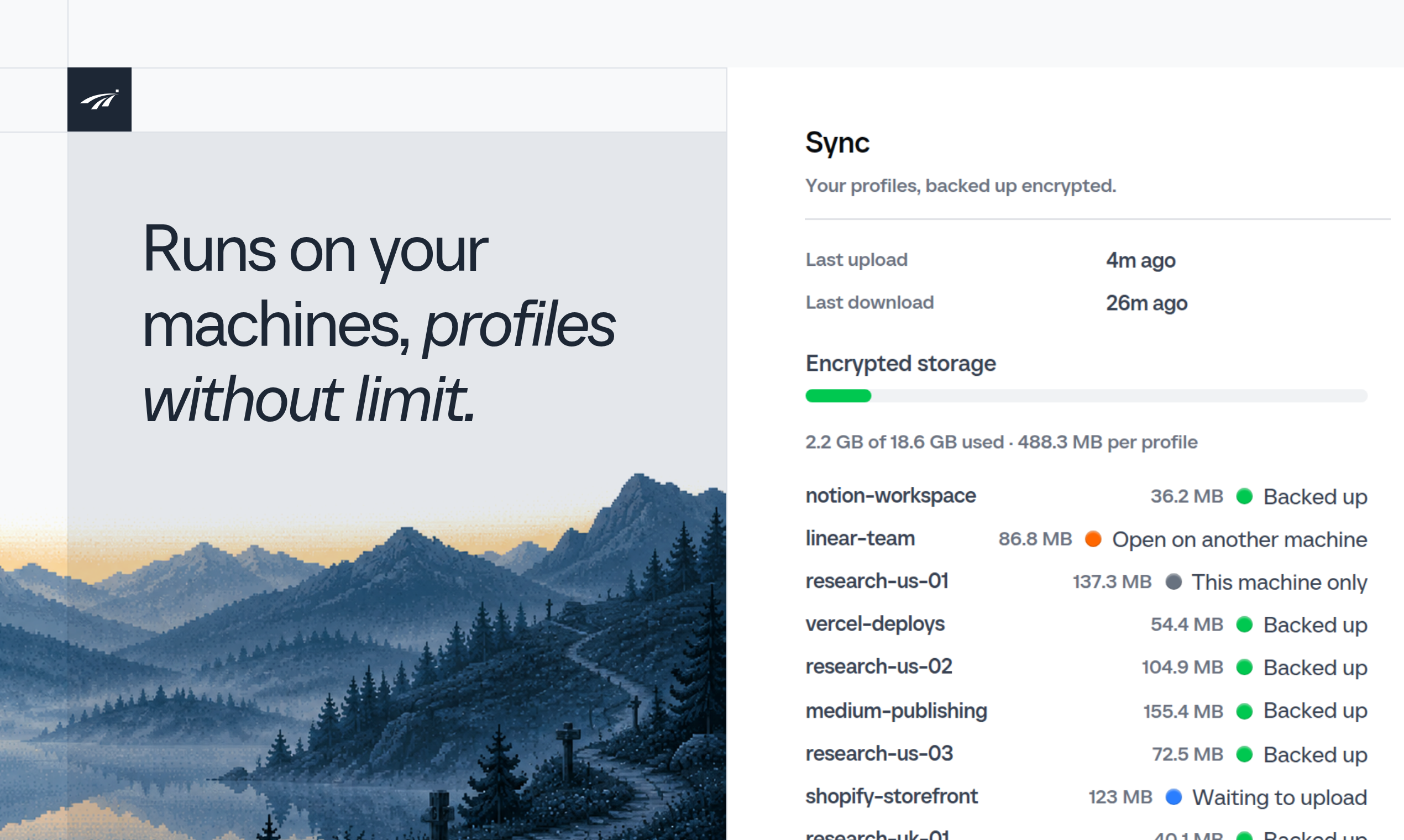
- **Persistent identity.** A profile's fingerprint comes from one seed, so it returns as the same machine after a restart, an update or an encrypted move to another computer you own.
- **Real hardware, no noise.** Scalebrowser uses the real GPU and screen values and refuses to launch a profile whose identity contradicts itself. No random canvas or WebGL noise.
- **Patched Chromium.** Automation traces are removed inside the engine, not hidden by page scripts.
- **Human-like input.** Every click, keystroke and scroll is routed through a human-like input layer instead of being injected instantly.
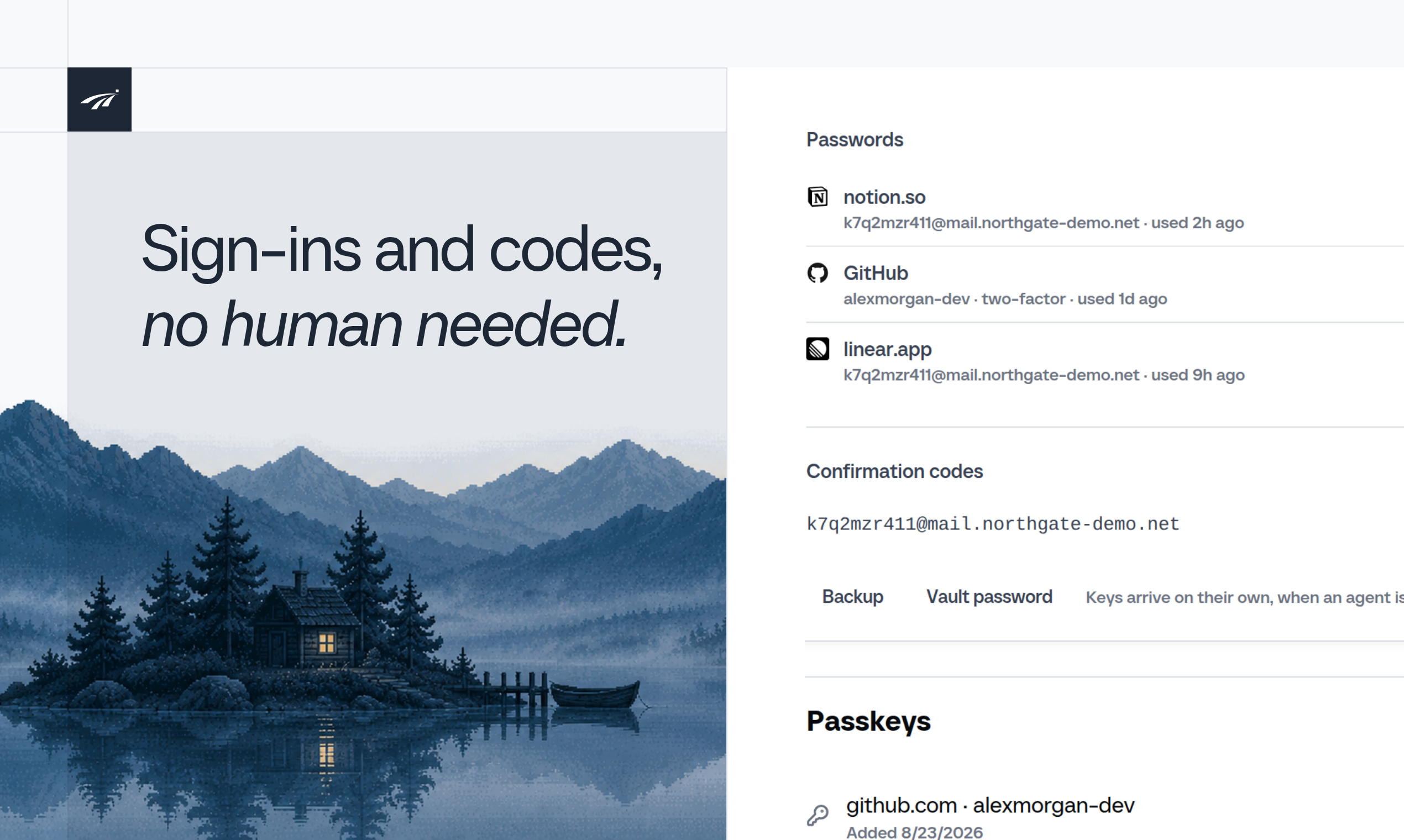
- **Sign-in handled.** Encrypted credentials the agent can fill without seeing the password, passkeys that survive browser shutdowns, email and SMS codes, and local TOTP.
- **18 captcha types.** Measured as solved on live widgets, including Cloudflare Turnstile, reCAPTCHA, hCaptcha and several GeeTest variants. Arkose and rotation captchas are the documented exceptions.
- **Browser prompts exposed.** Permission bubbles, warnings and device pickers show up for the agent instead of silently blocking the run.
- **Less context.** 21 tools by default out of 62, and a compact page map followed only by what changed. In Scalebrowser's own benchmark that took 11x fewer tokens than Playwright MCP over 75 steps.
- **Run trail and limits.** Every tool call becomes a step with its result and a screenshot. Read-only mode and address rules are enforced server-side, and secrets found on a page are replaced before they reach the model.
- **Fleet controls.** Group, reserve, start and stop profiles in bulk, assign your own proxies and extensions, and sync selected profiles between your machines with encryption.
- **Recipes and video.** Save a working run as a reusable recipe, or turn it into a demo video with camera movement, cursor motion, voiceover and subtitles.
Use Cases
- **Work inside real accounts.** Log in with two-factor, stay signed in and finish jobs in tools that have no API.
- **Daily jobs under one identity.** Run the same task every morning and show up as the same visitor each time.
- **Many agent identities on your own hardware.** Keep dozens of persistent profiles, grouped and reserved per agent, with credentials, passkeys and recordings staying on your machines.
- **Replace a cloud browser API or a Playwright stealth stack.** Attach your existing Playwright or Puppeteer code over CDP, or point an MCP client at it, and keep the sessions local.
- **Check what an agent did.** Read the run trail step by step, with a screenshot for each one, and switch on read-only mode for sensitive accounts.
- **Product demos and proof records.** Turn a completed run into a demo video, or render it as an unbroken proof record.

Comments


Hi, I'm Davide. I built Scalebrowser on my own. The agent jobs I care about are the annoying ones: log in to a real account, use a tool that has no API, run the same task every morning without showing up as a new visitor each time. Those jobs kept dying before the actual work. The profile came back as a different device after a restart, a login code landed in an inbox the agent couldn't read, a permission bubble sat outside the page, or the model burned its context just reading the DOM. Stealth plugins patch a stock browser from the inside, and cloud browsers keep your sessions on someone else's hardware. So I changed the browser itself. Scalebrowser runs a patched Chromium on your own machine, one profile per agent. Cookies, logins and passkeys stay with the profile, and its fingerprint comes from a single seed, so it starts as the same machine every time. Stored passwords are typed by the browser, so the model never sees them. The part I'm happiest with is the least flashy one. The MCP server gives the model a compact map of the page instead of the raw DOM. In my own benchmark that took 11x fewer tokens than Playwright MCP over 75 steps. Before you try it: - It's a Windows desktop app FOR NOW (Linux & MacOS coming soon) and needs a normal PC. VPS and servers don't work, because the checks flag them. - You bring your own residential or mobile proxy. - No free plan. The seven-day trial needs a card, and plans start at €19/month. - 18 captcha types are measured as solved. Arkose and rotation captchas aren't among them. - The product is commercial. The Node.js and Python SDKs are MIT. Where do your browser agents fail today: detection, login, context, or somewhere I haven't seen yet?
Premium Products





































Sponsors
Buy
Makers
Makers
Comments
Hi, I'm Davide. I built Scalebrowser on my own. The agent jobs I care about are the annoying ones: log in to a real account, use a tool that has no API, run the same task every morning without showing up as a new visitor each time. Those jobs kept dying before the actual work. The profile came back as a different device after a restart, a login code landed in an inbox the agent couldn't read, a permission bubble sat outside the page, or the model burned its context just reading the DOM. Stealth plugins patch a stock browser from the inside, and cloud browsers keep your sessions on someone else's hardware. So I changed the browser itself. Scalebrowser runs a patched Chromium on your own machine, one profile per agent. Cookies, logins and passkeys stay with the profile, and its fingerprint comes from a single seed, so it starts as the same machine every time. Stored passwords are typed by the browser, so the model never sees them. The part I'm happiest with is the least flashy one. The MCP server gives the model a compact map of the page instead of the raw DOM. In my own benchmark that took 11x fewer tokens than Playwright MCP over 75 steps. Before you try it: - It's a Windows desktop app FOR NOW (Linux & MacOS coming soon) and needs a normal PC. VPS and servers don't work, because the checks flag them. - You bring your own residential or mobile proxy. - No free plan. The seven-day trial needs a card, and plans start at €19/month. - 18 captcha types are measured as solved. Arkose and rotation captchas aren't among them. - The product is commercial. The Node.js and Python SDKs are MIT. Where do your browser agents fail today: detection, login, context, or somewhere I haven't seen yet?
Premium Products
New to Fazier?

Find your next favorite product or submit your own. Made by @FalakDigital.
Copyright ©2026. All Rights Reserved