Sales List Rescue
Clean CRM & lead lists in 48 hours
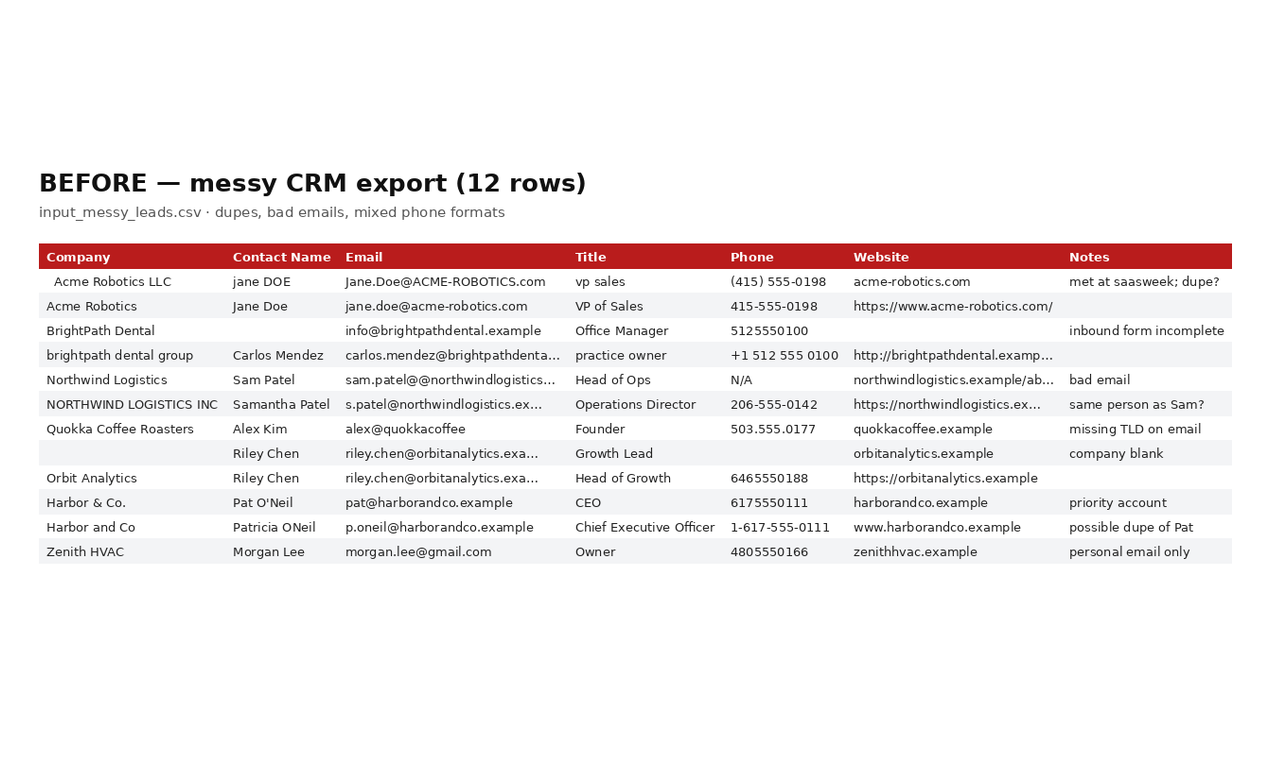
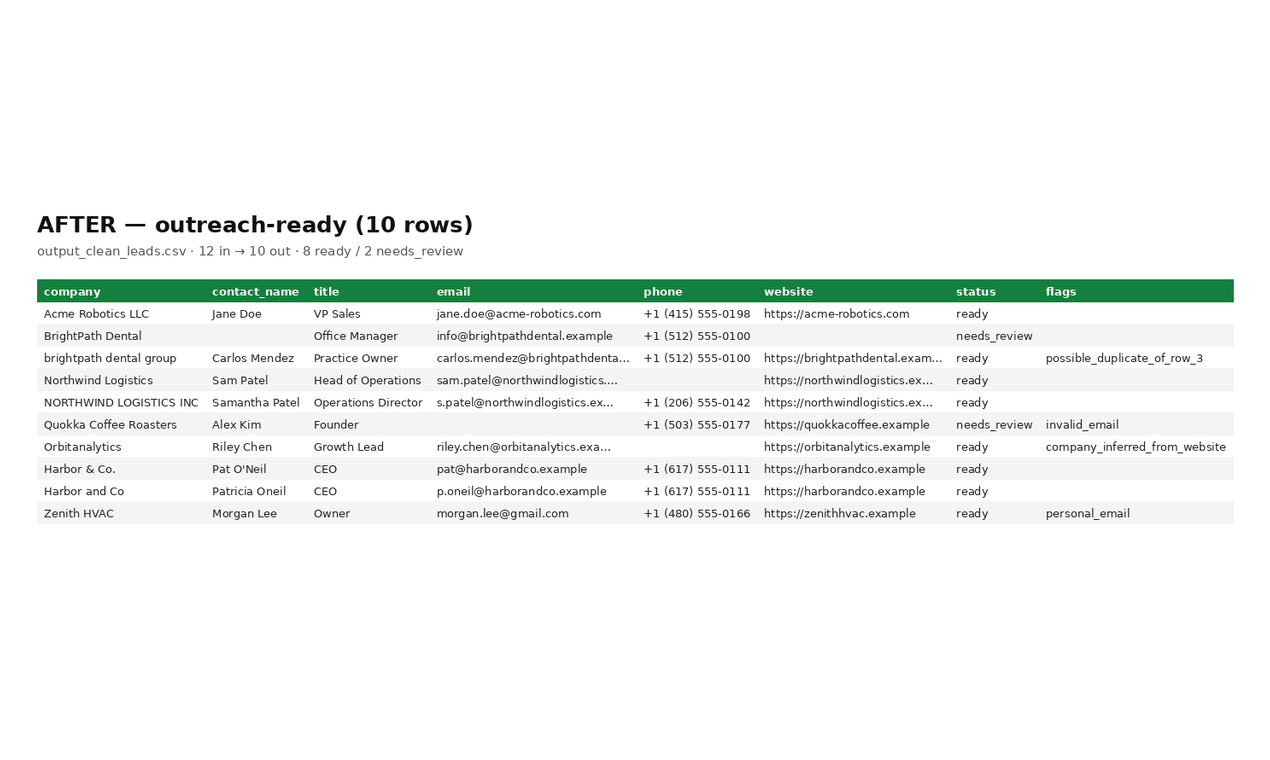
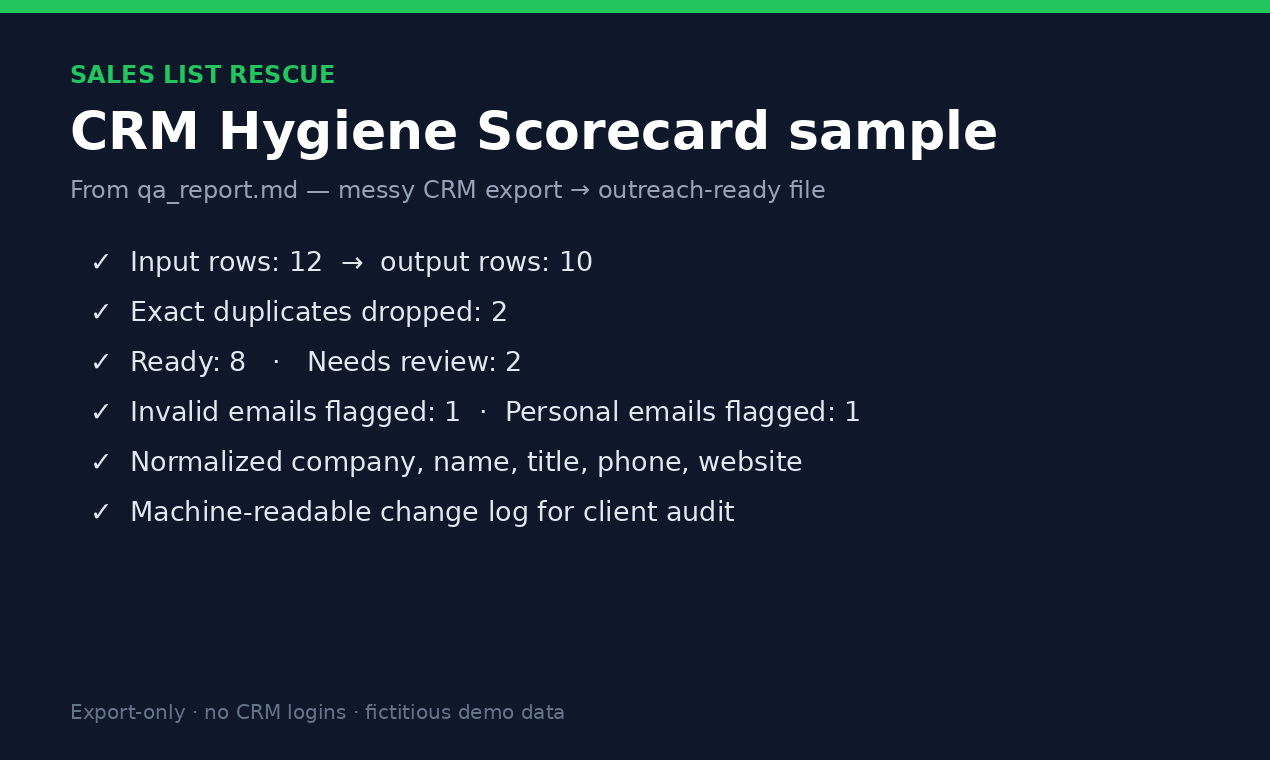
Bad lists kill outbound. Sales List Rescue takes your CSV/CRM export (HubSpot, Pipedrive, Salesforce, Apollo, spreadsheets) and returns a clean, deduplicated, standardized, import-ready list within 48 hours. Start with the $29 List Health Scorecard, then choose a clean-up pack. No software to install, no subscription. Built for founders, SDR teams and RevOps.

Comments



Starting with a $29 scorecard before the clean-up pack is a smart way to make the first yes easy. On the B2B ads side we see the same problem from another angle: a messy CRM export breaks offline conversion uploads to Meta and Google, so the platforms learn from duplicates and wrong job titles. Do you also standardize fields like lifecycle stage or deal status, or only contact data? That would make the cleaned list usable as a conversion signal too.
I noticed the Fazier listing leads with a $29 List Health Scorecard and a 48-hour turnaround, while the website's hero offers a $25 Quick Clean with 24-hour delivery. I'd align the two so first-time visitors aren't unsure which entry offer is current. The free in-browser CSV Preflight Checker is a smart low-friction hook, so what does it flag today, and does the paid QA report list which duplicate rows were merged?


Starting with a $29 List Health Scorecard before committing to a full clean-up pack makes the first purchase easy to justify, and covering HubSpot, Pipedrive, Salesforce and Apollo exports is practical. Could the scorecard also show a rough duplicate-rate estimate so buyers can see the likely payoff before choosing a pack?

Premium Products















































Sponsors
Buy

Awards
View all
Awards
View allMakers
Makers
Comments
Starting with a $29 scorecard before the clean-up pack is a smart way to make the first yes easy. On the B2B ads side we see the same problem from another angle: a messy CRM export breaks offline conversion uploads to Meta and Google, so the platforms learn from duplicates and wrong job titles. Do you also standardize fields like lifecycle stage or deal status, or only contact data? That would make the cleaned list usable as a conversion signal too.
I noticed the Fazier listing leads with a $29 List Health Scorecard and a 48-hour turnaround, while the website's hero offers a $25 Quick Clean with 24-hour delivery. I'd align the two so first-time visitors aren't unsure which entry offer is current. The free in-browser CSV Preflight Checker is a smart low-friction hook, so what does it flag today, and does the paid QA report list which duplicate rows were merged?
Starting with a $29 List Health Scorecard before committing to a full clean-up pack makes the first purchase easy to justify, and covering HubSpot, Pipedrive, Salesforce and Apollo exports is practical. Could the scorecard also show a rough duplicate-rate estimate so buyers can see the likely payoff before choosing a pack?
Premium Products
New to Fazier?

Find your next favorite product or submit your own. Made by @FalakDigital.
Copyright ©2026. All Rights Reserved