
RoadTally
Know what your vehicle costs.
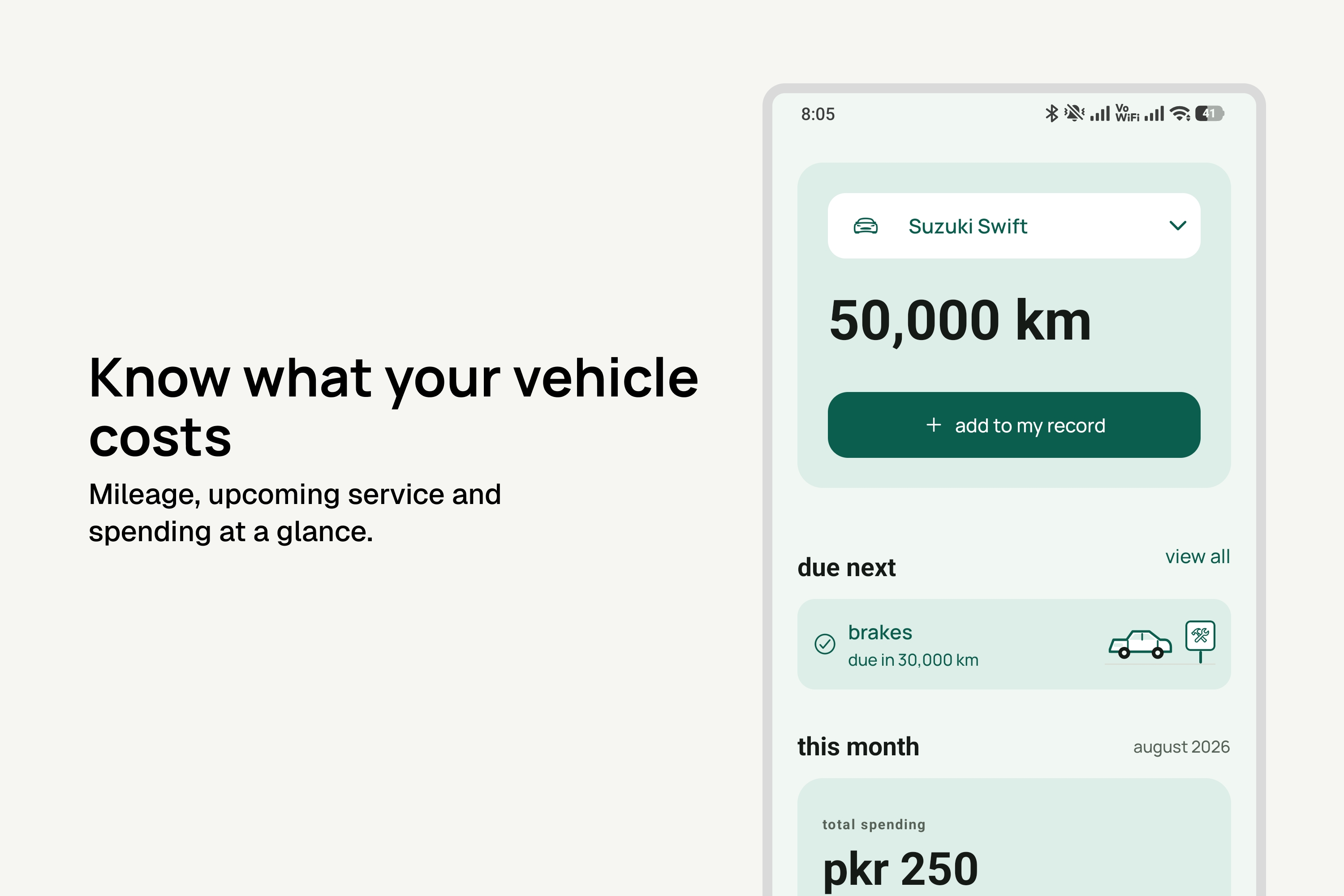
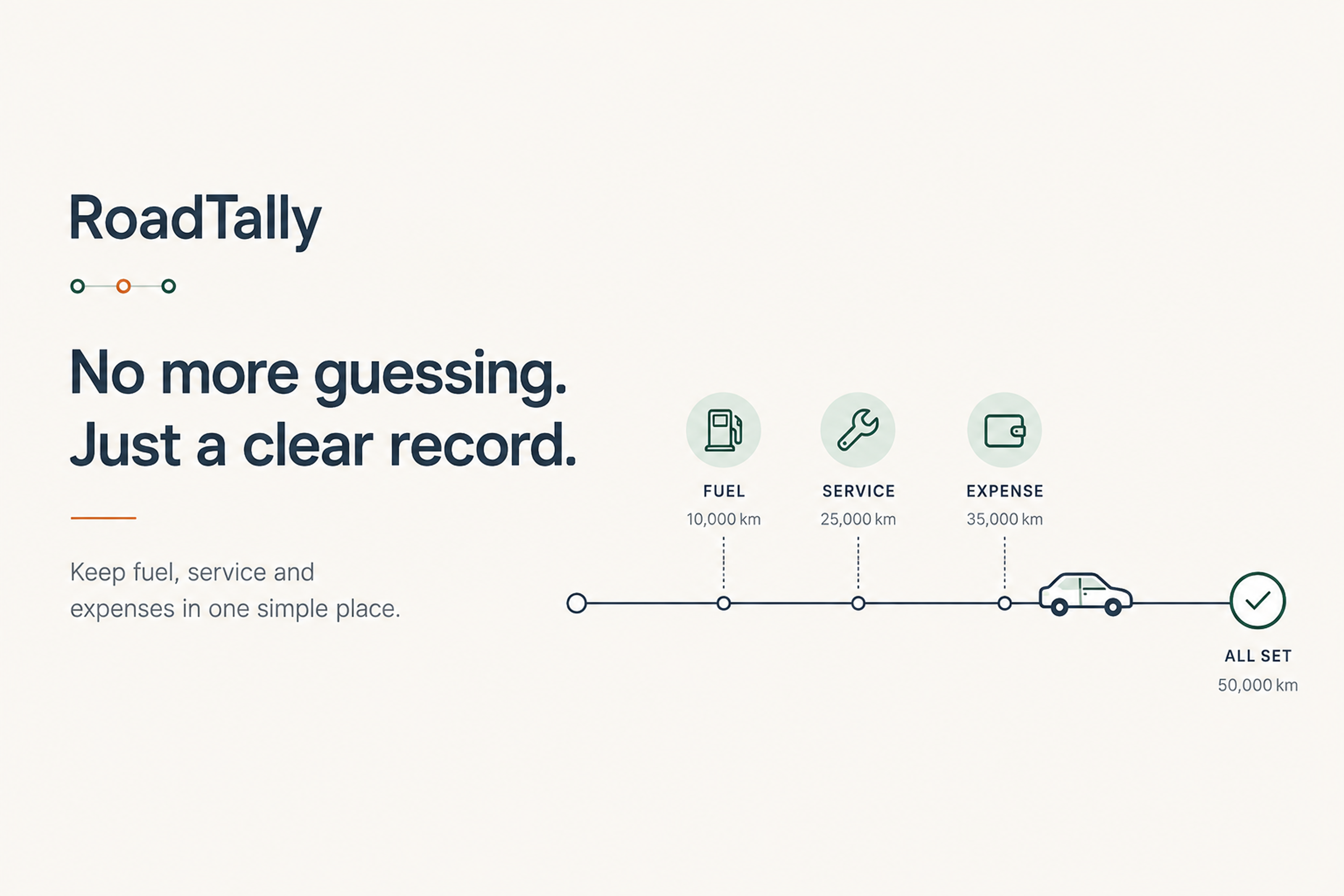
RoadTally is a local-first vehicle expense and maintenance tracking application for car and motorcycle owners. It allows users to record fuel purchases, services, repairs, general expenses, and odometer readings in one organized digital logbook.
The application helps owners understand their monthly vehicle costs, monitor fuel economy, maintain a complete service history, and receive reminders for upcoming maintenance. RoadTally works offline, requires no account, and gives users control over their records through backup, restore, and CSV export options.
Features
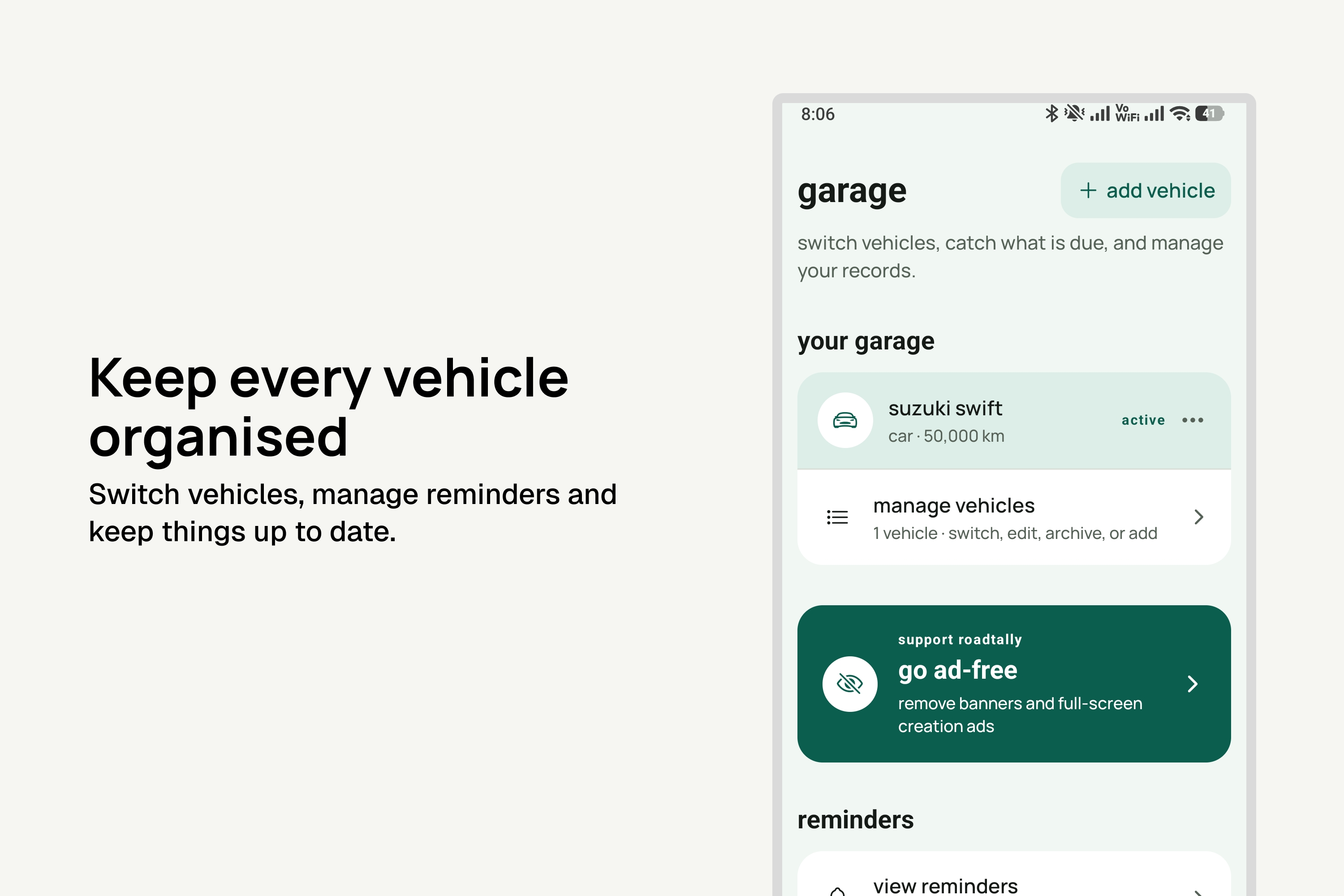
- Add and manage multiple cars or motorcycles.
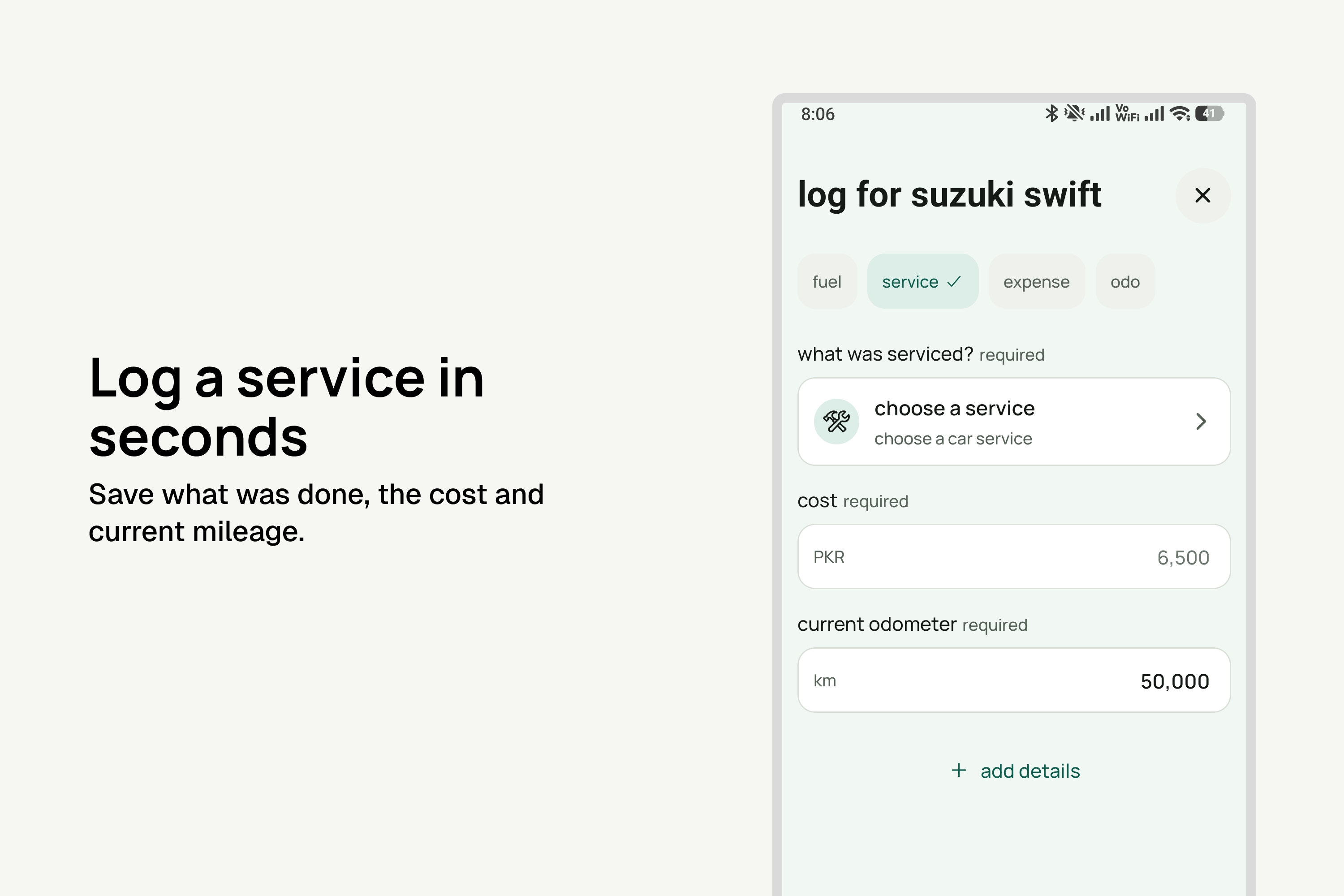
- Record fuel, service, repair, expense, and odometer entries.
- Automatically calculate fuel quantity, price, or total amount from available values.
- Display estimated and verified fuel economy.
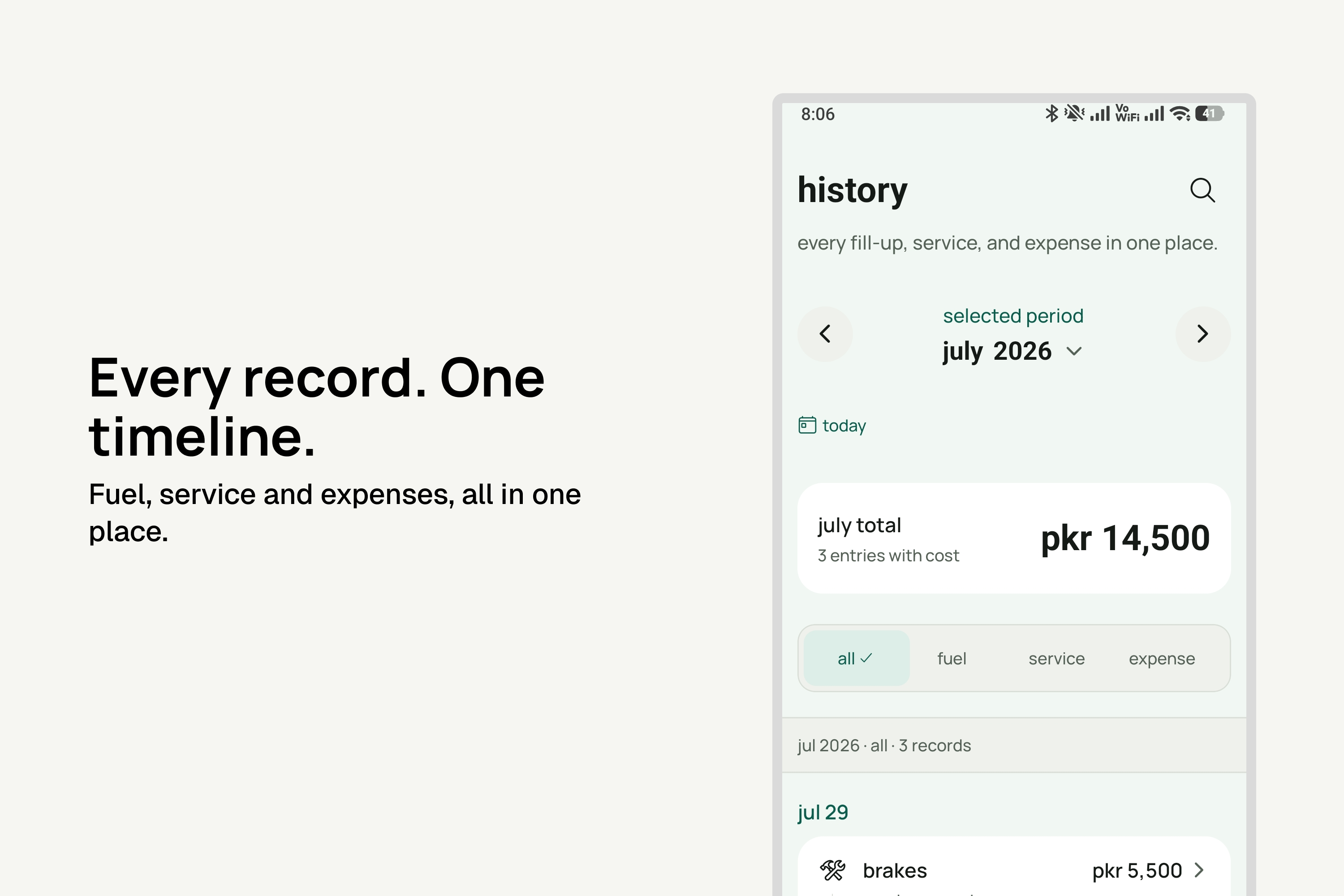
- Track monthly fuel and other vehicle expenses.
- View all records in a unified chronological history.
- Filter history by fuel, service, expense, or entry type.
- Edit, duplicate, and delete existing records.
- Create service reminders based on date, odometer reading, or both.
- Receive local notifications for upcoming maintenance.
- Support different currencies, distance units, and fuel-volume units.
- Store vehicle records locally for offline access.
- Create and restore complete RoadTally backups.
- Export records in a spreadsheet-friendly CSV format.
- Switch between multiple vehicles and archive inactive vehicles.
- Optional ad-free upgrade for a cleaner experience.
Use Cases
- Fuel consumption tracking: A vehicle owner records each fill-up to monitor fuel spending, distance travelled, and fuel economy.
- Maintenance management: A user records an oil change or repair and schedules the next service according to a date or odometer reading.
- Vehicle expense monitoring: A commuter logs fuel, parking, tolls, insurance, washing, and repair expenses to understand the actual monthly cost of owning a vehicle.
- Service-history management: A motorcycle or car owner keeps a chronological record of all maintenance and repairs for future reference or resale.
- Multiple-vehicle management: A household owner manages records for multiple cars or motorcycles from the same application.
- Offline record keeping: A user records expenses at a petrol station or workshop without requiring an internet connection.
- Data backup and migration: A user creates a backup before changing phones and restores the complete vehicle history on another installation.
- Data analysis and reporting: A user exports vehicle records to CSV for analysis, budgeting, documentation, or sharing with another person.

Comments


The offline-first approach is a real differentiator here. Most expense trackers require internet to save anything, which breaks the workflow when you're at a gas station or on a road trip with spotty coverage. Having everything sync locally and then backup/export gives you real control over your data too. The simplicity of tracking fuel costs in one place instead of scattered receipts is exactly what solo drivers need.
The local-first approach is a strong fit for drivers who want a durable maintenance and expense log without handing their records to another account-based service. Fuel economy trends plus upcoming-service reminders could make this especially useful; a quick exportable monthly cost report or vehicle comparison view would be a great next step.

The local-first, no-account angle is the part I like most here. One honest question, though: the free tier is ad-supported, and most mobile ad SDKs phone home with a device identifier and some amount of telemetry. Does that coexist with the privacy promise, i.e. do the ads run without any tracking, or is "no account" really about convenience rather than data? Not a criticism — I'd just want that stated plainly on the page, because right now the comments here are reading it as a privacy product.
How does it handle partial fill-ups and skipped entries? That's where every fuel logbook I've used quietly falls apart: one tank you don't fill completely, or one receipt you forget, and the consumption figure is wrong for the next few entries. Does the "estimated vs. verified fuel economy" distinction already cover exactly that, and can you mark an entry as partial so it's excluded from the calculation rather than distorting it?

Managing two vehicles in one household is usually a spreadsheet nightmare — fuel in one app, service receipts in email, insurance in a folder. The ability to switch vehicles and keep a unified chronological history (filterable by fuel vs. service) solves a real daily friction. For resale, that complete service log is worth more than people realize. Can archived vehicles still export their full history as a single CSV?


The local-first approach with offline records, CSV export, and maintenance reminders seems thoughtfully aimed at real-world vehicle ownership. Having backups and migration support should make it easier to keep a complete history when changing phones. Does the app plan any import tools for existing spreadsheets?


Hey, I built RoadTally because keeping track of a vehicle’s fuel, maintenance, and expenses is usually scattered across receipts, notes, spreadsheets, and memory. Existing tools often felt either too limited or unnecessarily complicated. RoadTally brings everything into one calm, offline-first logbook. You can record fuel, services, repairs, expenses, and odometer readings; monitor fuel economy and monthly costs; set maintenance reminders; and back up or export your records. It supports both cars and motorcycles, with no account required.
The offline-first approach is a real differentiator here. Most expense trackers require internet to save anything, which breaks the workflow when you're at a gas station or on a road trip with spotty coverage. Having everything sync locally and then backup/export gives you real control over your data too. The simplicity of tracking fuel costs in one place instead of scattered receipts is exactly what solo drivers need.
Local-first with no account required is a great call for something this personal - vehicle cost data feels like it should stay on-device. The CSV export plus backup/restore combo means people won't feel locked in either. Do the maintenance reminders account for both date and mileage together, or do you have to pick one trigger per service item?





Premium Products








































Sponsors
Buy

Awards
View all
Awards
View allMakers
Makers
Comments
The offline-first approach is a real differentiator here. Most expense trackers require internet to save anything, which breaks the workflow when you're at a gas station or on a road trip with spotty coverage. Having everything sync locally and then backup/export gives you real control over your data too. The simplicity of tracking fuel costs in one place instead of scattered receipts is exactly what solo drivers need.
The local-first approach is a strong fit for drivers who want a durable maintenance and expense log without handing their records to another account-based service. Fuel economy trends plus upcoming-service reminders could make this especially useful; a quick exportable monthly cost report or vehicle comparison view would be a great next step.
The local-first, no-account angle is the part I like most here. One honest question, though: the free tier is ad-supported, and most mobile ad SDKs phone home with a device identifier and some amount of telemetry. Does that coexist with the privacy promise, i.e. do the ads run without any tracking, or is "no account" really about convenience rather than data? Not a criticism — I'd just want that stated plainly on the page, because right now the comments here are reading it as a privacy product.
How does it handle partial fill-ups and skipped entries? That's where every fuel logbook I've used quietly falls apart: one tank you don't fill completely, or one receipt you forget, and the consumption figure is wrong for the next few entries. Does the "estimated vs. verified fuel economy" distinction already cover exactly that, and can you mark an entry as partial so it's excluded from the calculation rather than distorting it?
Managing two vehicles in one household is usually a spreadsheet nightmare — fuel in one app, service receipts in email, insurance in a folder. The ability to switch vehicles and keep a unified chronological history (filterable by fuel vs. service) solves a real daily friction. For resale, that complete service log is worth more than people realize. Can archived vehicles still export their full history as a single CSV?
The local-first approach with offline records, CSV export, and maintenance reminders seems thoughtfully aimed at real-world vehicle ownership. Having backups and migration support should make it easier to keep a complete history when changing phones. Does the app plan any import tools for existing spreadsheets?
Hey, I built RoadTally because keeping track of a vehicle’s fuel, maintenance, and expenses is usually scattered across receipts, notes, spreadsheets, and memory. Existing tools often felt either too limited or unnecessarily complicated. RoadTally brings everything into one calm, offline-first logbook. You can record fuel, services, repairs, expenses, and odometer readings; monitor fuel economy and monthly costs; set maintenance reminders; and back up or export your records. It supports both cars and motorcycles, with no account required.
The offline-first approach is a real differentiator here. Most expense trackers require internet to save anything, which breaks the workflow when you're at a gas station or on a road trip with spotty coverage. Having everything sync locally and then backup/export gives you real control over your data too. The simplicity of tracking fuel costs in one place instead of scattered receipts is exactly what solo drivers need.
Local-first with no account required is a great call for something this personal - vehicle cost data feels like it should stay on-device. The CSV export plus backup/restore combo means people won't feel locked in either. Do the maintenance reminders account for both date and mileage together, or do you have to pick one trigger per service item?
Premium Products
New to Fazier?

Find your next favorite product or submit your own. Made by @FalakDigital.
Copyright ©2026. All Rights Reserved