Rewa
Smart rewards for customer fidelization
rewa is a loyalty program for independent brick and mortar stores: cafés, bakeries, corner shops. It runs from the phone at the counter, with no cash register, POS or invoicing system required.
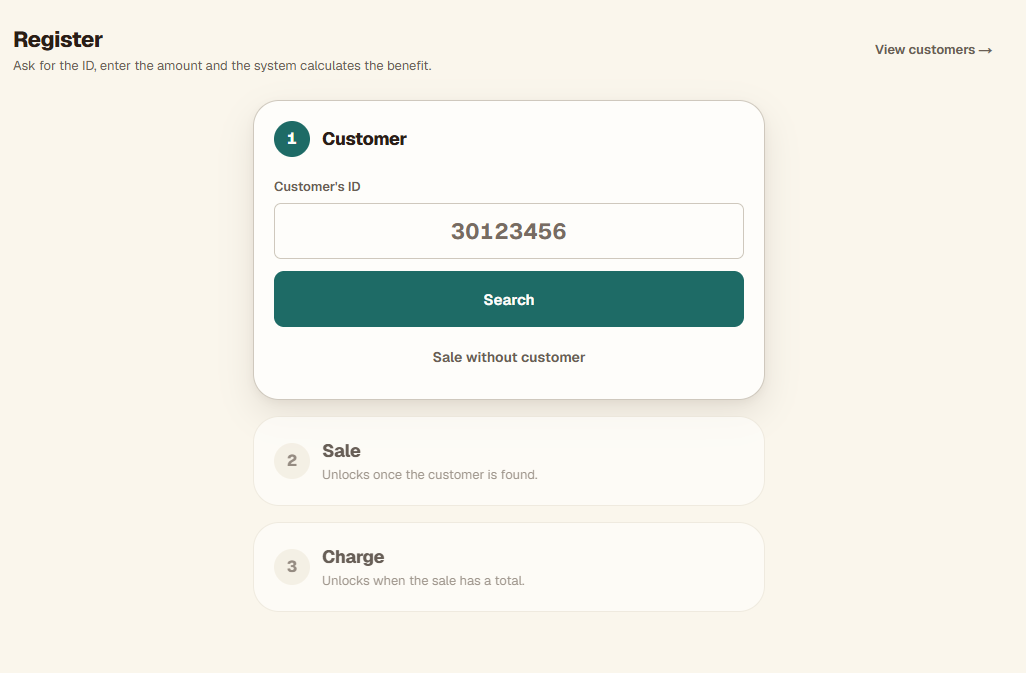
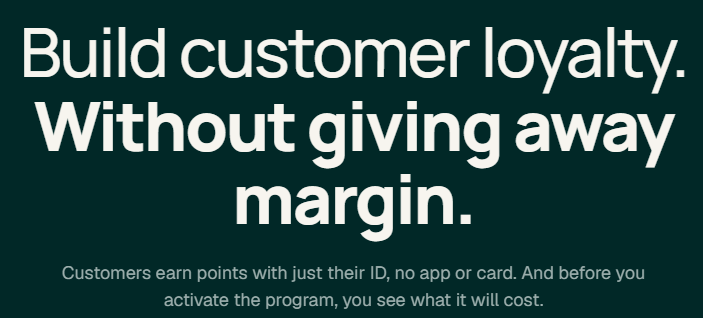
Customers don't download an app or carry a card. They identify with their ID or phone number and points accumulate on their own as the cashier taps products. Points define a level, and each level gives a discount that applies itself at the register, always with a cap or frequency limit so no single sale loses money.
The setup wizard takes under 10 minutes: it calculates percentages, caps and levels from your real margin and ticket numbers, and warns you if a level would sell at a loss. Smart rewards go one step further: instead of a cash discount, the customer gets a product that costs you less than the discount it replaces and matches what they usually buy.
Features
- Point levels with benefits that apply automatically at the register, each with a cap or frequency limit
- No app or card for customers: they identify by ID or phone number
- Smart rewards: the benefit is delivered as a product that costs the store less than the equivalent discount
- Setup wizard that computes discount percentages and caps from your real margin, with a warning if a level would sell at a loss
- QR self-registration so customers sign themselves up while they wait
- Google review booster: asks happy customers for a review right after they get a benefit
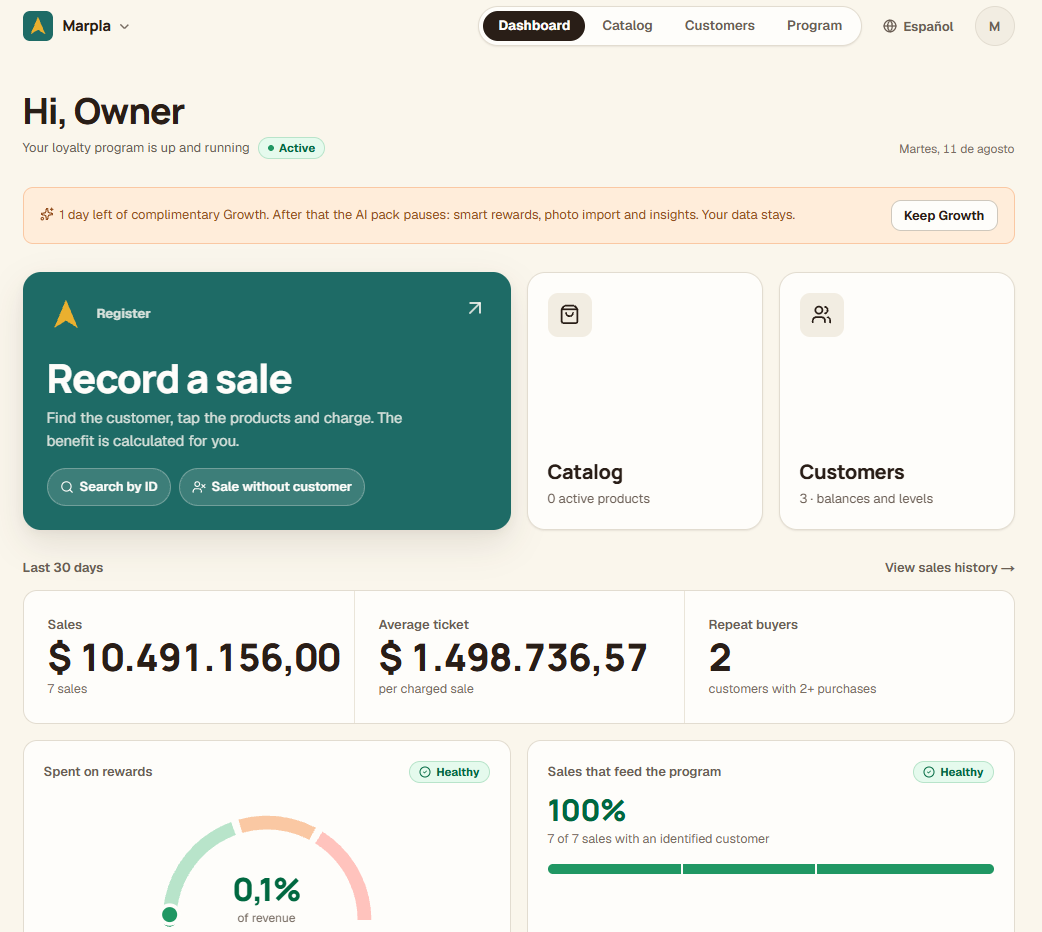
- Owner dashboard with margin saved, discount spend and customer balances
- Bilingual interface (English and Spanish), built to work with any currency and ID format
Use Cases
- A café that wants regulars to come back one extra time per month, without printing stamp cards
- A bakery running its counter from a phone, where the cashier records a sale with one hand in a few seconds
- A corner shop that wants to reward loyal customers but can't afford a flat permanent discount
- A store owner who wants Google reviews from real customers, asked at the moment they receive a reward
- A small retailer replacing cash discounts with products, protecting margin while the customer still feels the win

Comments


The Google review booster tied to the reward moment is a smart detail — most loyalty tools treat reviews as a separate ask, but catching someone right after they get a benefit is exactly when they're most willing. Also like that customers don't need an app or card at all, since that's usually the biggest drop-off point for small-shop loyalty programs.


The smart rewards angle is clever - giving a product that costs the store less than the cash discount it replaces protects margin while the customer still feels rewarded. How does the wizard pick which product to offer? Does it learn from what that customer usually buys, or does the owner configure a fixed reward per level?

Rewa feels like a very practical loyalty solution for small local businesses. I like that it doesn’t require customers to install an app or stores to integrate a complex POS system. The margin-aware rewards and automatic safeguards against unprofitable discounts are especially smart, and the product-based rewards are a nice way to improve loyalty while protecting margins.

The no-app, no-POS workflow feels well matched to independent shops. I especially like the margin and ticket-number safeguards—have you found that owners prefer rewards based on repeat visits or on specific high-margin products? A small dashboard showing those two outcomes side by side could make the value especially clear during onboarding.



The no-app, no-card approach is a real differentiator — most loyalty tools force customers to download something, and that friction kills adoption for small shops. The margin-aware setup wizard is clever too, since most small retailers set discounts by gut feeling and end up losing money on their best customers. How does the QR self-registration flow work in practice for stores with long queues?
The no-app, no-card approach is a real differentiator for small shops where customer adoption friction kills most loyalty programs. The margin-aware setup wizard is also smart — most small retailers set discounts by gut feeling and end up losing money. Curious how the QR self-registration handles busy queues in practice.
The no-app approach removes the biggest friction point for small shops — most loyalty programs fail because customers won't download yet another app. The margin-aware setup wizard is smart too, since most small retailers set discounts by gut feeling. How does QR self-registration handle busy queues?

The no-app, no-card approach is really smart for independent stores — the friction of downloading an app kills adoption for smaller retailers. Identifying customers by phone number keeps it lightweight. Curious whether the rewards can be customized per product category (e.g. higher points on high-margin items) or is it a flat rate across the board?


Premium Products






































Sponsors
Buy

Awards
View all
Awards
View allMakers

Makers
Comments
The Google review booster tied to the reward moment is a smart detail — most loyalty tools treat reviews as a separate ask, but catching someone right after they get a benefit is exactly when they're most willing. Also like that customers don't need an app or card at all, since that's usually the biggest drop-off point for small-shop loyalty programs.
The smart rewards angle is clever - giving a product that costs the store less than the cash discount it replaces protects margin while the customer still feels rewarded. How does the wizard pick which product to offer? Does it learn from what that customer usually buys, or does the owner configure a fixed reward per level?
Rewa feels like a very practical loyalty solution for small local businesses. I like that it doesn’t require customers to install an app or stores to integrate a complex POS system. The margin-aware rewards and automatic safeguards against unprofitable discounts are especially smart, and the product-based rewards are a nice way to improve loyalty while protecting margins.
The no-app, no-POS workflow feels well matched to independent shops. I especially like the margin and ticket-number safeguards—have you found that owners prefer rewards based on repeat visits or on specific high-margin products? A small dashboard showing those two outcomes side by side could make the value especially clear during onboarding.
The no-app, no-card approach is a real differentiator — most loyalty tools force customers to download something, and that friction kills adoption for small shops. The margin-aware setup wizard is clever too, since most small retailers set discounts by gut feeling and end up losing money on their best customers. How does the QR self-registration flow work in practice for stores with long queues?
The no-app, no-card approach is a real differentiator for small shops where customer adoption friction kills most loyalty programs. The margin-aware setup wizard is also smart — most small retailers set discounts by gut feeling and end up losing money. Curious how the QR self-registration handles busy queues in practice.
The no-app approach removes the biggest friction point for small shops — most loyalty programs fail because customers won't download yet another app. The margin-aware setup wizard is smart too, since most small retailers set discounts by gut feeling. How does QR self-registration handle busy queues?
The no-app, no-card approach is really smart for independent stores — the friction of downloading an app kills adoption for smaller retailers. Identifying customers by phone number keeps it lightweight. Curious whether the rewards can be customized per product category (e.g. higher points on high-margin items) or is it a flat rate across the board?
Premium Products
New to Fazier?

Find your next favorite product or submit your own. Made by @FalakDigital.
Copyright ©2026. All Rights Reserved