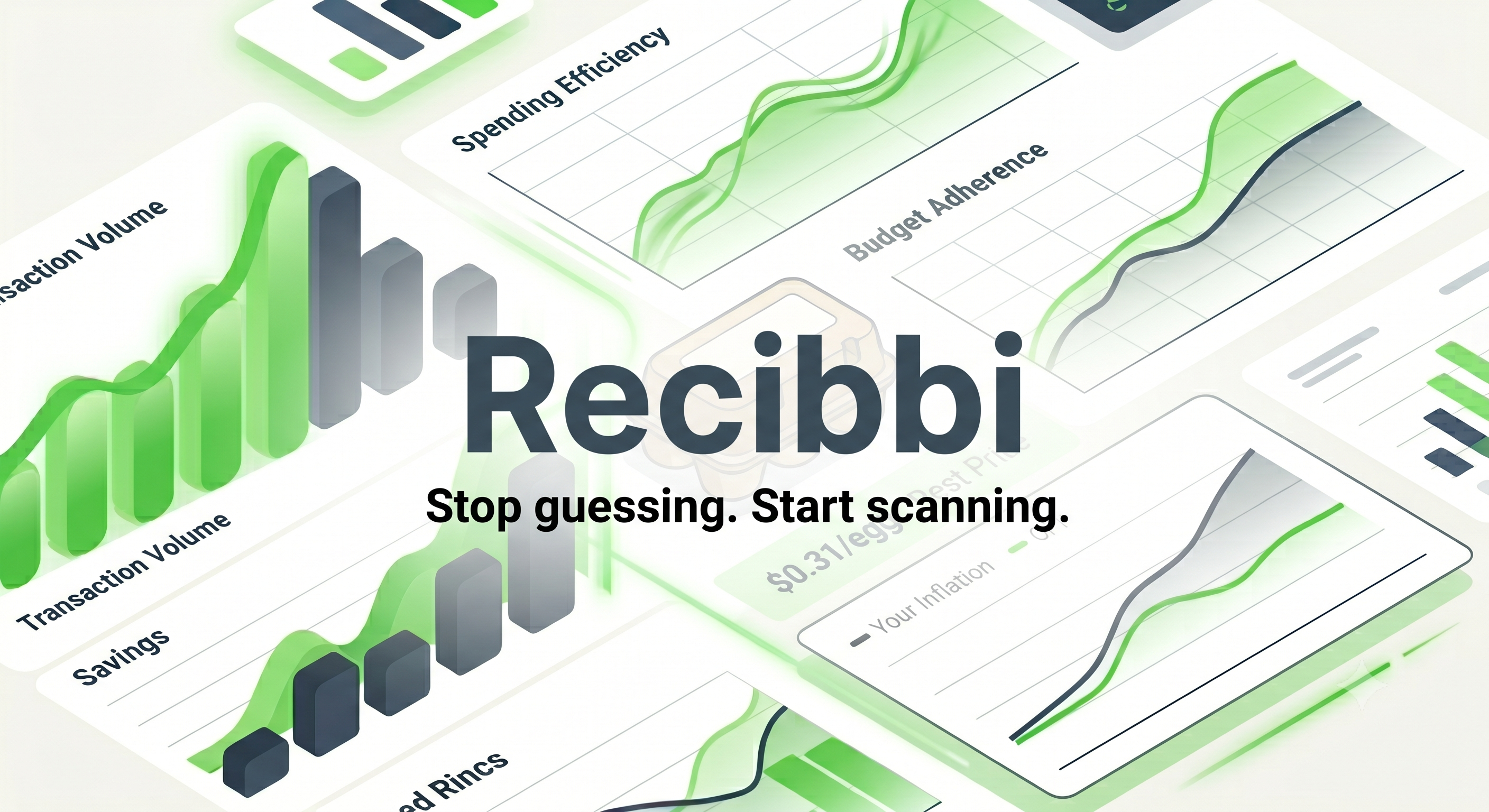
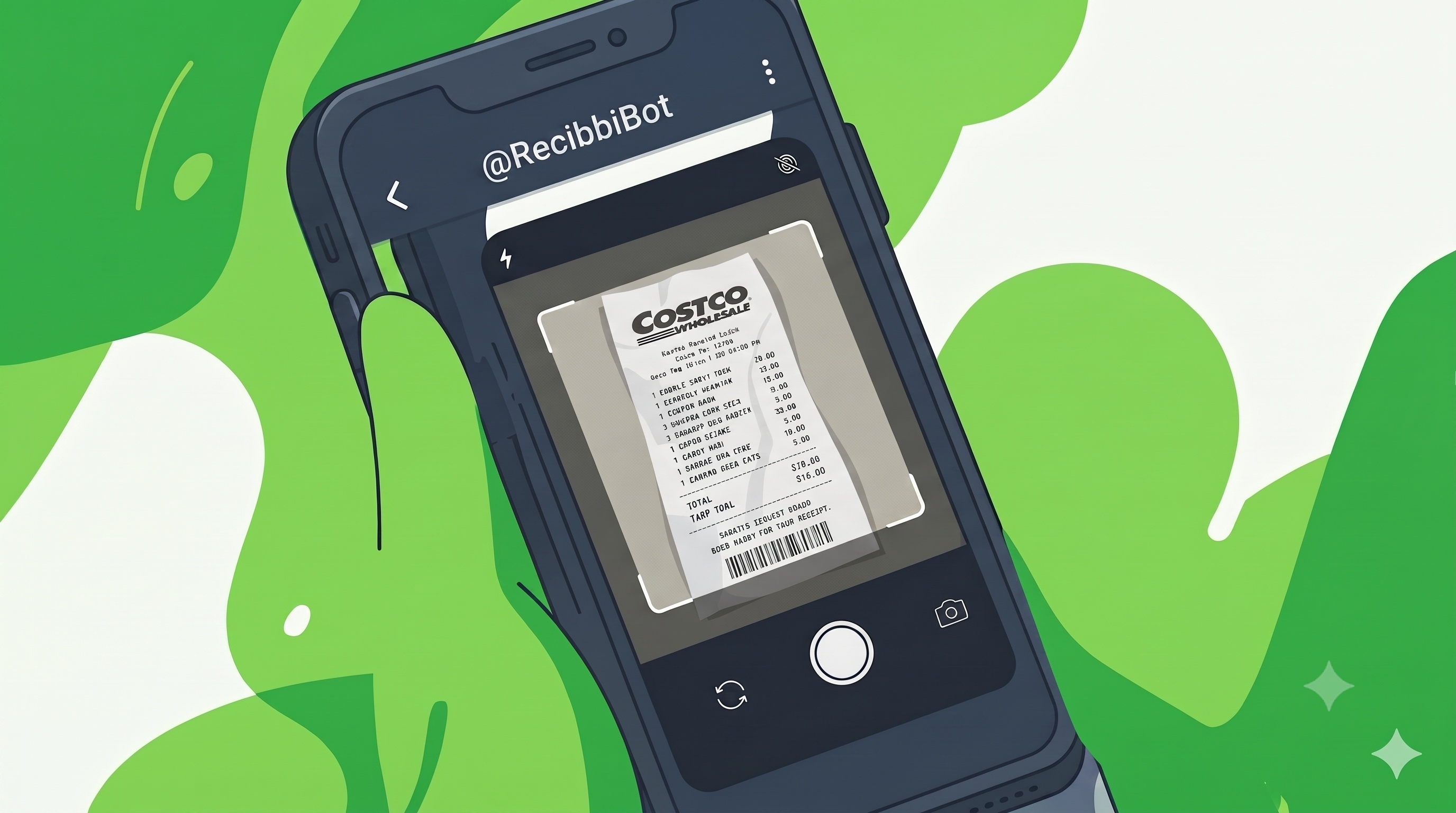
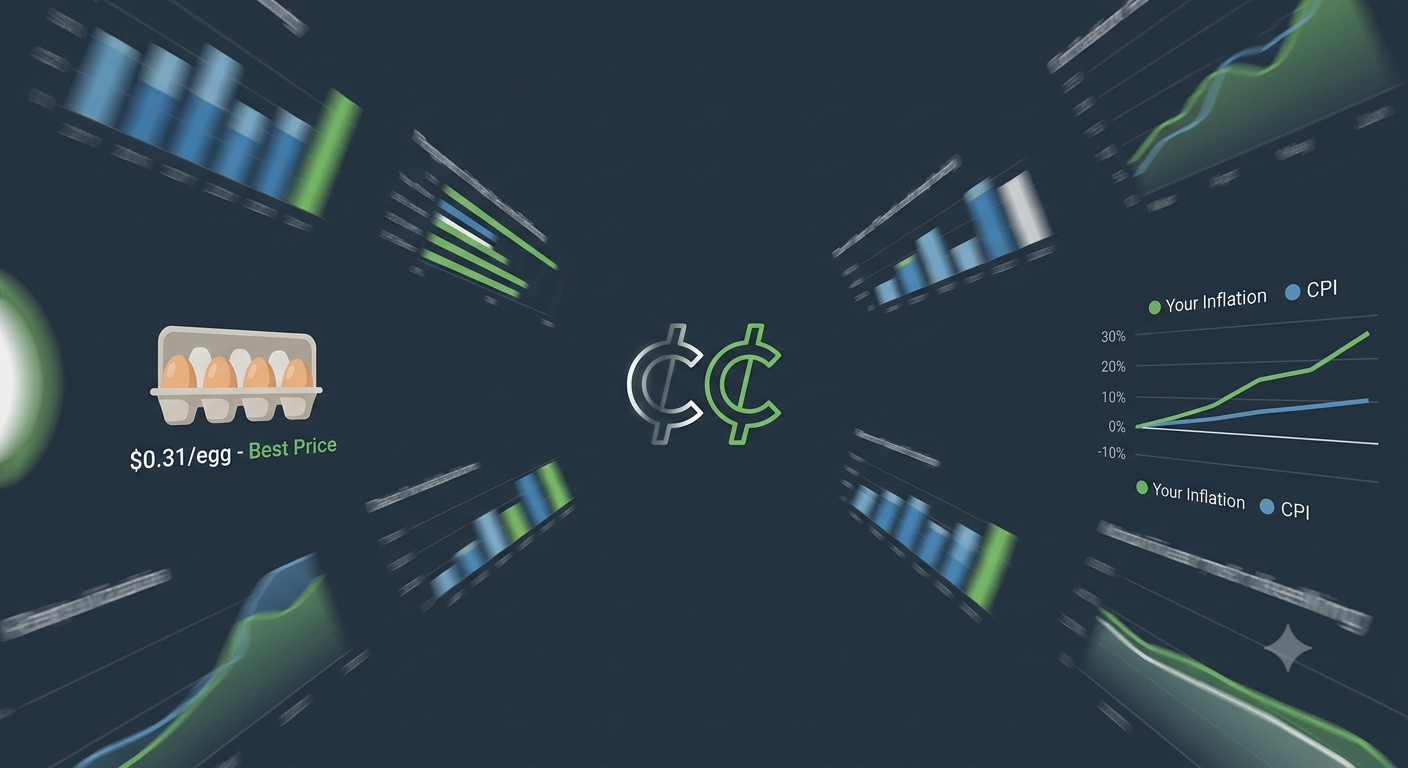
Recibbi turns your receipt photos into detailed spending intelligence. Upload or text your receipt photo and Recibbi reads every item, decodes register abbreviations, and adds images, sizes, categories, and unit prices. It builds your Personal Inflation Index, detects shrinkflation, compares nearby store prices, and flags overcharges. Share itemized links with your household, track trends and budgets, and export your data — all without bank logins.
Features
- Line-item receipt extraction
- Product identification and enrichment
- Personal Inflation Index™
- Shrinkflation and price alerts
- Nearby price comparisons
- Spending trends and budget tracking
- Shareable, searchable receipt breakdowns
Use Cases
- Understand exactly where your grocery money went
- Track price increases on products you regularly buy
- Detect shrinkflation in frequently purchased items
- Find cheaper nearby stores for household staples
- Catch duplicate charges and checkout errors
- Share and split itemized purchases with your household
- Monitor spending trends and stay within your budget
Fazier Deal

Comments



The no-bank-login choice is what sells it for me — I build financial calculators with the same privacy-by-architecture principle (compute locally, collect nothing), and it's rare to see a spending tracker take that route since everyone defaults to Plaid. Question about the Personal Inflation Index: roughly how many receipts does it need before the index is statistically meaningful? Official CPI baskets smooth over thousands of prices, so I'm curious how you handle the noise of one household's shopping.
The no-bank-login choice is what sells it for me — I build financial calculators with the same privacy-by-architecture principle (compute locally, collect nothing), and it's rare to see a spending tracker take that route since everyone defaults to Plaid. Question about the Personal Inflation Index: roughly how many receipts does it need before the index is statistically meaningful? Official CPI baskets smooth over thousands of prices, so I'm curious how you handle the noise of one household's shopping.


recibbi has great potential and offers some useful features, but I encountered a few issues that could be improved. Please contact me so I can share detailed feedback and suggest the changes I'd like to see. WhatsApp: https://wa.me/447307349530 Telegram: t.me/rforrank


The privacy-first approach here is the right call for financial data — this is the same instinct that keeps me away from anything that wants bank-level access just to track receipts. Question on the shrinkflation detection: are you comparing unit prices against the same product/UPC over time, or inferring it from size/weight text on the receipt itself? That seems like the harder problem once packaging redesigns happen mid-cycle.



The "no bank logins" angle is underrated: plenty of people won't connect accounts to a budgeting app, so parsing the receipt itself sidesteps the trust barrier entirely. The Personal Inflation Index and shrinkflation detection are the standout ideas, that's item-level insight raw transaction data can't give you. My one question is OCR accuracy on faded thermal receipts and cryptic register abbreviations, that feels like the make-or-break for the whole experience. How's it holding up there?

Receipt friction solved with genuine intelligence. Most budgeting tools force manual categorization or rely on bank transactions that miss cash purchases. Recibbi's line-item extraction plus shrinkflation detection changes the game - suddenly you see where money actually goes and catch price creep others miss. Personal Inflation Index is especially clever, turns abstract spending into data you understand. Privacy-first approach means household spend stays yours. Real win for people who want spending awareness without surveillance.
The no-bank-login angle is the right call. Most spending trackers demand full account access just to do categorization, so doing it from receipt photos is a much saner privacy tradeoff. Line-item shrinkflation detection is genuinely useful too, since that is invisible in normal bank-feed budgeting apps. Curious how well the register-abbreviation decoding holds up on receipts from small local shops rather than big chains.

Congrats on the launch! The shrinkflation detection is a genuinely clever angle: most budgeting apps only see totals, so item-level tracking of package sizes is real added value. Two questions: how does the Personal Inflation Index handle the same product bought across different stores? And since you lead with privacy and no bank logins, are receipt photos stored after extraction or discarded?



Decoding register abbreviations is the underrated hard part here. Spanish supermarket receipts print things like "P.LECH ENT 6x1L" and no generic OCR knows what that means, so if your model actually resolves those to real products with images and unit prices, that alone is worth the app. Do you handle non-English receipts yet, or is the abbreviation dictionary per country? I would happily feed it a stack of Mercadona receipts to test.
Premium Products




































Fazier Deal
Sponsors
Buy

Makers

Makers
Comments
The no-bank-login choice is what sells it for me — I build financial calculators with the same privacy-by-architecture principle (compute locally, collect nothing), and it's rare to see a spending tracker take that route since everyone defaults to Plaid. Question about the Personal Inflation Index: roughly how many receipts does it need before the index is statistically meaningful? Official CPI baskets smooth over thousands of prices, so I'm curious how you handle the noise of one household's shopping.
The no-bank-login choice is what sells it for me — I build financial calculators with the same privacy-by-architecture principle (compute locally, collect nothing), and it's rare to see a spending tracker take that route since everyone defaults to Plaid. Question about the Personal Inflation Index: roughly how many receipts does it need before the index is statistically meaningful? Official CPI baskets smooth over thousands of prices, so I'm curious how you handle the noise of one household's shopping.
recibbi has great potential and offers some useful features, but I encountered a few issues that could be improved. Please contact me so I can share detailed feedback and suggest the changes I'd like to see. WhatsApp: https://wa.me/447307349530 Telegram: t.me/rforrank
The privacy-first approach here is the right call for financial data — this is the same instinct that keeps me away from anything that wants bank-level access just to track receipts. Question on the shrinkflation detection: are you comparing unit prices against the same product/UPC over time, or inferring it from size/weight text on the receipt itself? That seems like the harder problem once packaging redesigns happen mid-cycle.
The "no bank logins" angle is underrated: plenty of people won't connect accounts to a budgeting app, so parsing the receipt itself sidesteps the trust barrier entirely. The Personal Inflation Index and shrinkflation detection are the standout ideas, that's item-level insight raw transaction data can't give you. My one question is OCR accuracy on faded thermal receipts and cryptic register abbreviations, that feels like the make-or-break for the whole experience. How's it holding up there?
Receipt friction solved with genuine intelligence. Most budgeting tools force manual categorization or rely on bank transactions that miss cash purchases. Recibbi's line-item extraction plus shrinkflation detection changes the game - suddenly you see where money actually goes and catch price creep others miss. Personal Inflation Index is especially clever, turns abstract spending into data you understand. Privacy-first approach means household spend stays yours. Real win for people who want spending awareness without surveillance.
The no-bank-login angle is the right call. Most spending trackers demand full account access just to do categorization, so doing it from receipt photos is a much saner privacy tradeoff. Line-item shrinkflation detection is genuinely useful too, since that is invisible in normal bank-feed budgeting apps. Curious how well the register-abbreviation decoding holds up on receipts from small local shops rather than big chains.
Congrats on the launch! The shrinkflation detection is a genuinely clever angle: most budgeting apps only see totals, so item-level tracking of package sizes is real added value. Two questions: how does the Personal Inflation Index handle the same product bought across different stores? And since you lead with privacy and no bank logins, are receipt photos stored after extraction or discarded?
Decoding register abbreviations is the underrated hard part here. Spanish supermarket receipts print things like "P.LECH ENT 6x1L" and no generic OCR knows what that means, so if your model actually resolves those to real products with images and unit prices, that alone is worth the app. Do you handle non-English receipts yet, or is the abbreviation dictionary per country? I would happily feed it a stack of Mercadona receipts to test.
Premium Products
New to Fazier?

Find your next favorite product or submit your own. Made by @FalakDigital.
Copyright ©2025. All Rights Reserved