
RealMarketAPI
Realtime Market Data API
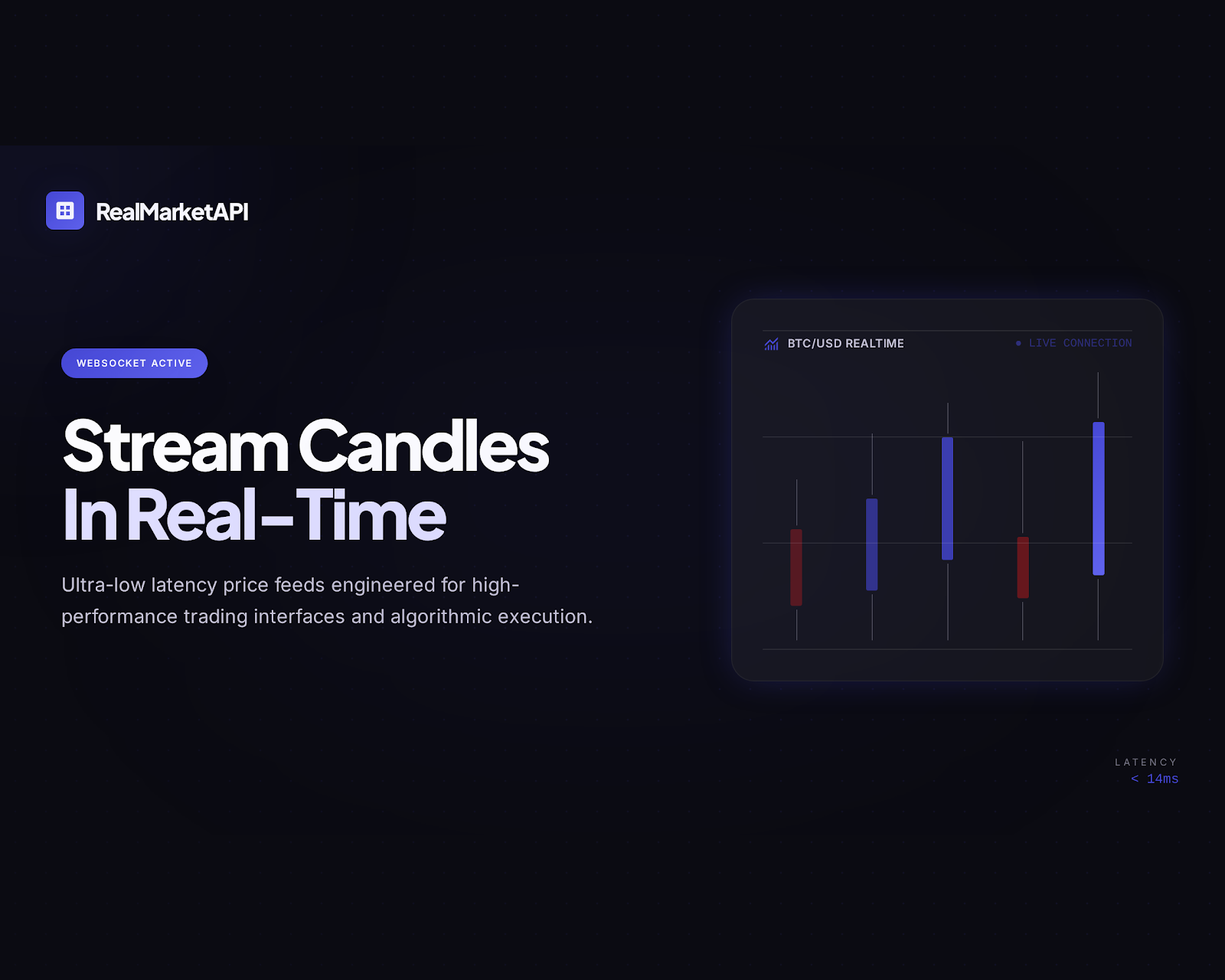
- Real-time market data API for traders & developers
- Fast, reliable, and easy to integrate
- Built for trading tools, bots, and dashboards
- Optimized for speed and accuracy
Features
Real-time market data with low latency
Supports multiple assets: Forex, Crypto, Commodities
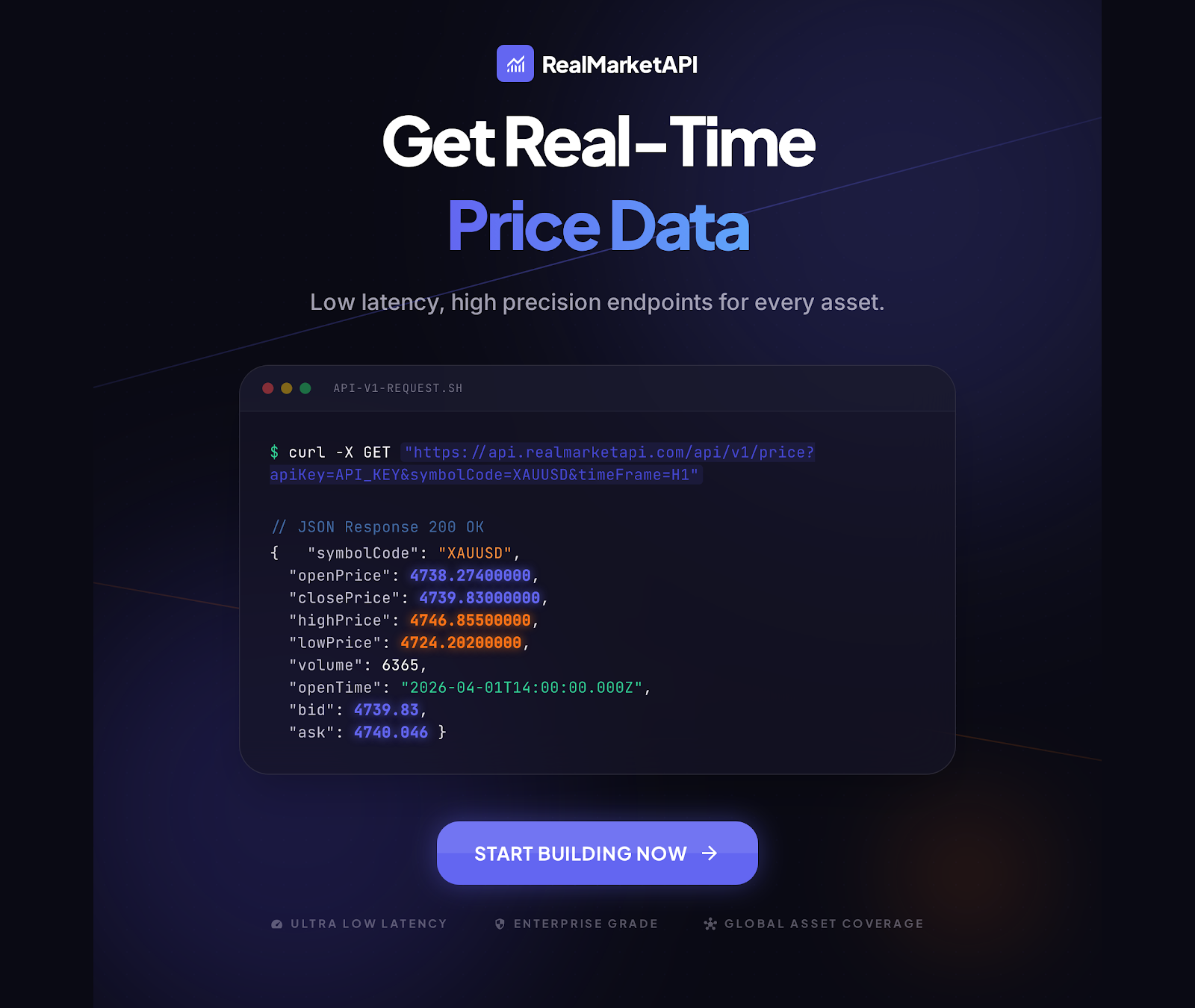
Simple and developer-friendly REST API
Tick-level price updates
High uptime and stable infrastructure
Clear and easy-to-use documentation
Use Cases
Build automated trading bots
Create real-time market dashboards
Backtest trading strategies
Integrate market data into financial apps
Develop technical analysis tools
Fazier Deal

Comments






The biggest advantage here is the focus on low-latency infrastructure rather than just “financial data access.” A lot of APIs offer market feeds, but reliability during volatility is what actually determines whether traders can build on top of it confidently. The tick-level updates and multi-asset support also make this more interesting for real-time dashboards and automated systems where delayed or inconsistent data can completely break decision-making.


The multi-asset coverage (Forex, Crypto, Commodities) in a single REST API is a big plus — most developers end up stitching together multiple data providers which creates reliability headaches. One thing I'd love to see documented is the WebSocket reconnect behavior during brief network drops, since trading bots need to handle that gracefully. Have you considered adding a sandbox/test mode with simulated tick data for developers to test against before going live?
Really impressive to see tick-level price feeds with WebSocket support — that's exactly what algo traders need for low-latency strategies. The multi-asset coverage (Forex, Crypto, Commodities) in one API is a big plus. Would love to know if there are rate limits on the free tier and whether historical OHLCV data is on the roadmap?
The freemium approach here is smart — giving developers access to real-time data without upfront cost lowers the barrier to integration significantly. One thing I'd love to see: WebSocket support for streaming prices so bots don't need to poll. Would be a huge differentiator for HFT use cases. The latency question from the other comment is key — if you can publish SLA benchmarks that would go a long way for production adoption.




Really interesting space — real-time market data infrastructure is harder than it looks. The latency question from 0xprinc is the right one. For HFT the difference between 5ms and 50ms is the entire business model. Publishing p95 latency benchmarks (not just averages) would answer that faster than any sales conversation. The multi-asset coverage in a single REST API is genuinely useful — stitching together multiple providers creates reconciliation headaches that compound under volatility. One thing worth considering: WebSocket reconnect behaviour during network drops is where most trading integrations break in production. If you can document the reconnect contract clearly, bot developers will trust the infrastructure faster. Good luck with the launch — steady progress beats viral every time.
Really interesting space — real-time market data infrastructure is harder than it looks. The latency question from 0xprinc is the right one. For HFT the difference between 5ms and 50ms is the entire business model. Publishing p95 latency benchmarks (not just averages) would answer that faster than any sales conversation. The multi-asset coverage in a single REST API is genuinely useful — stitching together multiple providers creates reconciliation headaches that compound under volatility. One thing worth considering: WebSocket reconnect behaviour during network drops is where most trading integrations break in production. If you can document the reconnect contract clearly, bot developers will trust the infrastructure faster. Good luck with the launch — steady progress beats viral every time.



Premium Products































Fazier Deal
Sponsors
Buy



Makers
Makers
Comments
The biggest advantage here is the focus on low-latency infrastructure rather than just “financial data access.” A lot of APIs offer market feeds, but reliability during volatility is what actually determines whether traders can build on top of it confidently. The tick-level updates and multi-asset support also make this more interesting for real-time dashboards and automated systems where delayed or inconsistent data can completely break decision-making.
The multi-asset coverage (Forex, Crypto, Commodities) in a single REST API is a big plus — most developers end up stitching together multiple data providers which creates reliability headaches. One thing I'd love to see documented is the WebSocket reconnect behavior during brief network drops, since trading bots need to handle that gracefully. Have you considered adding a sandbox/test mode with simulated tick data for developers to test against before going live?
Really impressive to see tick-level price feeds with WebSocket support — that's exactly what algo traders need for low-latency strategies. The multi-asset coverage (Forex, Crypto, Commodities) in one API is a big plus. Would love to know if there are rate limits on the free tier and whether historical OHLCV data is on the roadmap?
The freemium approach here is smart — giving developers access to real-time data without upfront cost lowers the barrier to integration significantly. One thing I'd love to see: WebSocket support for streaming prices so bots don't need to poll. Would be a huge differentiator for HFT use cases. The latency question from the other comment is key — if you can publish SLA benchmarks that would go a long way for production adoption.
Really interesting space — real-time market data infrastructure is harder than it looks. The latency question from 0xprinc is the right one. For HFT the difference between 5ms and 50ms is the entire business model. Publishing p95 latency benchmarks (not just averages) would answer that faster than any sales conversation. The multi-asset coverage in a single REST API is genuinely useful — stitching together multiple providers creates reconciliation headaches that compound under volatility. One thing worth considering: WebSocket reconnect behaviour during network drops is where most trading integrations break in production. If you can document the reconnect contract clearly, bot developers will trust the infrastructure faster. Good luck with the launch — steady progress beats viral every time.
Really interesting space — real-time market data infrastructure is harder than it looks. The latency question from 0xprinc is the right one. For HFT the difference between 5ms and 50ms is the entire business model. Publishing p95 latency benchmarks (not just averages) would answer that faster than any sales conversation. The multi-asset coverage in a single REST API is genuinely useful — stitching together multiple providers creates reconciliation headaches that compound under volatility. One thing worth considering: WebSocket reconnect behaviour during network drops is where most trading integrations break in production. If you can document the reconnect contract clearly, bot developers will trust the infrastructure faster. Good luck with the launch — steady progress beats viral every time.
Premium Products
New to Fazier?

Find your next favorite product or submit your own. Made by @FalakDigital.
Copyright ©2026. All Rights Reserved