
Real World Appeal
How attractive are you, at first sight?
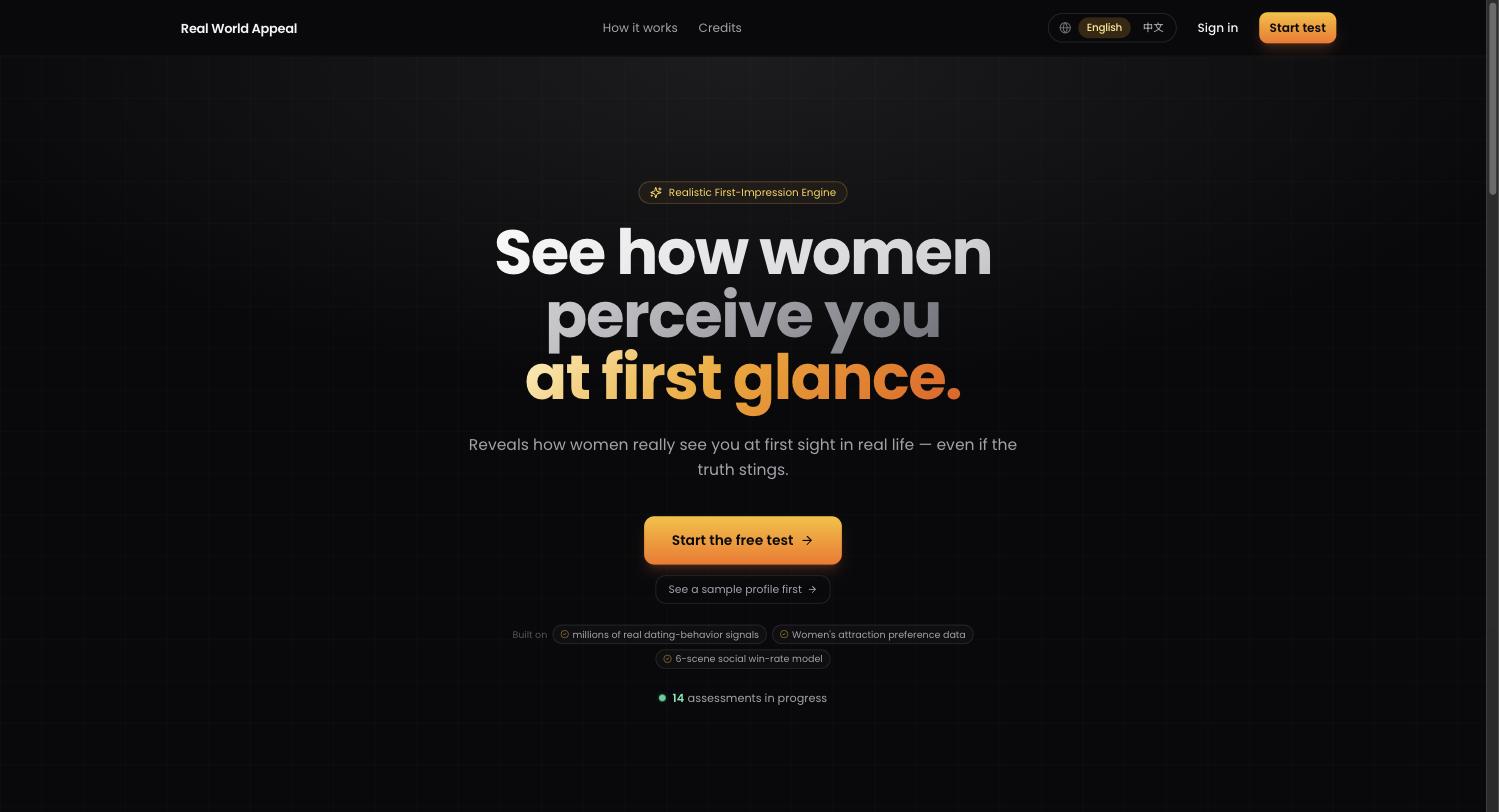
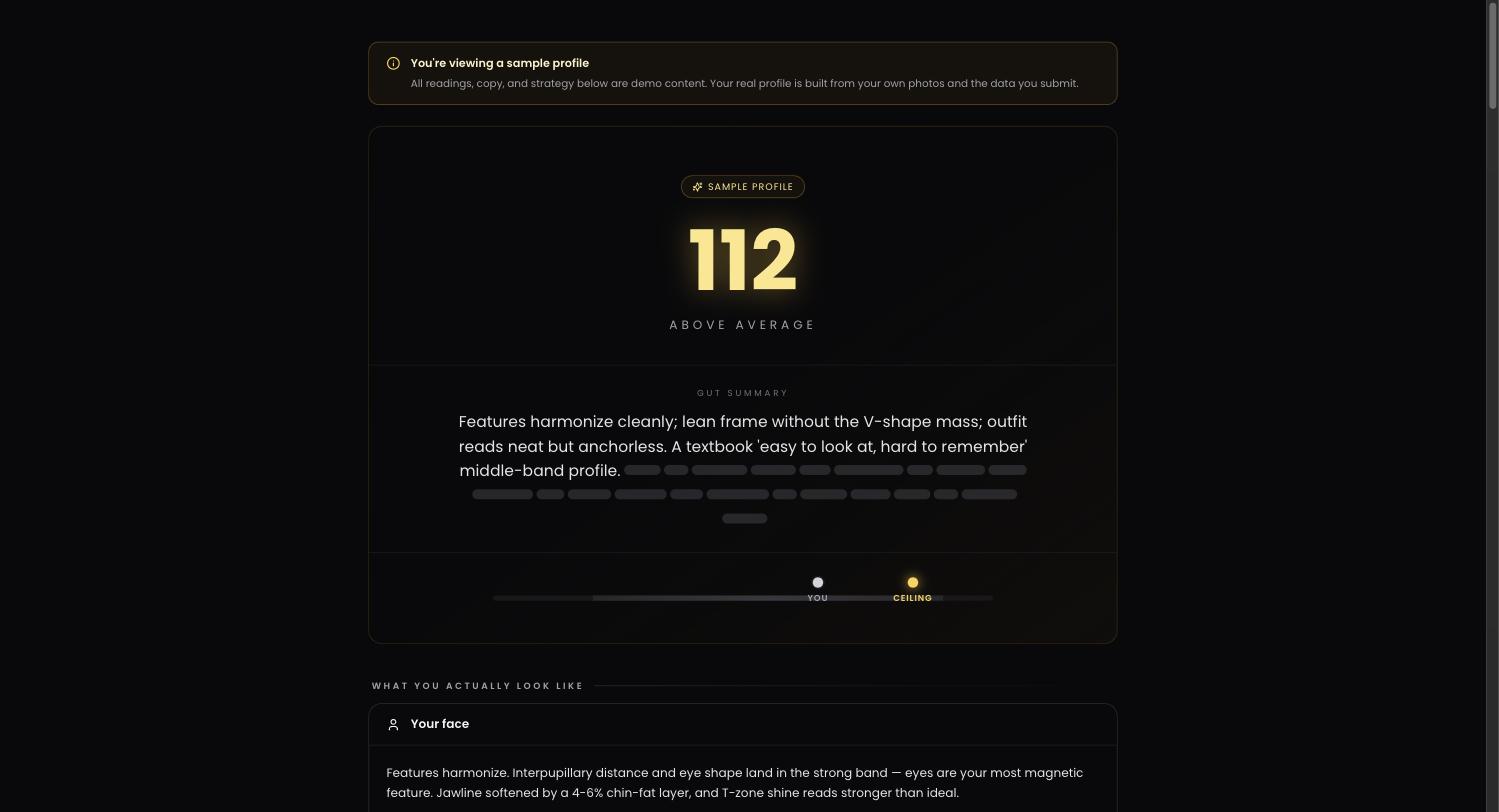
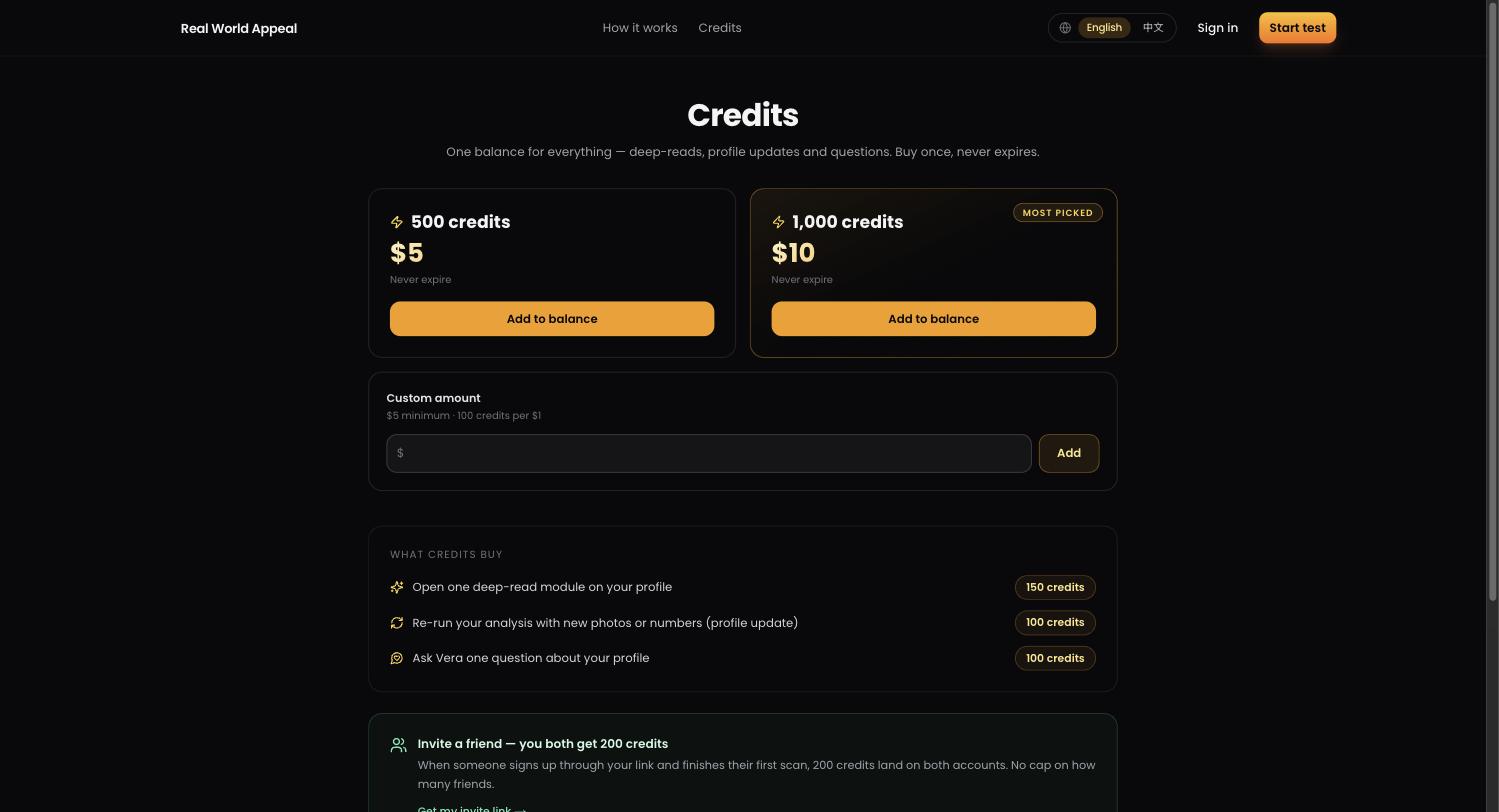
Real World Appeal answers the question most rating tools dodge: not what score a grid gives your face, but how you actually land on a real person, in a real room, in the first one to three seconds. You upload two photos and answer a 1-minute questionnaire. The engine reads four surfaces separately - face, physique, outfit and overall vibe - and returns a profile instead of a verdict: where you sit on a 70-155 perception axis, which of the 16 appeal personality types you read as, and how far your ceiling sits above today's photos. The first scan and the core profile are free; deep-read modules run on credits that never expire, with no subscription.
Features
1-minute test: two photos plus a short questionnaire
Use Cases
Before rebuilding a dating-app profile, to find which photo surface is costing matches

Comments


I built this after noticing that every "rate my face" tool answers a question nobody actually has. Nobody meets you as a grid of ratios. They meet you in a bar, on a street, in a photo they swipe past in half a second, and what registers is a mix of face, build, what you happen to be wearing, and the read those three add up to. So this returns a profile rather than a score: four surfaces read separately, a named personality type, and an honest gap between where you land today and where your ceiling sits. The uncomfortable part is deliberate - the reads are written the way a blunt friend would say them, not the way a compliment works. First scan and the core profile are free; the deeper modules run on credits that never expire, because a subscription made no sense for something you use a handful of times a year.

Really interesting concept. I like that RealWorldAppeal focuses on how a product is perceived in real-world situations rather than just relying on generic feedback. Turning subjective first impressions into something more structured and actionable is especially compelling. how do you make sure the feedback stays unbiased and representative of different types of users?

The "profile instead of a verdict" framing is smart positioning for a category that could easily feel harsh. splitting it into face/physique/outfit/vibe instead of one score is the difference between useful feedback and just a number to feel bad about. Genuinely curious how you validated the perception axis against real outcomes rather than just self-reported ratings is the "millions of dating-behavior signals" thing pulling from actual match/swipe data, or survey-style scoring? Also like that credits don't expire instead of the usual subscription-you-forget-to-cancel model.
Premium Products












































Sponsors
Buy

Awards
View all
Awards
View allMakers
Makers
Comments
I built this after noticing that every "rate my face" tool answers a question nobody actually has. Nobody meets you as a grid of ratios. They meet you in a bar, on a street, in a photo they swipe past in half a second, and what registers is a mix of face, build, what you happen to be wearing, and the read those three add up to. So this returns a profile rather than a score: four surfaces read separately, a named personality type, and an honest gap between where you land today and where your ceiling sits. The uncomfortable part is deliberate - the reads are written the way a blunt friend would say them, not the way a compliment works. First scan and the core profile are free; the deeper modules run on credits that never expire, because a subscription made no sense for something you use a handful of times a year.
Really interesting concept. I like that RealWorldAppeal focuses on how a product is perceived in real-world situations rather than just relying on generic feedback. Turning subjective first impressions into something more structured and actionable is especially compelling. how do you make sure the feedback stays unbiased and representative of different types of users?
The "profile instead of a verdict" framing is smart positioning for a category that could easily feel harsh. splitting it into face/physique/outfit/vibe instead of one score is the difference between useful feedback and just a number to feel bad about. Genuinely curious how you validated the perception axis against real outcomes rather than just self-reported ratings is the "millions of dating-behavior signals" thing pulling from actual match/swipe data, or survey-style scoring? Also like that credits don't expire instead of the usual subscription-you-forget-to-cancel model.
Premium Products
New to Fazier?

Find your next favorite product or submit your own. Made by @FalakDigital.
Copyright ©2026. All Rights Reserved