Launch
Ramsa Speech
Visit
Premium
Example Image

Ramsa Speech

Natural Emirati Arabic text-to-speech

Visit

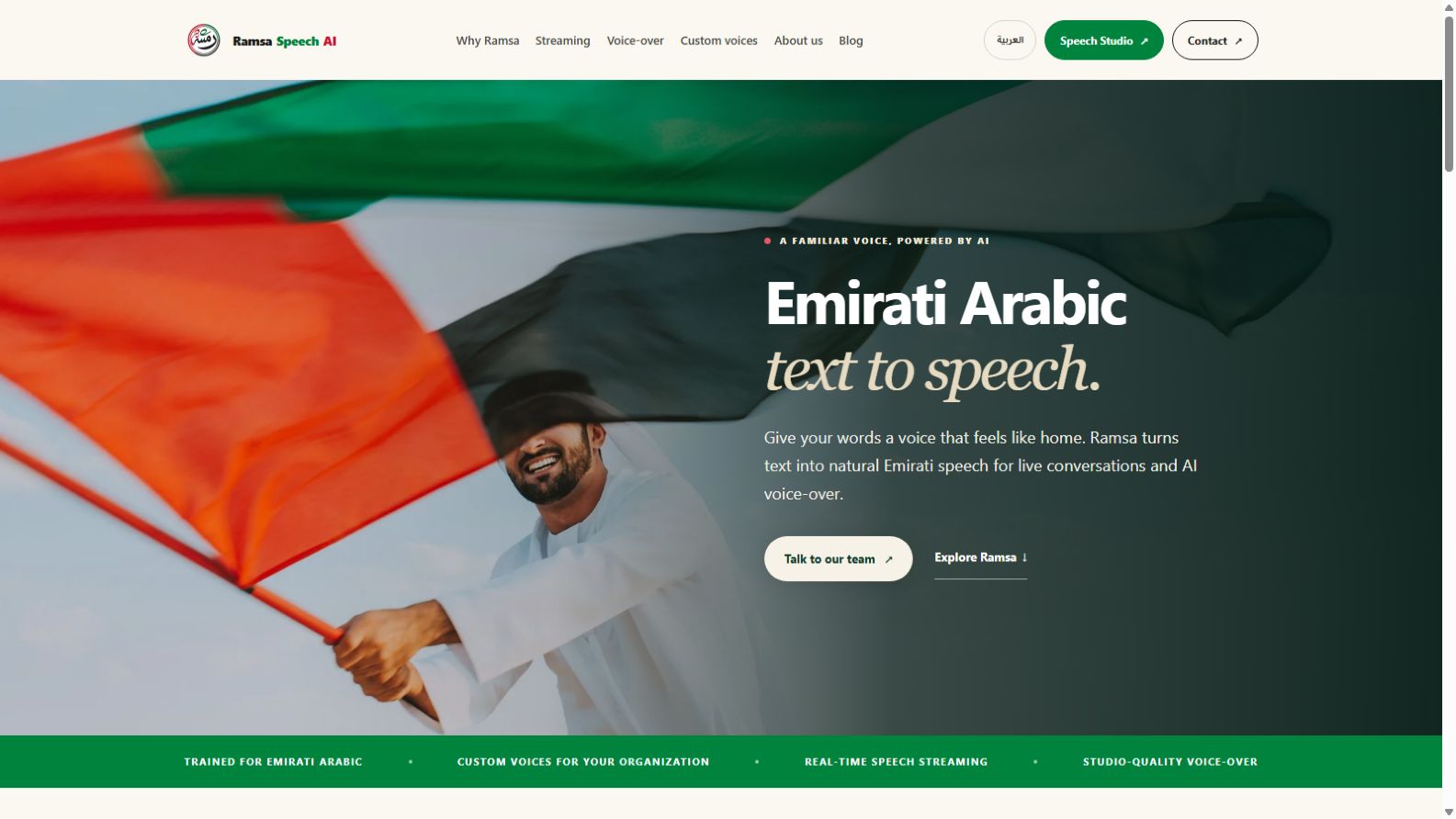
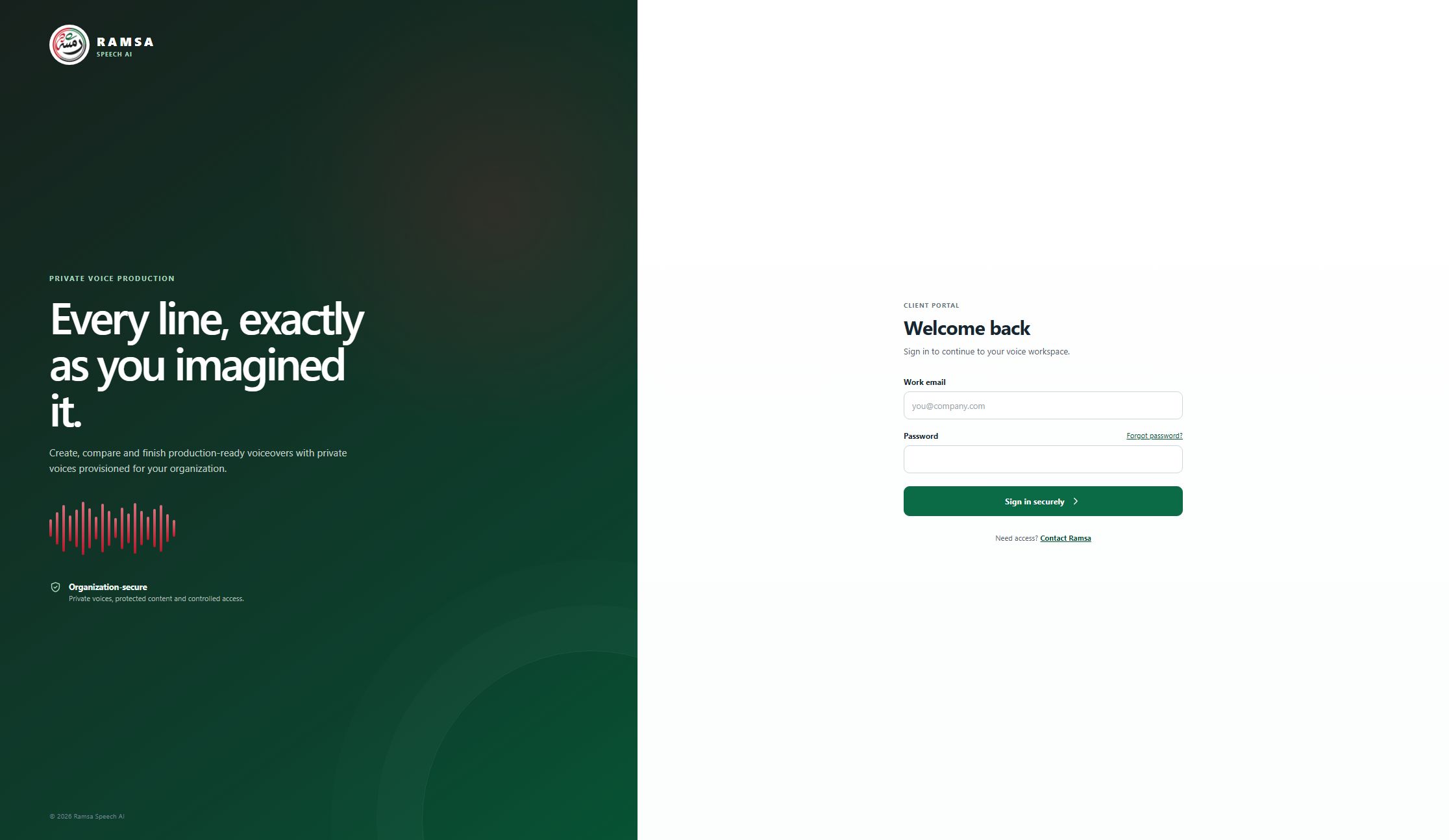
Ramsa is an AI speech platform built for Emirati Arabic. It turns text into spoken audio with local pronunciation, rhythm, and everyday expressions. Organizations can use Ramsa in AI assistants, virtual receptionists, customer service applications, and recorded voiceovers. Custom voice cloning is available with the speaker’s consent.
Example Image
Example Image
Example Image
Example Image

Features

Emirati Arabic text-to-speech

Streaming speech API

Consent-based custom voice cloning

Cloud and on-premises deployment options

Use Cases

AI assistants and virtual receptionists

Customer service conversations

Voiceovers for videos, advertising, training, and podcasts

Comments

very interesting, I like it

"Consent-based voice cloning is a useful safeguard for speakers. Do you keep an audit log that shows which voice was used and when?"

custom-img
Operations Manager at PureMail.ai Cold E...

This is a great idea!Natural Emirati Arabic text-to-speech can be really valuable for creating more localized and authentic audio experiences.It's nice to see tools focusing on regional language support.Great work!

custom-img
Maker of Clutvi, built in the UK.

Building for Emirati Arabic specifically, rather than a generic Gulf voice, makes so much sense for customer service. How do you handle callers who switch into English mid-sentence?

Love seeing AI voice technology focused on regional languages and dialects! Natural Emirati Arabic pronunciation could be really valuable for customer service and virtual assistants. Great to see local expressions and cultural nuances getting the attention they deserve. Exciting project!

Streaming is the part we would ask about. In a live conversation the first audio has to arrive fast or the turn feels dead. What is the time to first audio on the streaming API, and does it hold on the on-premises option too?

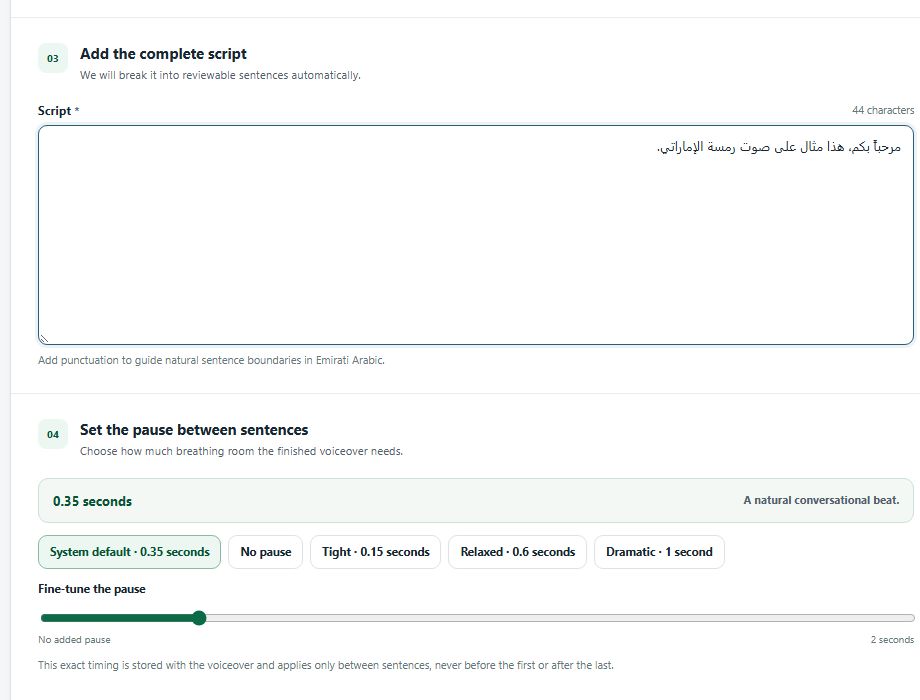
Focusing on Emirati dialect instead of generic MSA makes a lot of sense for receptionists and customer service, since that is what callers actually speak. I liked the pause control between sentences in the screenshots, that is usually what makes TTS sound robotic. How does it handle code-switching, when an Emirati speaker drops English words or brand names mid-sentence?

Building for Emirati Arabic specifically is a strong choice. Does the streaming API return phoneme or word timing? That would help teams align voiceovers with subtitles and captions.

very useful tool. i like it

custom-img
Founder at A2 Ventures, building softwar...

Focusing on Emirati Arabic rather than generic MSA is a meaningful differentiator for support teams; streaming and on-prem options also look useful for latency-sensitive assistants.

Premium Products
View all
Example Image
Awards
View all
Example Image

Comments

very interesting, I like it

"Consent-based voice cloning is a useful safeguard for speakers. Do you keep an audit log that shows which voice was used and when?"

custom-img
Operations Manager at PureMail.ai Cold E...

This is a great idea!Natural Emirati Arabic text-to-speech can be really valuable for creating more localized and authentic audio experiences.It's nice to see tools focusing on regional language support.Great work!

custom-img
Maker of Clutvi, built in the UK.

Building for Emirati Arabic specifically, rather than a generic Gulf voice, makes so much sense for customer service. How do you handle callers who switch into English mid-sentence?

Love seeing AI voice technology focused on regional languages and dialects! Natural Emirati Arabic pronunciation could be really valuable for customer service and virtual assistants. Great to see local expressions and cultural nuances getting the attention they deserve. Exciting project!

Streaming is the part we would ask about. In a live conversation the first audio has to arrive fast or the turn feels dead. What is the time to first audio on the streaming API, and does it hold on the on-premises option too?

Focusing on Emirati dialect instead of generic MSA makes a lot of sense for receptionists and customer service, since that is what callers actually speak. I liked the pause control between sentences in the screenshots, that is usually what makes TTS sound robotic. How does it handle code-switching, when an Emirati speaker drops English words or brand names mid-sentence?

Building for Emirati Arabic specifically is a strong choice. Does the streaming API return phoneme or word timing? That would help teams align voiceovers with subtitles and captions.

very useful tool. i like it

custom-img
Founder at A2 Ventures, building softwar...

Focusing on Emirati Arabic rather than generic MSA is a meaningful differentiator for support teams; streaming and on-prem options also look useful for latency-sensitive assistants.

Premium Products