
QuickEstimate
Construction estimating software made simple.
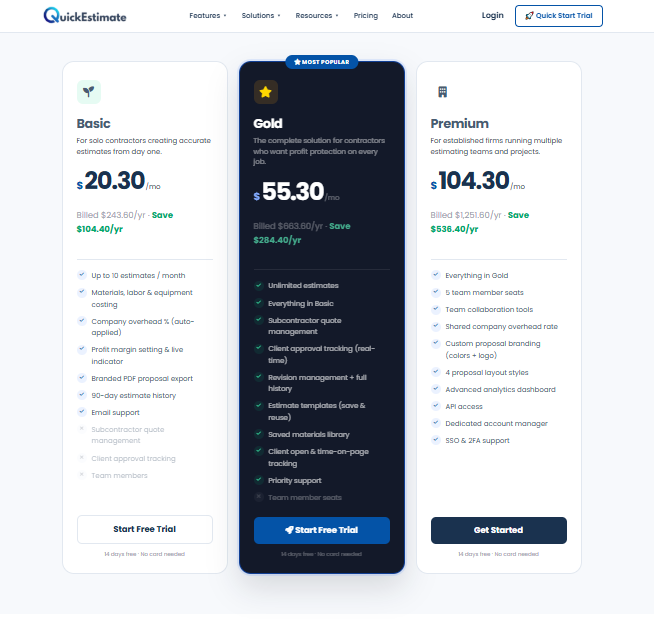
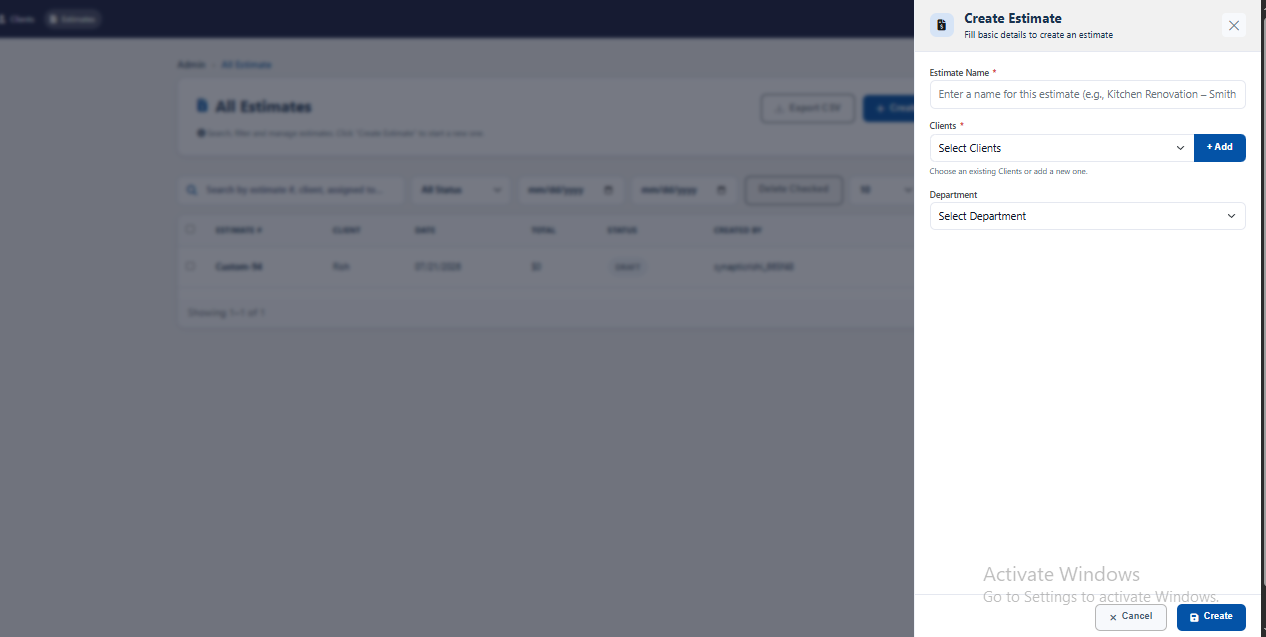
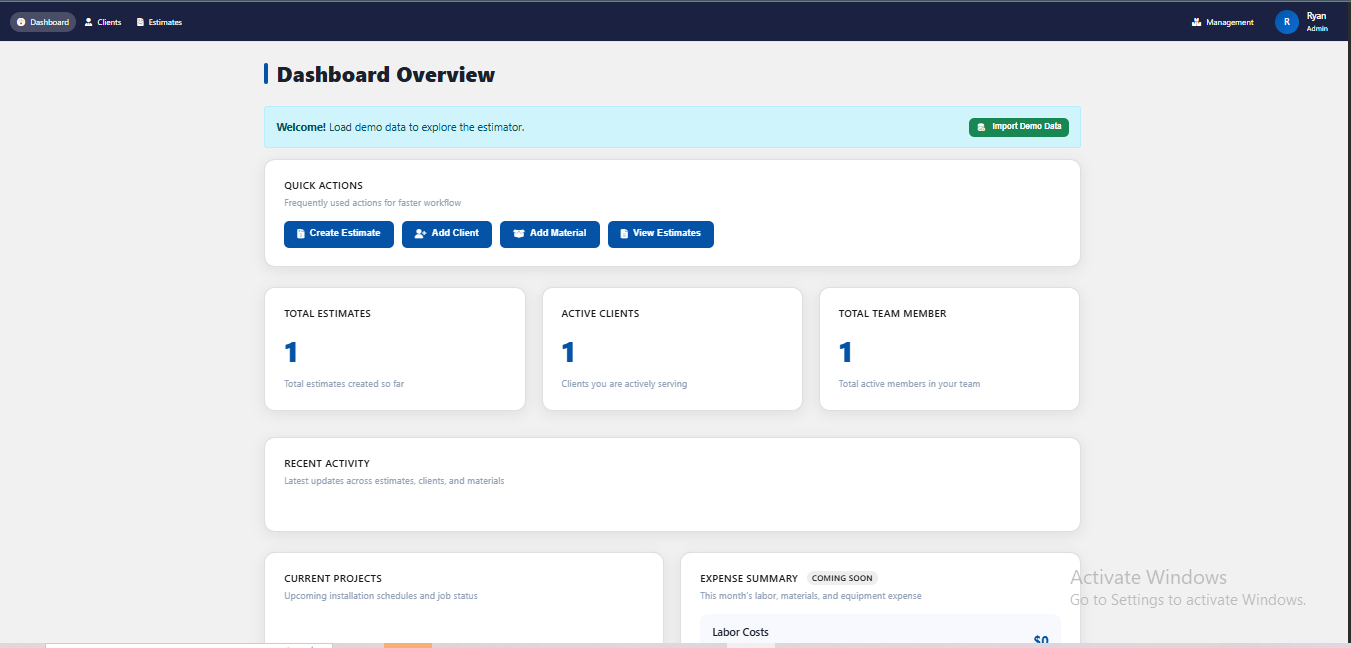
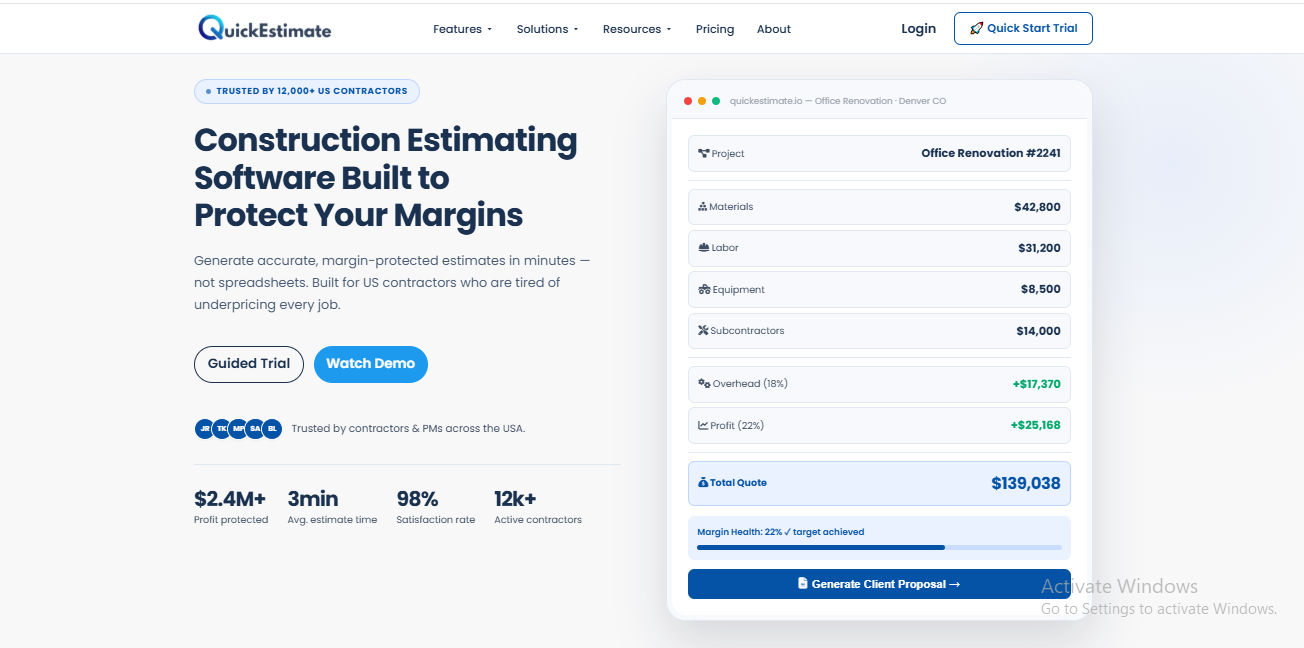
QuickEstimate is cloud-based construction estimating software built for contractors, builders, remodelers, and estimators. It helps construction businesses create accurate estimates, calculate material and labor costs, apply overhead and profit margins, and generate professional proposals in minutes.
Features
• Material, labor, and equipment cost estimation
• Overhead and profit margin calculations
• Professional PDF proposals
• Estimate history and revisions
• Fast project bidding workflow
• Cloud-based access
Use Cases
• Create accurate construction estimates
• Generate professional project proposals
• Calculate labor, materials, overhead, and profit
• Improve bidding accuracy
• Save time on construction estimating

Comments


QuickEstimate was built to help contractors and builders create accurate estimates faster without dealing with complicated spreadsheets. We wanted to simplify the estimating process, improve bidding accuracy, and help construction professionals protect their profit margins with an easy-to-use platform.

QuickEstimate looks useful for contractors who need to keep material and labor costs organized when preparing project estimates. That could be especially helpful for electrical work where panel upgrades may involve different equipment and installation costs. For homeowners or contractors researching panel upgrade work in Tuskegee, https://electricalpanelupgradepros.com/alabama/tuskegee-al/ is also a relevant resource.

Solid feature set for streamlining bids! Since the tool generates professional PDF proposals, handling user logos efficiently is probably key. If your app deals with vector graphics for those proposals, I built CrushSVG (www.crushsvg.net) to optimize them entirely client-side. Might be a handy utility for your stack. Best of luck with it!


Estimate history and revisions is the feature I'd actually pay for - most estimating tools treat every bid as a one-off, but the real value is in seeing how your own margins drift over a dozen jobs so you can catch yourself underbidding a trade before it becomes a pattern. Does the revision history let you compare margin trends across past projects, or is it more of a per-project audit trail? Also curious whether the overhead calculation adapts per trade (electrical vs. framing have pretty different waste/rework baselines) or if it's one flat overhead model.


The overhead/margin controls stand out to me since I build software for a similar audience (job management for Aussie tradies). One thing I've learned from our users: a single flat overhead percentage tends to undercharge trades with high material waste (tiling, roofing) and overcharge low-waste labour-heavy trades. Do you let estimators set a different overhead baseline per trade or per material category, or is it one number across the whole estimate? That's usually the difference between a tool people use once and one they trust for every bid.
Premium Products



































Sponsors
Buy

Comments
QuickEstimate was built to help contractors and builders create accurate estimates faster without dealing with complicated spreadsheets. We wanted to simplify the estimating process, improve bidding accuracy, and help construction professionals protect their profit margins with an easy-to-use platform.
QuickEstimate looks useful for contractors who need to keep material and labor costs organized when preparing project estimates. That could be especially helpful for electrical work where panel upgrades may involve different equipment and installation costs. For homeowners or contractors researching panel upgrade work in Tuskegee, https://electricalpanelupgradepros.com/alabama/tuskegee-al/ is also a relevant resource.
Solid feature set for streamlining bids! Since the tool generates professional PDF proposals, handling user logos efficiently is probably key. If your app deals with vector graphics for those proposals, I built CrushSVG (www.crushsvg.net) to optimize them entirely client-side. Might be a handy utility for your stack. Best of luck with it!
Estimate history and revisions is the feature I'd actually pay for - most estimating tools treat every bid as a one-off, but the real value is in seeing how your own margins drift over a dozen jobs so you can catch yourself underbidding a trade before it becomes a pattern. Does the revision history let you compare margin trends across past projects, or is it more of a per-project audit trail? Also curious whether the overhead calculation adapts per trade (electrical vs. framing have pretty different waste/rework baselines) or if it's one flat overhead model.
The overhead/margin controls stand out to me since I build software for a similar audience (job management for Aussie tradies). One thing I've learned from our users: a single flat overhead percentage tends to undercharge trades with high material waste (tiling, roofing) and overcharge low-waste labour-heavy trades. Do you let estimators set a different overhead baseline per trade or per material category, or is it one number across the whole estimate? That's usually the difference between a tool people use once and one they trust for every bid.
Premium Products
New to Fazier?

Find your next favorite product or submit your own. Made by @FalakDigital.
Copyright ©2026. All Rights Reserved