
ProposalDesk
Paste call notes. Get a client-ready proposal in seconds.
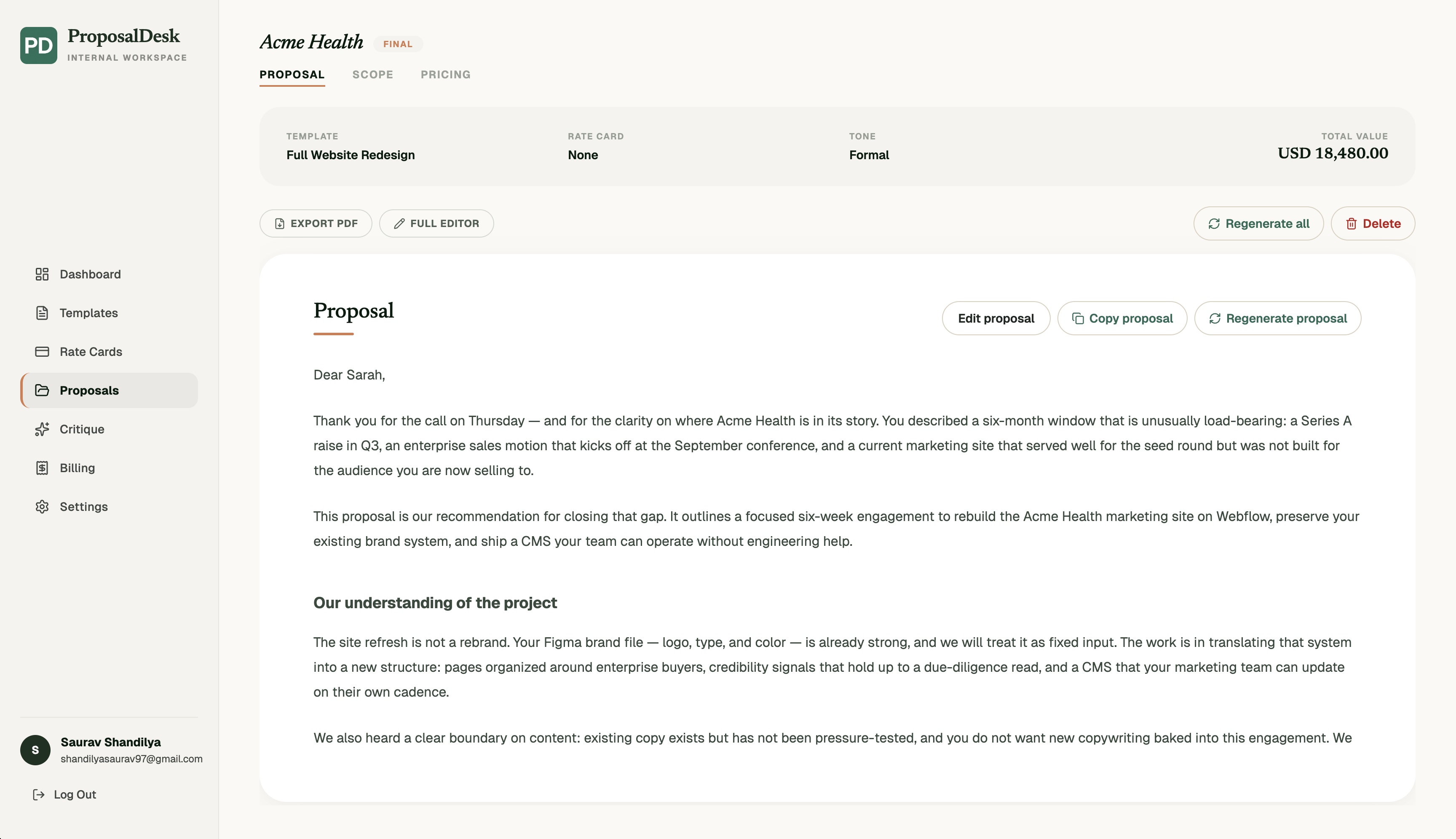
ProposalDesk is an AI proposal generator built for web dev freelancers and small studios. Paste your call notes or transcript — get back a professional proposal, scope of work, and pricing table in seconds. Uses your own templates and rate cards, not generic prompts. A built-in critique engine scores your proposal and flags weaknesses before you send. $29/mo Pro, 3 free generations to start.
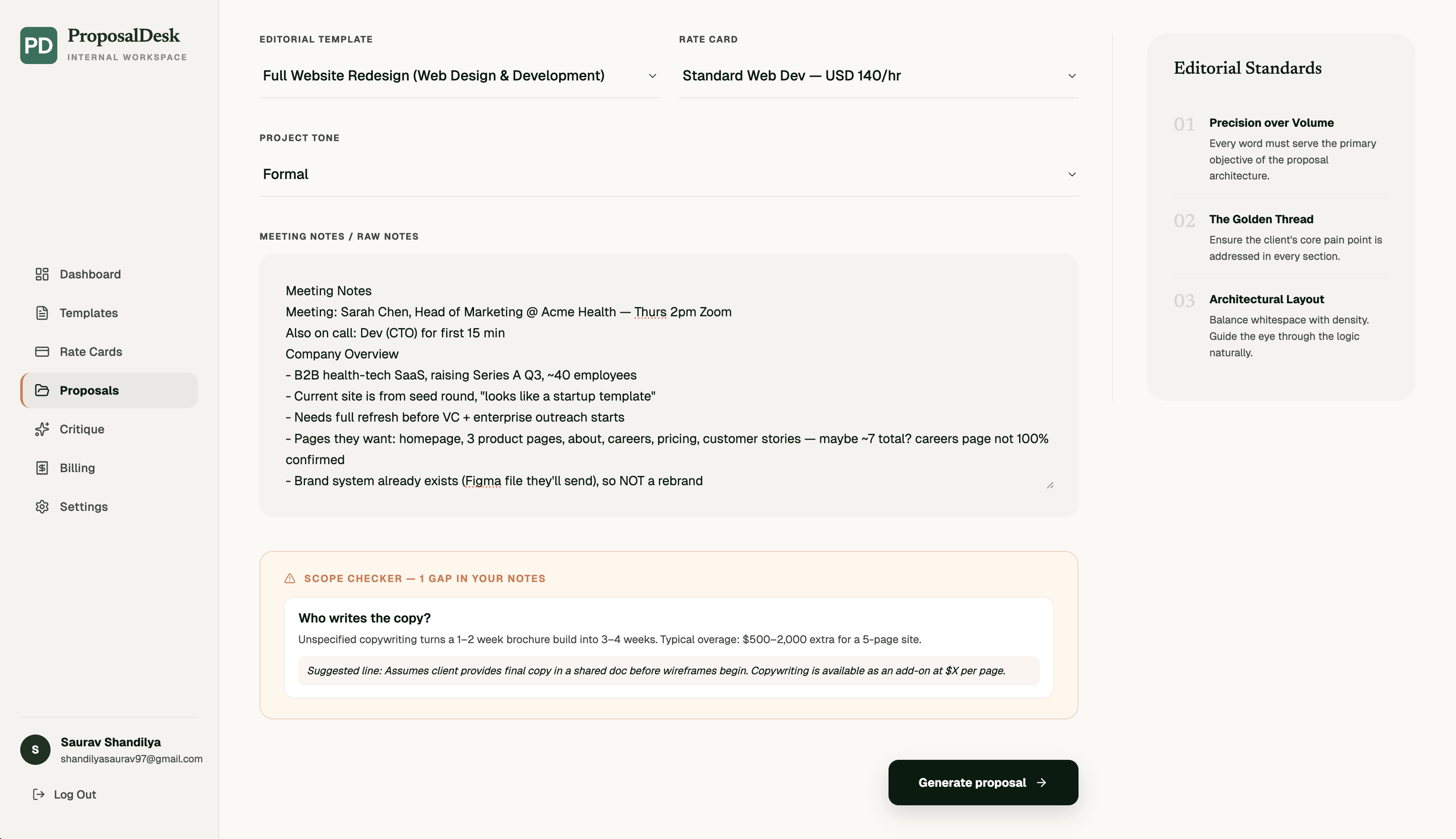
Features
- AI proposal generator from raw call notes
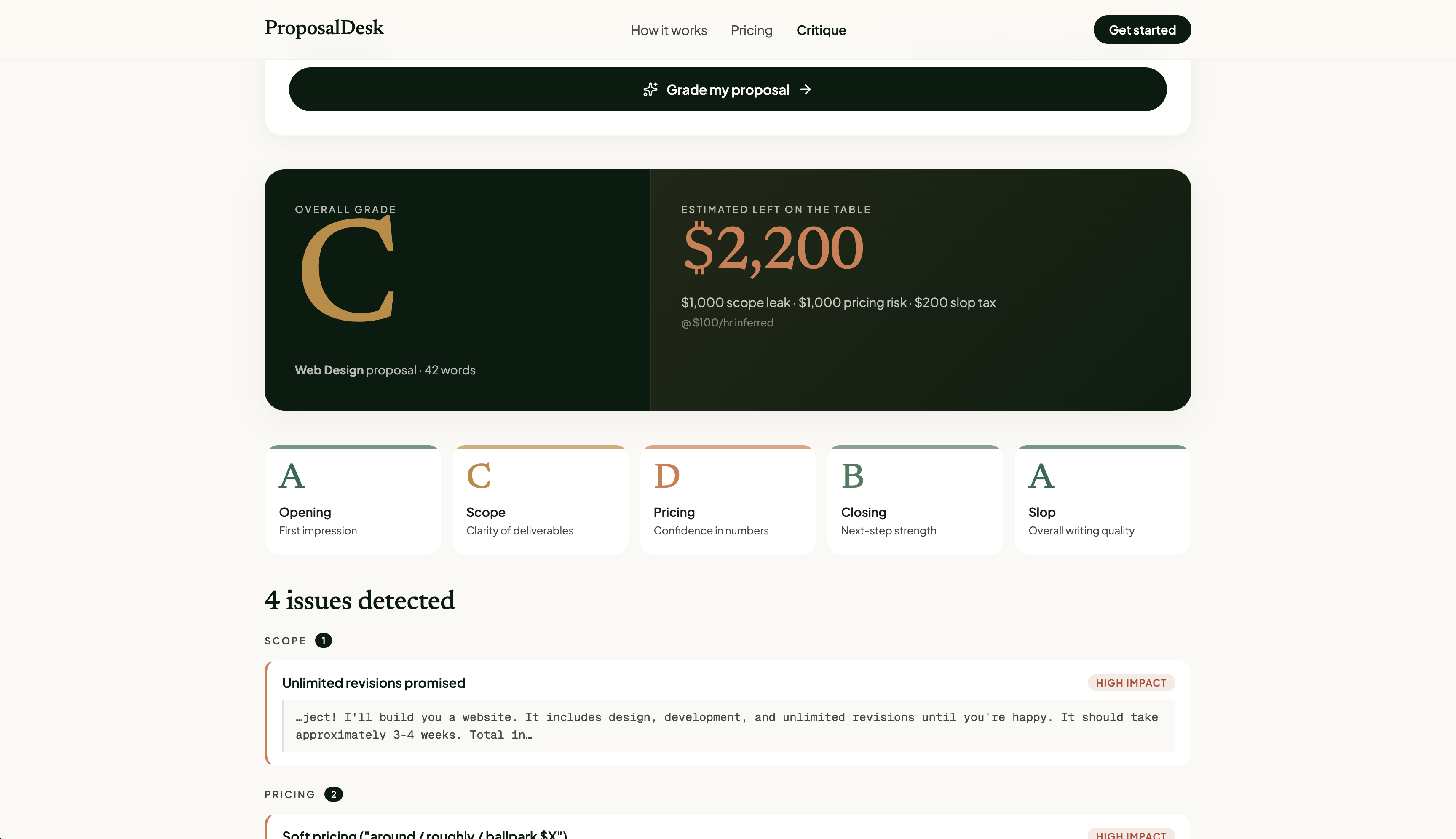
- Built-in critique engine — 32 detectors, 5 axes, dollar leak estimate
- Custom templates and rate cards
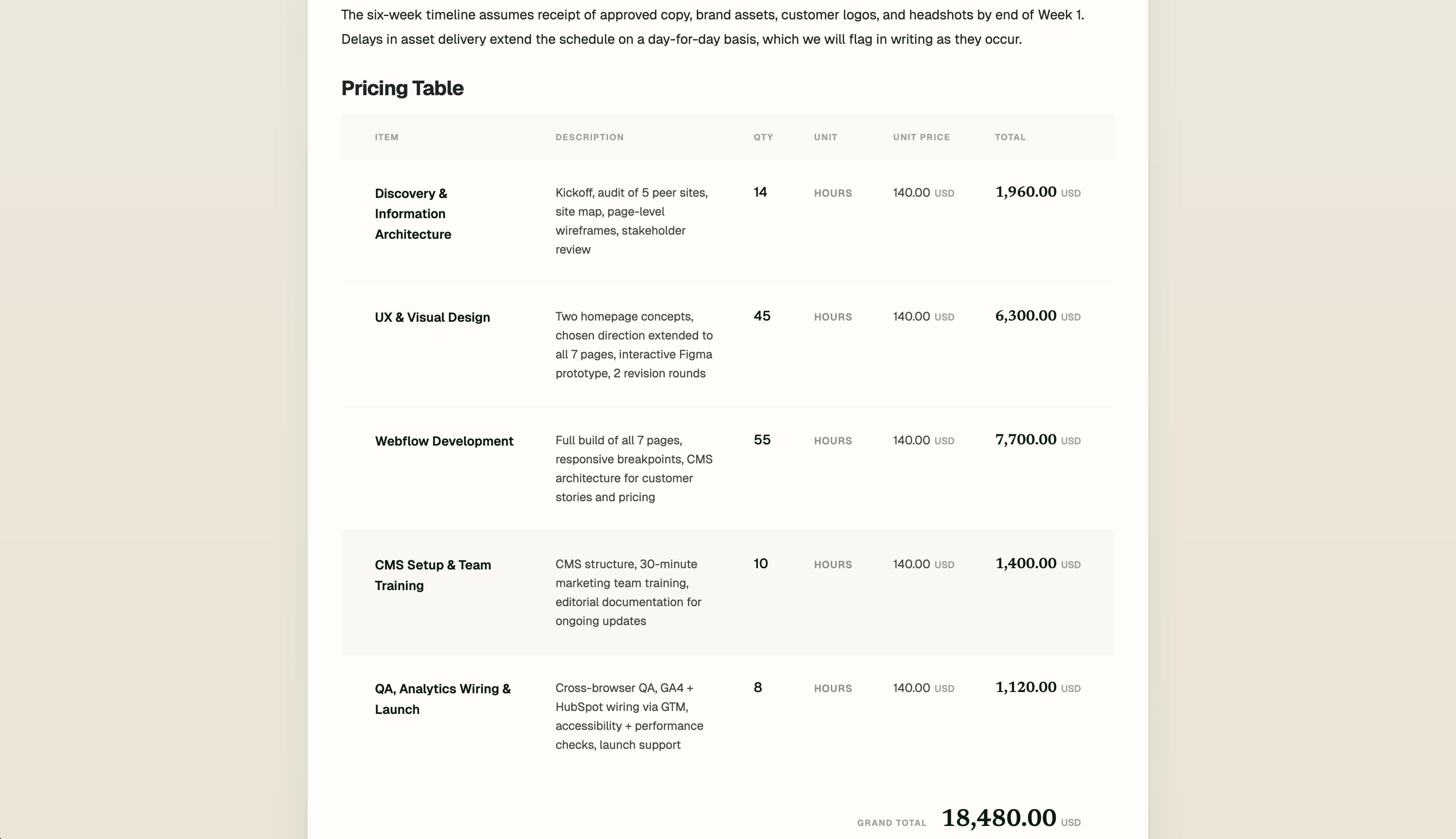
- Scope of work generator
- Pricing table with line items
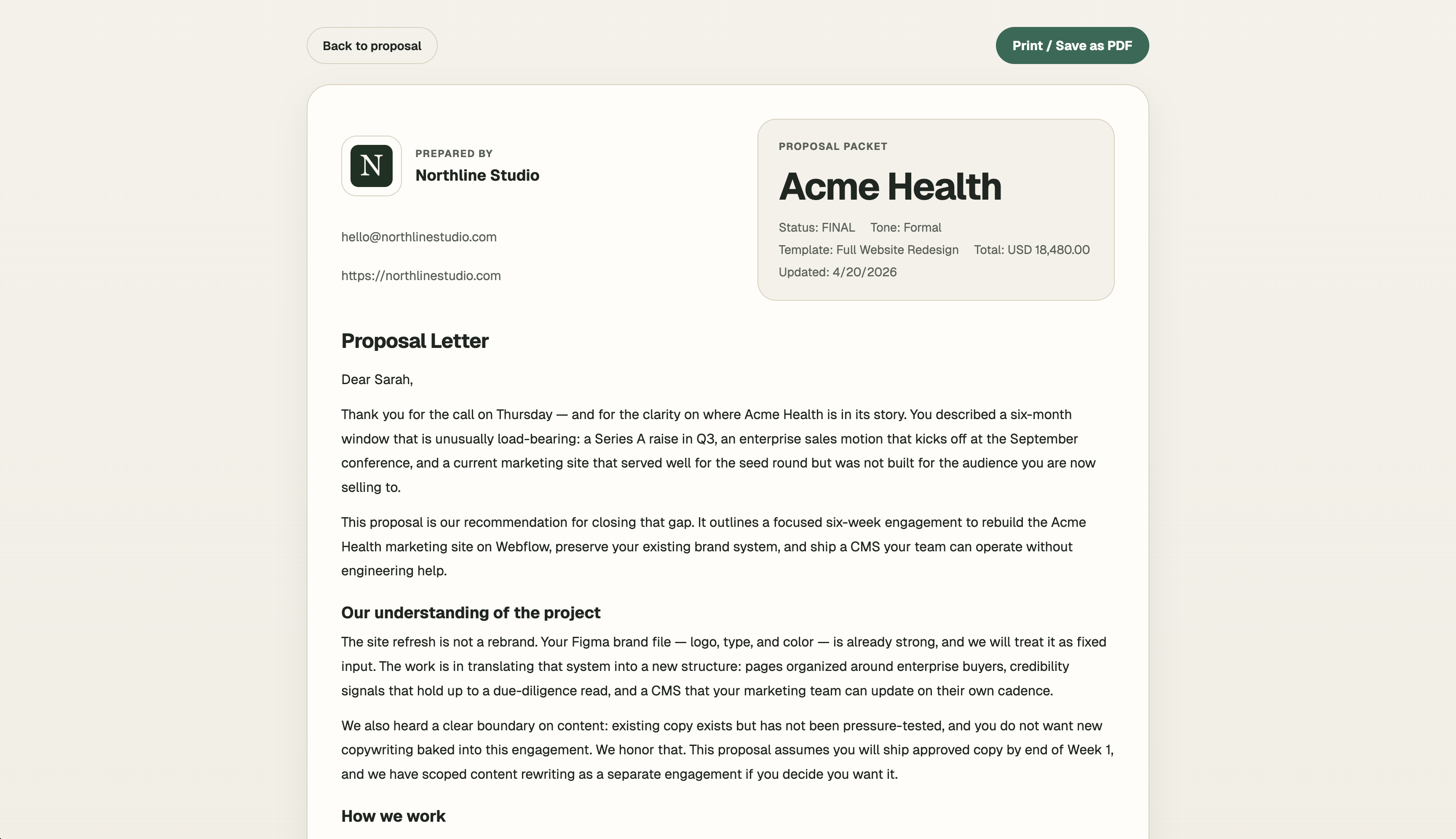
- Branded PDF export
- Free tier — 3 lifetime AI generations, no card
Use Cases
After a client discovery call — turn notes into a proposal in minutes.
Before sending any proposal — run the critique engine to catch leaks.
Freelancers tired of the blank-page problem after every sales call.
Web dev studios who want consistent branded output without templates.

Comments


ProposalDesk does exactly what it promises: it collapses the gap between "call ended" and "proposal sent" from hours to minutes, and it actively helps you send a better proposal, not just a faster one. For web dev freelancers and small studios tired of reinventing the wheel after every sales call, this is a tool worth adding to the stack.

ProposalDesk solves a very real problem for freelancers and small studios: turning messy call notes into a client-ready proposal without starting from a blank page. I like that it covers scope of work, pricing tables, templates, and proposal critique in one workflow. The built-in risk checks for scope creep, pricing gaps, and weak next steps make it more useful than a generic AI writing tool.

Thanks Nancy. Yes, it can work outside web dev wherever the proposal has real scope, pricing, timeline, and risk terms. Web dev is the first wedge because scope creep shows up there brutally, but the critique checks are broader: vague deliverables, missing deposit or payment terms, weak revision limits, fuzzy next step, and price not tied to outcome. We are adding more non-web-dev examples so consultants, marketers, agencies, and other service businesses can use the same review loop.

The critique engine is the real differentiator here. Generating a proposal from notes is useful, but catching scope leaks and pricing risks before you hit send is where this saves freelancers real money. The "dollar leak estimate" is a clever way to make the ROI immediately obvious. Curious how well it handles non-web-dev proposals — could see this working for any services business.
Premium Products


































Sponsors
Buy

Makers
Makers
Comments
ProposalDesk does exactly what it promises: it collapses the gap between "call ended" and "proposal sent" from hours to minutes, and it actively helps you send a better proposal, not just a faster one. For web dev freelancers and small studios tired of reinventing the wheel after every sales call, this is a tool worth adding to the stack.
ProposalDesk solves a very real problem for freelancers and small studios: turning messy call notes into a client-ready proposal without starting from a blank page. I like that it covers scope of work, pricing tables, templates, and proposal critique in one workflow. The built-in risk checks for scope creep, pricing gaps, and weak next steps make it more useful than a generic AI writing tool.
Thanks Nancy. Yes, it can work outside web dev wherever the proposal has real scope, pricing, timeline, and risk terms. Web dev is the first wedge because scope creep shows up there brutally, but the critique checks are broader: vague deliverables, missing deposit or payment terms, weak revision limits, fuzzy next step, and price not tied to outcome. We are adding more non-web-dev examples so consultants, marketers, agencies, and other service businesses can use the same review loop.
The critique engine is the real differentiator here. Generating a proposal from notes is useful, but catching scope leaks and pricing risks before you hit send is where this saves freelancers real money. The "dollar leak estimate" is a clever way to make the ROI immediately obvious. Curious how well it handles non-web-dev proposals — could see this working for any services business.
Premium Products
New to Fazier?

Find your next favorite product or submit your own. Made by @FalakDigital.
Copyright ©2026. All Rights Reserved