
PostQuest
Social media scheduler your AI can use
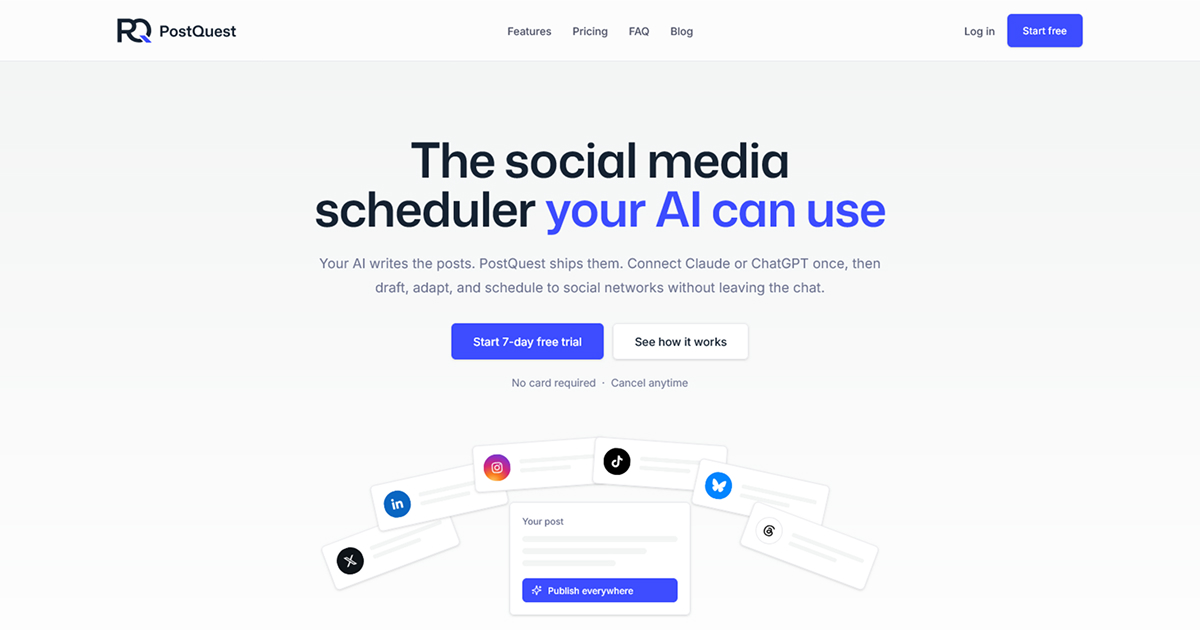
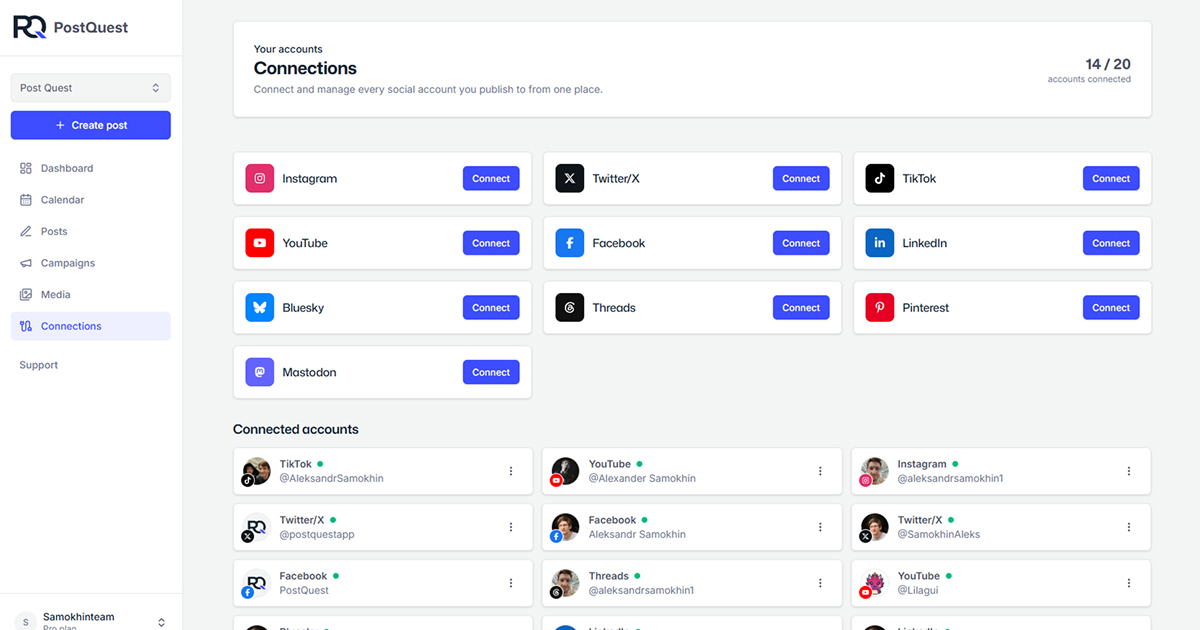
PostQuest is a social media scheduling platform that helps founders, creators, and small businesses turn ideas into published content. Write a post, adapt it for different social networks, and schedule everything from one calendar. Its built-in AI assistant helps with ideas and drafts, while integrations with tools such as Claude, ChatGPT, and Cursor let users manage their content through conversation. Whether working from the dashboard or an AI assistant, PostQuest helps users maintain a consistent social presence with less repetitive work.
Features
- Multi-Platform Publishing: Schedule and publish across Instagram, Facebook, LinkedIn, X, Threads, TikTok, Pinterest, YouTube, Bluesky, and Mastodon.
- AI Writing Assistant: Turn rough ideas into drafts, generate content suggestions, and rewrite captions for different audiences.
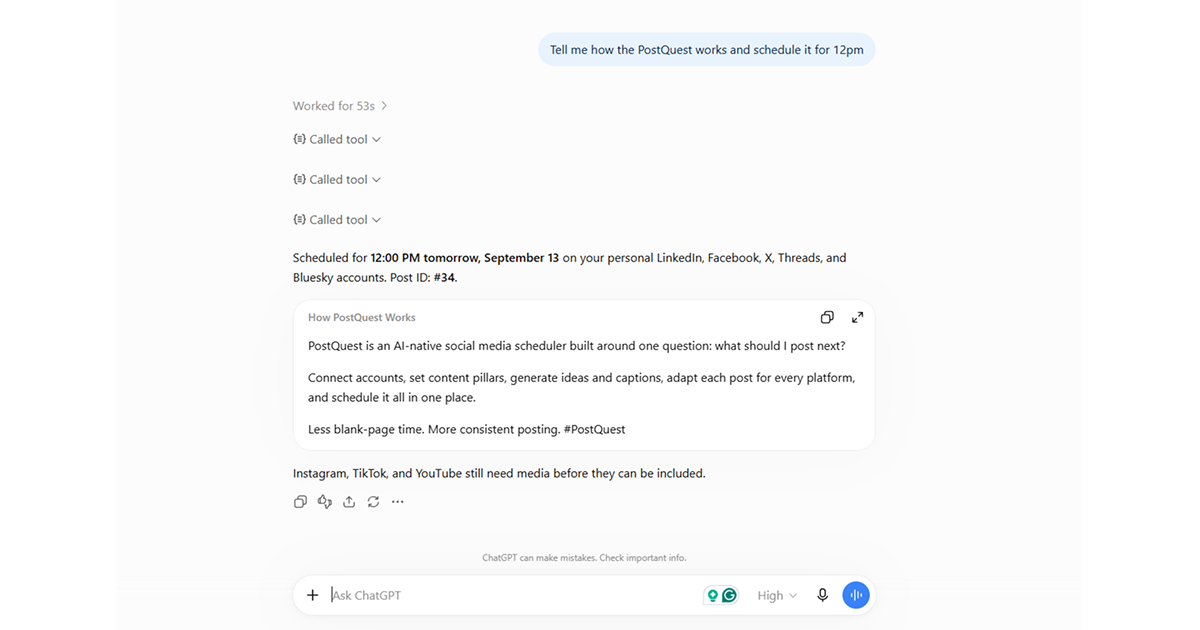
- AI Agent Integration: Connect compatible assistants through MCP to create drafts, schedule posts, and check publishing status through conversation.
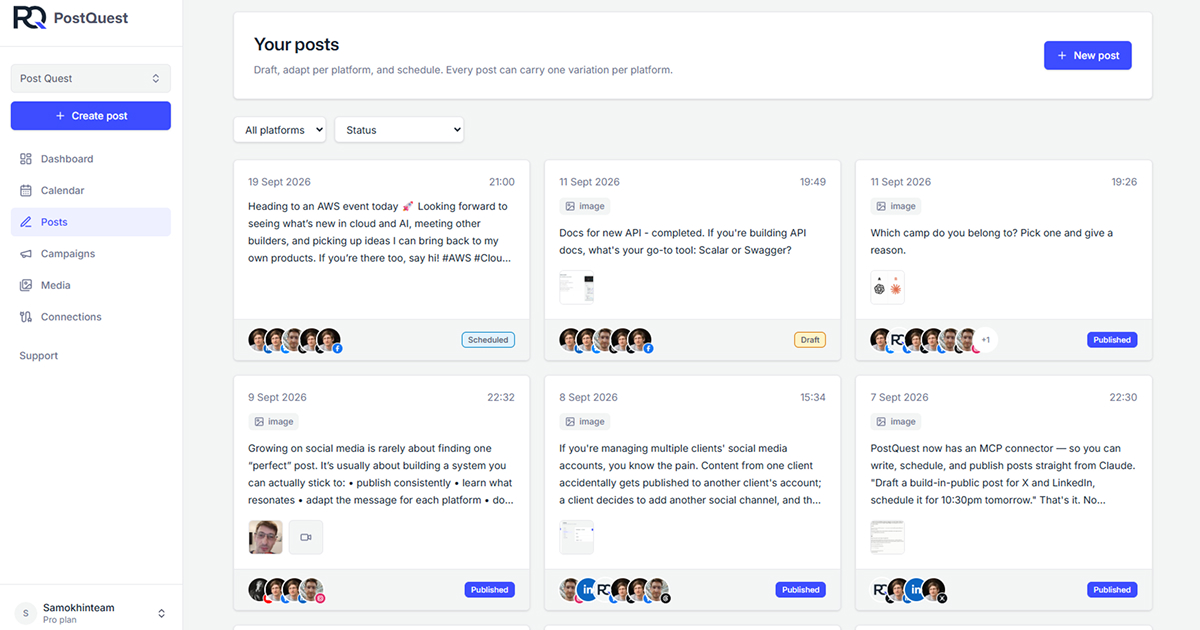
- Platform-Specific Captions: Customize each network’s version within a single post, from short updates on X to longer LinkedIn captions.
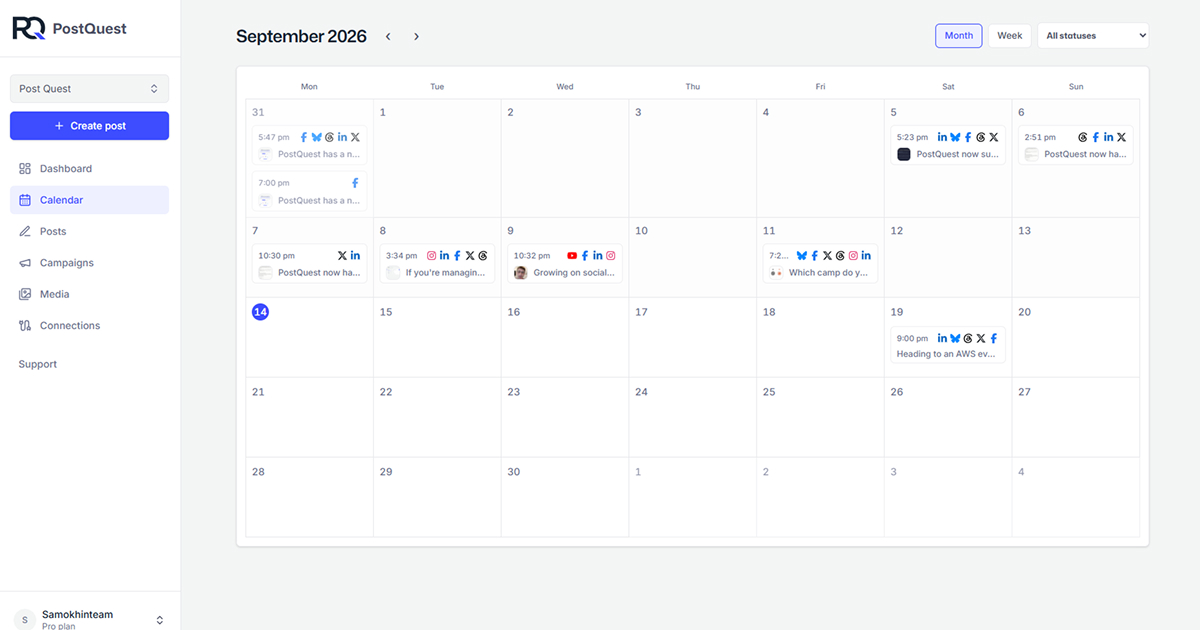
- Unified Content Calendar: View scheduled content across connected accounts and organize your publishing schedule in one place.
- Media Library: Store and reuse images and videos when creating posts.
- Multiple Workspaces: Keep separate brands’ social accounts, content, and schedules organized in dedicated workspaces.
- Draft-First Workflow: AI agent content starts as drafts by default, giving users control over what gets published.
Use Cases
For Founders and Solopreneurs
Founders can plan social content around product updates, lessons learned, and launch announcements. PostQuest helps turn a single idea into posts for several networks and schedule them ahead of time, making it easier to stay visible while running a business.
For Content Creators
Creators can adapt their content to each platform without starting from scratch. They can use the AI assistant to explore ideas, refine captions, and maintain a calendar that balances different content themes.
For Small Businesses and Agencies
Businesses and agencies can organize content for multiple brands using separate workspaces. Connected accounts, reusable media, and campaign planning help keep each brand’s publishing schedule organized.
For Users of AI Assistants
Users who already work in Claude, ChatGPT, or Cursor can bring social publishing into that workflow. Through PostQuest’s MCP integration, they can ask their assistant to prepare posts, tailor captions, schedule content, and check publishing results.
Comments


The combination of broad platform coverage and MCP support is a thoughtful fit for teams already working in Claude, ChatGPT, or Cursor. Drafting and scheduling from the assistant could remove a lot of context switching; can teams require an approval step before anything is published, and are analytics fed back into future recommendations?




PostQuest’s combination of platform-specific captions, AI-assisted drafting, and a unified content calendar could make managing cross-network publishing much more organised. The draft-first workflow and MCP connections are particularly useful details for teams that want conversational help while keeping control before anything goes live.

Hey, I'm Alex. I created PostQuest because I wanted a simple and cheap way to post on multiple social media channels at once. One more thing: I can hook it directly to my ChatGPT or Claude account and let it write post variations and schedule the content for me. A week of posting now takes me about ten minutes for $15 a month. If you ship more than you promote, PostQuest is for you.




A practical scheduler for anyone tired of manually cross-posting. Covers all the major platforms, adapts captions per network, and the MCP integration with Claude/ChatGPT/Cursor is a genuinely useful touch — you can draft and schedule posts just by chatting with your AI assistant. Draft-first workflow keeps you in control instead of auto-publishing blind. Solid pick for solo founders or small teams who want consistency without babysitting a content calendar.




The draft-first MCP flow is a smart safeguard. One thing I'm curious about: when an AI agent schedules through MCP and a network rejects the post (say a media spec mismatch on TikTok or a rate limit on X), does PostQuest surface that failure back to the agent in a structured way so it can retry or fix the draft? In my experience with multi-account scheduling, the post-publish verification loop matters as much as the drafting itself. Also, do the platform-specific captions account for character-count differences automatically?



The MCP integration with Claude and ChatGPT is a smart differentiator — it means founders can build and schedule posts without ever leaving their AI workflow. One thing I'm curious about: does PostQuest handle platform-specific formatting automatically (e.g. thread-style for X vs. single caption for Instagram), or does the AI suggest variations that you then pick from?




The AI angle here is interesting because most schedulers just batch time management. Having an AI that understands your voice and timing patterns could actually change how creators approach content distribution. The key differentiator is whether it learns from your engagement patterns or just optimizes posting windows.





This platform sounds like a dream for anyone managing multiple social media accounts! The AI assistant and integrations with other AI tools seem particularly helpful for streamlining content creation and scheduling. It's a great solution for maintaining a consistent online presence with less effort.



For the MCP integration, how do you handle an ambiguous publish result, such as the network accepting a post but the client timing out? Can the caller supply an idempotency key and recover the final platform URL before retrying? This is the main reliability question I would check before using agent-driven publishing.





Premium Products


































Sponsors
Buy




Makers
Makers
Comments
The combination of broad platform coverage and MCP support is a thoughtful fit for teams already working in Claude, ChatGPT, or Cursor. Drafting and scheduling from the assistant could remove a lot of context switching; can teams require an approval step before anything is published, and are analytics fed back into future recommendations?
PostQuest’s combination of platform-specific captions, AI-assisted drafting, and a unified content calendar could make managing cross-network publishing much more organised. The draft-first workflow and MCP connections are particularly useful details for teams that want conversational help while keeping control before anything goes live.
Hey, I'm Alex. I created PostQuest because I wanted a simple and cheap way to post on multiple social media channels at once. One more thing: I can hook it directly to my ChatGPT or Claude account and let it write post variations and schedule the content for me. A week of posting now takes me about ten minutes for $15 a month. If you ship more than you promote, PostQuest is for you.
A practical scheduler for anyone tired of manually cross-posting. Covers all the major platforms, adapts captions per network, and the MCP integration with Claude/ChatGPT/Cursor is a genuinely useful touch — you can draft and schedule posts just by chatting with your AI assistant. Draft-first workflow keeps you in control instead of auto-publishing blind. Solid pick for solo founders or small teams who want consistency without babysitting a content calendar.
The draft-first MCP flow is a smart safeguard. One thing I'm curious about: when an AI agent schedules through MCP and a network rejects the post (say a media spec mismatch on TikTok or a rate limit on X), does PostQuest surface that failure back to the agent in a structured way so it can retry or fix the draft? In my experience with multi-account scheduling, the post-publish verification loop matters as much as the drafting itself. Also, do the platform-specific captions account for character-count differences automatically?
The MCP integration with Claude and ChatGPT is a smart differentiator — it means founders can build and schedule posts without ever leaving their AI workflow. One thing I'm curious about: does PostQuest handle platform-specific formatting automatically (e.g. thread-style for X vs. single caption for Instagram), or does the AI suggest variations that you then pick from?
The AI angle here is interesting because most schedulers just batch time management. Having an AI that understands your voice and timing patterns could actually change how creators approach content distribution. The key differentiator is whether it learns from your engagement patterns or just optimizes posting windows.
This platform sounds like a dream for anyone managing multiple social media accounts! The AI assistant and integrations with other AI tools seem particularly helpful for streamlining content creation and scheduling. It's a great solution for maintaining a consistent online presence with less effort.
For the MCP integration, how do you handle an ambiguous publish result, such as the network accepting a post but the client timing out? Can the caller supply an idempotency key and recover the final platform URL before retrying? This is the main reliability question I would check before using agent-driven publishing.
Premium Products
New to Fazier?
Find your next favorite product or submit your own. Made by @FalakDigital.
Copyright ©2026. All Rights Reserved