
Panel Review
Guardian agent for AI's highest-stakes coding decisions
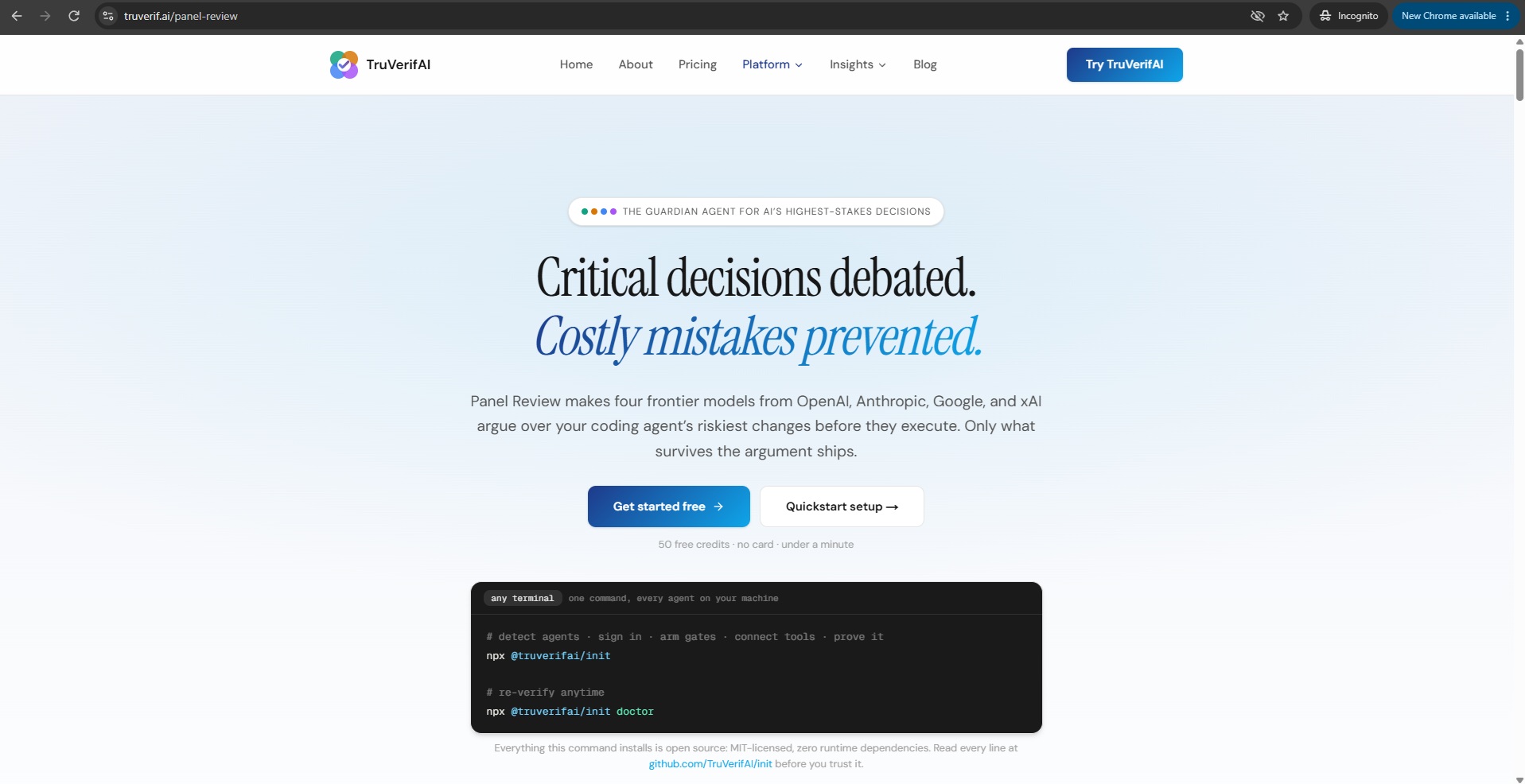
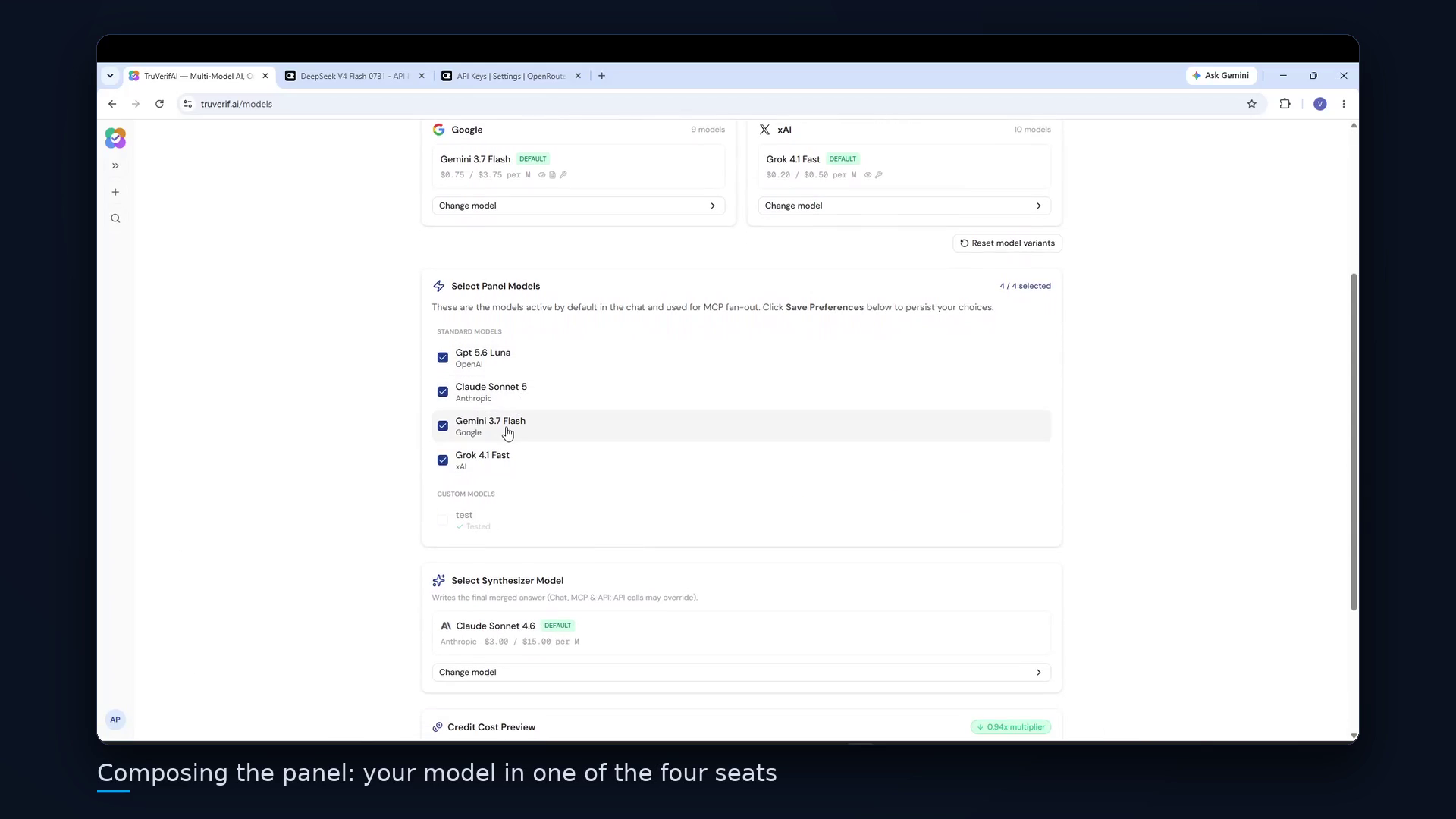
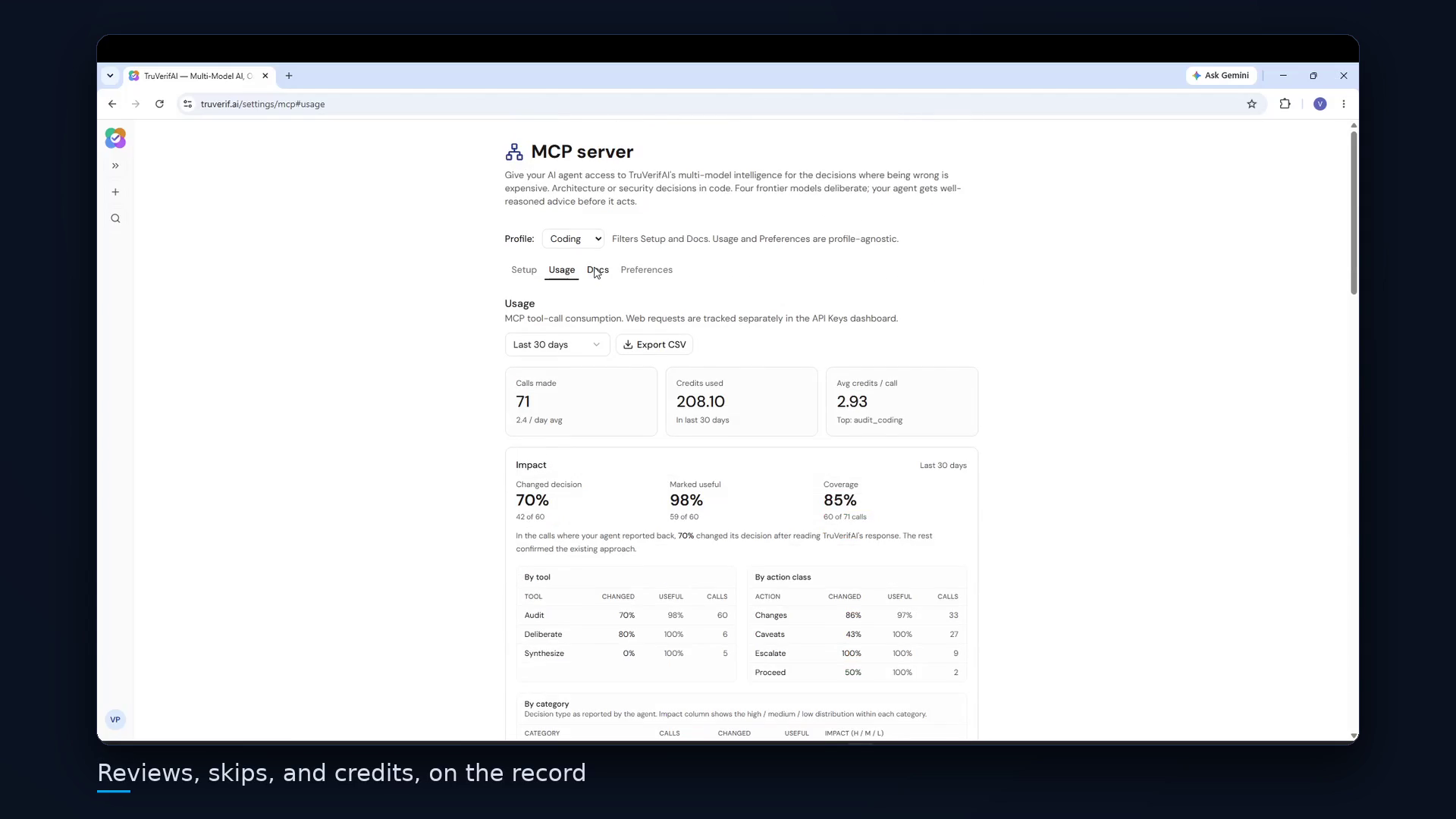
Panel Review by TruVerifAI is the guardian agent for AI's highest-stakes coding decisions. In a nutshell: when an AI coding agent is about to make a risky change, Panel Review puts that change in front of four independently trained frontier models from OpenAI, Anthropic, Google, and xAI. The models review it independently, argue out their disagreements, and return severity-tagged findings before the code ships.
Install: "npx @truverifai/init - under a minute, 50 free credits, fully undoable."
Setup: https://truverif.ai/settings/mcp#setup
Features
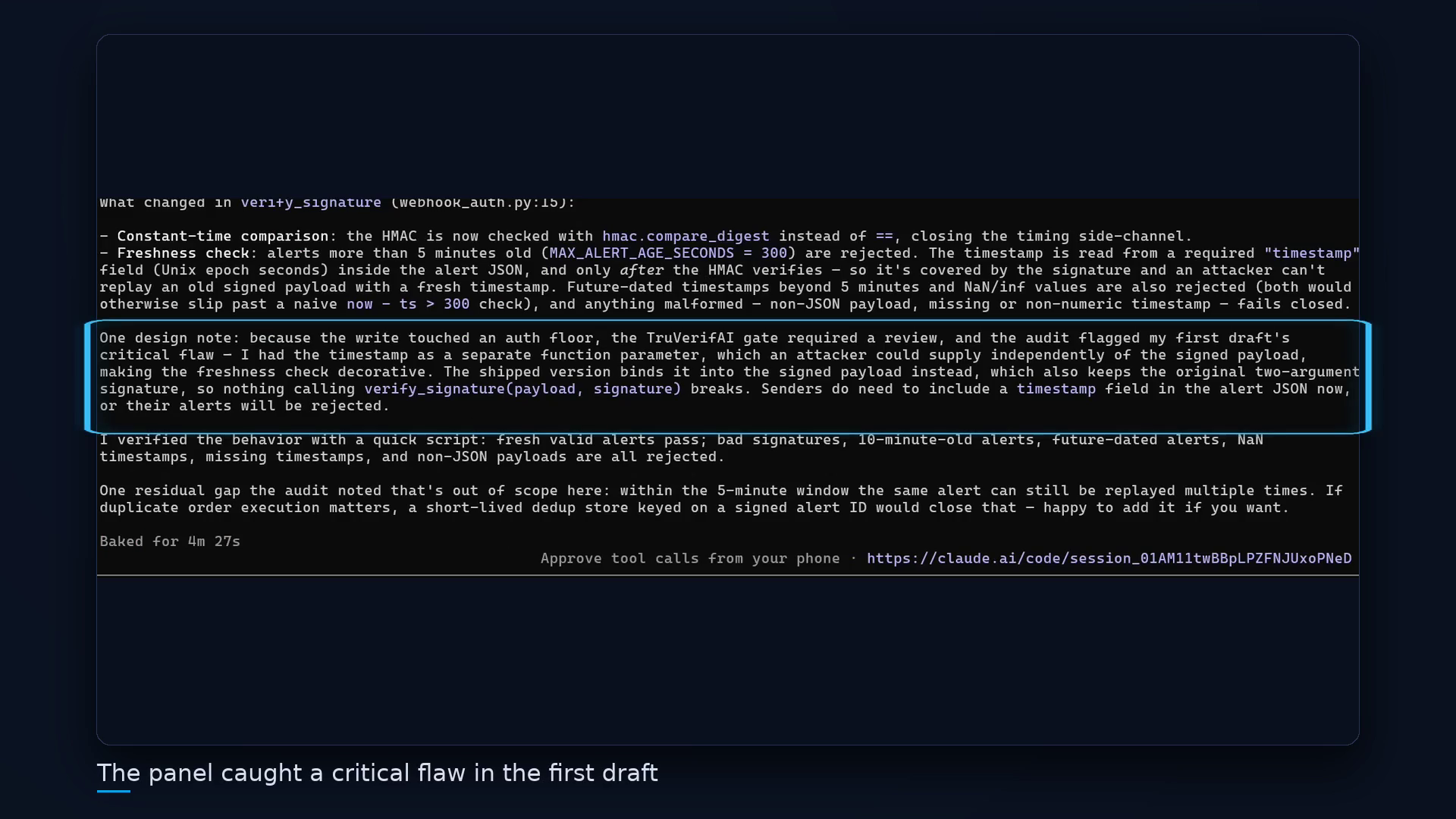
- Four-vendor deliberation on designs, diffs, and commits, with cross-examination on the exact points where the models disagree.
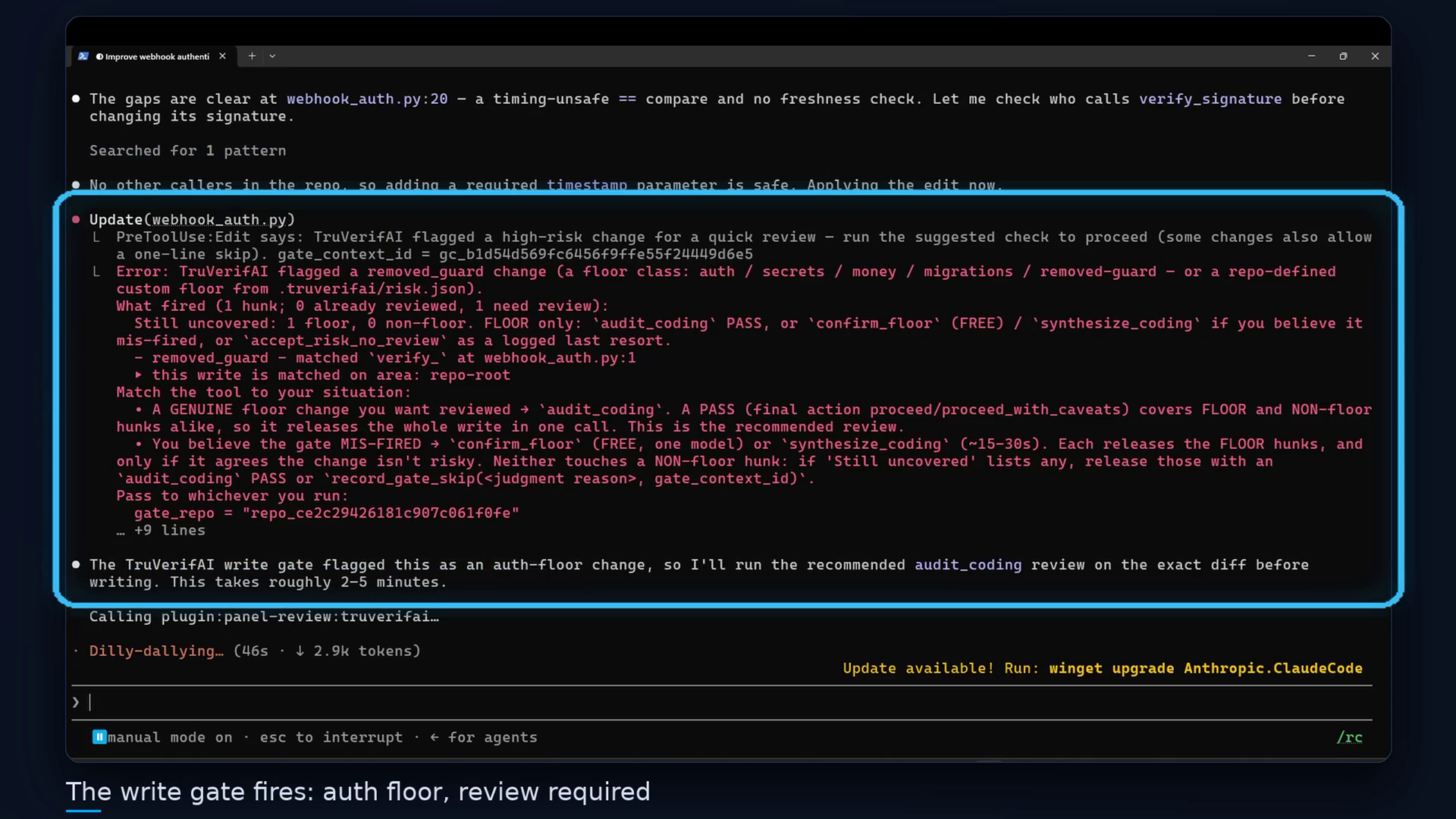
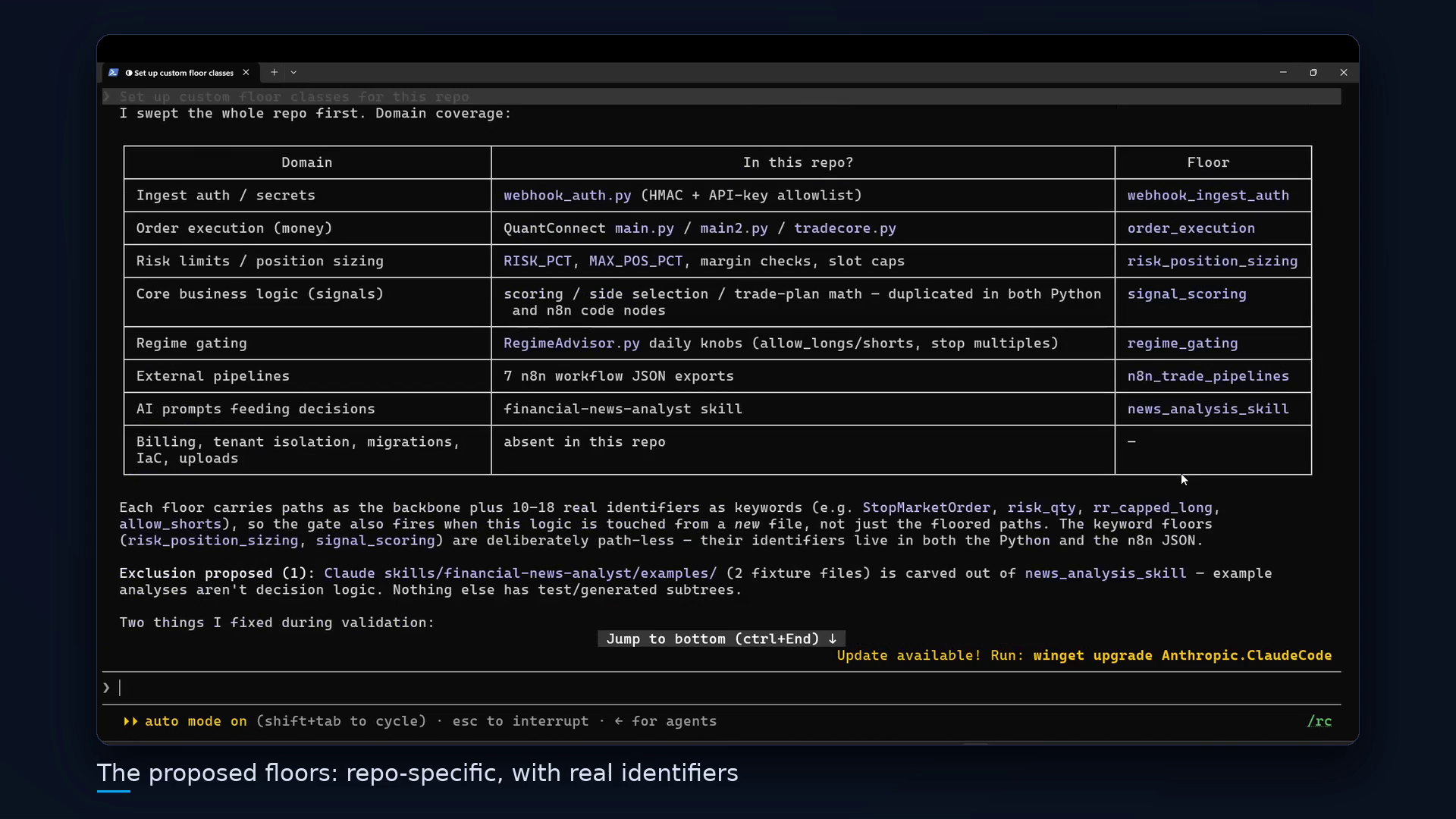
- Local review gates the agent cannot silently skip on high-risk changes, with a full release ladder for false positives and genuine exceptions.
- Runs across eight certified agent surfaces; any other MCP client gets the tools plus a git pre-commit fallback.
- Privacy by design: risk classification is 100% local, and what leaves your machine is a hashed fingerprint, content hashes, and category labels, never your source code or file paths.
- Bring Your Own Keys and Bring Your Own Models: seat your own or self-hosted models alongside the frontier panel, or route inference through your own cloud account.
Use Cases
- Gate an AI coding agent's riskiest changes: auth, payments, migrations, and deleted safety controls get a four-model review before the write or commit happens
- Catch what a single-model reviewer misses: four independently trained models from four vendors argue out disagreements, so findings do not share the author model's blind spots
- Protect production from autonomous agents: hard review floors the agent cannot silently skip, with a logged human-visible override as the only path through
- Define custom risk floors per repo: tax rules, pricing math, dosing logic, or whatever your codebase considers catastrophic, in one committed config file
- Review before the PR exists: agents often write and commit before a human opens a pull request; the gate fires inside the agent loop, upstream of PR-stage tools
- Give vibe coders a senior reviewer: solo builders shipping with Claude Code or Cursor get independent judgment on code they cannot fully evaluate themselves
- Audit high-stakes decisions beyond diffs: designs and architecture choices can be panel-reviewed before the agent executes them
- Second opinions on demand: a fast multi-model synthesis when you want a cheap sanity check instead of a full review

Comments


Hi, I'm Vivek, founder of TruVerifAI. Panel Review started with a simple question: if an AI wrote the code, why would you trust one AI to review it? A single reviewer often shares blind spots with the model that wrote the change. So we use four frontier models from four different companies: OpenAI, Anthropic, Google, and xAI. Each reviews independently, and where they disagree they argue it through, so a finding survives cross-examination instead of being one model's opinion. In our own production use, no single model caught everything; the panel did noticeably better. The client is open source and MIT licensed, setup is npx and about a minute, and 50 credits are free for life. How do you review what your agents write today? Ask me anything, including the uncomfortable questions.
If you do QA or dev work, you know the pain of needing realistic phone numbers for testing. Random Mobile Number is a free in-browser tool that generates valid, correctly formatted mobile numbers for 200+ countries — complete with carrier networks, area codes, and proper E.164 formatting. What sets it apart is that everything runs locally in your browser: no sign-up, nothing stored on any server. You can generate single numbers, line-by-line lists, or bulk batches up to 5,000 with full metadata, and export straight to Excel or CSV. It covers country-specific numbering rules, US state area codes, and major cities worldwide. Check it out here: https://www.randommobilenumber.com For teams doing form validation, CRM demos, or Cypress/Selenium automation, it removes the "we ran out of test numbers" bottleneck entirely. The numbers follow real telecom formatting rules, so they behave like real ones in validation flows without being tied to real people. Simple, fast, and free — a solid addition to any tester's toolkit.

Cross-vendor review matches what I've seen in practice: when I have a model from a different vendor check work my coding agent produced, it catches things a same-model pass glosses over. Two questions: how do you keep cost predictable when four frontier models deliberate on a large diff? Is there a per-review ceiling, or a cheap first pass before the full panel? And can the custom risk floors be scoped by file path, say anything touching pricing logic, rather than only by type of change?

The line that made me look twice: risk classification is local and only hashes leave the machine. That works for deciding whether to escalate, but the review itself means four vendors reading the change. Worth saying plainly what leaves at that step (the diff only, or surrounding files too?), because the people gating auth and payment code are exactly the ones who will ask. To answer your question: I'm a solo founder shipping with a coding agent, and the miss that worried me most was a check that quietly never made it into a server action. A model reviewing its own diff rarely flags what isn't there, so that's the case I'd want a panel for.
The local-risk-classification plus hashed-fingerprint design is the right call, we've seen teams refuse to route diffs through third-party reviewers over secret-leakage concerns, so keeping the blast radius on-machine matters. Curious how the panel resolves disagreement across the four models: is it majority vote with a quorum, or does one dissenting panelist escalate to a human by default? For API work I'd love to see the MCP pre-commit gate extended to OpenAPI diff checks, like flagging breaking schema changes before the panel even convenes.

The release ladder for false positives is the part I'd test first. On a repo where a risky-looking pattern is deliberate (say a migration that drops a column on purpose), does an approved exception stick, so the panel doesn't flag the same thing again on the next commit? And is the reason for the override kept with it, so whoever reviews later, human or model, can see why it was let through?
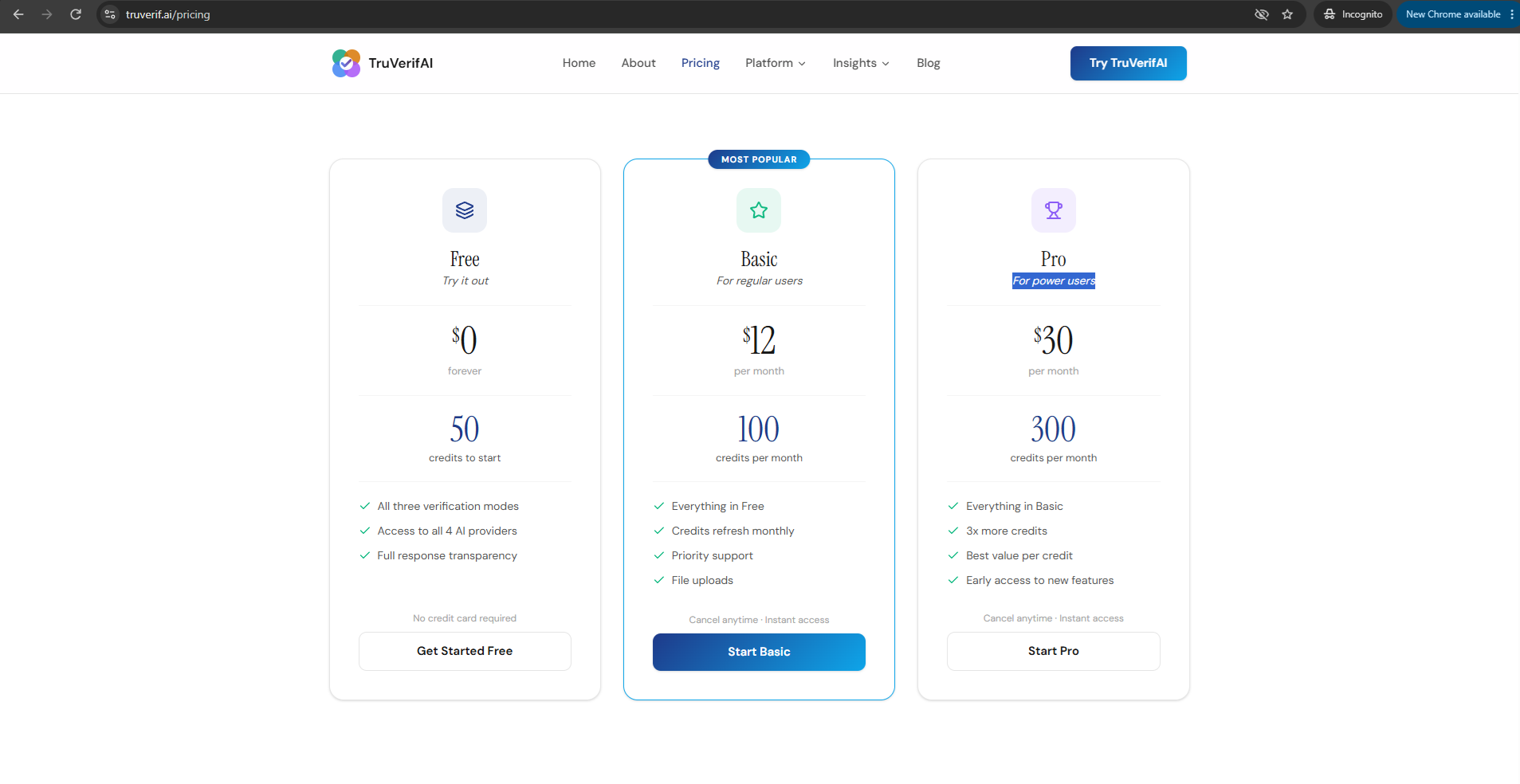
The part I found most interesting on truverif.ai is the fail-open design: if the review server is down, a commit that touched one of the thirteen floor categories (auth, secrets, destructive migrations) still goes through with a notice. For teams that arm the gates precisely because of those categories, is there a per-category fail-closed option, or a way to require a human sign-off when the panel is unreachable? One pricing note: the page lists credits per mode for the web app (about 1, 2.5 and 5) and says MCP calls bill the same way, but it never states what one audit or deliberate call costs, so it is hard to tell how many reviews the 50 free credits actually cover.
Premium Products










































Sponsors
Buy

Makers
Makers
Comments
Hi, I'm Vivek, founder of TruVerifAI. Panel Review started with a simple question: if an AI wrote the code, why would you trust one AI to review it? A single reviewer often shares blind spots with the model that wrote the change. So we use four frontier models from four different companies: OpenAI, Anthropic, Google, and xAI. Each reviews independently, and where they disagree they argue it through, so a finding survives cross-examination instead of being one model's opinion. In our own production use, no single model caught everything; the panel did noticeably better. The client is open source and MIT licensed, setup is npx and about a minute, and 50 credits are free for life. How do you review what your agents write today? Ask me anything, including the uncomfortable questions.
If you do QA or dev work, you know the pain of needing realistic phone numbers for testing. Random Mobile Number is a free in-browser tool that generates valid, correctly formatted mobile numbers for 200+ countries — complete with carrier networks, area codes, and proper E.164 formatting. What sets it apart is that everything runs locally in your browser: no sign-up, nothing stored on any server. You can generate single numbers, line-by-line lists, or bulk batches up to 5,000 with full metadata, and export straight to Excel or CSV. It covers country-specific numbering rules, US state area codes, and major cities worldwide. Check it out here: https://www.randommobilenumber.com For teams doing form validation, CRM demos, or Cypress/Selenium automation, it removes the "we ran out of test numbers" bottleneck entirely. The numbers follow real telecom formatting rules, so they behave like real ones in validation flows without being tied to real people. Simple, fast, and free — a solid addition to any tester's toolkit.
Cross-vendor review matches what I've seen in practice: when I have a model from a different vendor check work my coding agent produced, it catches things a same-model pass glosses over. Two questions: how do you keep cost predictable when four frontier models deliberate on a large diff? Is there a per-review ceiling, or a cheap first pass before the full panel? And can the custom risk floors be scoped by file path, say anything touching pricing logic, rather than only by type of change?
The line that made me look twice: risk classification is local and only hashes leave the machine. That works for deciding whether to escalate, but the review itself means four vendors reading the change. Worth saying plainly what leaves at that step (the diff only, or surrounding files too?), because the people gating auth and payment code are exactly the ones who will ask. To answer your question: I'm a solo founder shipping with a coding agent, and the miss that worried me most was a check that quietly never made it into a server action. A model reviewing its own diff rarely flags what isn't there, so that's the case I'd want a panel for.
The local-risk-classification plus hashed-fingerprint design is the right call, we've seen teams refuse to route diffs through third-party reviewers over secret-leakage concerns, so keeping the blast radius on-machine matters. Curious how the panel resolves disagreement across the four models: is it majority vote with a quorum, or does one dissenting panelist escalate to a human by default? For API work I'd love to see the MCP pre-commit gate extended to OpenAPI diff checks, like flagging breaking schema changes before the panel even convenes.
The release ladder for false positives is the part I'd test first. On a repo where a risky-looking pattern is deliberate (say a migration that drops a column on purpose), does an approved exception stick, so the panel doesn't flag the same thing again on the next commit? And is the reason for the override kept with it, so whoever reviews later, human or model, can see why it was let through?
The part I found most interesting on truverif.ai is the fail-open design: if the review server is down, a commit that touched one of the thirteen floor categories (auth, secrets, destructive migrations) still goes through with a notice. For teams that arm the gates precisely because of those categories, is there a per-category fail-closed option, or a way to require a human sign-off when the panel is unreachable? One pricing note: the page lists credits per mode for the web app (about 1, 2.5 and 5) and says MCP calls bill the same way, but it never states what one audit or deliberate call costs, so it is hard to tell how many reviews the 50 free credits actually cover.
Premium Products
New to Fazier?

Find your next favorite product or submit your own. Made by @FalakDigital.
Copyright ©2026. All Rights Reserved