
Oplyr
Build software by directing AI, not by typing it
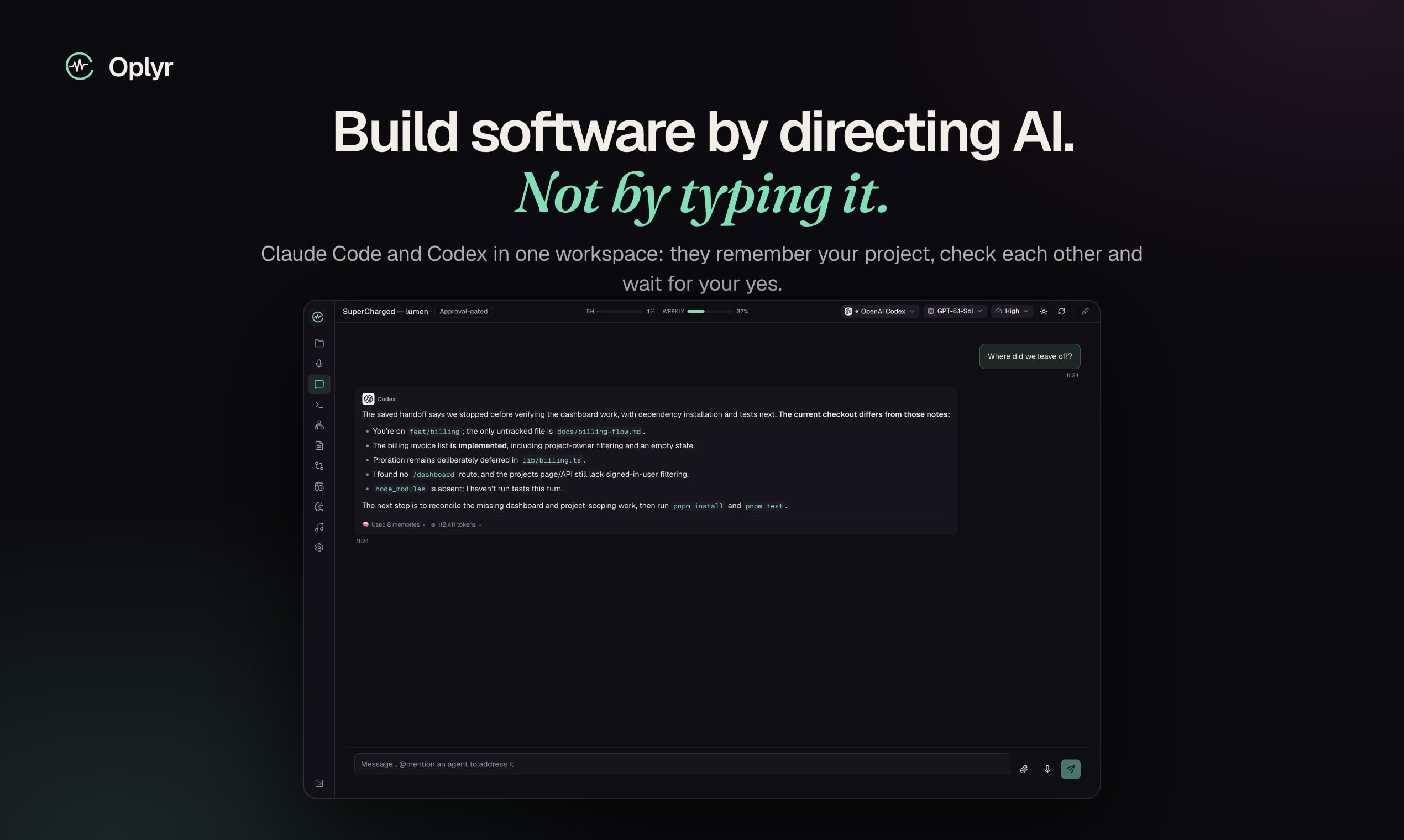
Build software by directing AI instead of typing it. Oplyr is a Mac workspace, an IDE without the editor, where Claude Code and Codex work together. They share one Brain, so the next agent already knows what the last one decided. They check each other's work, and nothing is kept until you approve it. A map explains your codebase in plain words, and voice, a terminal, your calendar and music sit beside them. For developers, and for anyone building with AI.
Features
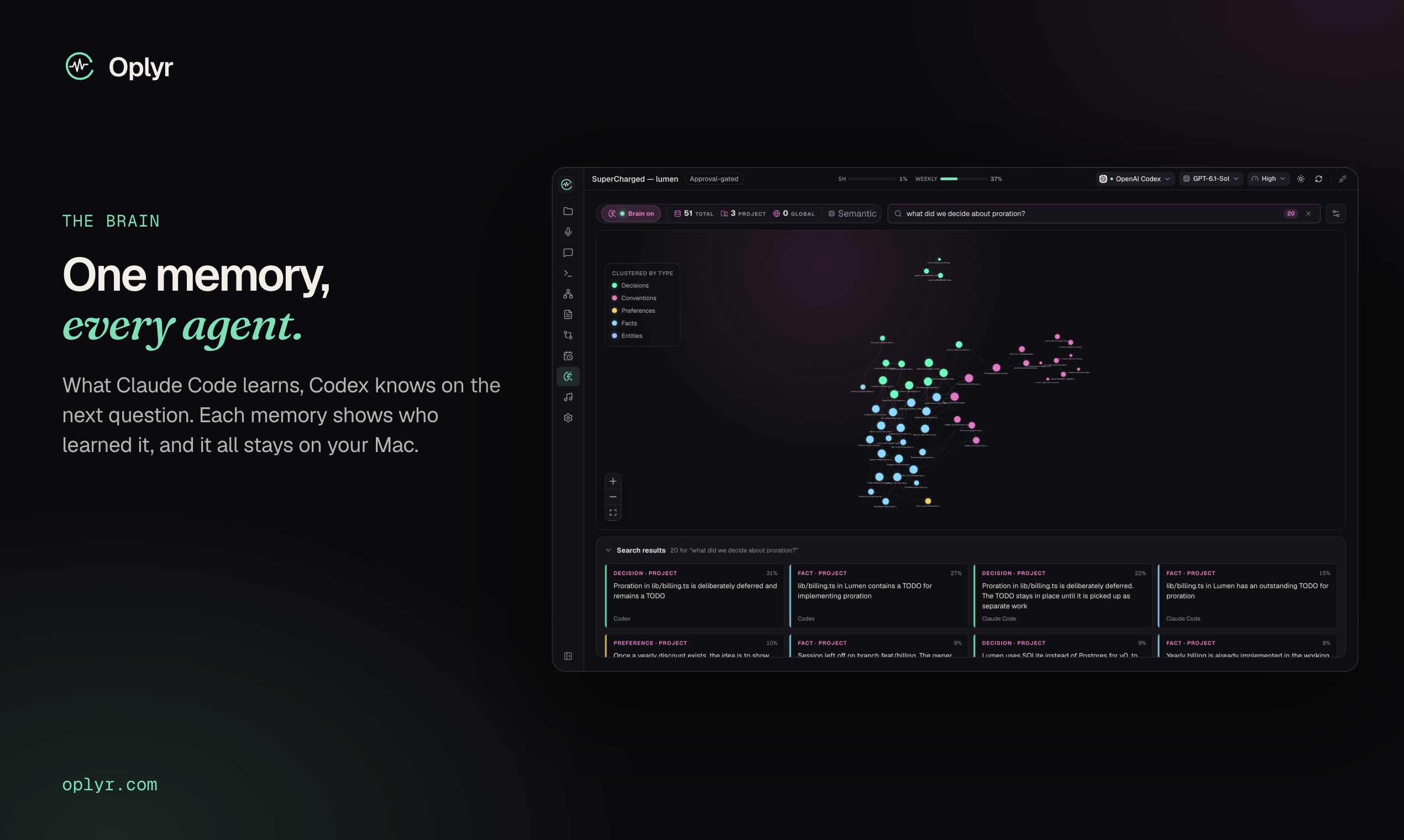
- One shared memory, the Brain, on your Mac that Claude Code and Codex both read and write
- Mention both agents in one message and each answers after reading the other
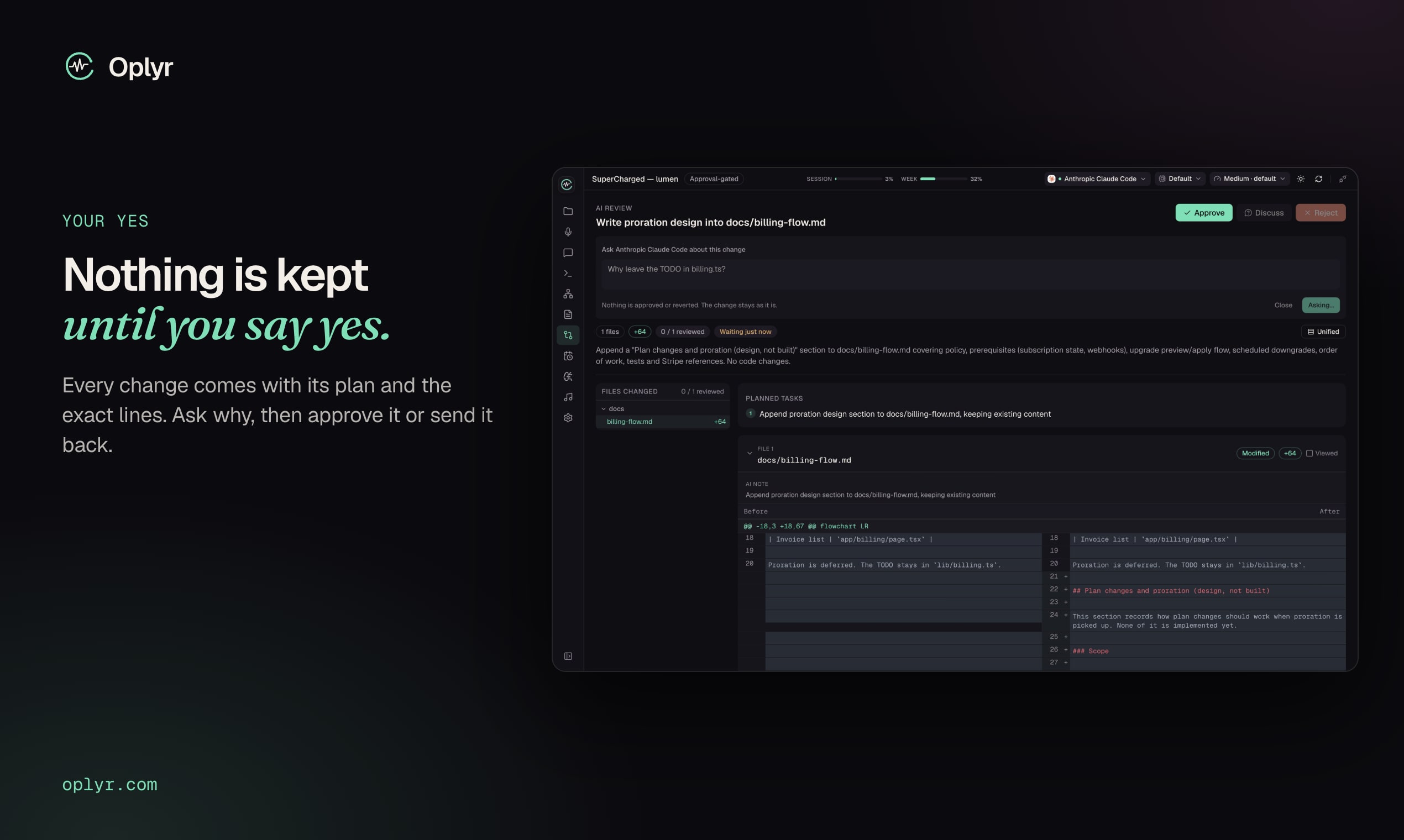
- Every edit arrives as a proposal with the exact lines, and nothing is kept until you say yes
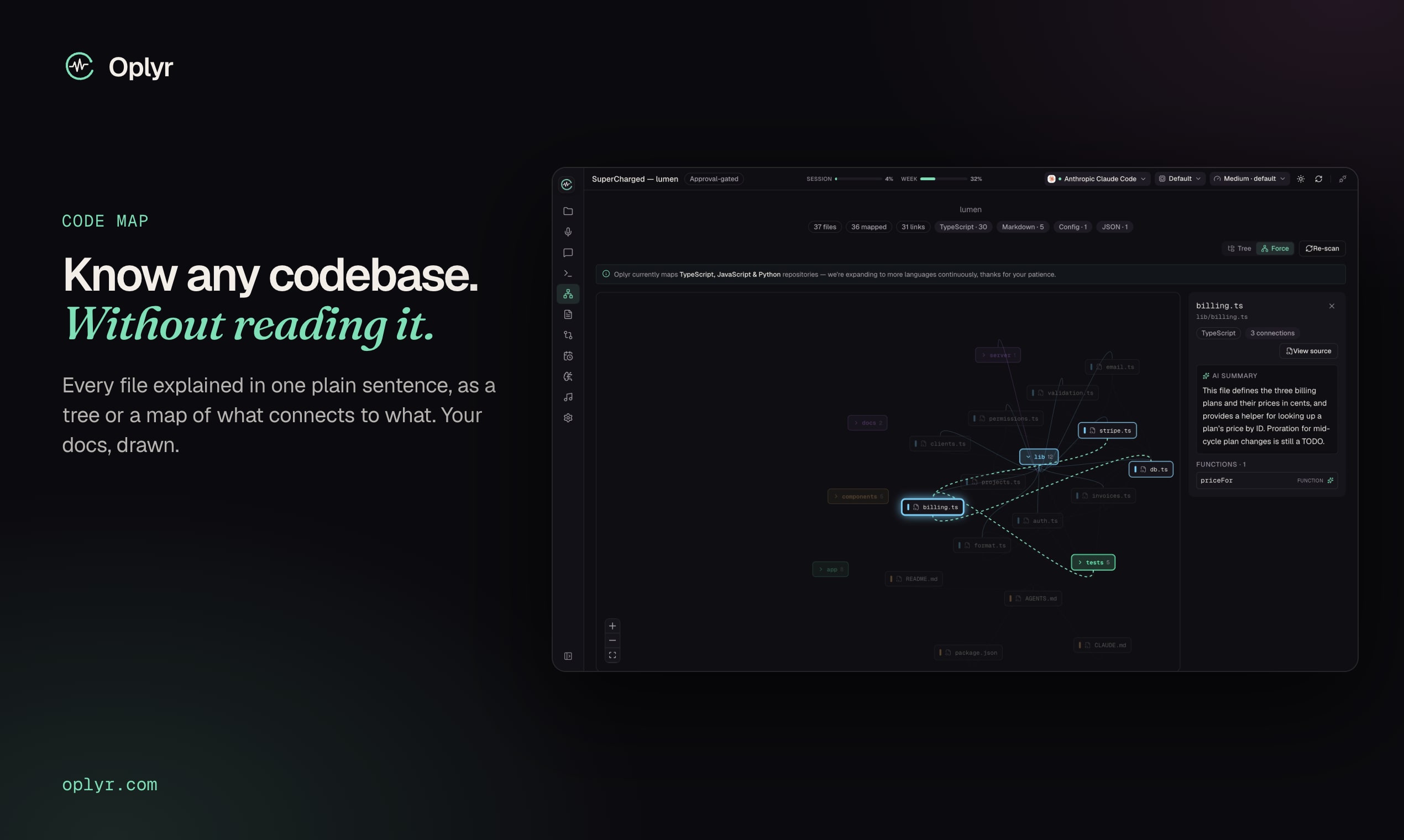
- A codebase map that explains every file in one sentence, as a tree or a graph
- Voice, dictation into any app, a real terminal, your calendar and your own playlists beside the agents
- Runs on the Claude and ChatGPT plans you already have, with no API keys
Use Cases
- Switch from Claude Code to Codex mid-task without re-explaining the project
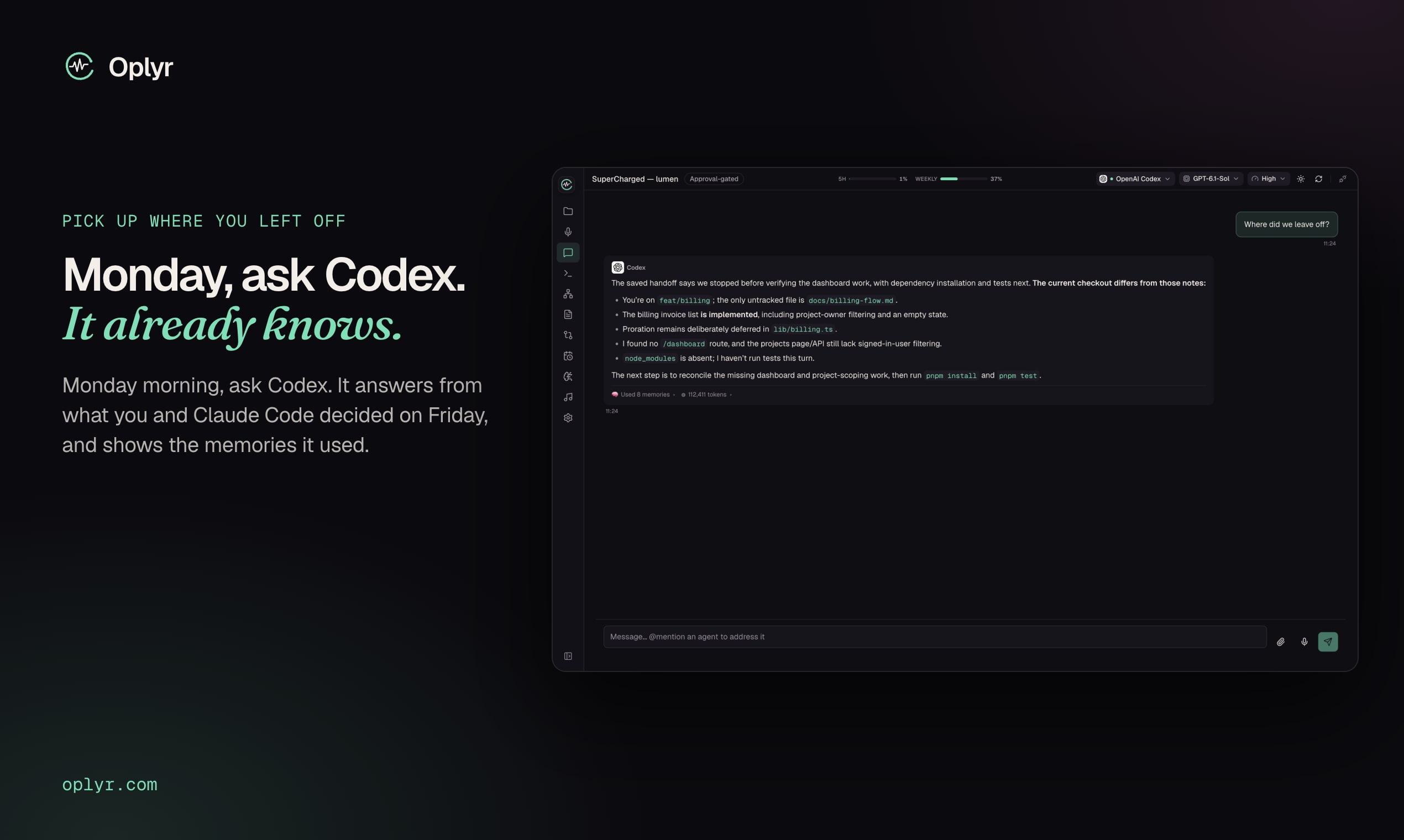
- Ask "where did we leave off?" on Monday and get an answer from Friday's real work
- Let one agent draft and the other check before anything changes
- Understand an old or unfamiliar codebase without reading every file
- Build software by directing AI, even if you don't live in a code editor

Comments


Hi Fazier, I'm the developer behind Oplyr, and I build Oplyr with Oplyr. I code with Claude Code and Codex every day, and what kept costing me time wasn't the code. It was re-explaining the project: a new session forgets what the last one decided, and switching agents means starting cold. So Oplyr puts both agents in one Mac window with one shared memory, the Brain, kept on your Mac. Ask either one where you left off and it answers from real work. Every change comes back as a proposal, and nothing is kept until you say yes. It runs on the Claude and ChatGPT plans you already have, with no API keys. Access is by request at oplyr.com, and I usually send the link the same day. What would you want a shared memory between your agents to remember? I'll be here answering everything.

To your question: the why behind a decision, not just the decision. I run a few Claude Code sessions on one product and keep a decisions log in the repo that every session reads first, with my exact words and what each decision replaced. What still breaks is an agent finding an old decision and quietly working around it instead of flagging the conflict. Does the Brain keep superseded decisions linked to whatever replaced them, or only the latest state?

Premium Products


































Makers
Makers
Comments
Hi Fazier, I'm the developer behind Oplyr, and I build Oplyr with Oplyr. I code with Claude Code and Codex every day, and what kept costing me time wasn't the code. It was re-explaining the project: a new session forgets what the last one decided, and switching agents means starting cold. So Oplyr puts both agents in one Mac window with one shared memory, the Brain, kept on your Mac. Ask either one where you left off and it answers from real work. Every change comes back as a proposal, and nothing is kept until you say yes. It runs on the Claude and ChatGPT plans you already have, with no API keys. Access is by request at oplyr.com, and I usually send the link the same day. What would you want a shared memory between your agents to remember? I'll be here answering everything.
To your question: the why behind a decision, not just the decision. I run a few Claude Code sessions on one product and keep a decisions log in the repo that every session reads first, with my exact words and what each decision replaced. What still breaks is an agent finding an old decision and quietly working around it instead of flagging the conflict. Does the Brain keep superseded decisions linked to whatever replaced them, or only the latest state?
Premium Products
New to Fazier?

Find your next favorite product or submit your own. Made by @FalakDigital.
Copyright ©2026. All Rights Reserved