
OnSkillDemand
Structured interviews, evidence-based hiring
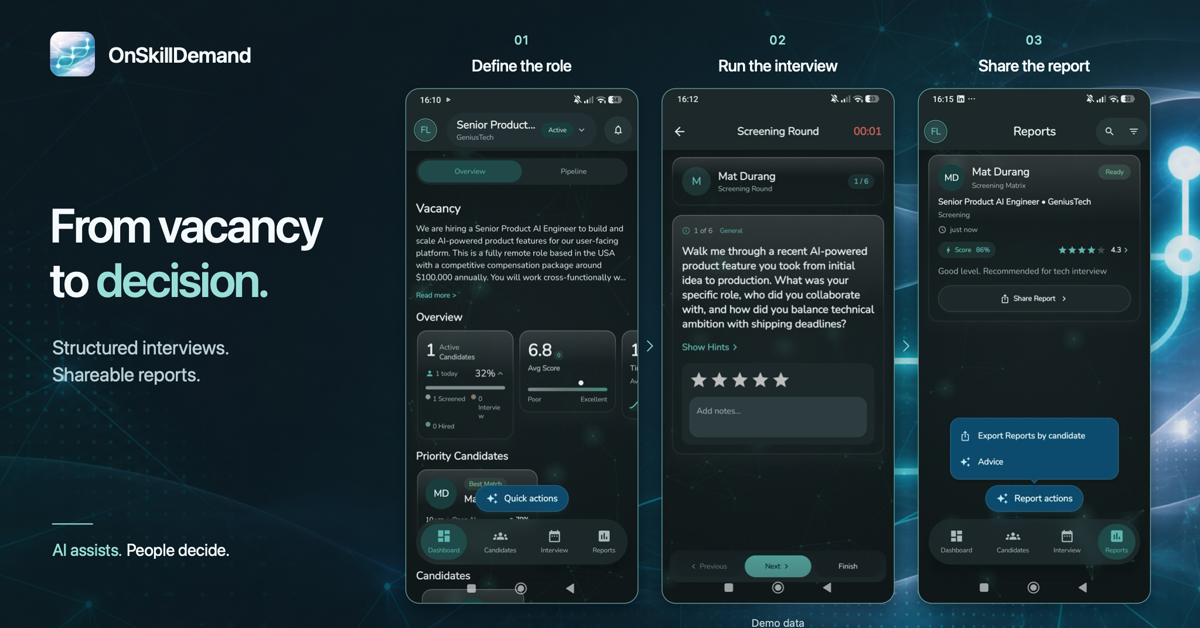
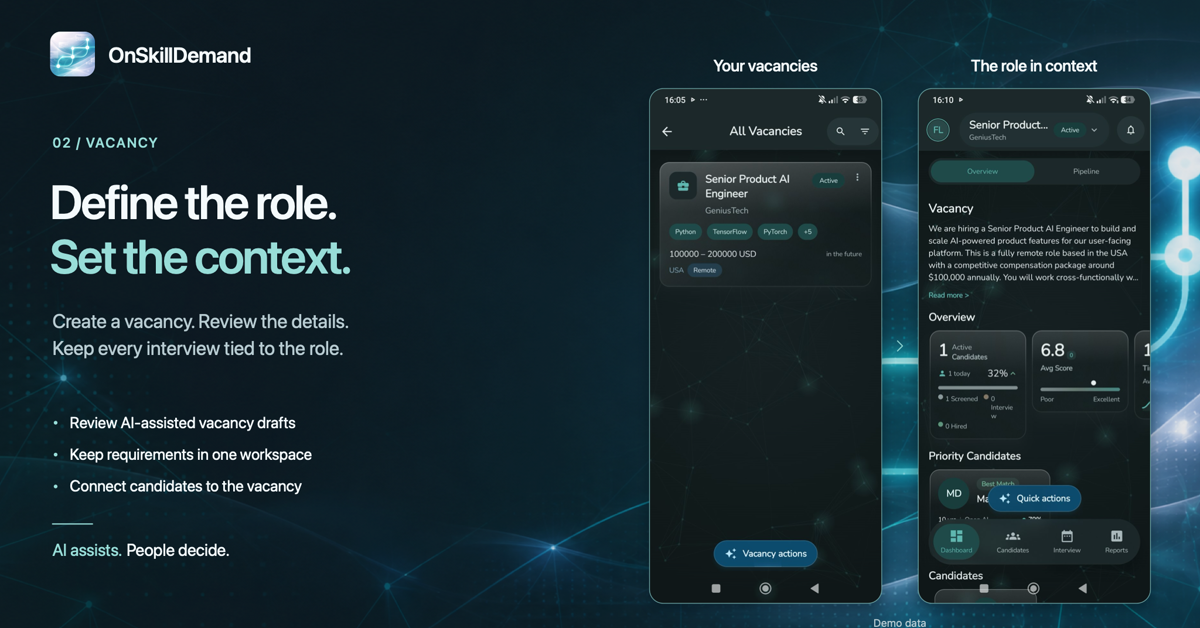
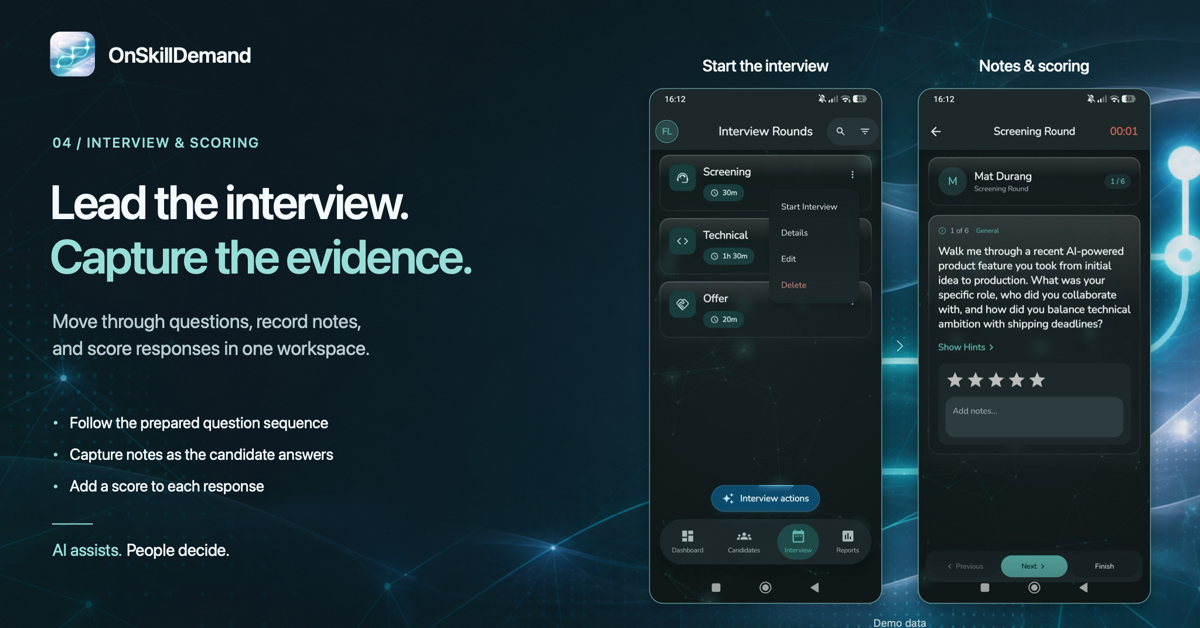
OnSkillDemand is an AI-assisted workspace for structured technical interviews. It keeps role requirements, candidates, interview rounds, questions, notes, evidence, scores, and reports in one place so teams can compare candidates consistently. AI helps prepare and organize the work; recruiters and interviewers make every evaluation and final hiring decision.
Features
• Vacancy-based interview workspaces
• AI-assisted, editable questions and answer guidance
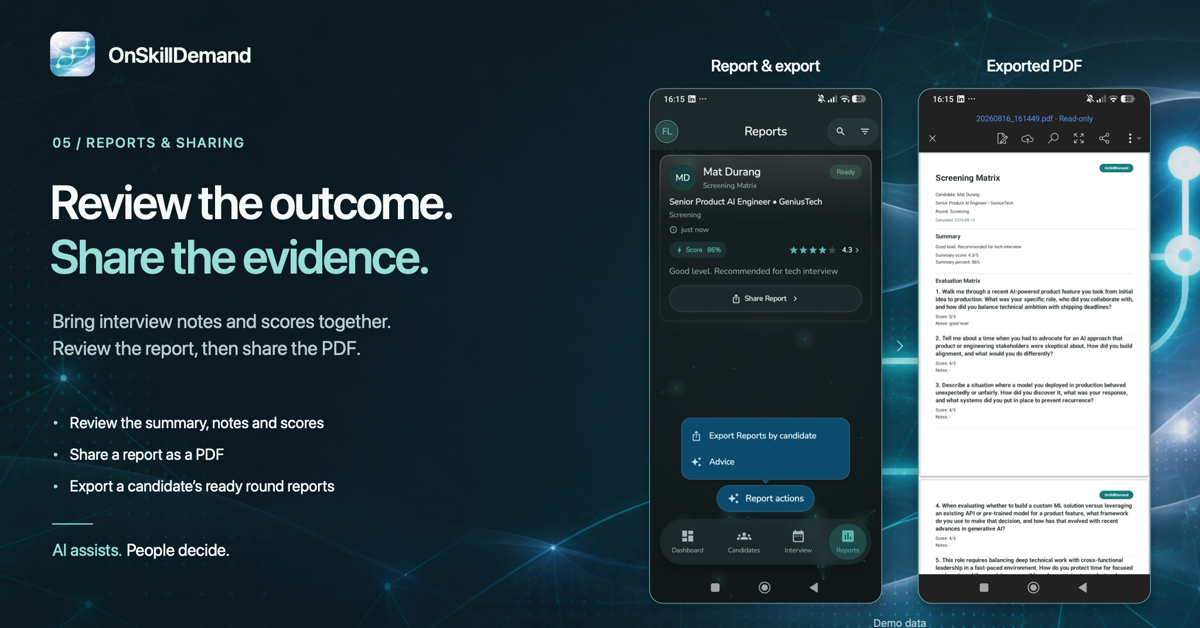
• Structured notes, evidence, and scoring
• Consistent candidate comparison across rounds
• Shareable reports and PDF exports
• iOS and Android apps
Use Cases
• Plan structured technical interviews
• Keep interviewers aligned across hiring rounds
• Replace scattered notes and gut-feel decisions
• Compare candidates against role requirements
• Create auditable hiring evidence and reports

Comments


We built OnSkillDemand because too many interview decisions still depend on scattered notes and gut feeling. Our goal is to make every stage structured and evidence-based while keeping people responsible for each evaluation and the final decision. We’d love feedback from recruiters, hiring managers, and technical interviewers: what part of your current interview workflow is hardest to keep consistent?
Keeping AI on prep and leaving every score to a person is the right split. How long do candidate notes and evidence stay in a workspace after a vacancy closes? Teams hiring in the EU usually need a retention window plus a way to delete one candidate's data on request, so a per-candidate delete or a retention setting would make this easier to adopt.

Tying every score back to a role requirement should make debiasing interviews much easier, since the evidence sits right next to the rating instead of in someone's head. Auditable PDF reports are a nice touch for compliance-heavy teams — I'd be curious how it handles panel interviews where several interviewers score the same candidate independently.
Keeping editable AI-generated questions separate from human scoring is a useful distinction. How do you version the rubric when a role's requirements change mid-process? Preserving the exact question and scoring guidance used for each interview in the exported report would help teams compare candidates fairly.
Structured interviews are one of the most reliable predictors of job performance, so centralizing the process in one tool makes a lot of sense. I would love to see how the scoring rubrics handle calibration across multiple interviewers — that is typically where bias creeps back in even with a structured format.






Premium Products
















































Sponsors
Buy
Awards
View all
Awards
View allMakers
Makers
Comments
We built OnSkillDemand because too many interview decisions still depend on scattered notes and gut feeling. Our goal is to make every stage structured and evidence-based while keeping people responsible for each evaluation and the final decision. We’d love feedback from recruiters, hiring managers, and technical interviewers: what part of your current interview workflow is hardest to keep consistent?
Keeping AI on prep and leaving every score to a person is the right split. How long do candidate notes and evidence stay in a workspace after a vacancy closes? Teams hiring in the EU usually need a retention window plus a way to delete one candidate's data on request, so a per-candidate delete or a retention setting would make this easier to adopt.
Tying every score back to a role requirement should make debiasing interviews much easier, since the evidence sits right next to the rating instead of in someone's head. Auditable PDF reports are a nice touch for compliance-heavy teams — I'd be curious how it handles panel interviews where several interviewers score the same candidate independently.
Keeping editable AI-generated questions separate from human scoring is a useful distinction. How do you version the rubric when a role's requirements change mid-process? Preserving the exact question and scoring guidance used for each interview in the exported report would help teams compare candidates fairly.
Structured interviews are one of the most reliable predictors of job performance, so centralizing the process in one tool makes a lot of sense. I would love to see how the scoring rubrics handle calibration across multiple interviewers — that is typically where bias creeps back in even with a structured format.
Premium Products
New to Fazier?

Find your next favorite product or submit your own. Made by @FalakDigital.
Copyright ©2026. All Rights Reserved