OffCode tor chat
Tor Chat is designed to make secure self-hosting simple
Setting up your own self-hosted chat server has never been this easy. No port forwarding, no cloud account, and no complicated setup.
OffCode Tor Chat is designed to make secure self-hosting simple.
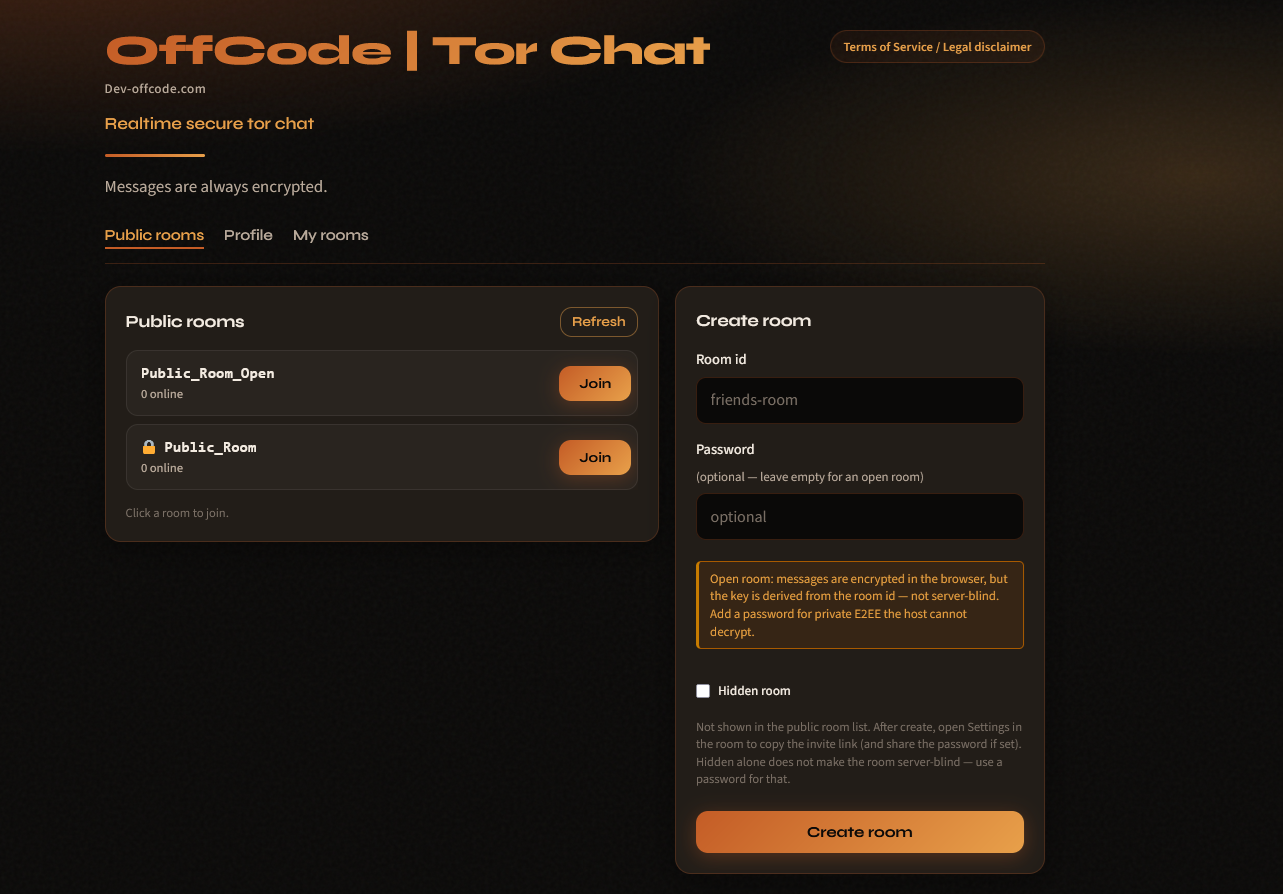
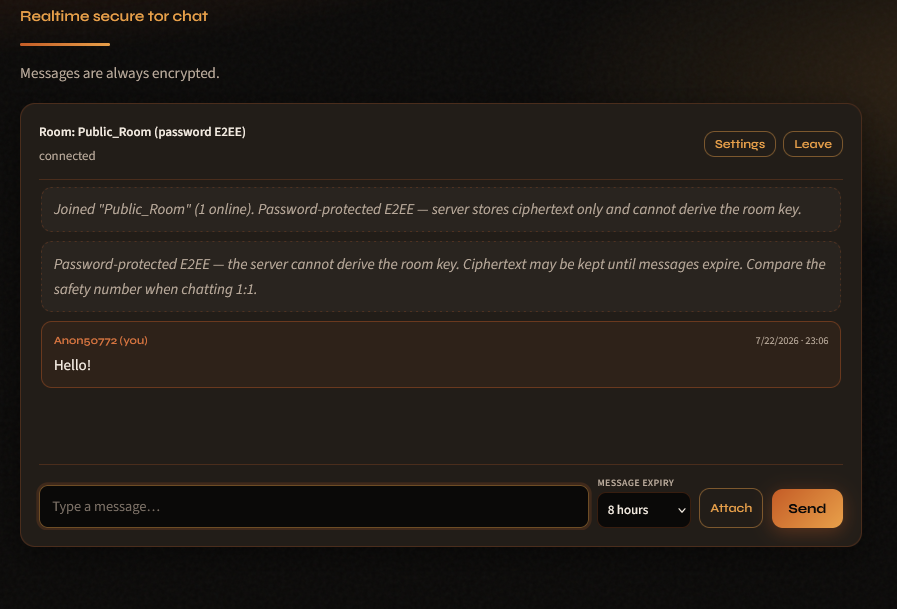
Messages are encrypted in-browser with WebCrypto AES-256-GCM (PBKDF2-v2, 600k iterations) before reaching the server — ChatServer relays and stores ciphertext only. Password rooms use separate KDF domains so the host cannot derive the key; open rooms are public encrypted channels. Guests connect through any Tor Browser — no app install, no account.
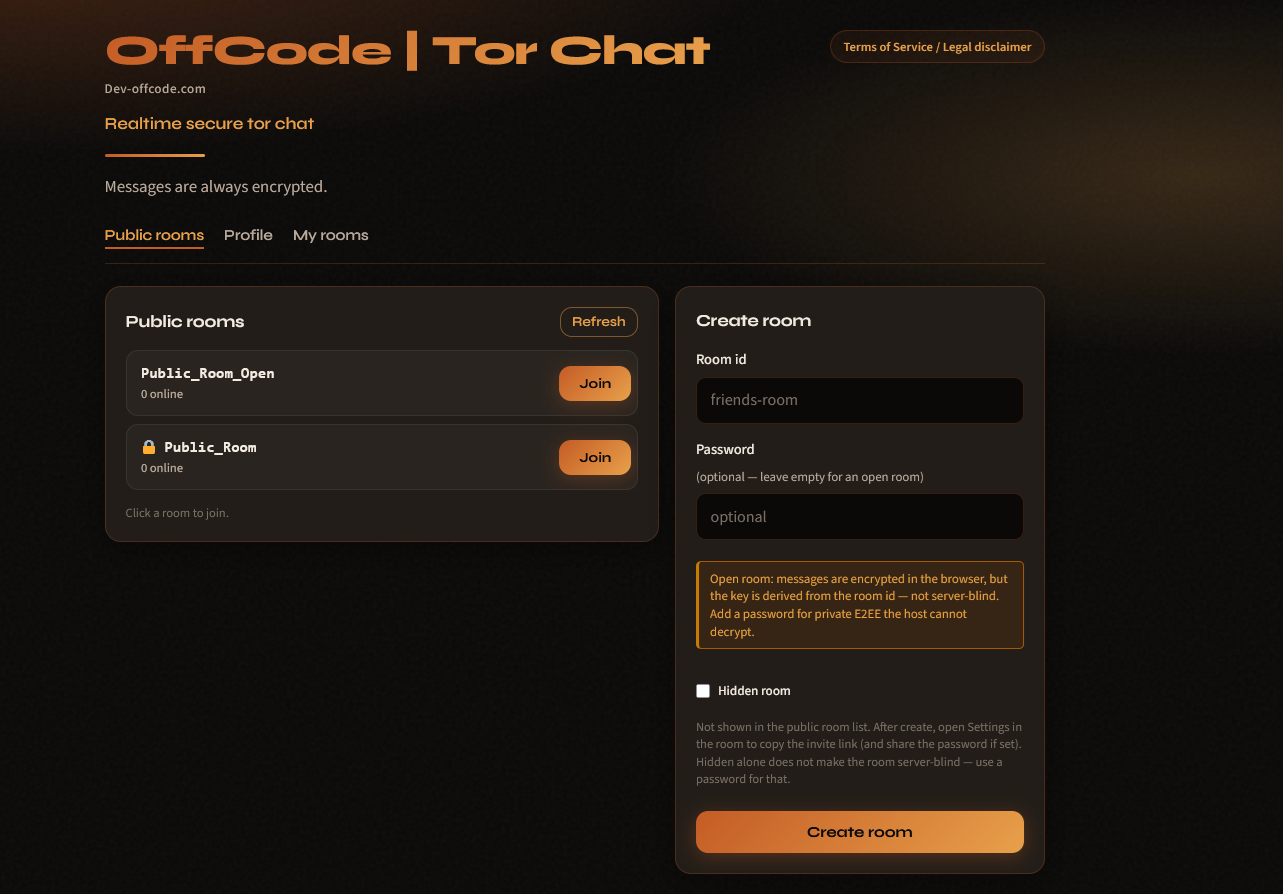
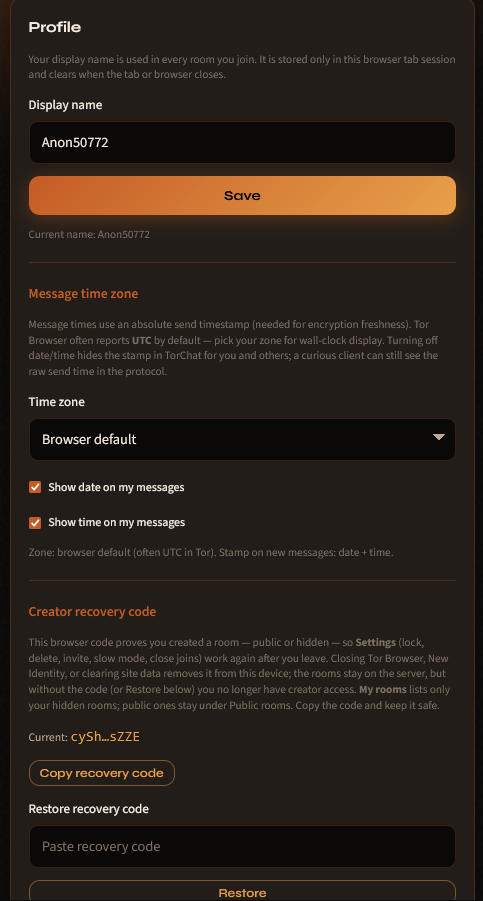
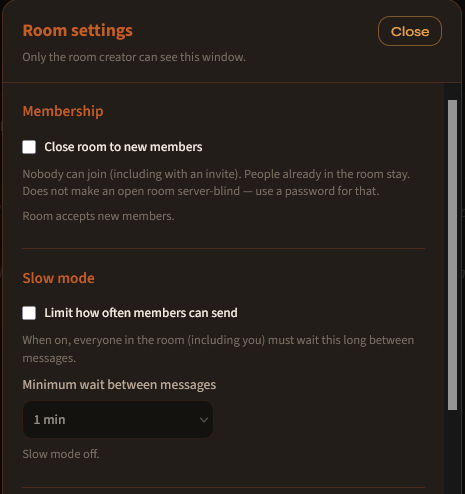
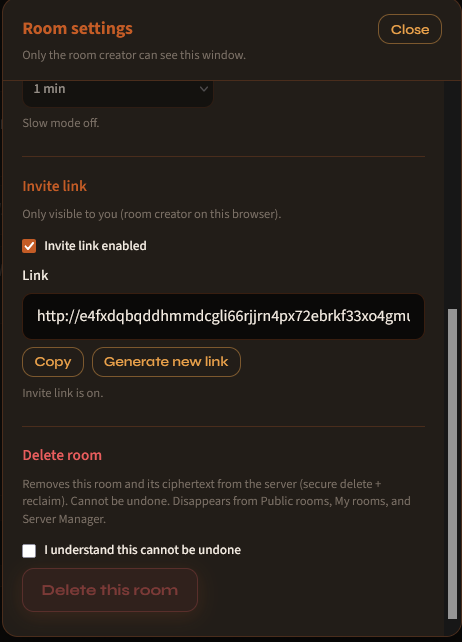
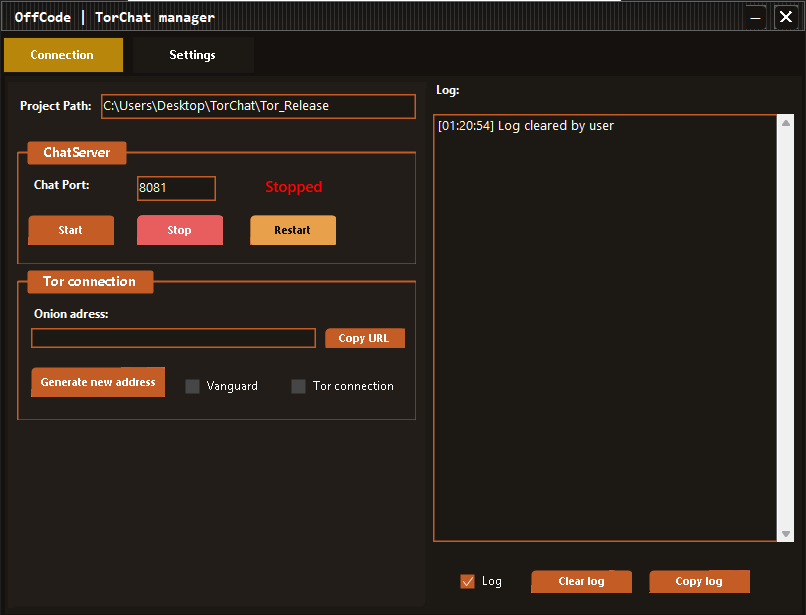
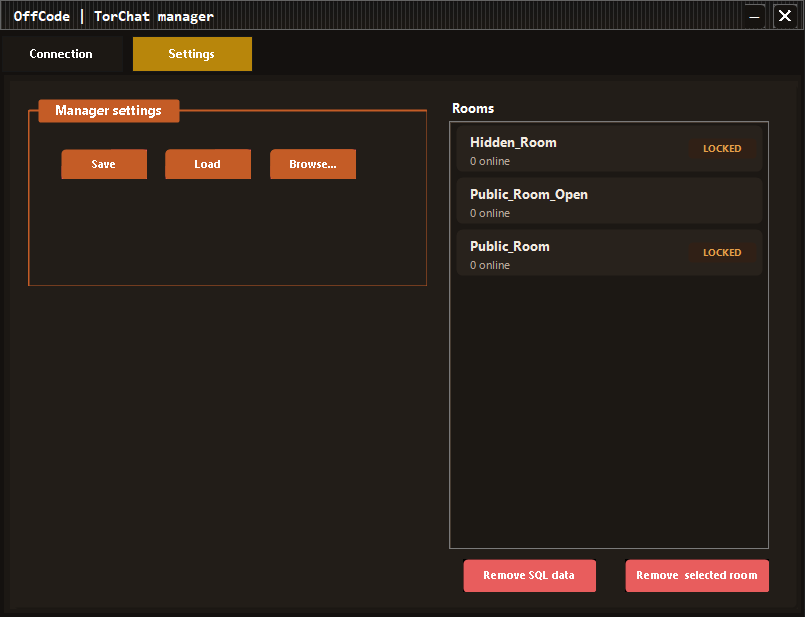
Host with Server Manager on Windows, or headless Docker (ChatServer + Tor HS). Password rooms are server-blind E2EE (the host cannot derive the room key). Open rooms still encrypt in the browser, but the key is derived from the room id: intentional public channels. Hidden rooms stay off the public list and use invite links; add a password for private E2EE. Creators get Settings for close joins, slow mode, lock later, and delete room, plus a Profile recovery code (My rooms for hidden). Required message TTL, E2EE attachments, and optional Full Vanguards complete the stack.
Features
Tor-only hosting
ChatServer binds 127.0.0.1 only. Tor Expert Bundle publishes a v3 .onion and forwards VirtualPort 80 (and the app port) to localhost; no clearnet chat listener. Optional Docker compose: ChatServer + Tor (no host ports).
- HiddenServiceVersion 3, ClientOnly 1, SafeLogging 1
- SOCKS disabled on the HS process (SOCKSPort 0)
- Open in Tor Browser: http://ADDRESS.onion/
- Client clearnet banner if the page host is not .onion / localhost
Rooms, invites & TTL
Open, password-protected, and/or hidden rooms with invite links and required per-message lifetime.
- Hidden rooms: not listed; join via ?invite= (+ password if locked)
- Message expiry required: 30 min … 1 week (default 8 h). No forever option
- E2EE attachments (images + small files) on the same SendEncrypted path
- Profile: hide date/time stamps; pick message time zone (Tor often shows UTC)
- Unique senderId per room; server binds send identity to the session
Browser encryption (pbkdf2-v2)
WebCrypto PBKDF2-HMAC-SHA256 (600 000 iterations) → AES-256-GCM. Separate v2 KDF domains for join proof vs room key on locked rooms so the server cannot derive the message key from join material.
- AAD binds roomId|senderId|nonce|clientSentAtUnixMs
- Locked: password stays in the browser — server-blind E2EE
- Open: key from torchat-open-material-v2:{roomId} — public by design
- Server stores join-proof hash as 250000:salt:hash (250k PBKDF2)
- 1:1 ECDH hybrid + safety number (3×5 decimal) for peer verify / TOFU
- No Double Ratchet yet; prefer short message retention if passwords may leak
Ciphertext storage
SQLCipher database under LocalAppData (Windows) or Docker volume. DPAPI / env key. Parameterized queries. Plaintext is never written to disk.
- Rooms + ciphertext envelopes only (encryption_version: pbkdf2-v2 / ecdh-hybrid-v1)
- Max 500 messages per room (oldest trimmed)
- Expired rows: secure_delete + WAL checkpoint / VACUUM
- Replay fingerprints + restart-gap reject via server_meta
Full Vanguards - Guard-Discovery Protection
A standard Tor Hidden Service chooses its entry (guard) nodes randomly on every circuit build. Over time a network-level adversary can watch which relays the server connects to and gradually narrow down the real server IP. This is called a guard-discovery attack and is especially dangerous for long-lived hidden services.
Use Cases
Self-host your own chat server & Best privacy

Comments


OffCode tor chat Your product has strong potential, but I found a few key improvements that could make it even better. I'd love to share my feedback and suggestions—please contact me at [email protected]
Premium Products






























Sponsors
Buy

Makers
Makers
Comments
OffCode tor chat Your product has strong potential, but I found a few key improvements that could make it even better. I'd love to share my feedback and suggestions—please contact me at [email protected]
Premium Products
New to Fazier?

Find your next favorite product or submit your own. Made by @FalakDigital.
Copyright ©2026. All Rights Reserved