
Mozonic
The AI mix studio that coaches you, not just a black box
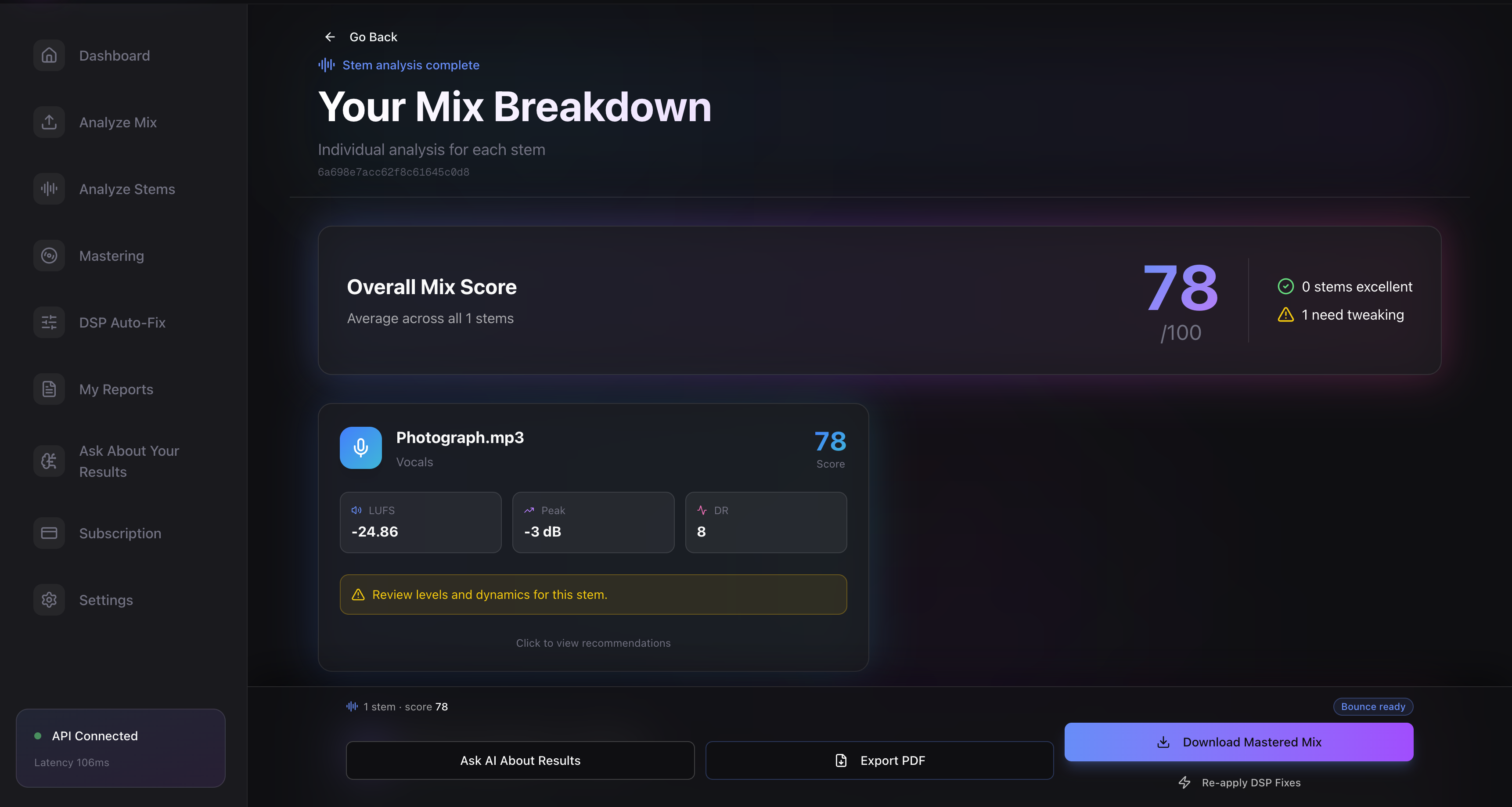
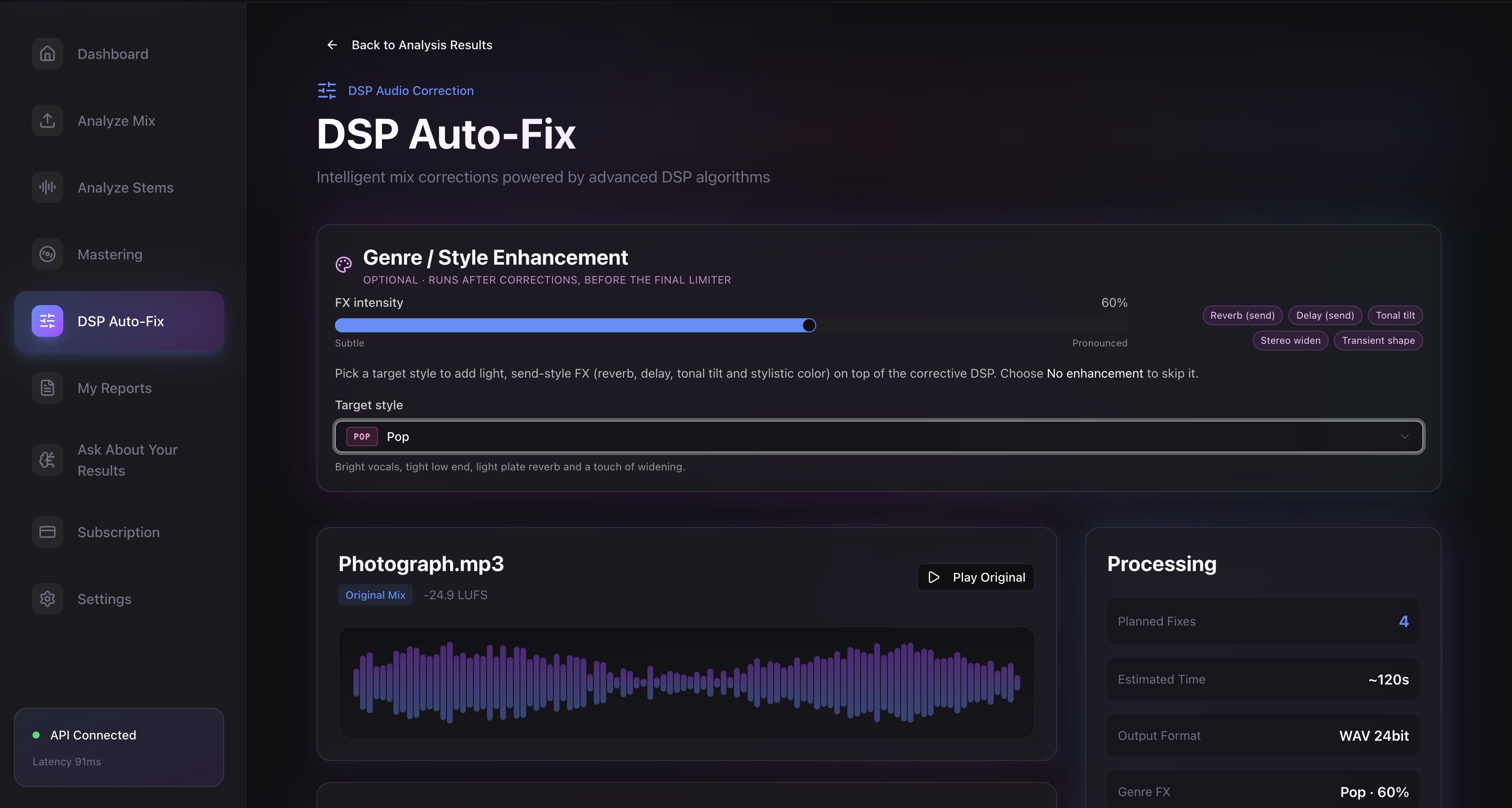
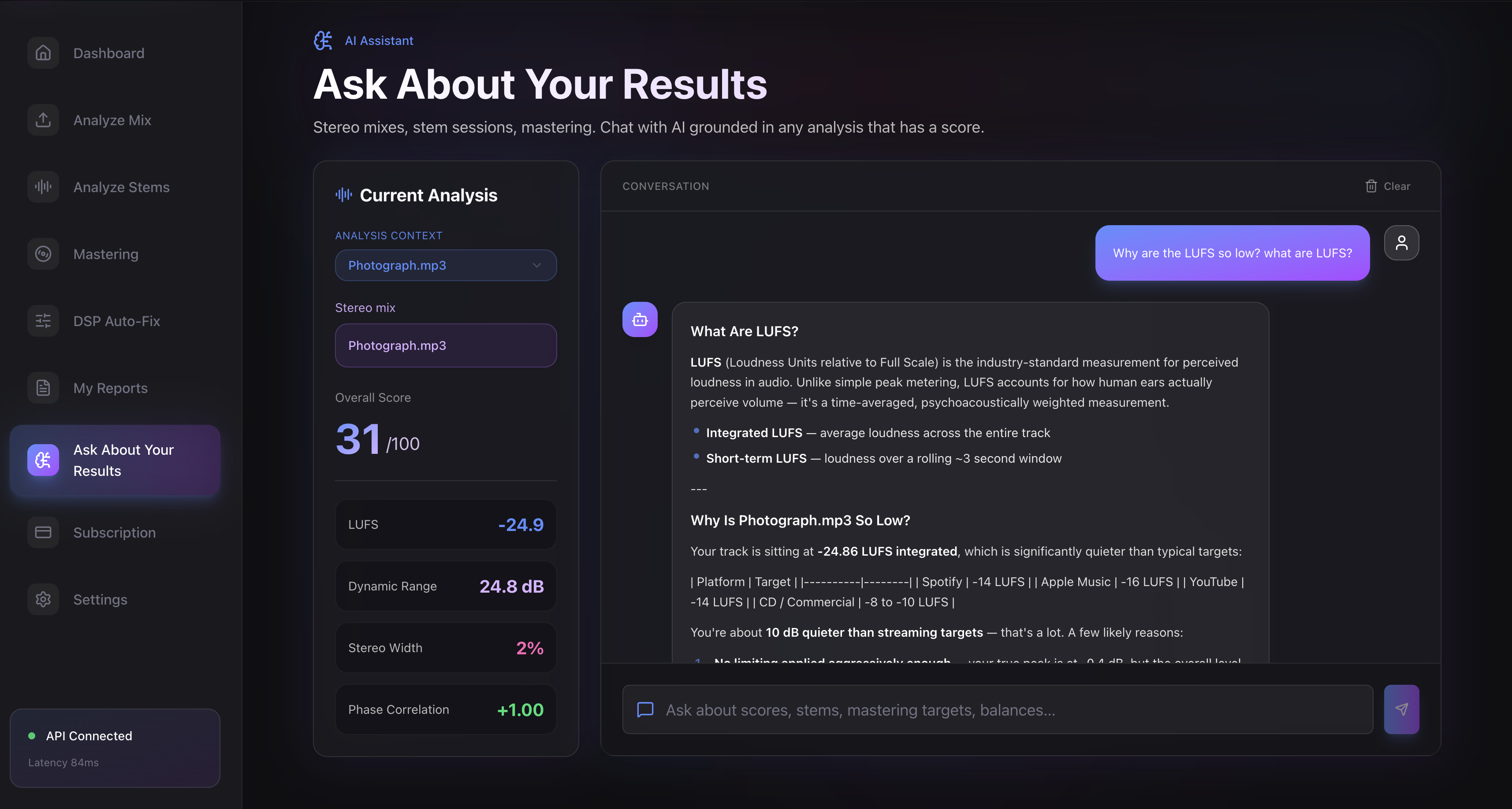
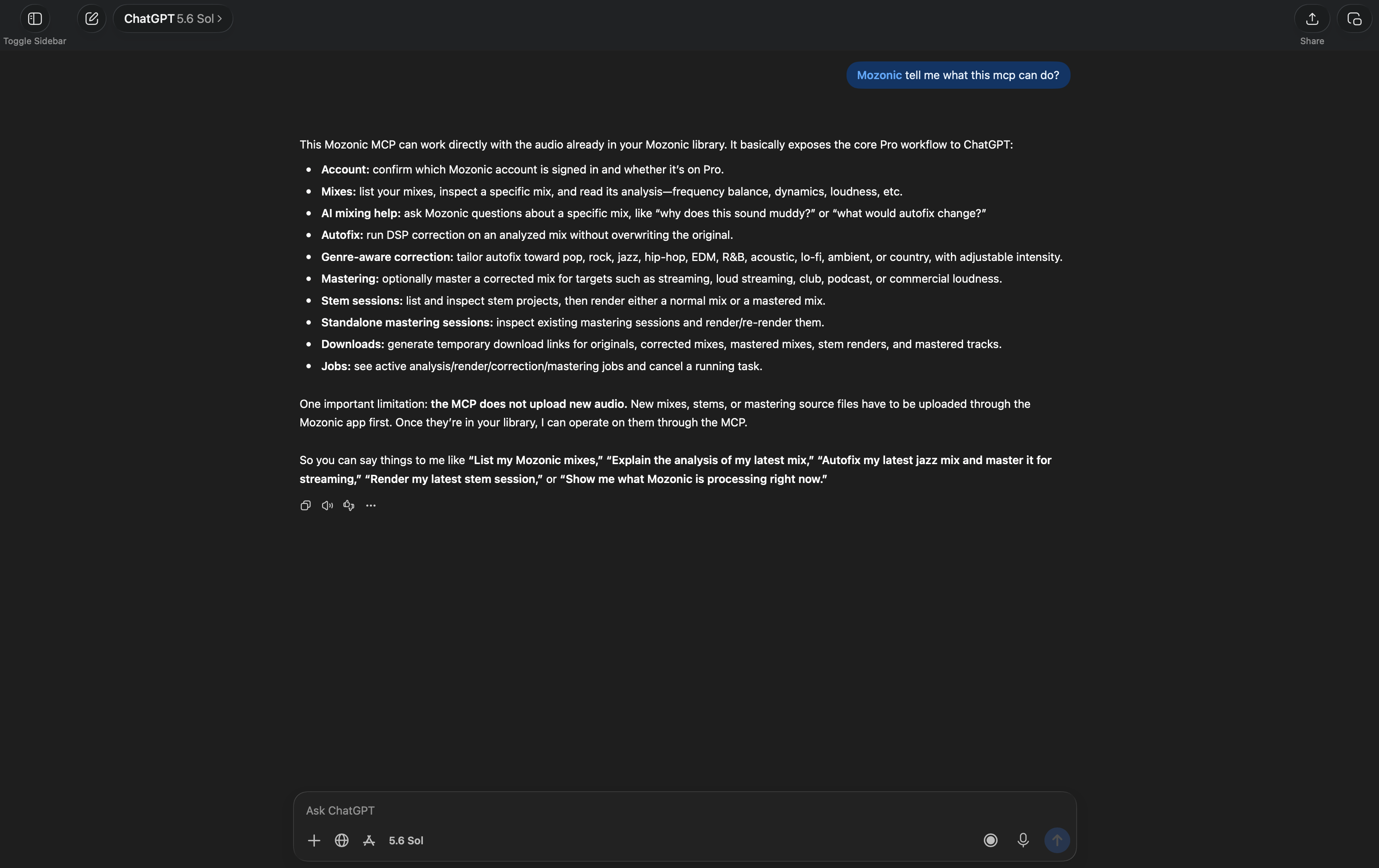
Mozonic analyzes your mix — loudness, tonal balance, stereo image, dynamics — scores it, and explains every problem in plain language instead of returning a mystery-louder file. It can apply the fixes as downloadable DSP-corrected audio, master to streaming-ready targets, and answer questions about your track through a chat grounded in its actual measurements. It's also the only tool in the space that speaks MCP, so Claude or ChatGPT can analyze your mixes directly. Web + macOS desktop app. Free plan includes 5 full analyses a month, no card required.
Pricing: Free $0 (5 analyses/mo) · Starter $12/mo (30 analyses, PDF reports) · Pro $29/mo (120 analyses, stems, mastering + DSP Auto-Fix, MCP).
Features
- Mix analysis across loudness, tonal balance, stereo image and dynamics, with an overall score
- Plain-language explanation of every problem it finds, not just numbers
- DSP Auto-Fix: apply the corrections and download the fixed audio
- Mastering to streaming-ready targets
- Ask About My Mix: chat grounded in your track's actual measurements
- Stem separation on the Pro plan
- MCP support, so Claude or ChatGPT can analyze your mixes directly
- Web app plus a macOS desktop app
Use Cases
- Work out why a mix sounds muddy, harsh or thin before you master it
- Check loudness and true peak against streaming targets before release
- Get a second opinion on a near-final mix without booking an engineer
- Pull stems out of a track you only have as a stereo bounce
- Analyze mixes from inside Claude or ChatGPT through MCP

Comments


Founder here. I built Mozonic because every AI mastering tool I tried gave me back a louder file and no idea what was wrong with the mix underneath. Mozonic measures the mix, explains the problems, and fixes them — so you actually get better at mixing. Happy to answer anything, and the free plan (5 full analyses/month) needs no card if you want to poke at it.

Explaining every problem in plain language instead of just handing back a louder file is the real differentiator here — most mastering tools optimize for "sounds better instantly" over actually teaching you why the mix was off. The MCP support is a smart move too, letting Claude or ChatGPT reason over the actual measurements rather than guessing from a description. One question: when DSP Auto-Fix applies corrections, does the chat ("Ask About My Mix") explain what changed between the original and fixed version, or is that context lost once the fix is applied?

Explaining the problem in plain language instead of returning a mystery-louder file is the real differentiator — plenty of tools make a mix sound different immediately and the mix pays for it on streaming targets later. Grounding the chat in the actual measurements is the right way to do Q&A. And MCP support is an early bet that makes sense: mix notes landing next to the rest of the session notes saves real context-switching.

The measurement-first workflow is a strong idea, especially the way Mozonic explains mix issues in plain language rather than only giving scores. The DSP Auto-Fix and MCP support also make the workflow more practical. I’m curious how you handle recommendations when a mix has conflicting issues, such as improving loudness without negatively affecting dynamics.


The integration of the Model Context Protocol is a brilliant move that differentiates this from standard automated mastering tools by letting external LLMs interpret the mix data. Providing plain-language explanations for tonal balance issues instead of just a processed file makes this a genuine learning tool for bedroom producers. Does the DSP Auto-Fix allow for selective application of suggested corrections, or is it an all-or-nothing process once the analysis is complete?

Freemium Mozonic analyzes your mix — loudness, tonal balance, stereo image, dynamics — scores it, and explains every problem in plain language instead of returning a mystery-louder file. It can apply the fixes as downloadable DSP-corrected audio, master to streaming-ready targets, and answer questions about your track through a chat grounded in its actual measurements. It's also the only tool in the space that speaks MCP, so Claude or ChatGPT can analyze your mixes directly. Web + macOS desktop app. Free plan includes 5 full analyses a month, no card required. Pricing: Free $0 (5 analyses/mo) · Starter $12/mo (30 analyses, PDF reports) · Pro $29/mo (120 analyses, stems, mastering + DSP Auto-Fix, MCP).


Scoring the mix and explaining each problem in plain language is the opposite of how most of these tools work, and it's the part that actually teaches you something — a louder file tells you nothing about why it was quiet. The MCP surface is the interesting bit to me: does it expose the raw measurements, so an assistant can reason over loudness and stereo width itself, or does it return the verdict already formed?


Premium Products



































Sponsors
Buy

Awards
View all
Awards
View allMakers
Makers
Comments
Founder here. I built Mozonic because every AI mastering tool I tried gave me back a louder file and no idea what was wrong with the mix underneath. Mozonic measures the mix, explains the problems, and fixes them — so you actually get better at mixing. Happy to answer anything, and the free plan (5 full analyses/month) needs no card if you want to poke at it.
Explaining every problem in plain language instead of just handing back a louder file is the real differentiator here — most mastering tools optimize for "sounds better instantly" over actually teaching you why the mix was off. The MCP support is a smart move too, letting Claude or ChatGPT reason over the actual measurements rather than guessing from a description. One question: when DSP Auto-Fix applies corrections, does the chat ("Ask About My Mix") explain what changed between the original and fixed version, or is that context lost once the fix is applied?
Explaining the problem in plain language instead of returning a mystery-louder file is the real differentiator — plenty of tools make a mix sound different immediately and the mix pays for it on streaming targets later. Grounding the chat in the actual measurements is the right way to do Q&A. And MCP support is an early bet that makes sense: mix notes landing next to the rest of the session notes saves real context-switching.
The measurement-first workflow is a strong idea, especially the way Mozonic explains mix issues in plain language rather than only giving scores. The DSP Auto-Fix and MCP support also make the workflow more practical. I’m curious how you handle recommendations when a mix has conflicting issues, such as improving loudness without negatively affecting dynamics.
The integration of the Model Context Protocol is a brilliant move that differentiates this from standard automated mastering tools by letting external LLMs interpret the mix data. Providing plain-language explanations for tonal balance issues instead of just a processed file makes this a genuine learning tool for bedroom producers. Does the DSP Auto-Fix allow for selective application of suggested corrections, or is it an all-or-nothing process once the analysis is complete?
Freemium Mozonic analyzes your mix — loudness, tonal balance, stereo image, dynamics — scores it, and explains every problem in plain language instead of returning a mystery-louder file. It can apply the fixes as downloadable DSP-corrected audio, master to streaming-ready targets, and answer questions about your track through a chat grounded in its actual measurements. It's also the only tool in the space that speaks MCP, so Claude or ChatGPT can analyze your mixes directly. Web + macOS desktop app. Free plan includes 5 full analyses a month, no card required. Pricing: Free $0 (5 analyses/mo) · Starter $12/mo (30 analyses, PDF reports) · Pro $29/mo (120 analyses, stems, mastering + DSP Auto-Fix, MCP).
Scoring the mix and explaining each problem in plain language is the opposite of how most of these tools work, and it's the part that actually teaches you something — a louder file tells you nothing about why it was quiet. The MCP surface is the interesting bit to me: does it expose the raw measurements, so an assistant can reason over loudness and stereo width itself, or does it return the verdict already formed?
Premium Products
New to Fazier?

Find your next favorite product or submit your own. Made by @FalakDigital.
Copyright ©2026. All Rights Reserved