
MeshCrunch
3D meshes: inspect, simplify, rebuild, and generate LODs.
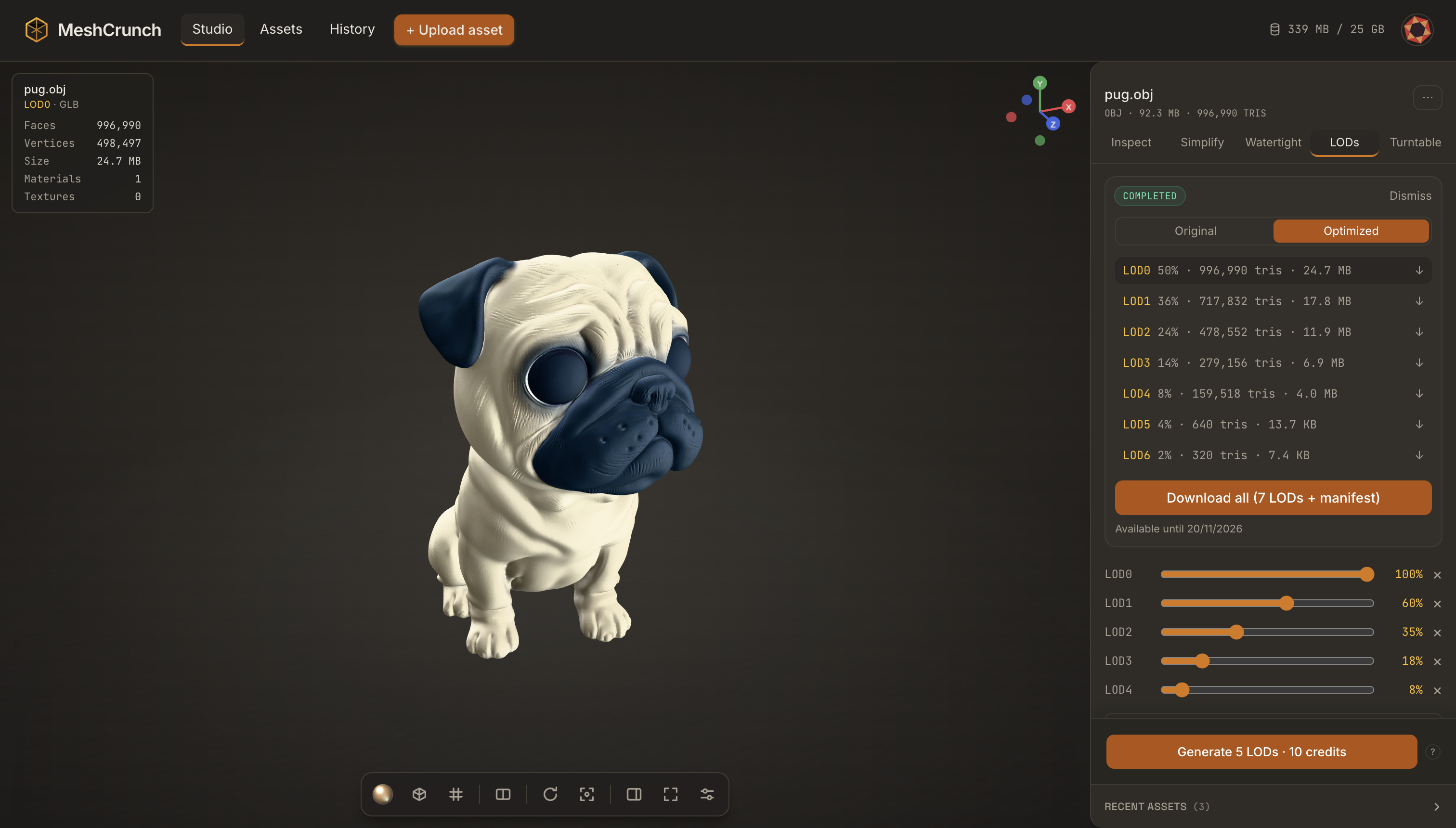
MeshCrunch is a web workspace for preparing 3D assets for delivery. Simplify high-poly models, generate LOD chains, rebuild broken geometry into a new watertight surface, inspect meshes, convert supported formats, and export turntable GIFs or MP4s. It is built for teams and creators shipping 3D assets to the web, games, XR, and 3D-print workflows.
Features
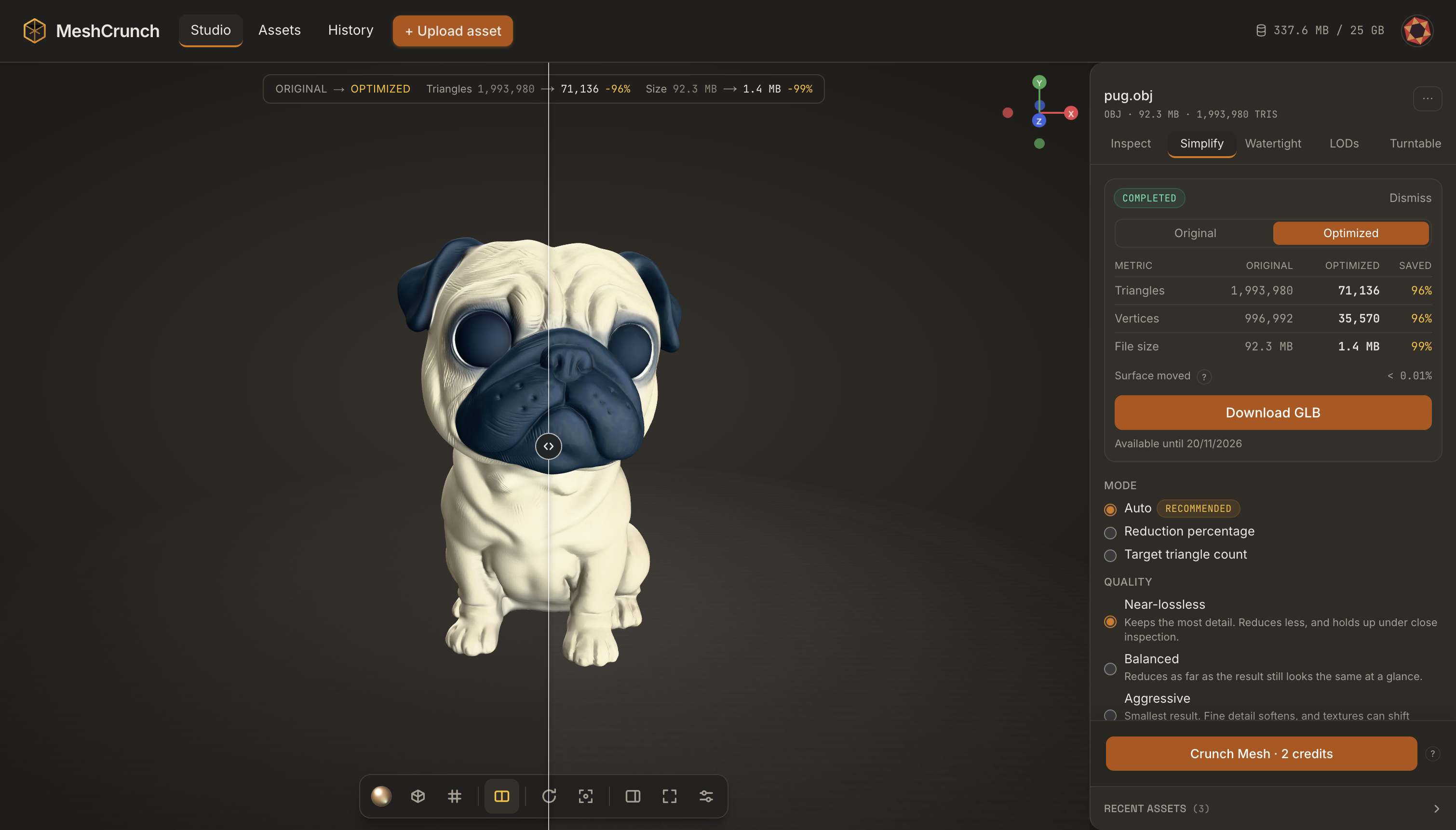
- Simplify heavy meshes while controlling triangle count
- Generate complete LOD chains from one source model
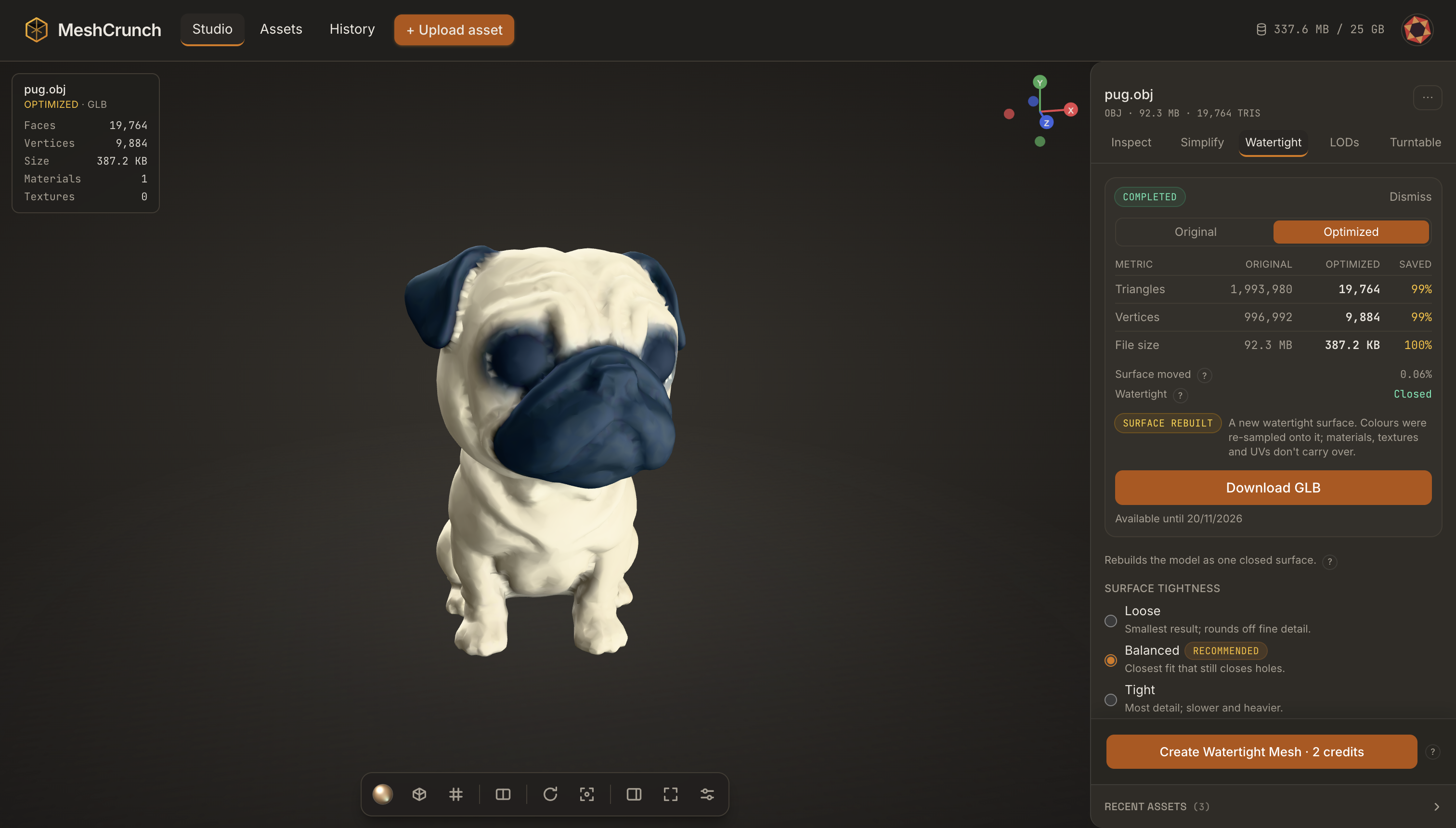
- Rebuild broken geometry into a new watertight surface
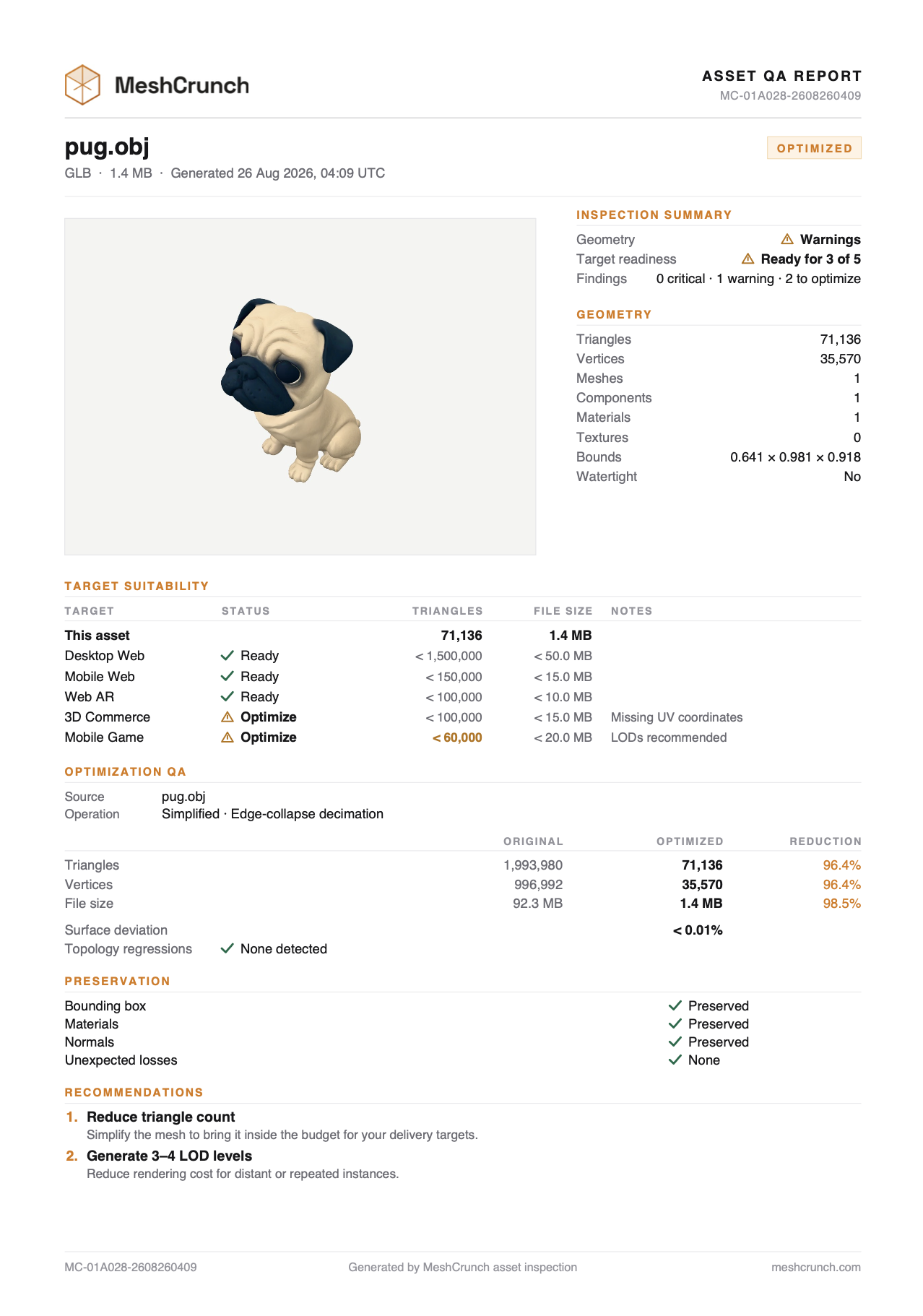
- Inspect geometry and delivery readiness before export
- Convert supported 3D model formats
- Create turntable GIFs and MP4 videos
Use Cases
- Optimize 3D assets for WebGL and Three.js experiences
- Prepare lightweight models for games, mobile, and XR
- Reduce asset size before sharing or publishing online
- Rebuild difficult geometry for downstream 3D-print workflows
- Create LOD-ready assets for real-time rendering
Fazier Deal

Comments


Hi, I’m Puneet, the maker of MeshCrunch. I built MeshCrunch after repeatedly running into the same delivery problem: a 3D model can look great, but still be too heavy for the web, a game scene, XR, or sharing with a client. MeshCrunch is designed as a focused workspace for the practical jobs around that moment—simplifying dense meshes, generating LOD chains, inspecting assets, converting supported formats, and rebuilding difficult geometry into a new watertight surface. The rebuild feature is intentionally different from simplification: it creates a new closed surface for problem geometry, so it is useful when a model needs a clean starting point for downstream workflows. I’m launching early and would genuinely value feedback from 3D artists, developers, and technical artists: which part of preparing assets for delivery takes the most time in your workflow?

Not a 3D artist myself but I build a browser-based image tool, and the part that's always eaten the most time for me is exactly what you're describing for LODs — getting file size down without visibly hurting quality, and having it hold up across weird edge-case inputs. Rebuilding broken geometry into a clean watertight surface as a separate step from simplification makes sense — most tools I've seen try to force both into the same pass. Good luck with the launch, this is a real problem to solve.

MeshCrunch Your product has strong potential, but I found a few key improvements that could make it even better. I'd love to share my feedback and suggestions—please contact me at [email protected].
Premium Products










































Fazier Deal
Sponsors
Buy
Makers
Makers
Comments
Hi, I’m Puneet, the maker of MeshCrunch. I built MeshCrunch after repeatedly running into the same delivery problem: a 3D model can look great, but still be too heavy for the web, a game scene, XR, or sharing with a client. MeshCrunch is designed as a focused workspace for the practical jobs around that moment—simplifying dense meshes, generating LOD chains, inspecting assets, converting supported formats, and rebuilding difficult geometry into a new watertight surface. The rebuild feature is intentionally different from simplification: it creates a new closed surface for problem geometry, so it is useful when a model needs a clean starting point for downstream workflows. I’m launching early and would genuinely value feedback from 3D artists, developers, and technical artists: which part of preparing assets for delivery takes the most time in your workflow?
Not a 3D artist myself but I build a browser-based image tool, and the part that's always eaten the most time for me is exactly what you're describing for LODs — getting file size down without visibly hurting quality, and having it hold up across weird edge-case inputs. Rebuilding broken geometry into a clean watertight surface as a separate step from simplification makes sense — most tools I've seen try to force both into the same pass. Good luck with the launch, this is a real problem to solve.
MeshCrunch Your product has strong potential, but I found a few key improvements that could make it even better. I'd love to share my feedback and suggestions—please contact me at [email protected].
Premium Products
New to Fazier?

Find your next favorite product or submit your own. Made by @FalakDigital.
Copyright ©2026. All Rights Reserved