MenuDoro
QR menu in 10 languages; the kitchen reads yours
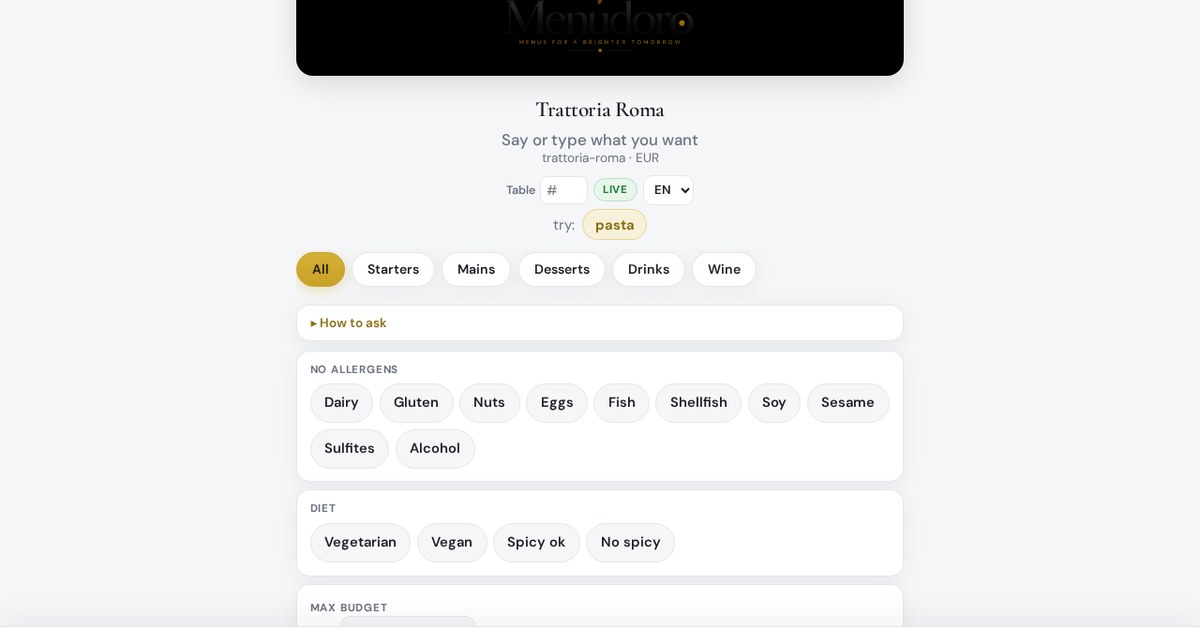
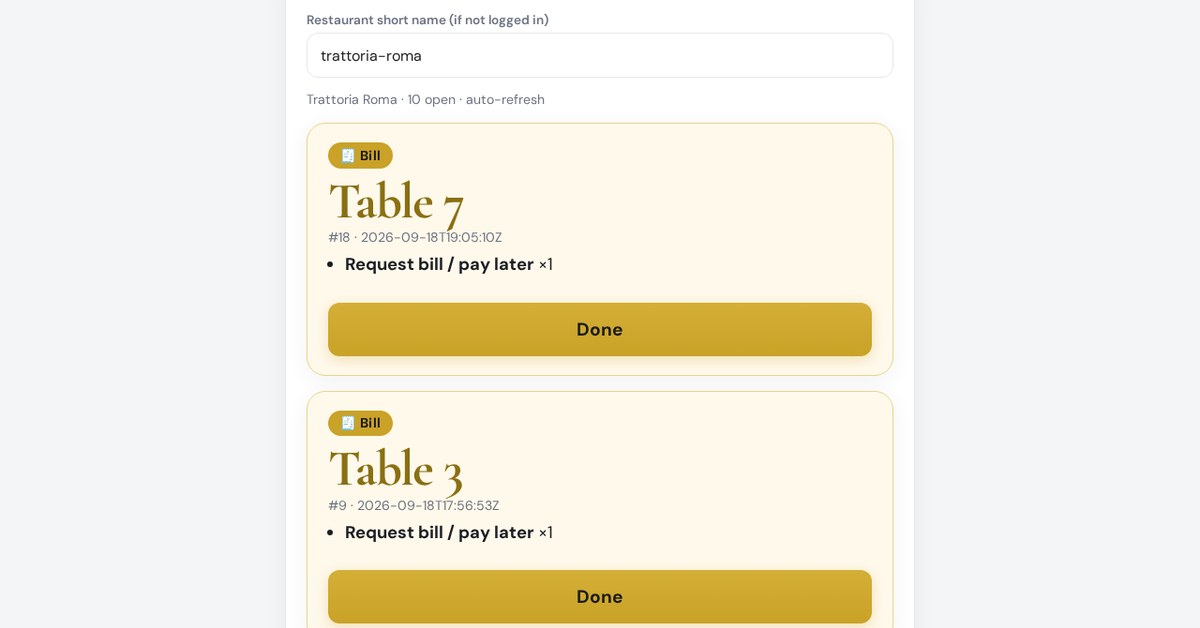
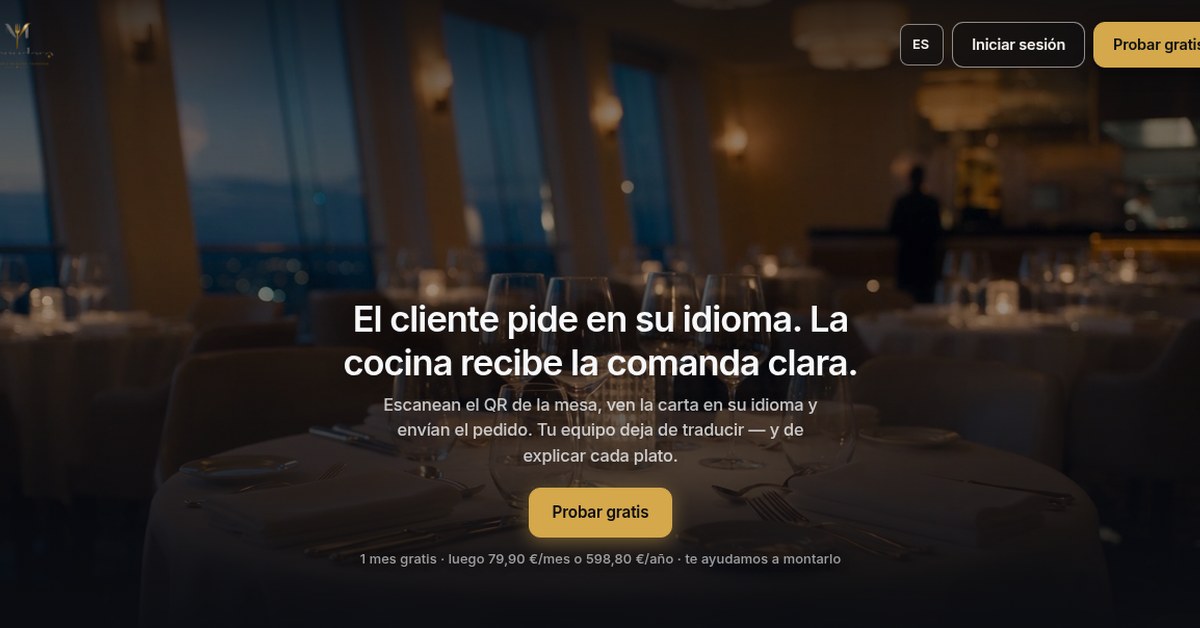
MenuDoro is a QR menu and table-ordering tool for restaurants, bars and cafés with international guests. Upload your menu as PDF, Excel or text (or send it to us and we upload it for free). MenuDoro translates it into 10 languages: English, Spanish, German, French, Italian, Portuguese, Polish, Russian, Greek and Chinese. Guests scan the table QR with their camera, with no app to install, and read the menu in their own language. They can filter by the 14 EU allergens by tapping or speaking ("gluten-free and dairy-free"), then order from their phone. The kitchen screen runs in any browser and shows each ticket in the kitchen's language, with the table, the dishes and the guest's notes, and allergies highlighted. When guests ask for the bill, they can be invited to leave a Google review.
Pricing: one plan per restaurant at €79.90/month, or €598.80/year (€49.90/month). VAT included, no per-order commission, unlimited tables, no lock-in. The first month is free with no card.
Features
Multilingual menu (10 languages)
QR per table
Table ordering
Kitchen display
Translated kitchen tickets
14 EU allergens + alcohol
Voice and allergen filters
Menu import from PDF/Excel
Google review prompt at bill
Per-venue public menu link
Use Cases
Restaurants, bars and cafés with international guests
Table ordering without an app
Allergen-safe menus (14 EU allergens filter)
Kitchens that need tickets in their own language

Comments


Congrats on the launch! The kitchen getting the ticket in its own language is the part I haven't seen elsewhere, and the hero says it in one line. One thing on the site, since you asked for blunt: the top bar reads "Founding offer: 20 of 20 places left". To a restaurant owner that quietly says nobody has signed up yet, right above the moment you ask them to trust you with their tables. Until the first spots go, "Founding offer for the first 20 restaurants" without the counter would keep the urgency without the empty-room signal. Rooting for you!

Showing each ticket in the kitchen’s own language, with allergies highlighted, solves a real problem for restaurants with lots of tourists. How do you handle dish names that shouldn’t be translated literally, like local specialties? Can the owner edit or lock a translation per language? And does the spoken allergen filter (“gluten-free and dairy-free”) work in all 10 languages or only some?

Spoken allergen filtering ("gluten-free and dairy-free") is a really nice touch for guests who can't read the menu at all. Two questions: can a restaurant keep a dish's original name (a local specialty, say) and translate only the description underneath? And are allergens always set by the restaurant rather than inferred from the translated text? Showing guests that the allergen info was confirmed by the kitchen would build a lot of trust.

Translating the menu is useful, but sending the kitchen ticket in the kitchen's own language with allergies highlighted is the part that really solves a daily problem. No app to install for guests is a big plus too. How do daily specials or a dish running out work — can the kitchen update a dish once and have it change in all ten languages at once?


Translated kitchen tickets are a smart touch: most QR menus only solve the guest side. A question from Peru, where tourist menus are full of dishes like lomo saltado, causa or ají de gallina: does the translation keep the original dish name and add a short description, or translate the name literally? A literal translation of a local dish usually confuses guests more than the Spanish original does. Can the owner edit a single translation by hand?

Two things I didn't see asked yet. Guest notes are free text ("no nuts at all, I'm allergic"): does the kitchen ticket show the guest's original words next to the translation, so staff can double-check the one line that matters most? And is the per-venue public menu link crawlable HTML in each language, with Menu schema? Tourists often search "gluten-free tapas near me" or ask an AI assistant, and a menu that only exists behind a QR scan never shows up there.

The menu import from PDF or Excel stood out to me, since a lot of small restaurants do not have a tidy digital menu to start from. How clean does the source file need to be? If a menu has handwritten specials or prices in the margins, does the import flag those for review instead of guessing? I also wondered whether the Google review prompt at bill time can be turned off for regulars.



The translated kitchen tickets are a smart idea – I've seen the same chaos in tourist restaurants here in Italy. One question: what happens when a single table orders in two different languages (e.g. a German couple and their Italian friends)? Does the kitchen still get one combined ticket in its own language, with each guest's notes kept separate?

Ten menu languages from one QR code is a practical fit for tourist-area restaurants. Two things that would decide adoption for me: how the kitchen handles a dish name that translates awkwardly into, say, German or Arabic — is there a per-language override field so the owner can fix a bad translation — and whether photos and allergen tags carry over to every language automatically or must be re-entered.

Asking for the Google review right at the bill is good timing, the meal is fresh and the guest is already on their phone. Is the invite shown to every guest the same way, or only after a good rating? Google does not allow filtering out unhappy guests before sending them to the review page, so if it goes to everyone it is worth saying so on the site, some owners will ask before turning it on.

I build a table-QR tool for Korean shops, so this is my daily problem, and the hard part is not translation. It is the 86'd dish: the kitchen runs out of one item at 19:40 and the QR menu keeps selling it in ten languages until somebody remembers to edit it. So: can the kitchen itself tap a dish off for the shift (not the owner's laptop), and does it propagate to all ten languages at once? Two smaller ones from the same experience. Keep the original dish name on the guest's side next to the translation, because waiters call the dish out in the local name and re-ask at the pass when the ticket only carries the translated one. And prices: when one changes, the printed menu and the QR menu disagree for a week; a per-shift change log the owner can print settles more arguments than any translation feature. Translation is the hook, but the availability toggle and price sync are what keep a restaurant paying in month two.

A request from Dubai that I haven't seen raised yet: Arabic as a guest language, with a proper right-to-left layout. Across the Gulf, menus are Arabic/English by default, so Arabic plus RTL would open up a big market for you. The kitchen-language feature would be just as useful here, since kitchen teams are often multilingual. Nice work on the allergen filtering.

The translated kitchen ticket is the real differentiator here — plenty of QR menus solve the guest side, but the ticket arriving in the kitchen's own language with allergies highlighted is where the chaos actually happens. One practical question: if a dish runs out mid-service, can staff hide it from the live menu in one tap without re-uploading the PDF? And does the spoken allergen filter cover all 14 EU allergens in all 10 languages?

The detail I like most is that the kitchen gets the ticket in its own language, not only the guest. In Italy a lot of kitchen staff aren't native Italian speakers either, so translation on both ends solves a real problem. How do you handle dish names that shouldn't be translated, like "cacio e pepe" or regional specialities? Do restaurants get to lock those?

Translating the menu is useful, but sending the kitchen ticket in the kitchen's own language with allergies highlighted is the part that really solves a daily problem. No app to install for guests is a big plus too. How do daily specials or a dish running out work — can the kitchen update a dish once and have it change in all ten languages at once?

Translating the kitchen ticket back into the kitchen's language is the clever part here, since guest and kitchen each see their own language. How do you handle local dish names that shouldn't be translated (things like ćevapi or rakija)? Can the owner lock certain item names so they stay in the original?

The voice allergen filter is a smart touch. One question: when a dish in the uploaded PDF has no allergen info at all, does a "gluten-free" filter hide it or show it as unconfirmed? For someone with a real allergy, an honest "not listed" beats a dish quietly passing the filter. Asking because we deal with the same thing tracking meds: missing data has to look different from safe data.

Tourists often order by picture when a dish name means nothing to them. Can owners add a photo per dish, and does it show next to the translated description? I'd also be curious whether vegetarian, vegan and halal sit alongside the 14 allergens as filters, since in tourist areas those come up about as often as allergies.


Something I ran into building a translation tool: once an owner hand-fixes a dish in one language, the next edit to the Spanish source tends to retranslate everything and quietly wipe that fix. Does MenuDoro keep manual overrides per language when the original text changes, or at least flag them as possibly out of date so the owner can check?


I'm in Riga, where a lot of restaurants serve tourists in English, Russian, Finnish and the Scandinavian languages, so having Russian in the 10 already covers a big part of it here. Can a restaurant request an extra language, or are the 10 fixed? Finnish and Swedish would make this an easy pitch for Old Town places.


Keeping the guest menu and kitchen ticket in different languages is a useful distinction. What happens if the guest loses their mobile connection just after tapping Order—does the page show a confirmed ticket number, and is retrying protected against duplicate orders? A clear “sent to kitchen” versus “not yet sent” state would be important during a busy service.
Premium Products






































Sponsors
Buy
Awards
View all
Awards
View allComments
Congrats on the launch! The kitchen getting the ticket in its own language is the part I haven't seen elsewhere, and the hero says it in one line. One thing on the site, since you asked for blunt: the top bar reads "Founding offer: 20 of 20 places left". To a restaurant owner that quietly says nobody has signed up yet, right above the moment you ask them to trust you with their tables. Until the first spots go, "Founding offer for the first 20 restaurants" without the counter would keep the urgency without the empty-room signal. Rooting for you!
Showing each ticket in the kitchen’s own language, with allergies highlighted, solves a real problem for restaurants with lots of tourists. How do you handle dish names that shouldn’t be translated literally, like local specialties? Can the owner edit or lock a translation per language? And does the spoken allergen filter (“gluten-free and dairy-free”) work in all 10 languages or only some?
Spoken allergen filtering ("gluten-free and dairy-free") is a really nice touch for guests who can't read the menu at all. Two questions: can a restaurant keep a dish's original name (a local specialty, say) and translate only the description underneath? And are allergens always set by the restaurant rather than inferred from the translated text? Showing guests that the allergen info was confirmed by the kitchen would build a lot of trust.
Translating the menu is useful, but sending the kitchen ticket in the kitchen's own language with allergies highlighted is the part that really solves a daily problem. No app to install for guests is a big plus too. How do daily specials or a dish running out work — can the kitchen update a dish once and have it change in all ten languages at once?
Translated kitchen tickets are a smart touch: most QR menus only solve the guest side. A question from Peru, where tourist menus are full of dishes like lomo saltado, causa or ají de gallina: does the translation keep the original dish name and add a short description, or translate the name literally? A literal translation of a local dish usually confuses guests more than the Spanish original does. Can the owner edit a single translation by hand?
Two things I didn't see asked yet. Guest notes are free text ("no nuts at all, I'm allergic"): does the kitchen ticket show the guest's original words next to the translation, so staff can double-check the one line that matters most? And is the per-venue public menu link crawlable HTML in each language, with Menu schema? Tourists often search "gluten-free tapas near me" or ask an AI assistant, and a menu that only exists behind a QR scan never shows up there.
The menu import from PDF or Excel stood out to me, since a lot of small restaurants do not have a tidy digital menu to start from. How clean does the source file need to be? If a menu has handwritten specials or prices in the margins, does the import flag those for review instead of guessing? I also wondered whether the Google review prompt at bill time can be turned off for regulars.
The translated kitchen tickets are a smart idea – I've seen the same chaos in tourist restaurants here in Italy. One question: what happens when a single table orders in two different languages (e.g. a German couple and their Italian friends)? Does the kitchen still get one combined ticket in its own language, with each guest's notes kept separate?
Ten menu languages from one QR code is a practical fit for tourist-area restaurants. Two things that would decide adoption for me: how the kitchen handles a dish name that translates awkwardly into, say, German or Arabic — is there a per-language override field so the owner can fix a bad translation — and whether photos and allergen tags carry over to every language automatically or must be re-entered.
Asking for the Google review right at the bill is good timing, the meal is fresh and the guest is already on their phone. Is the invite shown to every guest the same way, or only after a good rating? Google does not allow filtering out unhappy guests before sending them to the review page, so if it goes to everyone it is worth saying so on the site, some owners will ask before turning it on.
I build a table-QR tool for Korean shops, so this is my daily problem, and the hard part is not translation. It is the 86'd dish: the kitchen runs out of one item at 19:40 and the QR menu keeps selling it in ten languages until somebody remembers to edit it. So: can the kitchen itself tap a dish off for the shift (not the owner's laptop), and does it propagate to all ten languages at once? Two smaller ones from the same experience. Keep the original dish name on the guest's side next to the translation, because waiters call the dish out in the local name and re-ask at the pass when the ticket only carries the translated one. And prices: when one changes, the printed menu and the QR menu disagree for a week; a per-shift change log the owner can print settles more arguments than any translation feature. Translation is the hook, but the availability toggle and price sync are what keep a restaurant paying in month two.
A request from Dubai that I haven't seen raised yet: Arabic as a guest language, with a proper right-to-left layout. Across the Gulf, menus are Arabic/English by default, so Arabic plus RTL would open up a big market for you. The kitchen-language feature would be just as useful here, since kitchen teams are often multilingual. Nice work on the allergen filtering.
The translated kitchen ticket is the real differentiator here — plenty of QR menus solve the guest side, but the ticket arriving in the kitchen's own language with allergies highlighted is where the chaos actually happens. One practical question: if a dish runs out mid-service, can staff hide it from the live menu in one tap without re-uploading the PDF? And does the spoken allergen filter cover all 14 EU allergens in all 10 languages?
The detail I like most is that the kitchen gets the ticket in its own language, not only the guest. In Italy a lot of kitchen staff aren't native Italian speakers either, so translation on both ends solves a real problem. How do you handle dish names that shouldn't be translated, like "cacio e pepe" or regional specialities? Do restaurants get to lock those?
Translating the menu is useful, but sending the kitchen ticket in the kitchen's own language with allergies highlighted is the part that really solves a daily problem. No app to install for guests is a big plus too. How do daily specials or a dish running out work — can the kitchen update a dish once and have it change in all ten languages at once?
Translating the kitchen ticket back into the kitchen's language is the clever part here, since guest and kitchen each see their own language. How do you handle local dish names that shouldn't be translated (things like ćevapi or rakija)? Can the owner lock certain item names so they stay in the original?
The voice allergen filter is a smart touch. One question: when a dish in the uploaded PDF has no allergen info at all, does a "gluten-free" filter hide it or show it as unconfirmed? For someone with a real allergy, an honest "not listed" beats a dish quietly passing the filter. Asking because we deal with the same thing tracking meds: missing data has to look different from safe data.
Tourists often order by picture when a dish name means nothing to them. Can owners add a photo per dish, and does it show next to the translated description? I'd also be curious whether vegetarian, vegan and halal sit alongside the 14 allergens as filters, since in tourist areas those come up about as often as allergies.
Something I ran into building a translation tool: once an owner hand-fixes a dish in one language, the next edit to the Spanish source tends to retranslate everything and quietly wipe that fix. Does MenuDoro keep manual overrides per language when the original text changes, or at least flag them as possibly out of date so the owner can check?
I'm in Riga, where a lot of restaurants serve tourists in English, Russian, Finnish and the Scandinavian languages, so having Russian in the 10 already covers a big part of it here. Can a restaurant request an extra language, or are the 10 fixed? Finnish and Swedish would make this an easy pitch for Old Town places.
Keeping the guest menu and kitchen ticket in different languages is a useful distinction. What happens if the guest loses their mobile connection just after tapping Order—does the page show a confirmed ticket number, and is retrying protected against duplicate orders? A clear “sent to kitchen” versus “not yet sent” state would be important during a busy service.
Premium Products
New to Fazier?

Find your next favorite product or submit your own. Made by @FalakDigital.
Copyright ©2026. All Rights Reserved