
MeloLab
AI music generator for songs, stems, remixes, and mastering
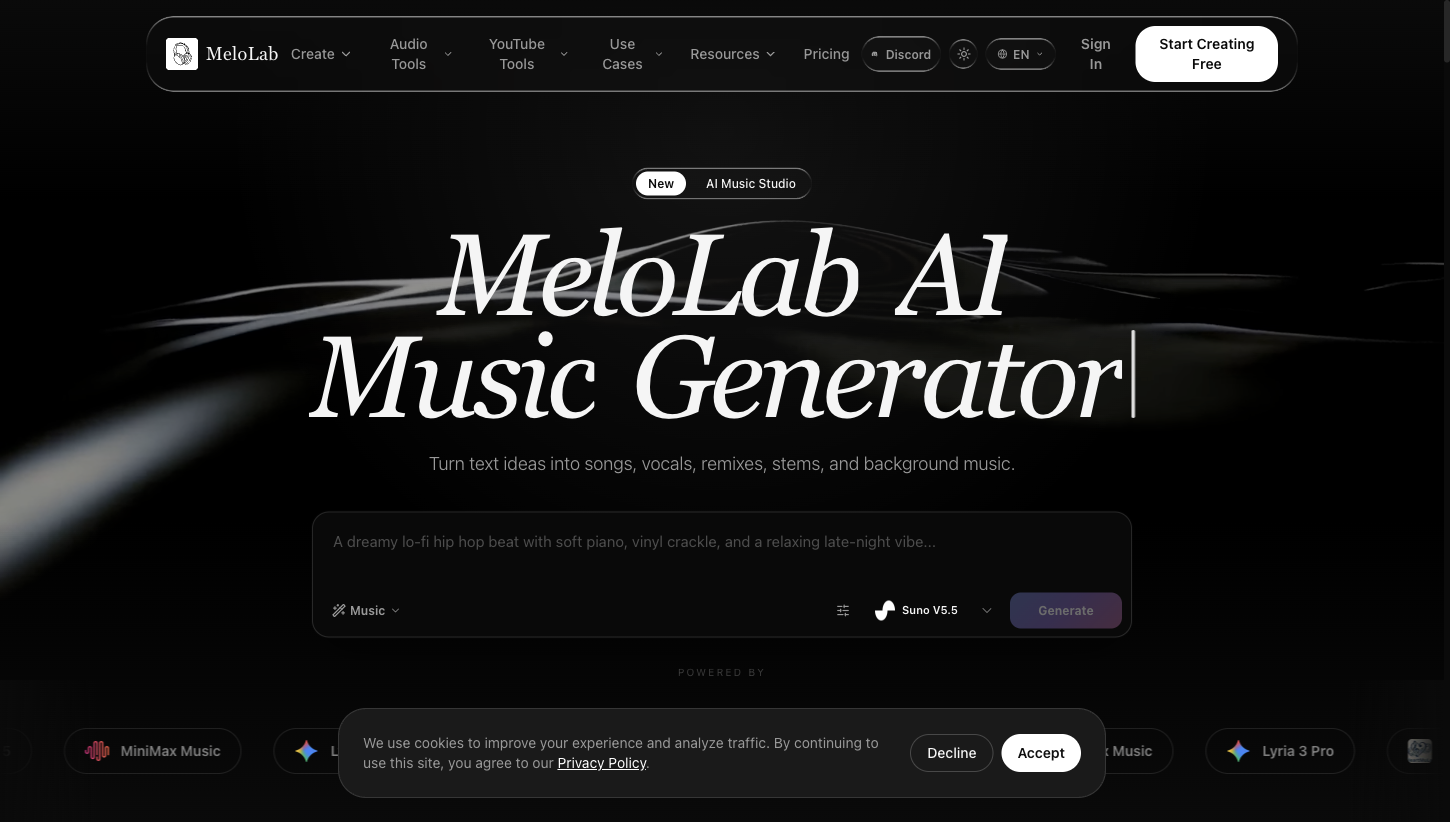
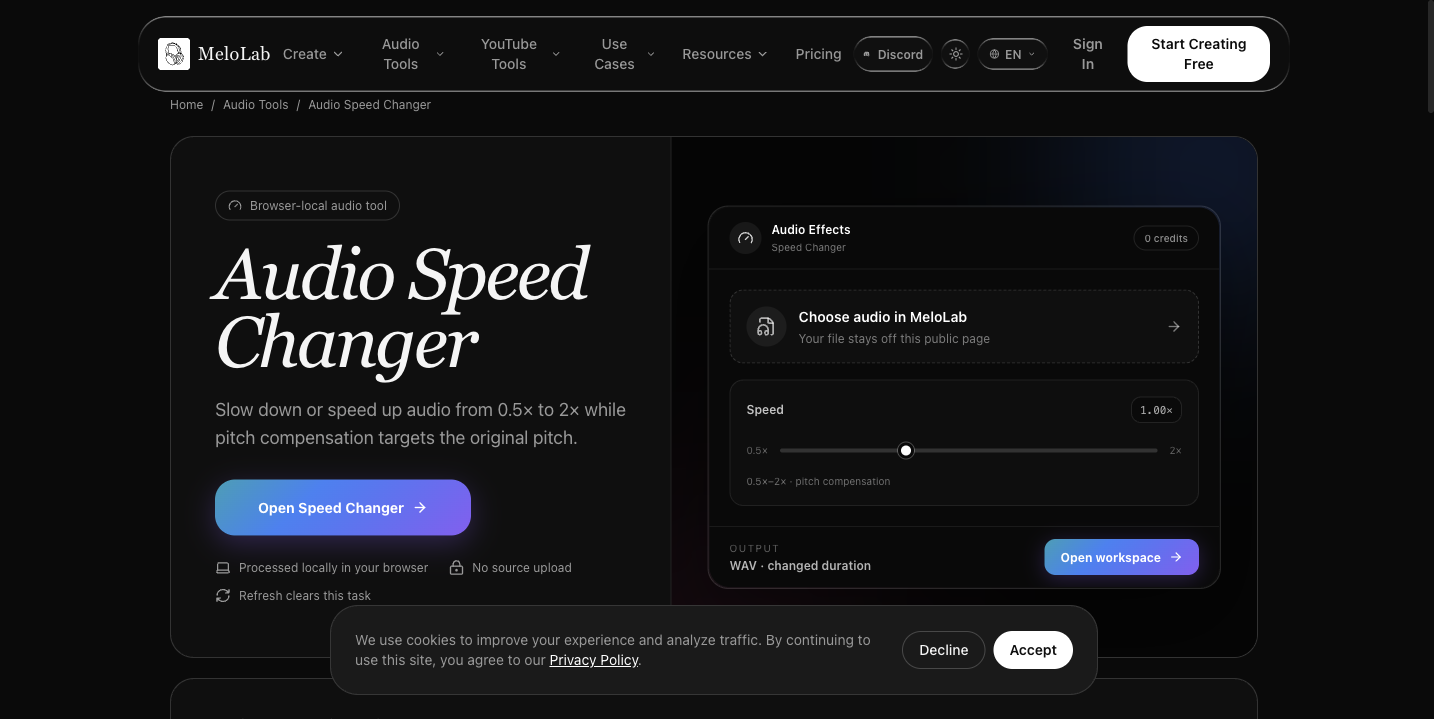
MeloLab is an AI music generator and audio creation workspace for turning text, lyrics, or existing audio into complete songs and editable music assets. Creators can generate songs with vocals, turn lyrics into music, make AI covers and remixes, extend tracks, split stems, remove vocals, and master finished audio in one web app. MeloLab also includes practical music tools for chord detection, lyrics transcription, pitch and speed changes, audio analysis, and MIDI conversion. For permitted YouTube sources, MeloLab can convert audio to MP3 or WAV, remove vocals, and estimate BPM and musical key. It is free to start, with credit costs shown before AI-powered processing.
Features
AI music generator for creating complete songs from text prompts or lyrics.
Lyrics-to-song, AI vocals, AI cover, remix, and music extension workflows.
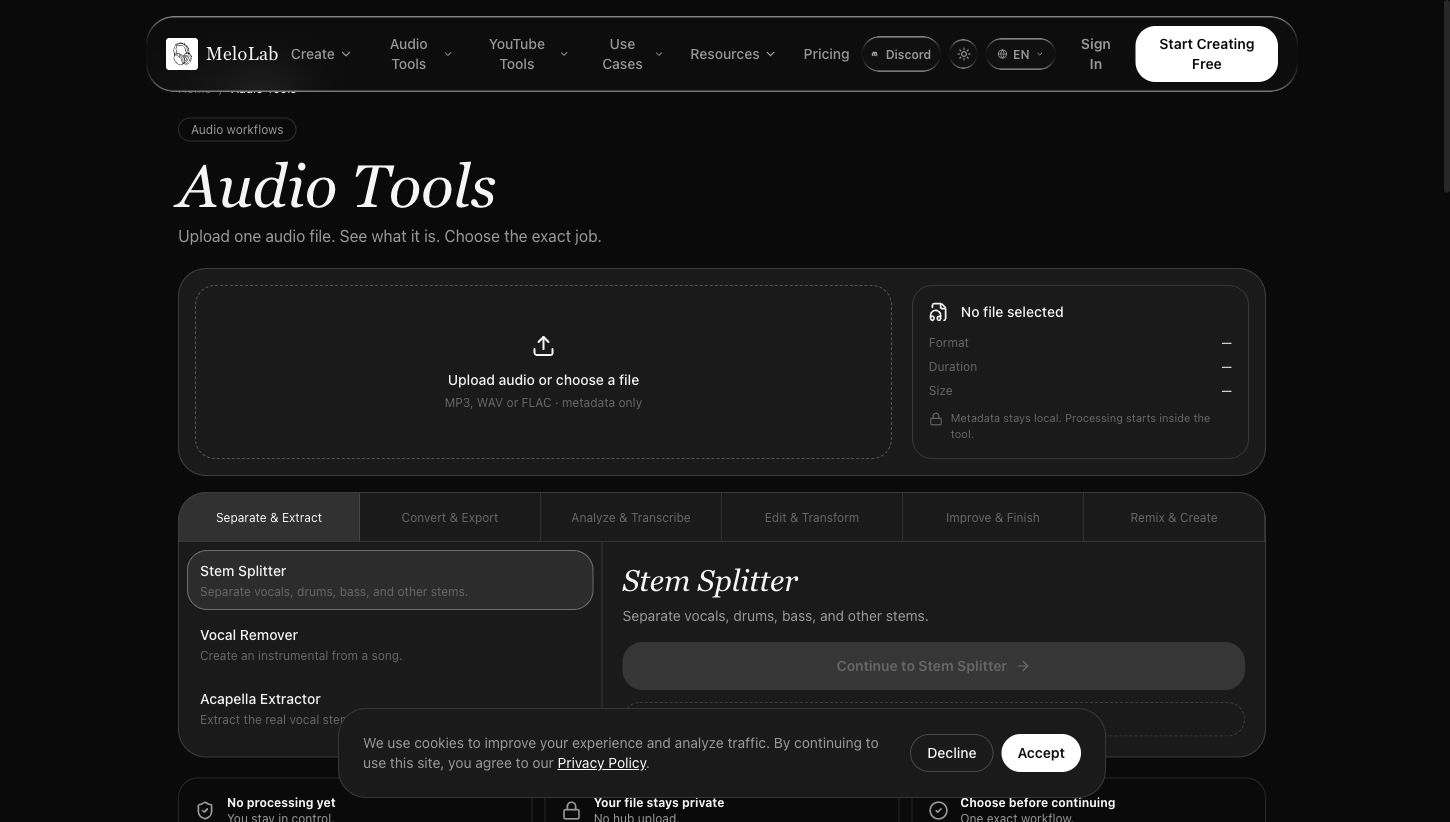
Stem splitter for separating vocals, drums, bass, and other instruments.
Vocal remover for instrumentals, karaoke tracks, remixes, and practice.
AI mastering, chord detection, lyrics transcription, audio analysis, and MIDI conversion.
YouTube music tools for MP3 and WAV conversion, vocal removal, and BPM and key detection.
Use Cases
Create an original song from a prompt, genre, mood, or set of lyrics.
Turn written lyrics into a produced song with vocals and instrumentation.
Make remixes, AI covers, alternate versions, or extended arrangements.
Separate vocals and instruments for karaoke, sampling, editing, or music practice.
Analyze, edit, and master audio for videos, podcasts, games, demos, and releases.
Process a permitted YouTube source for audio conversion, vocal removal, tempo detection, or key analysis.

Comments





The interesting bet here is bundling the whole audio workflow instead of just generation. Most AI music tools stop at 'here's your song', and then you're exporting to three other apps for stems, mastering and MIDI. Having stem separation, vocal removal, mastering and analysis in the same workspace as the generator is where the real time saving is, especially for anyone doing remixes or karaoke tracks. The credit transparency before processing is also a good call, since surprise credit burn is what usually kills trust in tools like this. The part I'd watch is quality versus the specialists: a bundled suite tends to be fine at everything and best at nothing, so mastering and stem separation have to hold up against dedicated tools or people will just use it for the first step. The commercial licensing clarity is the other thing that matters — that's what decides whether independent creators can actually ship what they make here. Solid scope for a single workspace.



The breadth here is impressive, going from generation all the way to mastering in one workspace. Two questions from someone who works with stems a lot. Which separation model powers the stem splitter, and does it offer more than four stems (guitar and piano as their own tracks)? And for the BPM estimate, how does it handle fast genres like drum and bass? Many detectors report 174 BPM tracks as 87, so I'm curious whether you correct for half-time. Showing credit costs before processing is a nice touch too.

The stems and remix workflow is what makes this different from other AI music tools. Most focus on full track generation, but being able to isolate vocals and create variations opens up actual production possibilities. The mastering layer on top rounds it out nicely for creators who need polish without engineering knowledge.
Premium Products













































Sponsors
Buy

Awards
View all
Awards
View allMakers

Makers
Comments
The interesting bet here is bundling the whole audio workflow instead of just generation. Most AI music tools stop at 'here's your song', and then you're exporting to three other apps for stems, mastering and MIDI. Having stem separation, vocal removal, mastering and analysis in the same workspace as the generator is where the real time saving is, especially for anyone doing remixes or karaoke tracks. The credit transparency before processing is also a good call, since surprise credit burn is what usually kills trust in tools like this. The part I'd watch is quality versus the specialists: a bundled suite tends to be fine at everything and best at nothing, so mastering and stem separation have to hold up against dedicated tools or people will just use it for the first step. The commercial licensing clarity is the other thing that matters — that's what decides whether independent creators can actually ship what they make here. Solid scope for a single workspace.
The breadth here is impressive, going from generation all the way to mastering in one workspace. Two questions from someone who works with stems a lot. Which separation model powers the stem splitter, and does it offer more than four stems (guitar and piano as their own tracks)? And for the BPM estimate, how does it handle fast genres like drum and bass? Many detectors report 174 BPM tracks as 87, so I'm curious whether you correct for half-time. Showing credit costs before processing is a nice touch too.
The stems and remix workflow is what makes this different from other AI music tools. Most focus on full track generation, but being able to isolate vocals and create variations opens up actual production possibilities. The mastering layer on top rounds it out nicely for creators who need polish without engineering knowledge.
Premium Products
New to Fazier?

Find your next favorite product or submit your own. Made by @FalakDigital.
Copyright ©2026. All Rights Reserved