
Matchbox
Real problems. Matching products.
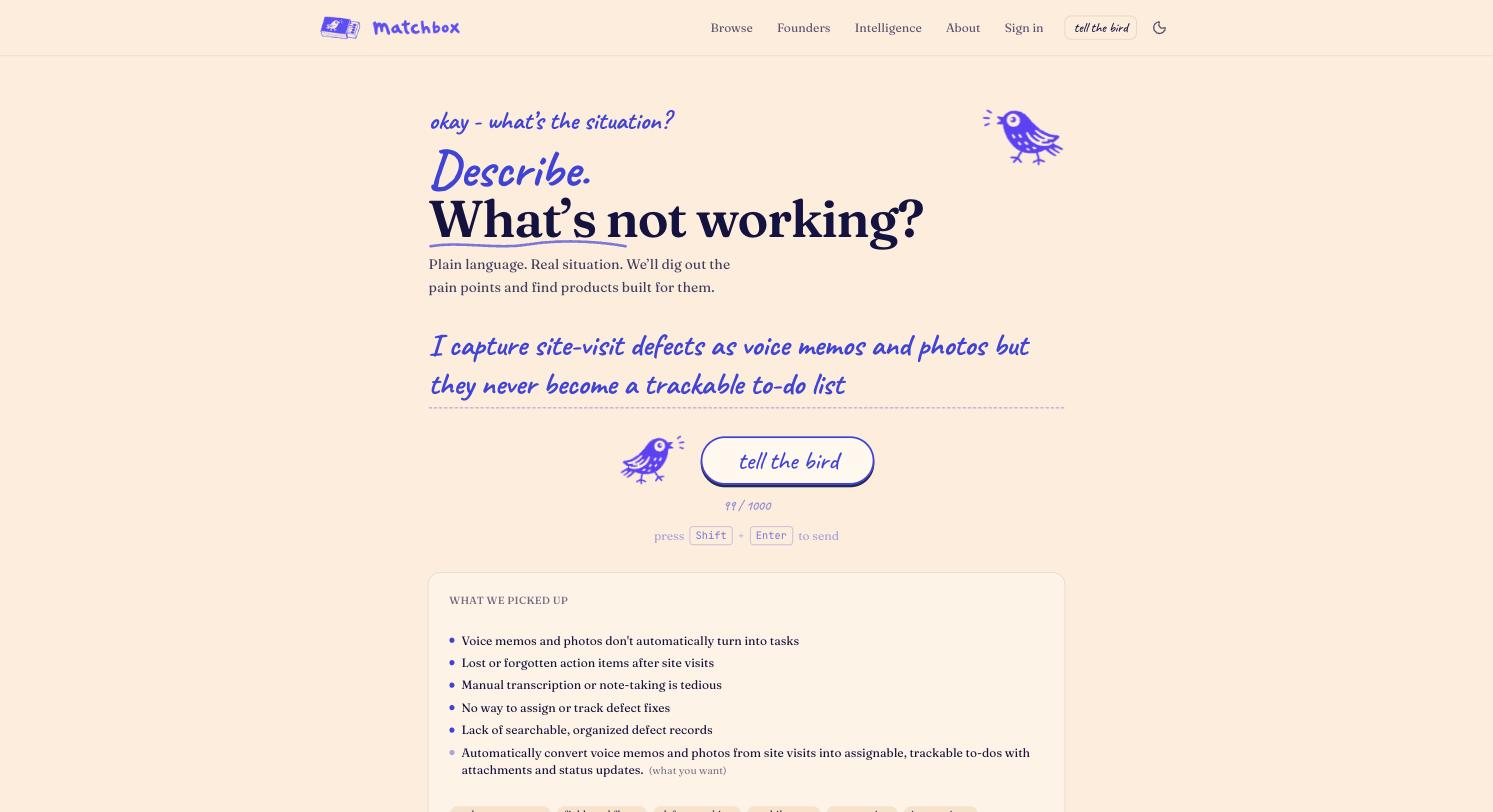
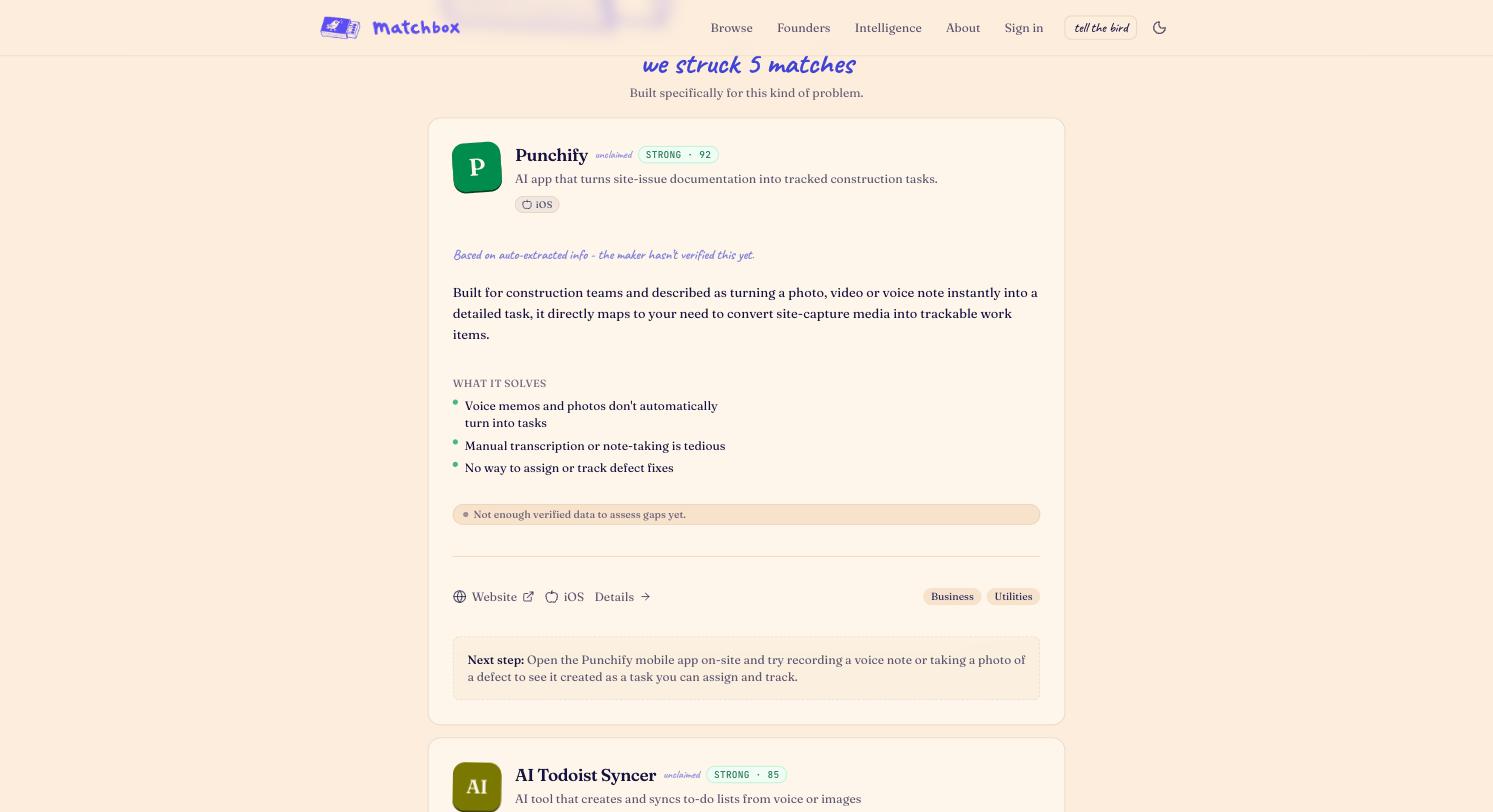
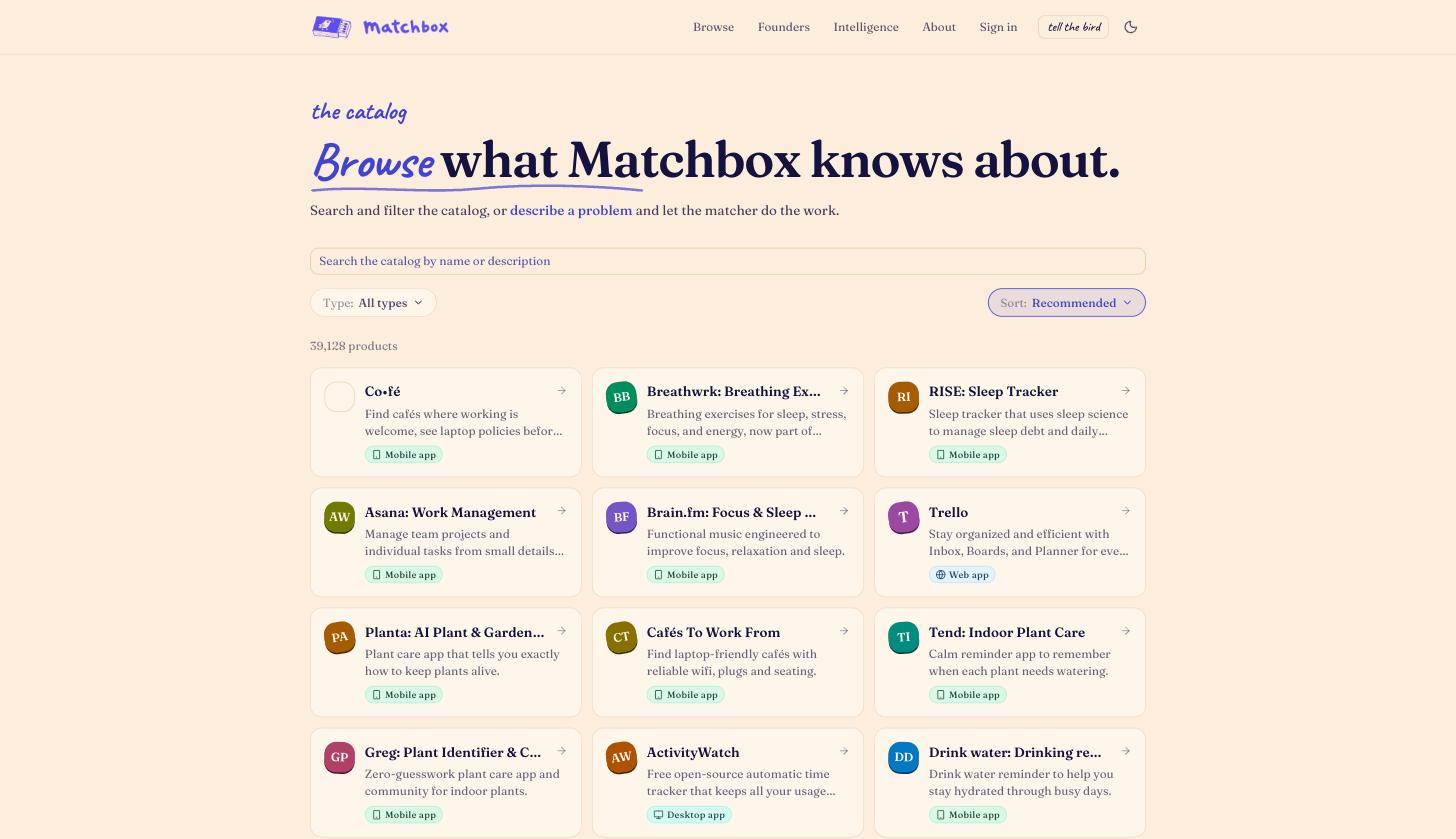
Most product discovery starts too late - after you already know a product name or a category. Matchbox starts with the problem: describe what you're struggling with in plain language, and it searches a growing catalog (already over 30,000 products, indexed from public app stores and launch platforms), including newer and smaller tools that rarely appear in standard recommendation lists. Matches come with honest reasoning: why a product fits, what it won't cover, and a frank "nothing fits yet" when that's the truth. Nothing is sponsored, and payment never affects ranking. For makers: claim your listing (or submit a new one) in under a minute, free - your product becomes findable by the problem it solves, not just by its name.
Features
- Problem-first matching in plain language - no keywords needed
- Growing catalog: 30,000+ products indexed from public app stores and launch platforms
- Honest results with explicit caveats - including a frank "nothing fits yet"
- Never sponsored; payment never affects ranking
- MCP server: connect Matchbox to your favourite LLM
- Free maker claim flow
Use Cases
- Find the right tool for a specific problem without wading through listicles
- Check whether your product idea already exists before you build it
- Makers: get discovered by the problem you solve, not by your product's name
- Give your AI assistant long-tail product knowledge via MCP

Comments



Maker here 👋 Matchbox exists because I built my first product (Co•fé) and learned the hard way that building is no longer the hard part - being found is. Existing channels all optimize for something other than fit: search ranks authority, launch boards assume you already know what solution you're looking for, and social media optimizes for attention. Matchbox starts from the problem instead: describe what you're struggling with in plain language, and it searches a growing catalog (already over 30,000 products) - including the small, new tools that are invisible everywhere else. Honest caveats included, and a frank "nothing fits yet" when that's the truth. Ask it a real problem and tell me where it fails - disappointing results are the most useful feedback I can get. And if you've built something: claiming your listing is free and takes under a minute.
Premium Products



































Awards
View all
Awards
View allMakers
Makers
Comments
Maker here 👋 Matchbox exists because I built my first product (Co•fé) and learned the hard way that building is no longer the hard part - being found is. Existing channels all optimize for something other than fit: search ranks authority, launch boards assume you already know what solution you're looking for, and social media optimizes for attention. Matchbox starts from the problem instead: describe what you're struggling with in plain language, and it searches a growing catalog (already over 30,000 products) - including the small, new tools that are invisible everywhere else. Honest caveats included, and a frank "nothing fits yet" when that's the truth. Ask it a real problem and tell me where it fails - disappointing results are the most useful feedback I can get. And if you've built something: claiming your listing is free and takes under a minute.
Premium Products
New to Fazier?

Find your next favorite product or submit your own. Made by @FalakDigital.
Copyright ©2026. All Rights Reserved