
Maskmail (maskmail.io)
The email mask firewall for your inbox
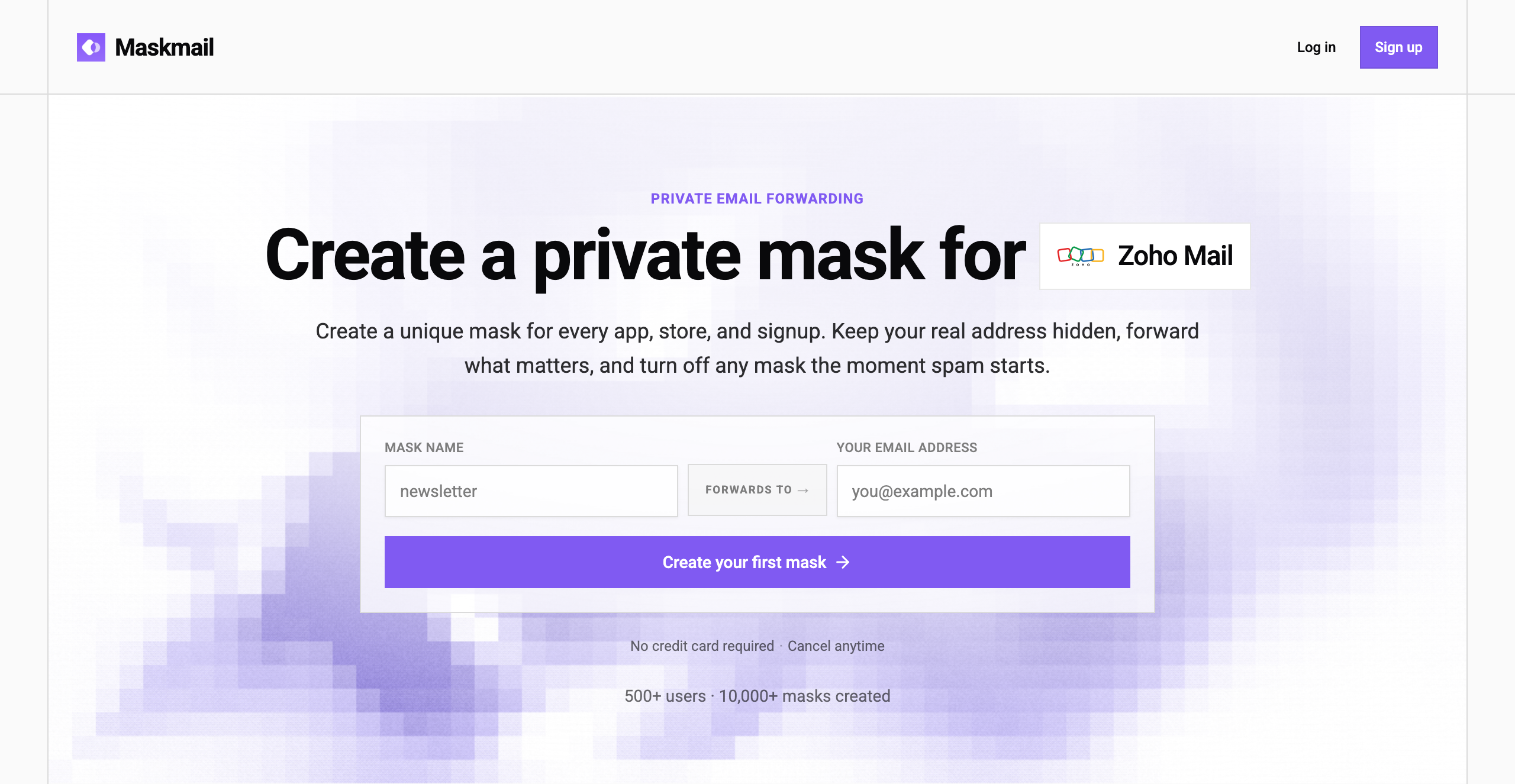
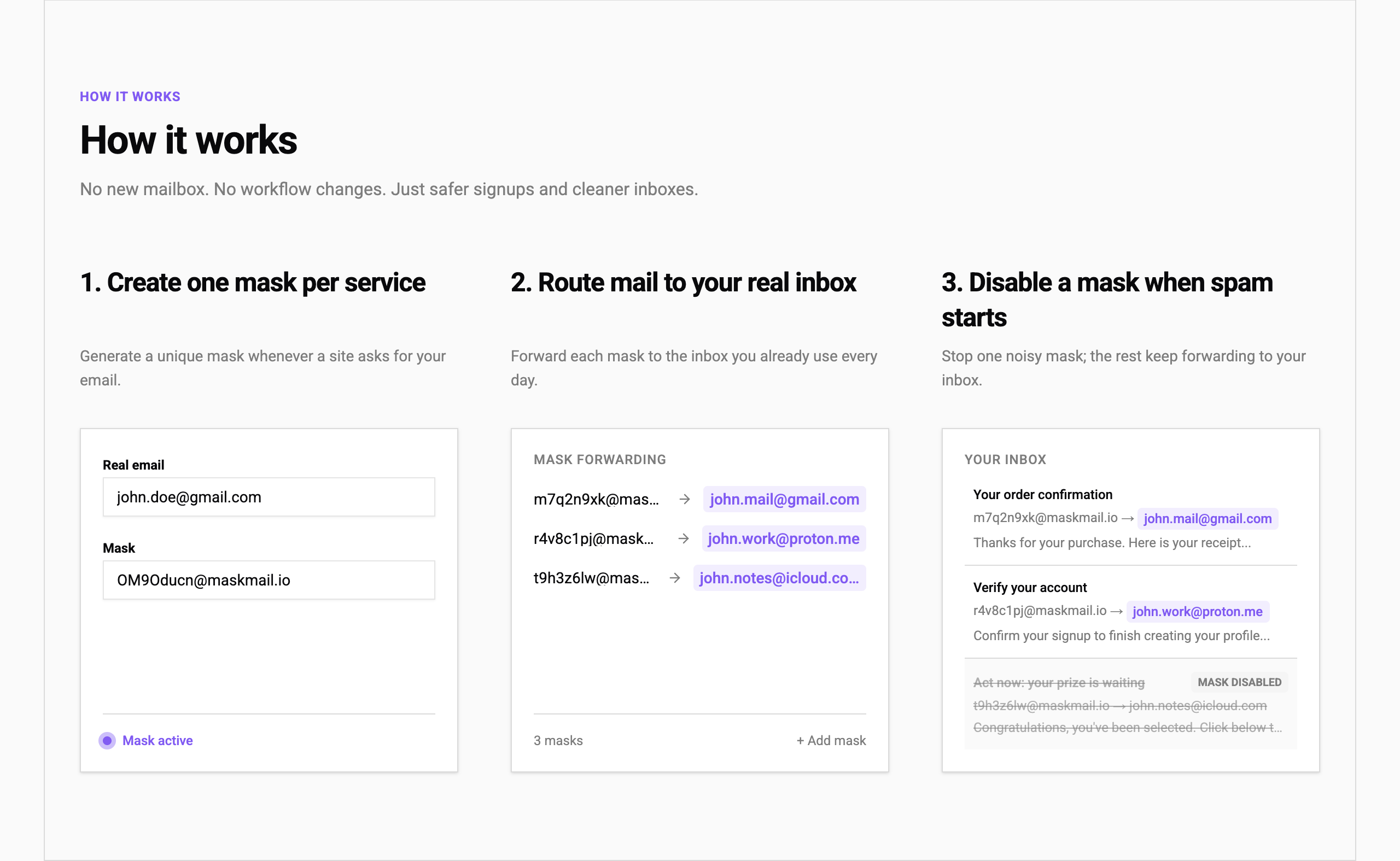
Stop handing out your real email. Maskmail lets you create a unique forwarding address for every app, store, and signup. Important mail forwards straight to your existing inbox. When spam starts, disable the mask in seconds without changing your real address anywhere.
Features: unlimited masks, custom domains, catch-all support, anonymous two-way replies (sender only sees the mask), delivery history, and an instant mask kill switch. Works with Gmail, Outlook, Proton Mail, iCloud, and any other email provider.
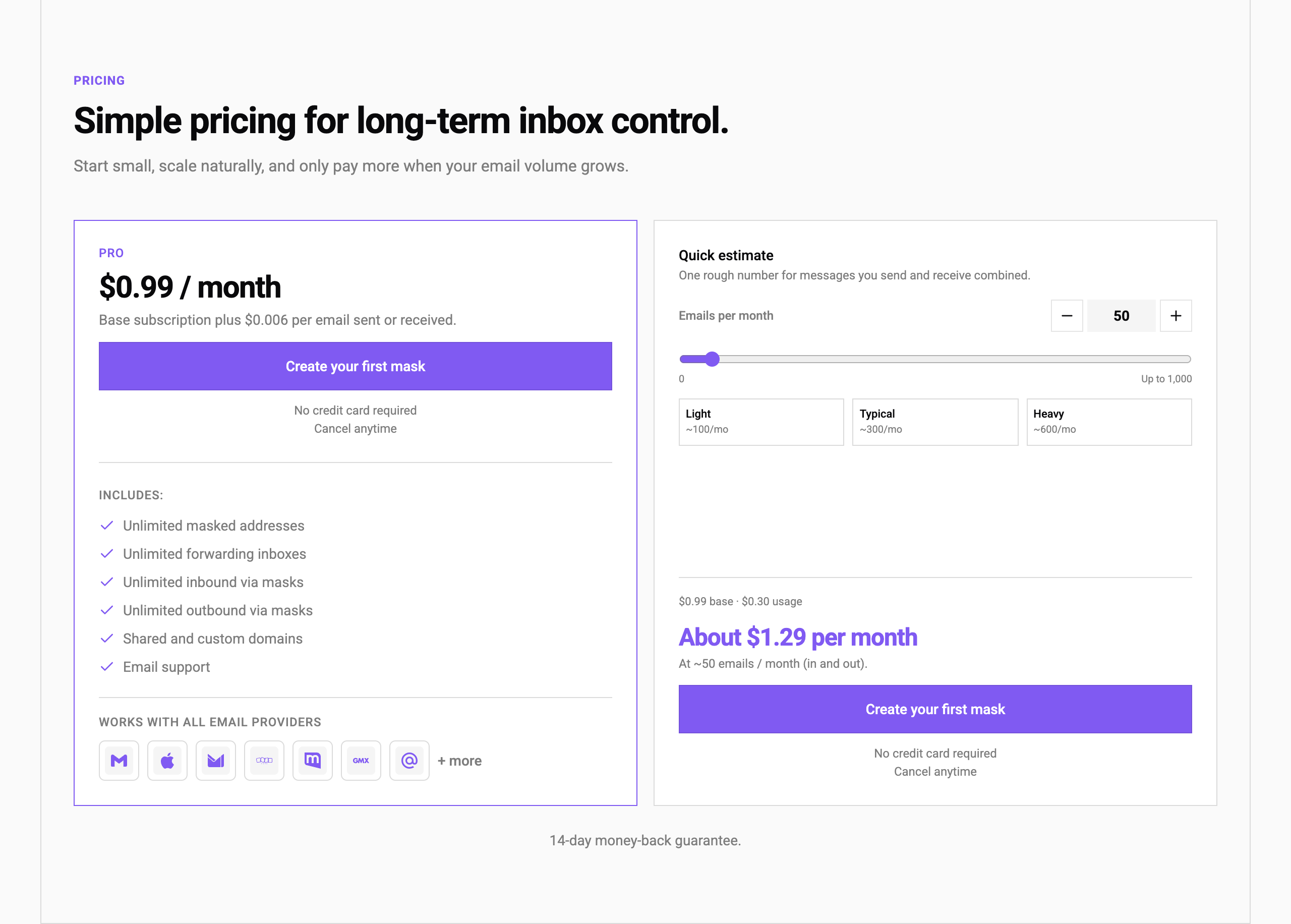
Usage-based pricing starts at $0.99/month base plus $0.006 per email sent or received.
Features
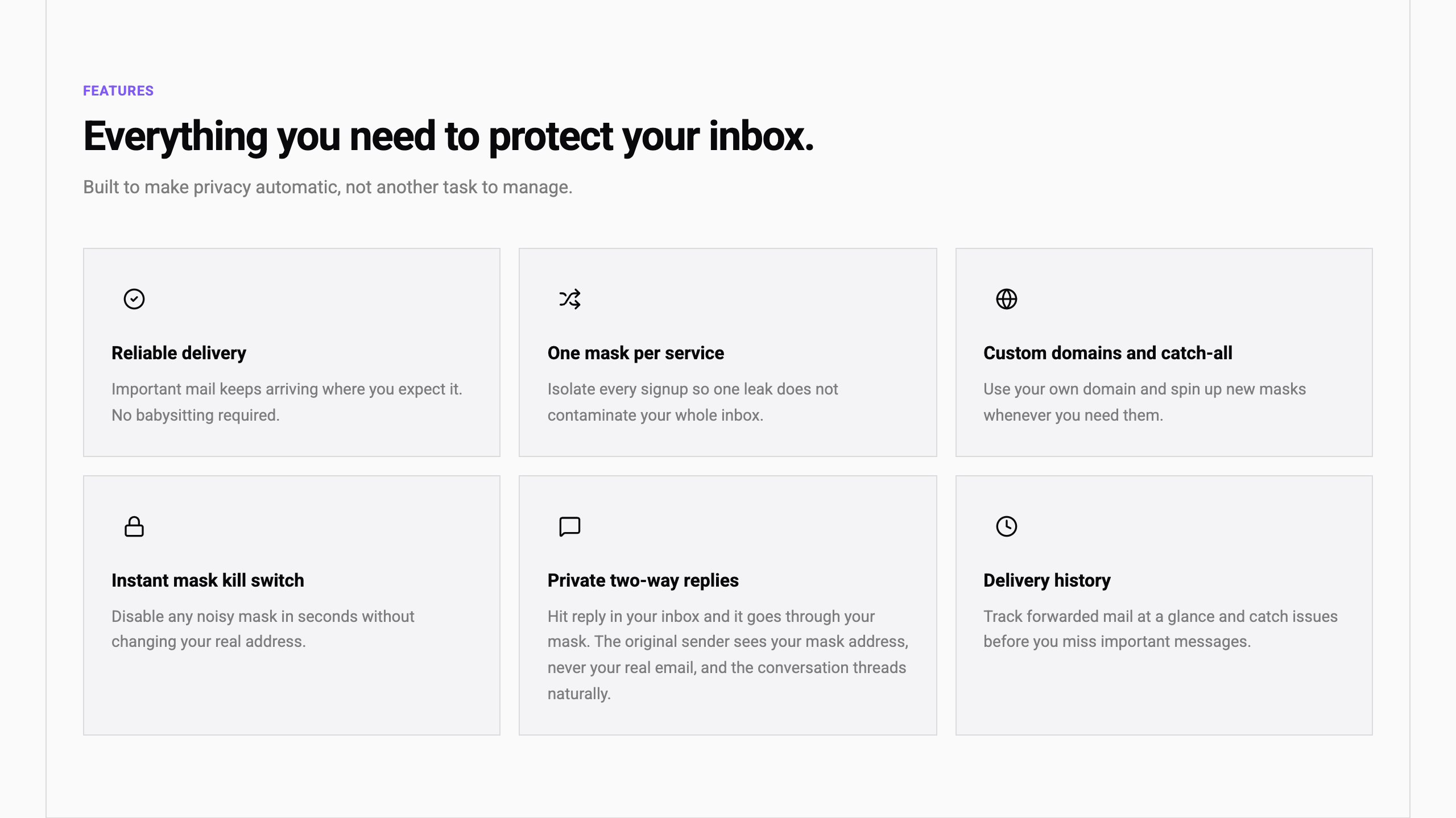
- Unlimited masks: one per service, signup, or newsletter
- Custom domains with catch-all support
- Anonymous two-way replies (sender only sees the mask)
- Instant mask kill switch to stop spam in seconds
- Full delivery history and email logs
- Works with Gmail, Outlook, Proton Mail, iCloud, and any provider
Use Cases
- Sign up for new services without exposing your real email
- Isolate marketing emails per brand so you can cut off any source instantly
- Protect your inbox when posting your email publicly
- Create disposable addresses for one-time purchases
- Use a unique mask per freelance client to keep work organized
Fazier Deal

Comments












The per-service isolation model here is exactly the right mental model for email hygiene. Most people give out one email everywhere and then have no way to identify which service sold their data — with Maskmail, the mask itself tells you who leaked it. The anonymous two-way reply feature is the detail that makes this actually usable vs. just a one-way throwaway address. Catch-all support + custom domains makes it enterprise-credible too. Would love to see bulk mask creation for power users who are migrating off an old email address.



The idea of an "email mask firewall" really resonates, especially the instant kill switch. I've been using something similar, <a href="https://routerbase.com">RouterBase: One API for GPT</a>, for managing API keys, and the control it offers over individual access points feels very much in the same vein of security and convenience.

Maskmail launching on Fazier is an interesting concept for temporary email but for anyone running serious campaigns there is no substitute for a verified permanent list that actually reaches people. Temporary addresses have their place but they do not build relationships. When I need to validate hundreds of contacts at once I turn to a https://mailtester.ninja/ bulk email verifier like MailTester.Ninja because it handles large volumes without breaking a sweat and keeps my deliverability rates consistently high.

The per-service email isolation model is really compelling. Most people only realize they need this after their inbox gets flooded or their email leaks somewhere. The anonymous reply feature feels especially useful since most masking tools stop at forwarding only. Curious — do you have a way to detect which masks suddenly spike in spam volume so users can identify a data leak faster?

What caught my attention is the privacy-first approach to email management. Disposable and masked email addresses are becoming increasingly valuable as more services require sign-ups before users can evaluate them. I'm curious about how Maskmail handles forwarding reliability and spam filtering over time, especially for users managing multiple masked identities. The concept seems particularly useful for reducing inbox clutter while maintaining better control over personal data.

Nice detail that the mask-label placeholder ("e.g. newsletter, movie tickets") teaches the use-case right inside the input. I ran a Lastest visual-regression baseline across Masks / Emails / Domains / Settings and creating a mask: https://app.lastest.cloud/r/x4buAYCjj4dxqjXYyJCJHQ


Premium Products


































Fazier Deal
Sponsors
Buy



Makers
Makers
Comments
The per-service isolation model here is exactly the right mental model for email hygiene. Most people give out one email everywhere and then have no way to identify which service sold their data — with Maskmail, the mask itself tells you who leaked it. The anonymous two-way reply feature is the detail that makes this actually usable vs. just a one-way throwaway address. Catch-all support + custom domains makes it enterprise-credible too. Would love to see bulk mask creation for power users who are migrating off an old email address.
The idea of an "email mask firewall" really resonates, especially the instant kill switch. I've been using something similar, <a href="https://routerbase.com">RouterBase: One API for GPT</a>, for managing API keys, and the control it offers over individual access points feels very much in the same vein of security and convenience.
Maskmail launching on Fazier is an interesting concept for temporary email but for anyone running serious campaigns there is no substitute for a verified permanent list that actually reaches people. Temporary addresses have their place but they do not build relationships. When I need to validate hundreds of contacts at once I turn to a https://mailtester.ninja/ bulk email verifier like MailTester.Ninja because it handles large volumes without breaking a sweat and keeps my deliverability rates consistently high.
The per-service email isolation model is really compelling. Most people only realize they need this after their inbox gets flooded or their email leaks somewhere. The anonymous reply feature feels especially useful since most masking tools stop at forwarding only. Curious — do you have a way to detect which masks suddenly spike in spam volume so users can identify a data leak faster?
What caught my attention is the privacy-first approach to email management. Disposable and masked email addresses are becoming increasingly valuable as more services require sign-ups before users can evaluate them. I'm curious about how Maskmail handles forwarding reliability and spam filtering over time, especially for users managing multiple masked identities. The concept seems particularly useful for reducing inbox clutter while maintaining better control over personal data.
Nice detail that the mask-label placeholder ("e.g. newsletter, movie tickets") teaches the use-case right inside the input. I ran a Lastest visual-regression baseline across Masks / Emails / Domains / Settings and creating a mask: https://app.lastest.cloud/r/x4buAYCjj4dxqjXYyJCJHQ
Premium Products
New to Fazier?

Find your next favorite product or submit your own. Made by @FalakDigital.
Copyright ©2026. All Rights Reserved