
Marden Row
Stop scope creep. Protect revenue.
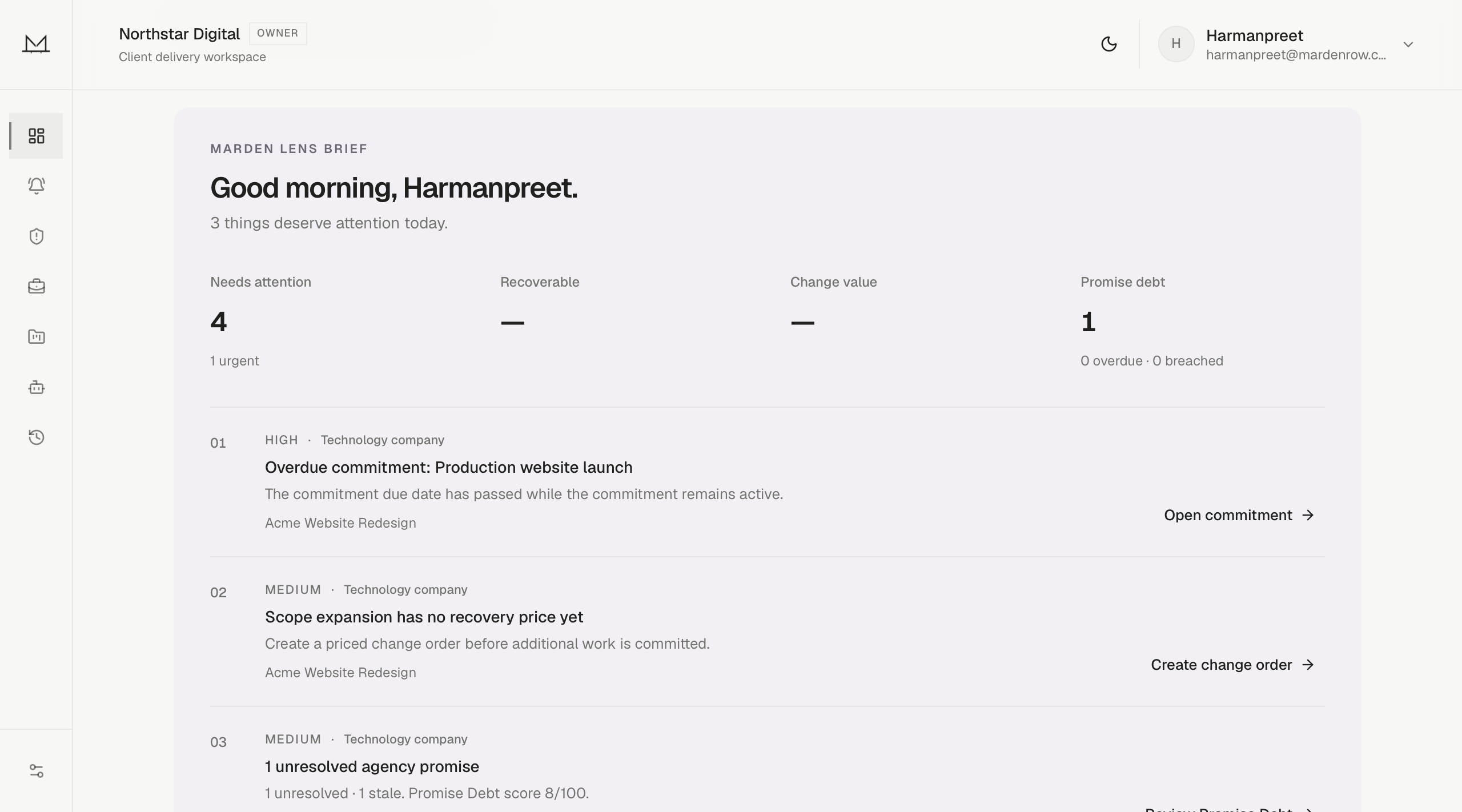
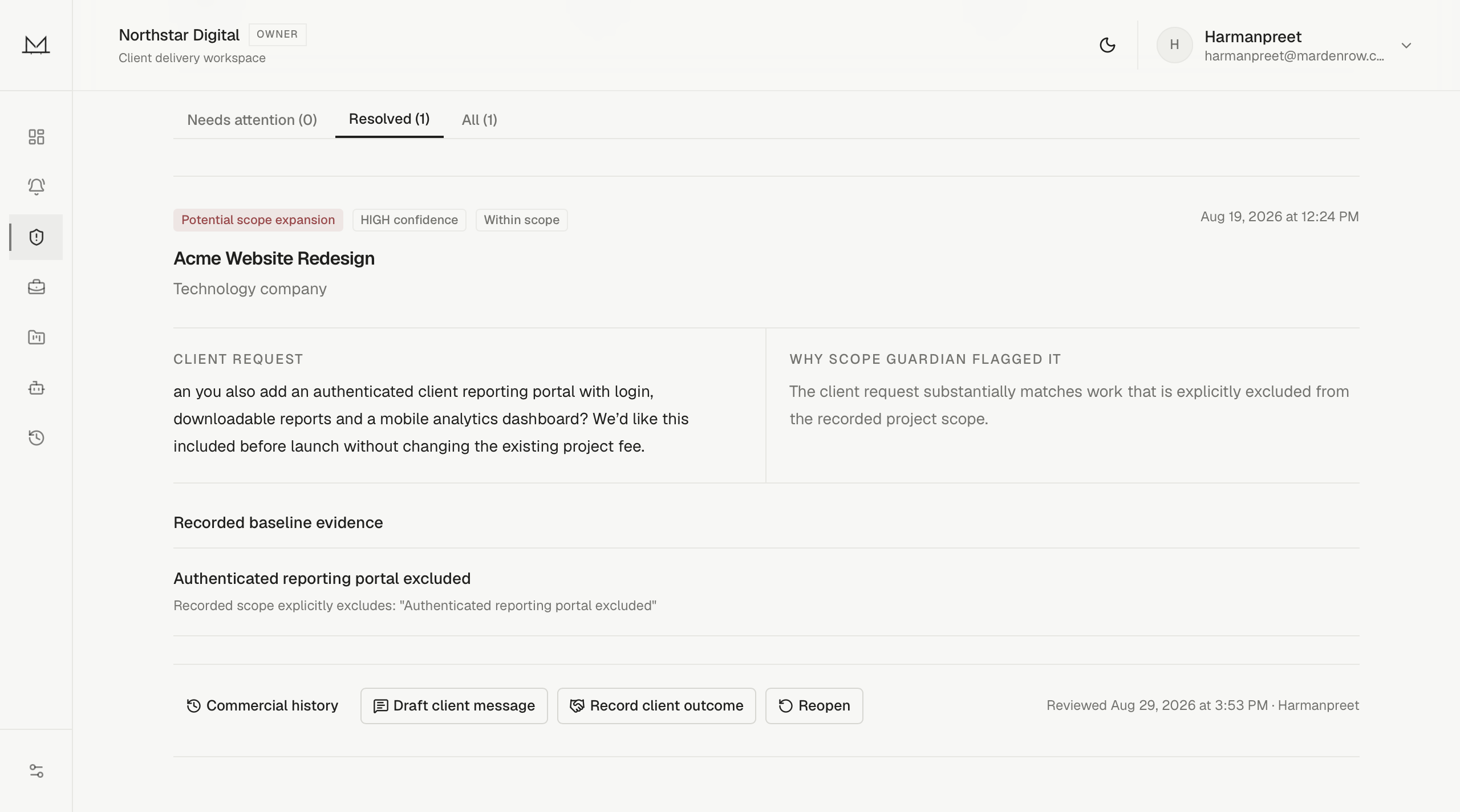
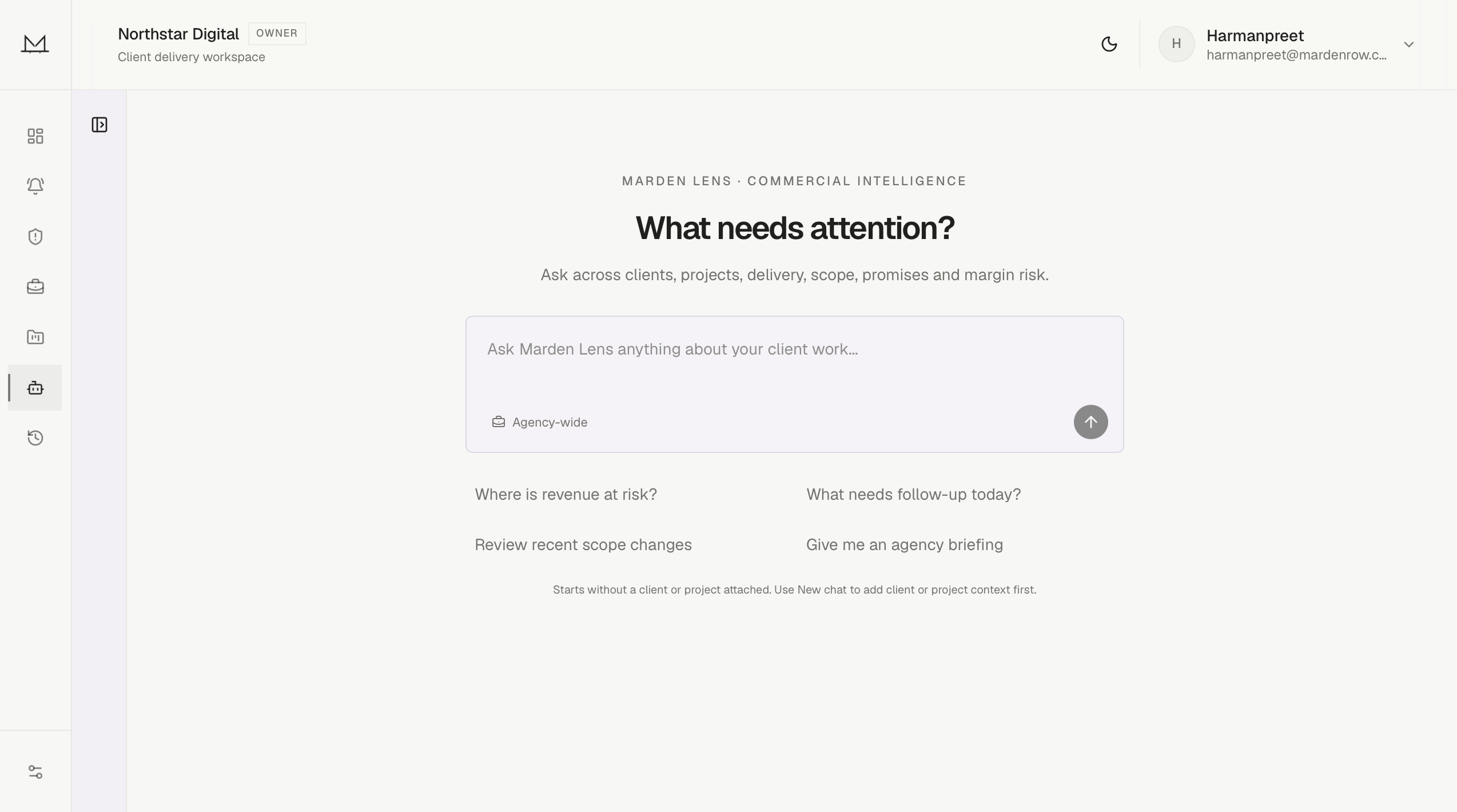
Marden Row helps project-based service businesses catch scope creep before extra work turns into lost revenue. It keeps client commitments, scope changes, approvals, change orders, revenue at risk, and next actions connected, so teams can see what changed and act before margin disappears.
Features
- Track original client commitments and project scope
- Detect work drifting beyond the agreed scope
- Surface revenue at risk and margin exposure
- Turn scope changes into structured change orders
- Keep evidence, approvals, and commercial decisions connected
- Prioritize the next actions that need attention
Use Cases
- Agencies managing changing client requirements
- Software studios delivering custom client projects
- Consultancies handling evolving engagements
- Implementation teams tracking additional work
- Service businesses protecting project margin
- Teams that need clearer scope-change and approval records

Comments


I built Marden Row after seeing how easily project margin gets lost in small client requests that never look serious on their own. One extra revision, one new expectation, one thing the team agrees to absorb, and eventually the work being delivered no longer matches what was originally priced. Marden Row keeps the original commitment, scope changes, approvals, change orders, and revenue at risk connected so teams can catch that drift while there is still time to act. I’m especially interested in feedback from people running client projects where scope changes often happen through conversations rather than formal change requests. Harmanpreet


Marden Row looks like a valuable tool for service-based businesses managing multiple client projects. Keeping scope changes, approvals, and revenue risks organized in one place can help teams avoid unpaid extra work and protect their profit margins. A practical solution for better project management and financial control!

Harmanpreet, turning a "quick favour" mentioned on a call into a structured change order with the revenue at risk next to it is the right fix. The hard part is that the creep usually starts in Slack or a meeting, not in a ticket. How do teams get those conversational requests into Marden Row today: someone logs them by hand, or does it pull from email and chat? Small search note: I googled "scope creep tracking software for agencies" (US results) and the top 9 include a Notion template, ScopeAuditor's "5 best scope creep tools 2026" list, Rize, VocalJet, Boom ERP and Ravetree. Marden Row isn't there yet, and that ScopeAuditor list is the kind of page buyers and AI assistants shortlist from. I run AI Knows Us, so this kind of search check is what I do.
Premium Products


















































Sponsors
Buy

Makers
Makers
Comments
I built Marden Row after seeing how easily project margin gets lost in small client requests that never look serious on their own. One extra revision, one new expectation, one thing the team agrees to absorb, and eventually the work being delivered no longer matches what was originally priced. Marden Row keeps the original commitment, scope changes, approvals, change orders, and revenue at risk connected so teams can catch that drift while there is still time to act. I’m especially interested in feedback from people running client projects where scope changes often happen through conversations rather than formal change requests. Harmanpreet
Marden Row looks like a valuable tool for service-based businesses managing multiple client projects. Keeping scope changes, approvals, and revenue risks organized in one place can help teams avoid unpaid extra work and protect their profit margins. A practical solution for better project management and financial control!
Harmanpreet, turning a "quick favour" mentioned on a call into a structured change order with the revenue at risk next to it is the right fix. The hard part is that the creep usually starts in Slack or a meeting, not in a ticket. How do teams get those conversational requests into Marden Row today: someone logs them by hand, or does it pull from email and chat? Small search note: I googled "scope creep tracking software for agencies" (US results) and the top 9 include a Notion template, ScopeAuditor's "5 best scope creep tools 2026" list, Rize, VocalJet, Boom ERP and Ravetree. Marden Row isn't there yet, and that ScopeAuditor list is the kind of page buyers and AI assistants shortlist from. I run AI Knows Us, so this kind of search check is what I do.
Premium Products
New to Fazier?

Find your next favorite product or submit your own. Made by @FalakDigital.
Copyright ©2026. All Rights Reserved