
Loger
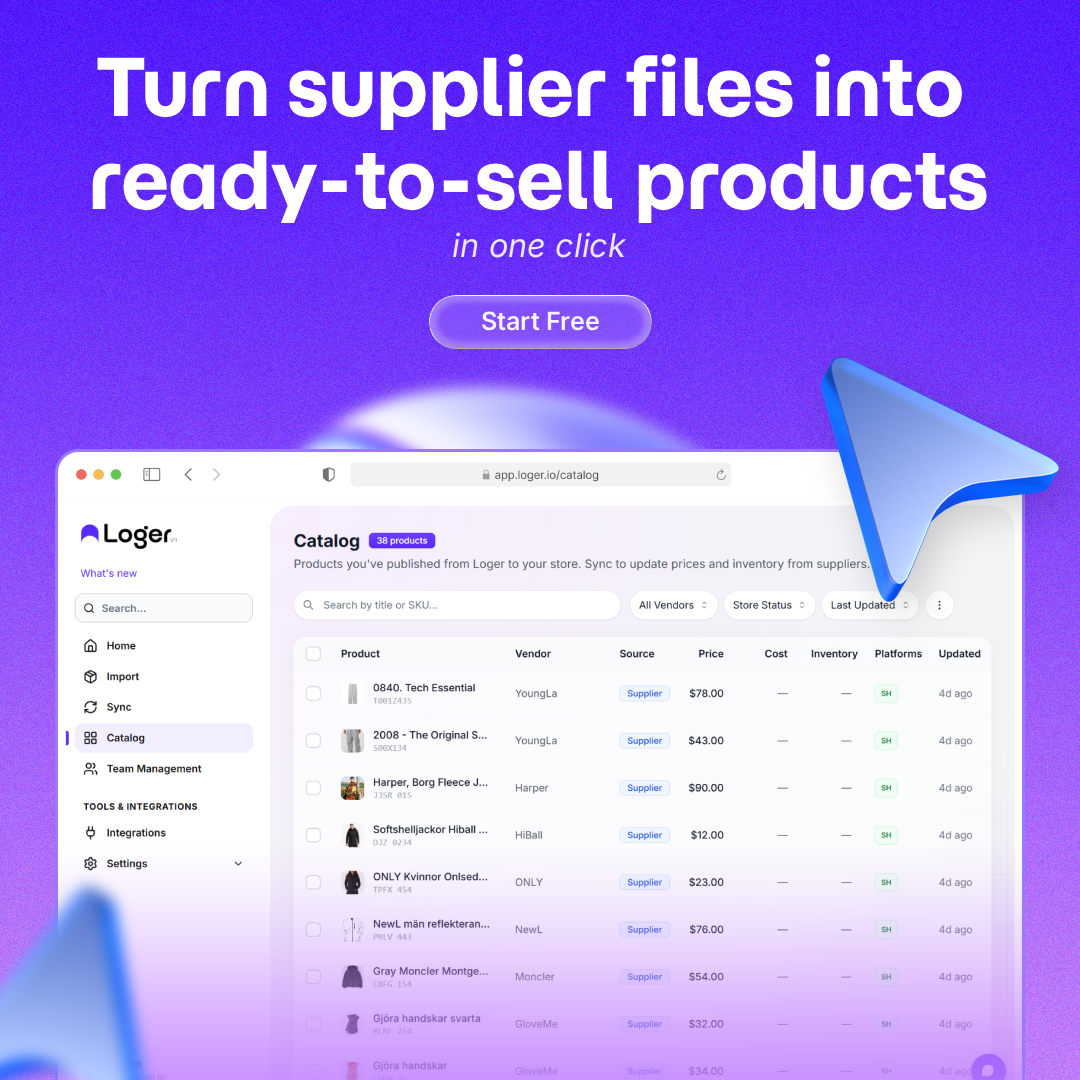
Turn files into ready-to-sell products.
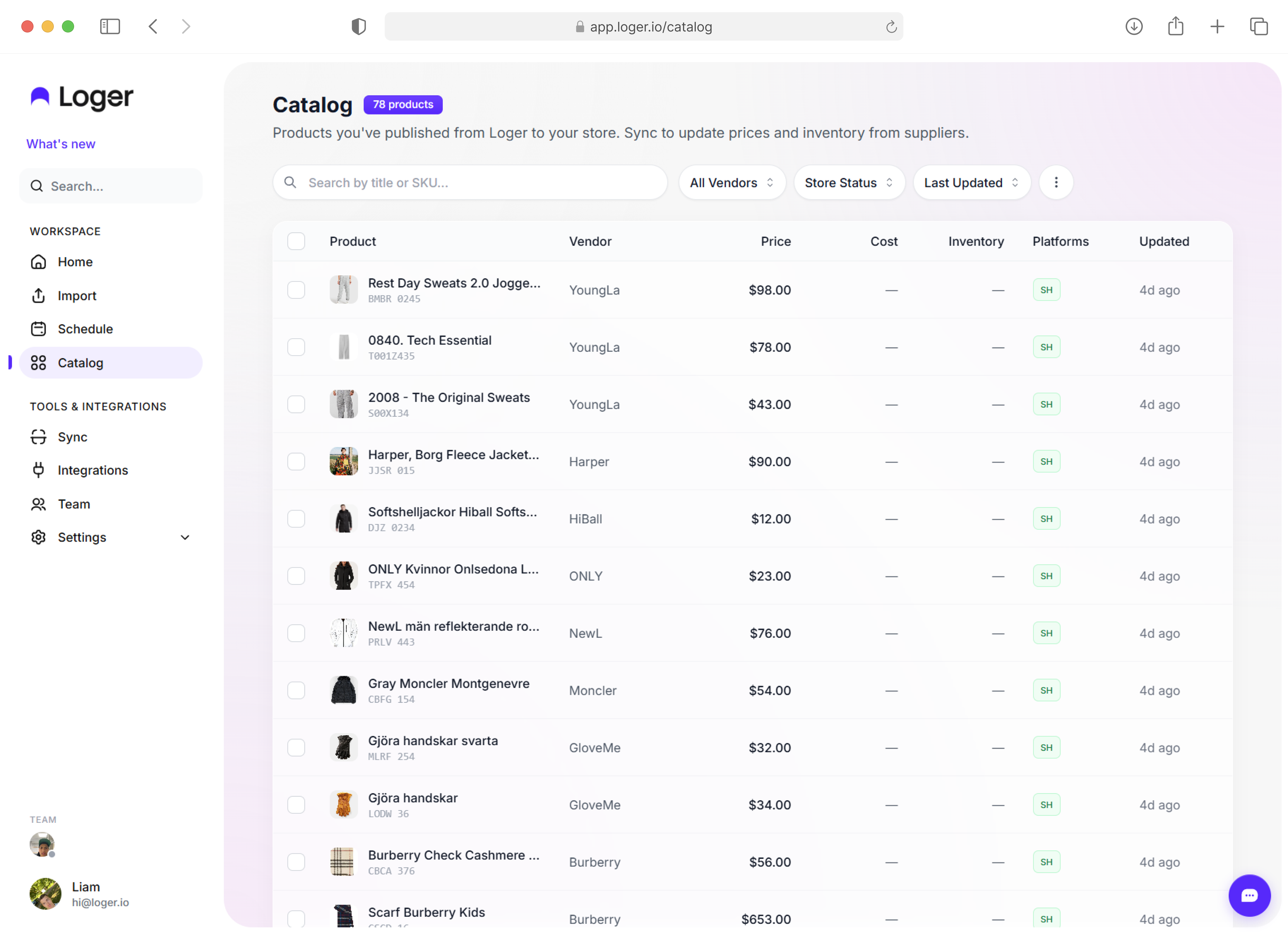
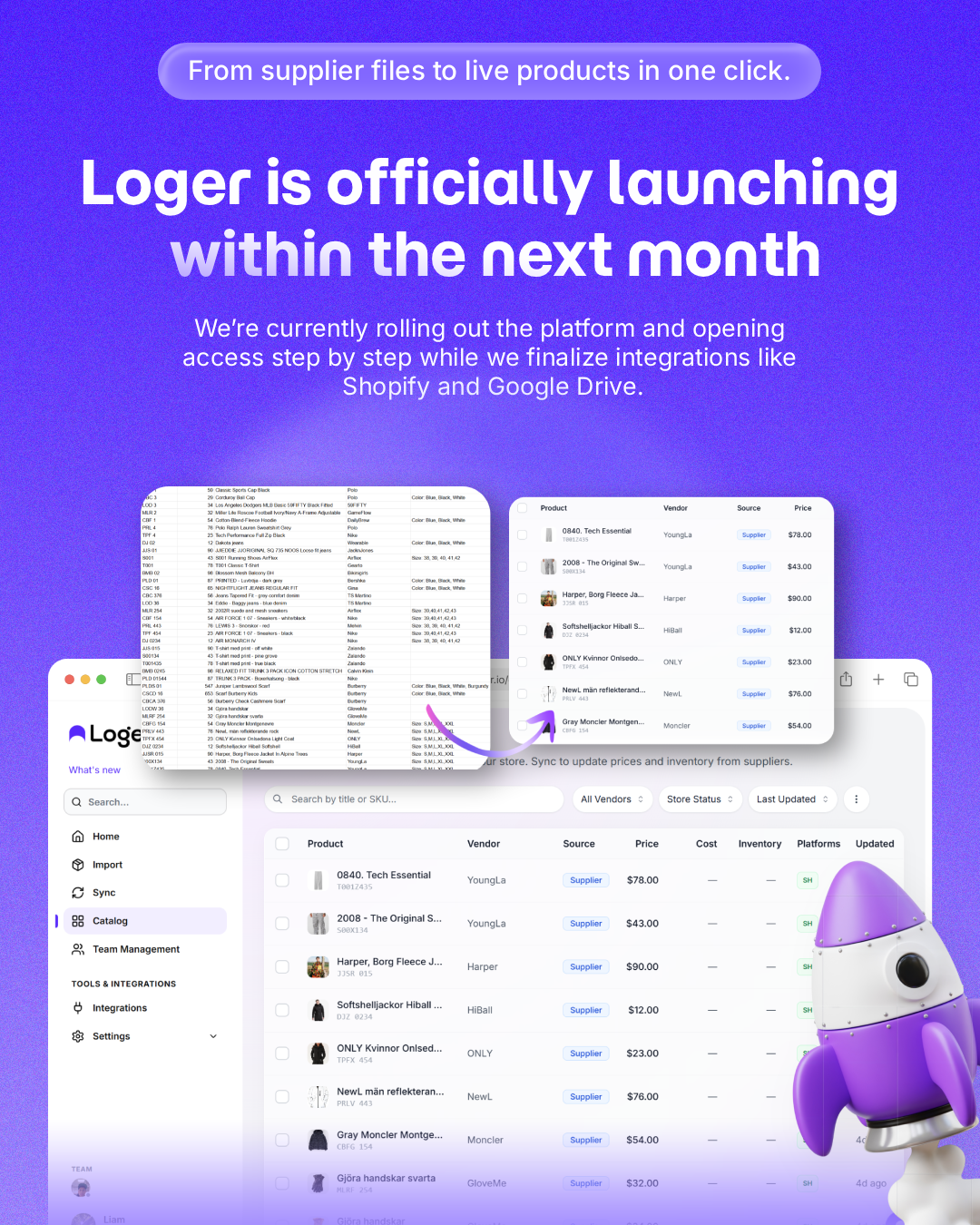
Loger.io helps ecommerce stores turn messy product data into structured, optimized catalogs at scale. Unlike manual tools, it imports, organizes, and syncs thousands of products automatically, saving time and reducing errors. Built for modern ecommerce, it’s fast, scalable, and designed to handle growing product catalogs without tedious manual work.

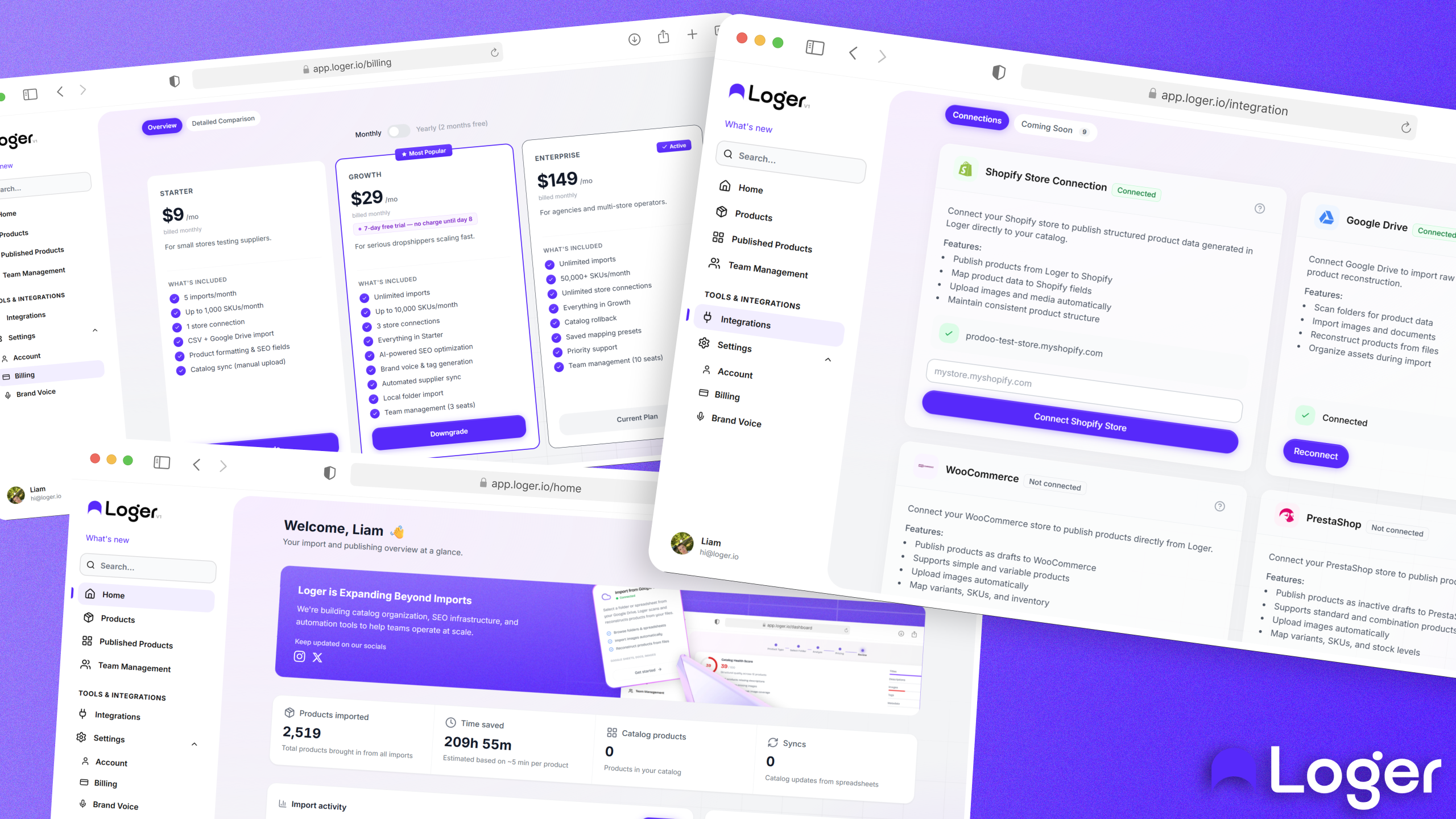
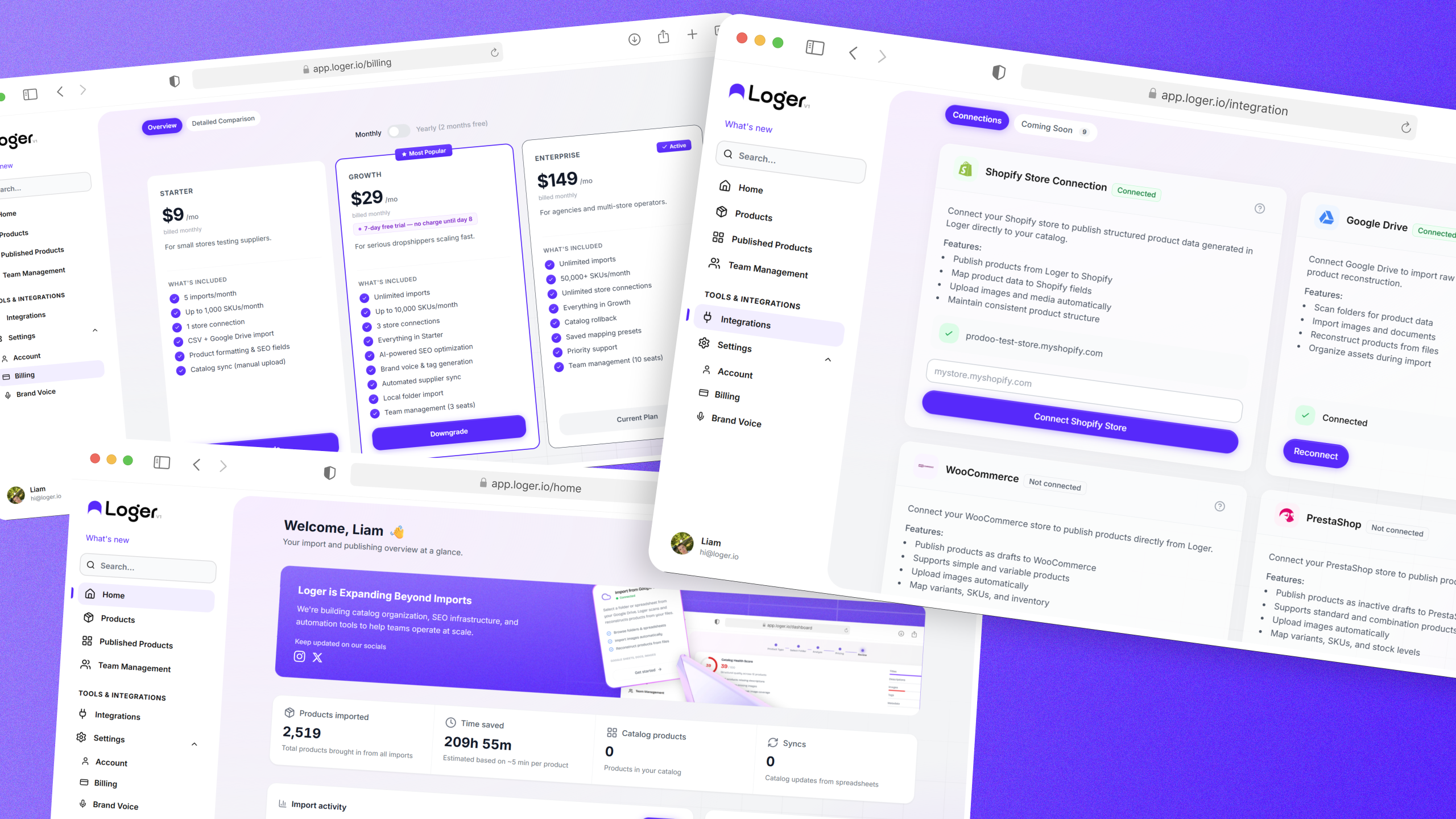
Features
Core Product Creation
- Import products from CSV, spreadsheets, and local folders
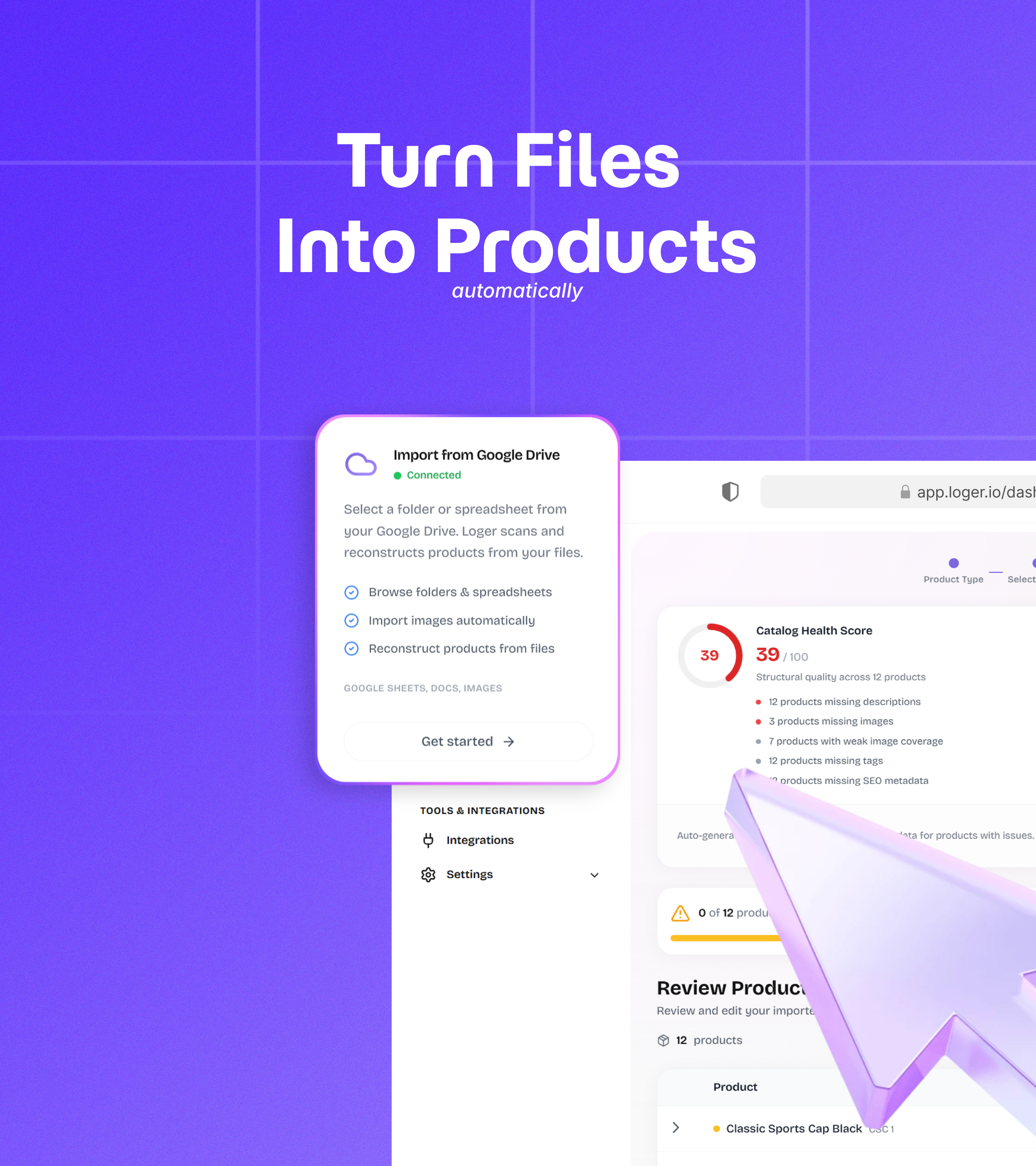
- Google Drive import (folder + file support)
- Automatic product reconstruction from supplier data
- Variant detection and grouping
- Image matching from folders
- SKU-based product matching
- Duplicate product detection
Review & Editing
- Product review page before publishing
- Bulk editing of products
- Variant setup and refinement
- Product-level editing (title, price, etc.)
- Issue highlighting (missing images, data, etc.)
- Product status system (ready, issues, etc.)
Catalog Optimization
- AI product optimization (descriptions, tags, SEO)
- Brand voice generation
- Tag generation
- SEO metadata generation
- Bulk optimization tools
Catalog Health
- Catalog health score
- Detection of missing descriptions
- Detection of weak image coverage
- Missing tags and SEO identification
- Fix issues before publishing
Sync & Updates
- Manual catalog sync via updated files
- Supplier data re-import for updates
- Price and stock updating from files
- Scheduled publishing
- Automatic supplier sync (planned / partial)
Multi-Store & Publishing
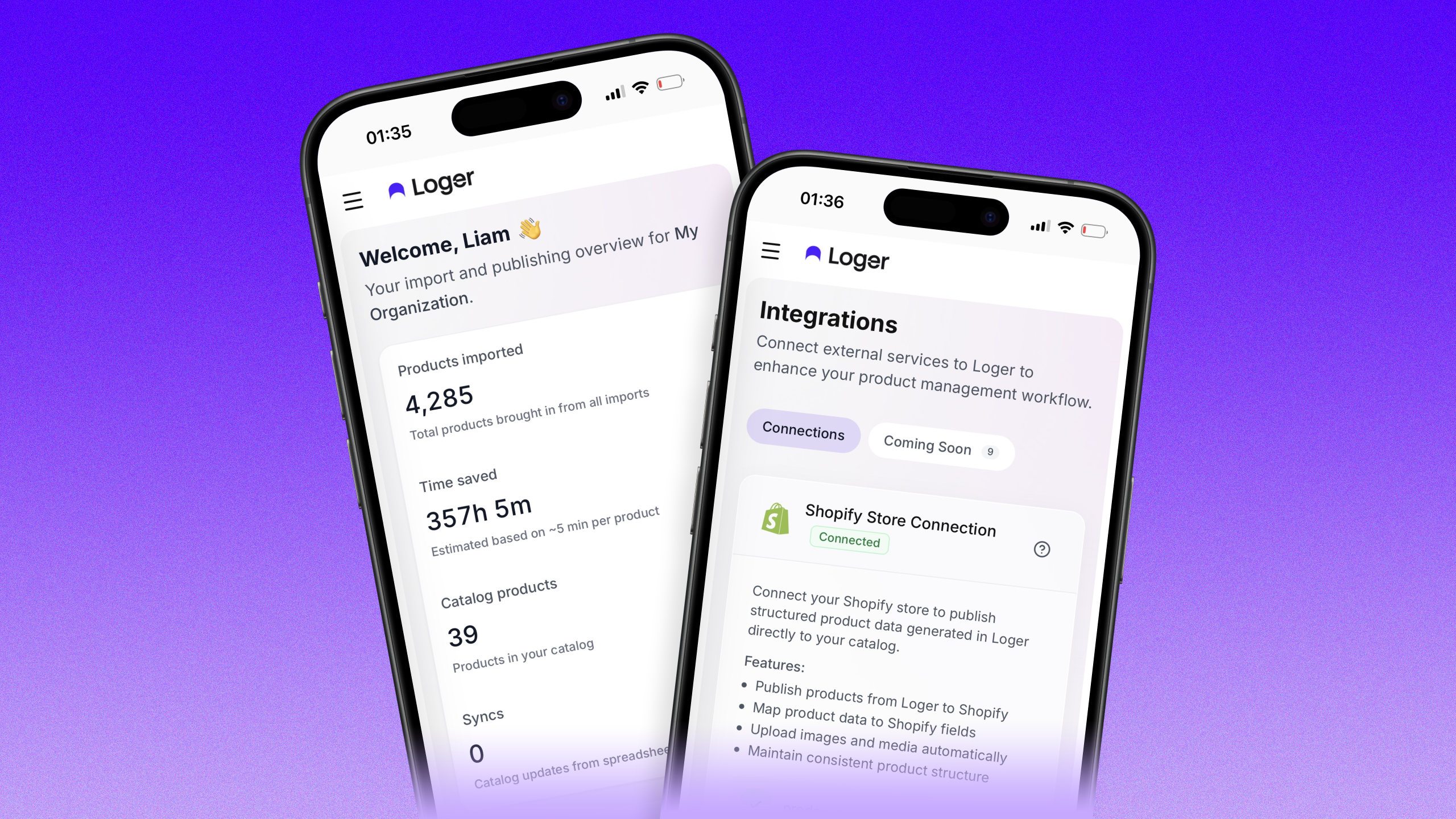
- Publish to Shopify
- Multiple store connections
- Multi-channel publishing (planned/partial)
Supplier Management
- Multiple supplier handling
- Supplier-based product grouping
- Supplier-specific imports
- Supplier data organization (early stage)
Import Experience
- Drag & drop uploads
- ZIP file support
- Progress tracking (reading, matching, building)
- Confidence scoring (product matching quality)
System & Workflow
- End-to-end workflow: import → review → optimize → publish
- Session-based product building
- Structured product pipeline
- Scalable catalog handling
Team & Scaling
- Team access (multi-seat plans)
- Workflow suited for large catalogs
- High SKU handling (10k+ depending on plan)
Use Cases
Loger is used by ecommerce stores that work with supplier data and want to remove the manual work of creating and managing products.
A common use case is turning files into products. Instead of manually going through CSV files, spreadsheets, or folders with images and building products one by one, users upload their data and Loger automatically creates structured, ready-to-sell products in seconds.
Another use case is fixing messy supplier data. Supplier files are often inconsistent, with missing fields, broken formats, or mixed languages. Loger cleans and structures this data so it becomes usable without manual effort.
For stores working with multiple suppliers, Loger helps keep everything organized. Each supplier may provide data in a different format, which quickly becomes difficult to manage. Loger standardizes and centralizes this, making it easier to handle large catalogs.
Loger is also used to keep products updated. When suppliers change prices, stock, or product details, users can re-import or sync data instead of manually updating everything, ensuring the catalog stays accurate.
Finally, before publishing, users can review and improve their products. Loger highlights issues like missing data or weak content and allows users to fix and optimize everything in one place so products are fully ready before going live.

Comments


Loger started from a problem I ran into myself, dealing with supplier files was one of the most frustrating parts of running an ecommerce store. Every time I wanted to add products, it meant going through messy spreadsheets, matching images, fixing data, and building everything manually. At first, I thought the problem was just about importing faster. But while building, I realized the real issue is how inconsistent and messy supplier data actually is. So the focus shifted to handling that mess, cleaning, structuring, and turning it into ready-to-sell products automatically. We’re currently in the process of getting Loger fully ready for launch, with core features already working and being tested. At the same time, we’re also developing a native Shopify app to make the experience more seamless for users. Still early, still improving, and actively looking for feedback from people dealing with supplier data.



The catalog health score is a smart addition. Most ecommerce tools just let you publish and discover missing data later. Having a pre-publish check that flags weak descriptions, missing images, and SEO gaps saves a real headache. Curious how you handle supplier files that mix multiple languages in the same sheet?

This looks particularly valuable for stores working with several suppliers and inconsistent source files. The combination of SKU matching, image association, variant grouping, and a pre-publish health check addresses the tedious parts that usually make catalog expansion slow and error-prone. The review step before Shopify publishing is especially important—automation is useful, but ecommerce teams still need confidence that products are accurate before they go live.
Turning files into sellable products is a clever niche — especially for creators who already have high-quality PDFs, templates, or datasets sitting unused. The promise of no dev skills needed should resonate well with educators and consultants. Would be great to see built-in license controls or download limits per purchase.

Messy supplier data is one of those problems that quietly eats hours, especially when every supplier hands you a different format and you're reconciling it all by hand. Cleaning that up automatically and keeping it synced when stock or details change is the real value, not just the initial import. Curious how it handles the weirder edge cases like mixed languages or suppliers who randomly rename their columns. If it holds up at 10k+ SKUs that's a serious time saver.
Premium Products






























Sponsors
Buy

Awards
View all
Awards
View allMakers
Makers
Comments
Loger started from a problem I ran into myself, dealing with supplier files was one of the most frustrating parts of running an ecommerce store. Every time I wanted to add products, it meant going through messy spreadsheets, matching images, fixing data, and building everything manually. At first, I thought the problem was just about importing faster. But while building, I realized the real issue is how inconsistent and messy supplier data actually is. So the focus shifted to handling that mess, cleaning, structuring, and turning it into ready-to-sell products automatically. We’re currently in the process of getting Loger fully ready for launch, with core features already working and being tested. At the same time, we’re also developing a native Shopify app to make the experience more seamless for users. Still early, still improving, and actively looking for feedback from people dealing with supplier data.
The catalog health score is a smart addition. Most ecommerce tools just let you publish and discover missing data later. Having a pre-publish check that flags weak descriptions, missing images, and SEO gaps saves a real headache. Curious how you handle supplier files that mix multiple languages in the same sheet?
This looks particularly valuable for stores working with several suppliers and inconsistent source files. The combination of SKU matching, image association, variant grouping, and a pre-publish health check addresses the tedious parts that usually make catalog expansion slow and error-prone. The review step before Shopify publishing is especially important—automation is useful, but ecommerce teams still need confidence that products are accurate before they go live.
Turning files into sellable products is a clever niche — especially for creators who already have high-quality PDFs, templates, or datasets sitting unused. The promise of no dev skills needed should resonate well with educators and consultants. Would be great to see built-in license controls or download limits per purchase.
Messy supplier data is one of those problems that quietly eats hours, especially when every supplier hands you a different format and you're reconciling it all by hand. Cleaning that up automatically and keeping it synced when stock or details change is the real value, not just the initial import. Curious how it handles the weirder edge cases like mixed languages or suppliers who randomly rename their columns. If it holds up at 10k+ SKUs that's a serious time saver.
Premium Products
New to Fazier?

Find your next favorite product or submit your own. Made by @FalakDigital.
Copyright ©2026. All Rights Reserved